Understanding Quantities Addition Worksheets for Ages 5-9 - Page 2
40 filtered results
-
From - To
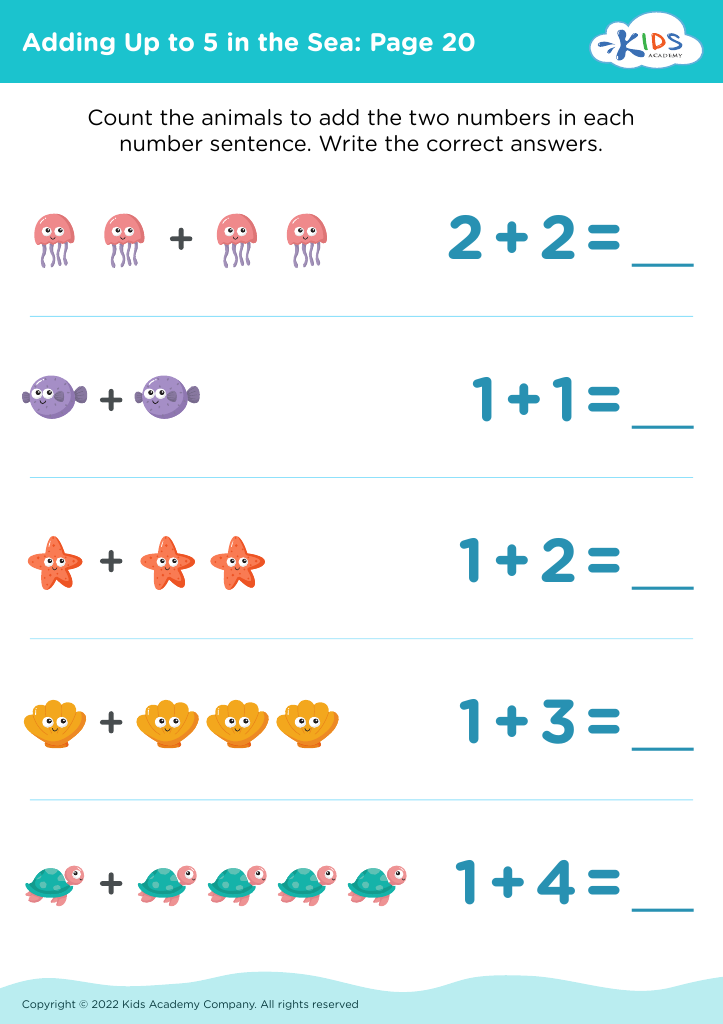
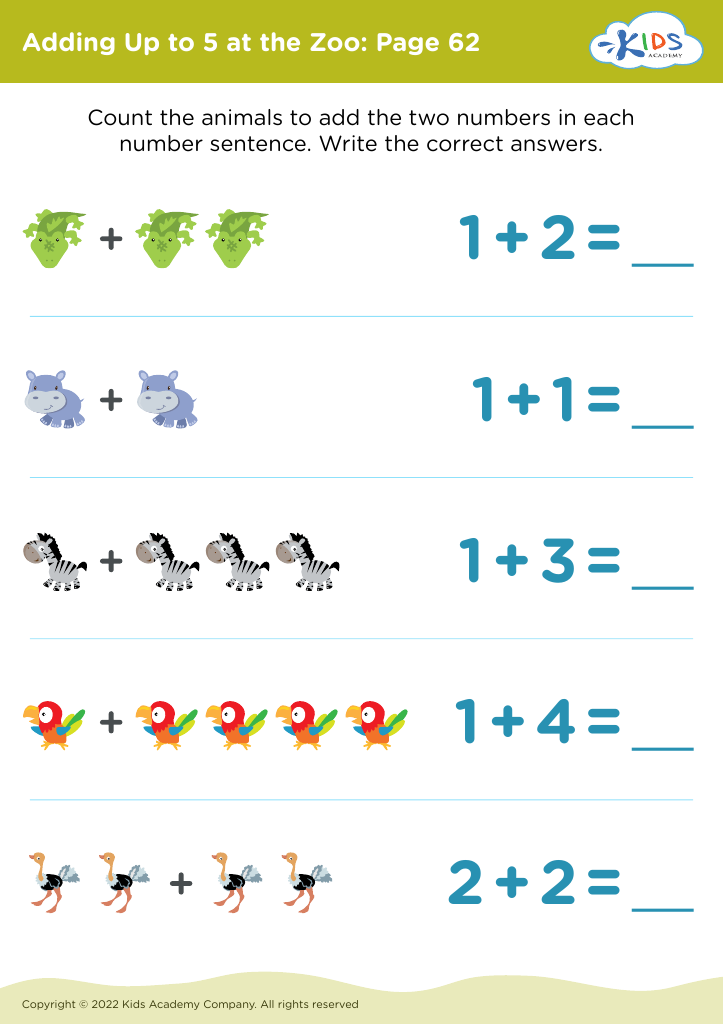
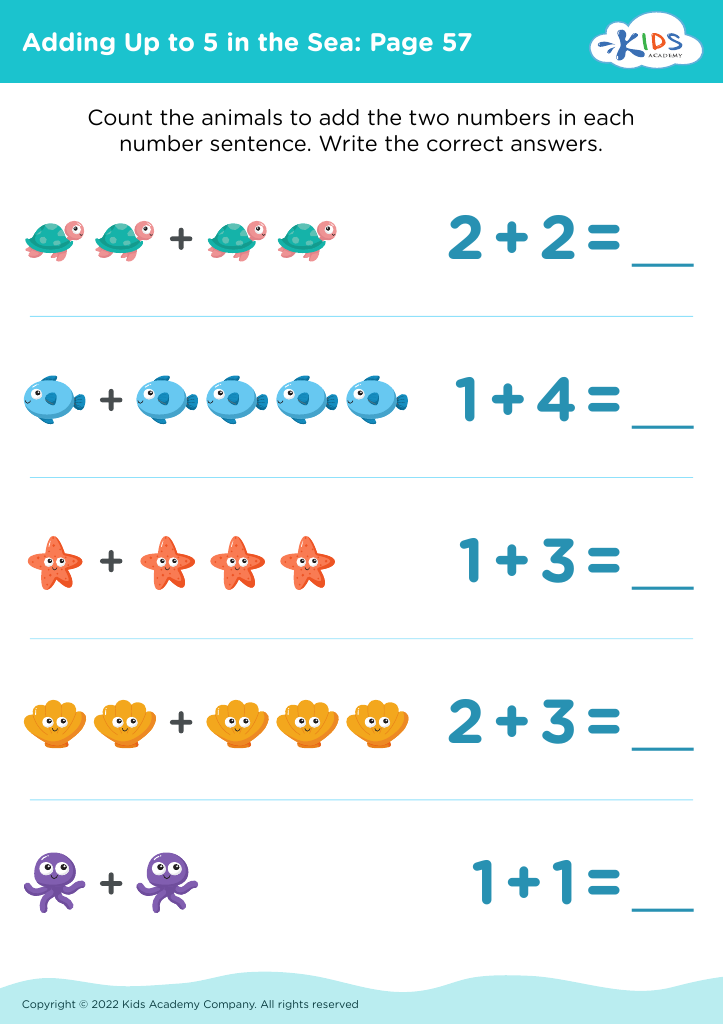
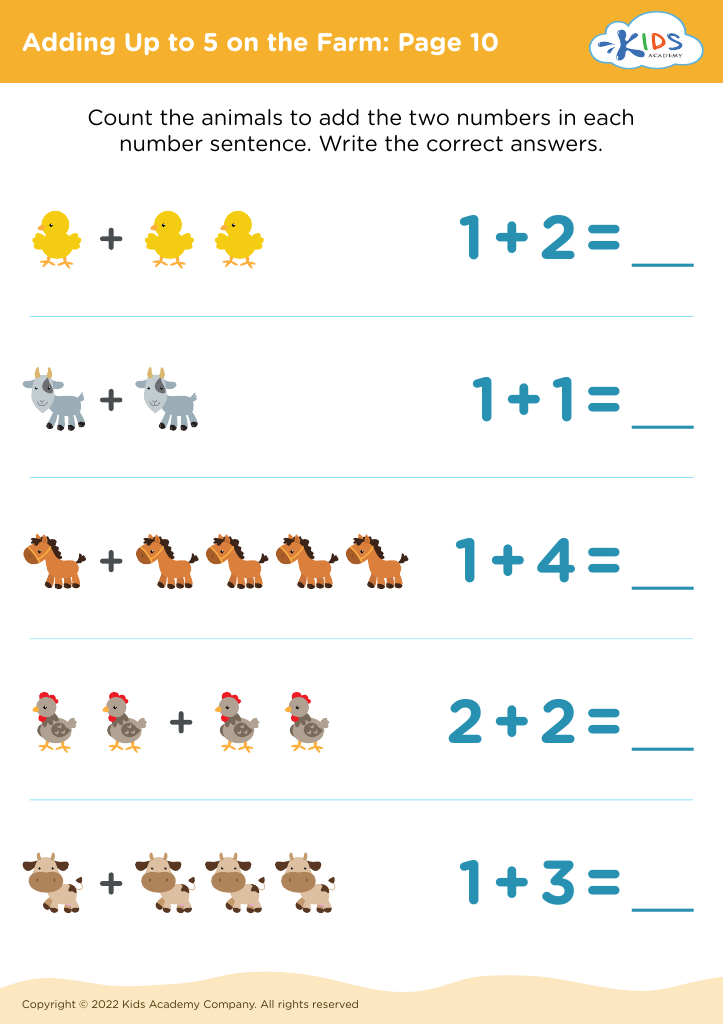
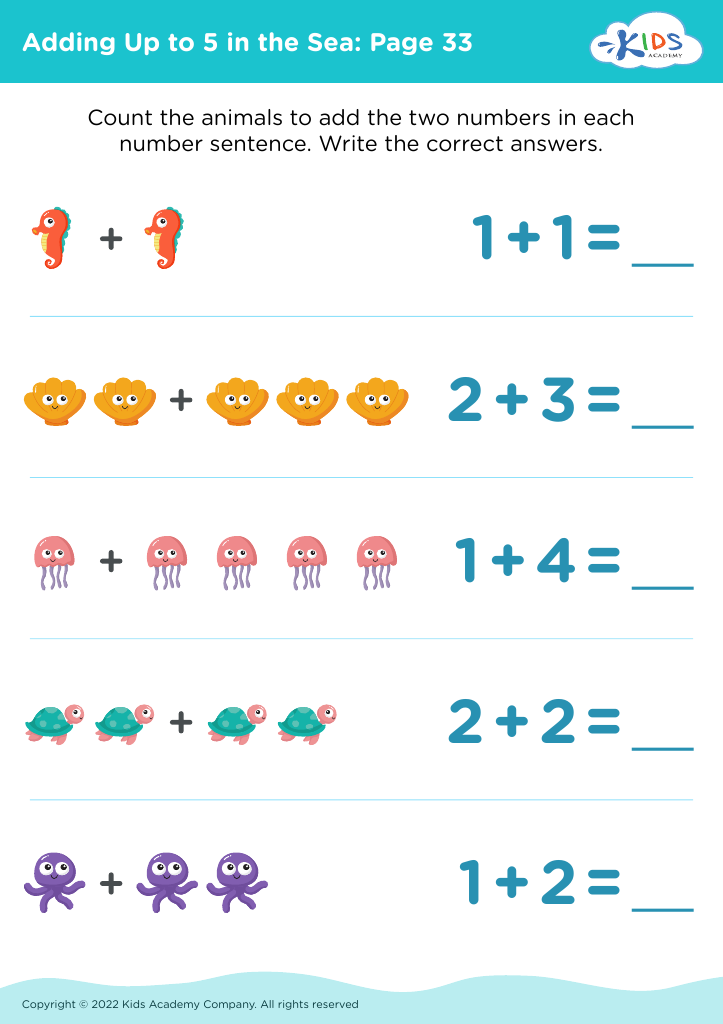
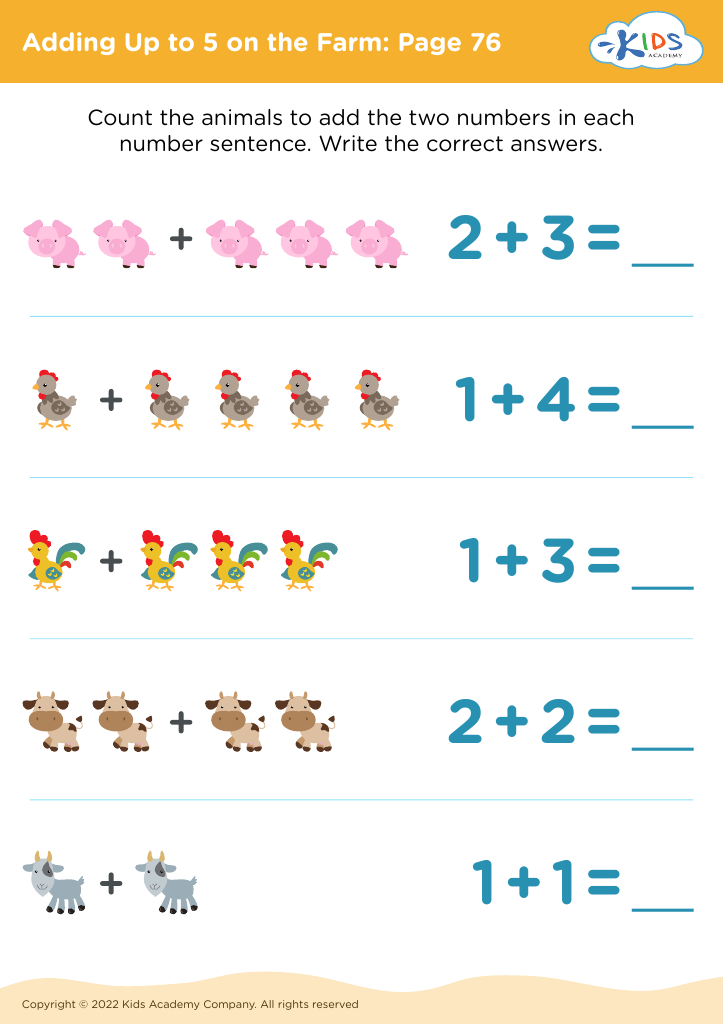
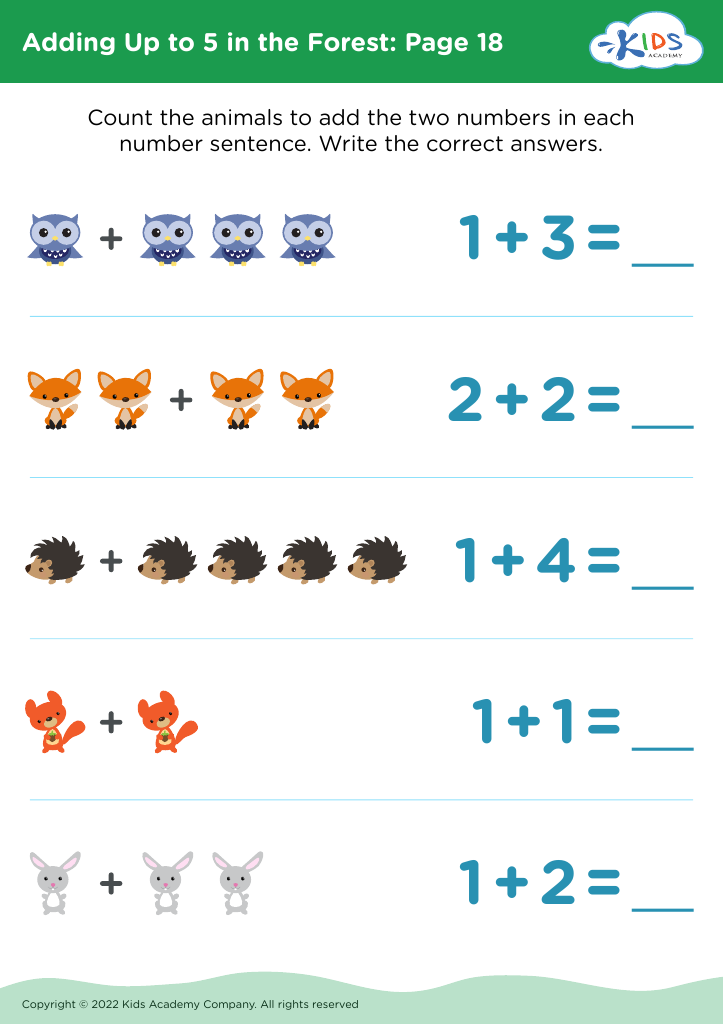
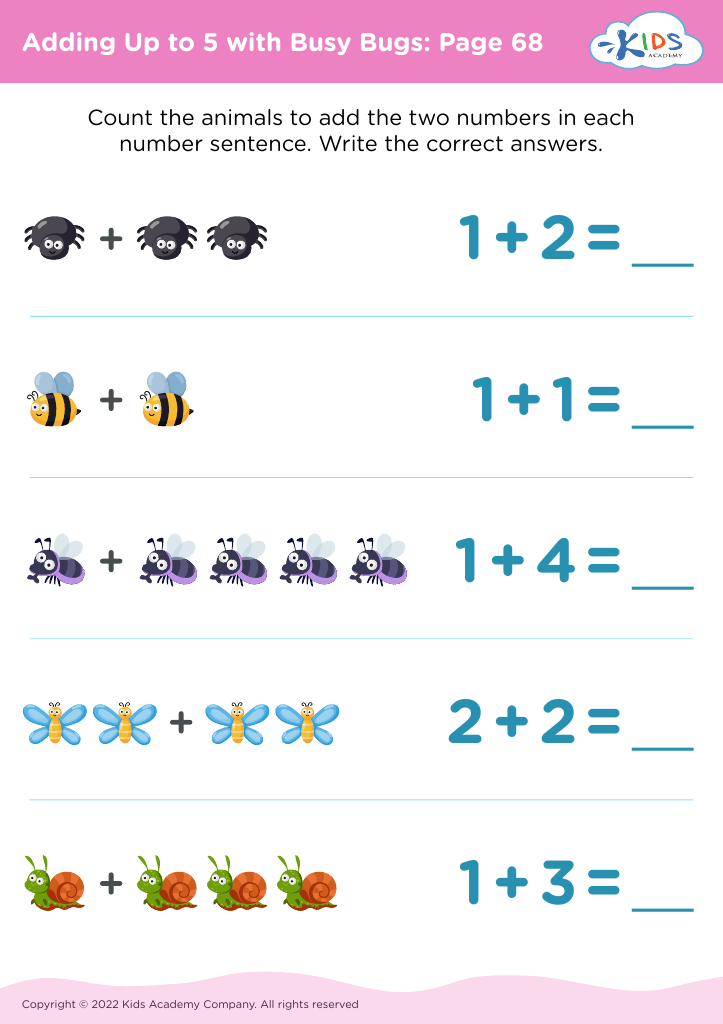
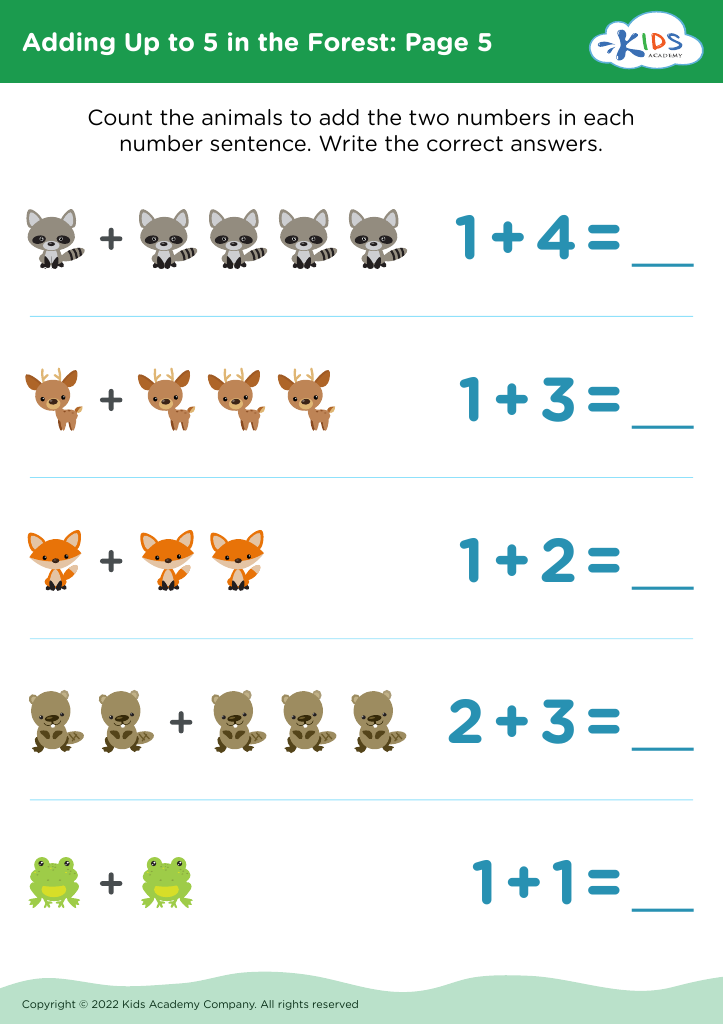
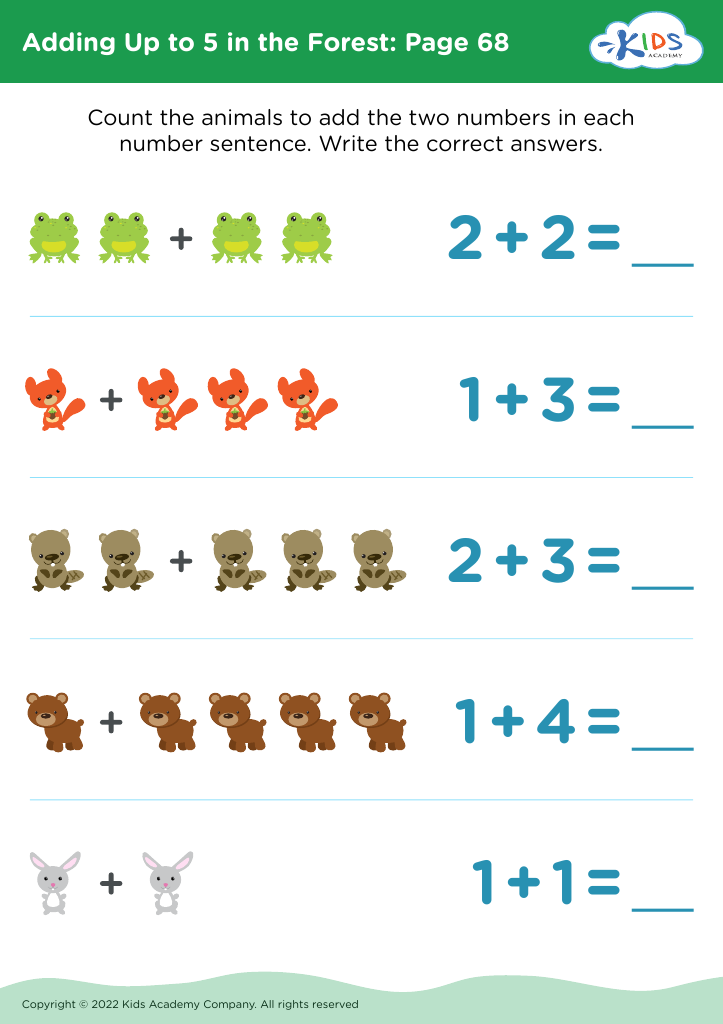
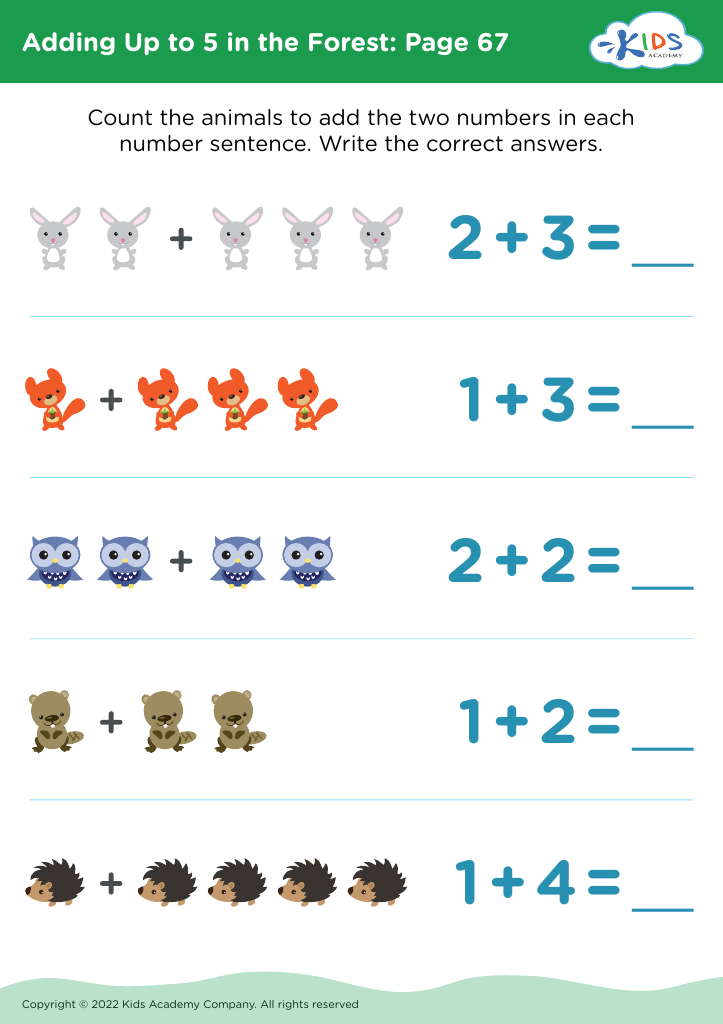
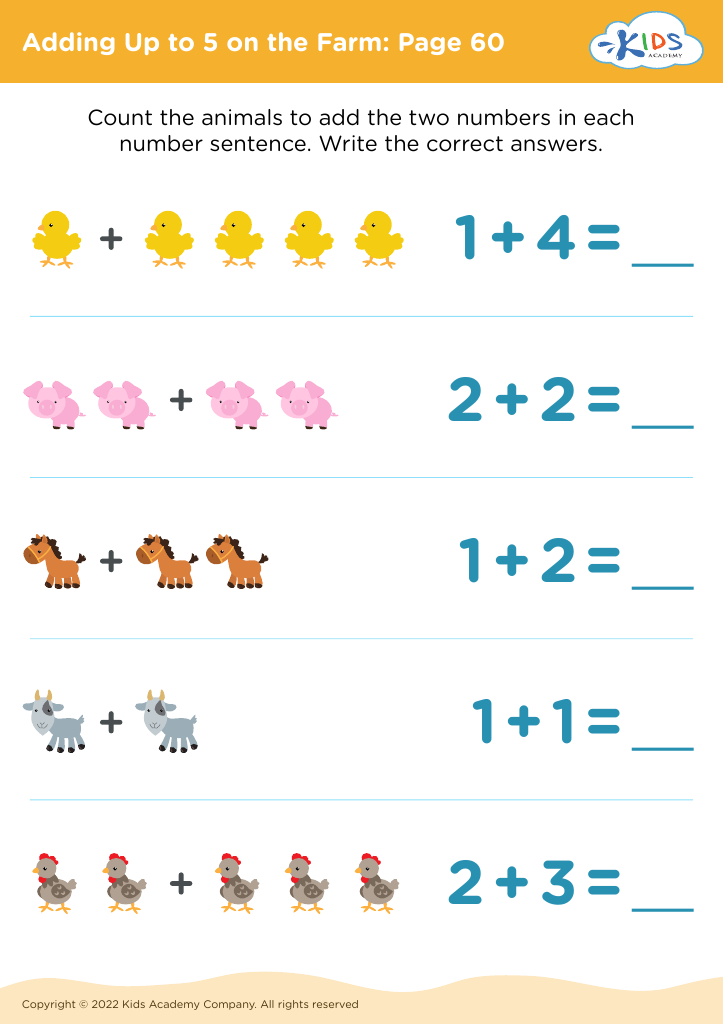








Understanding quantity addition for ages 5-9 is pivotal because it forms the foundational cornerstone for future mathematical success. For young learners, grasping the concept of adding quantities transcends mere numeric operations; it enhances their cognitive development by promoting logical thinking, problem-solving skills, and comprehension of real-world relationships between objects. When parents and teachers emphasize this learning, they empower children with the ability to make sense of their environment—like counting toys, distributing snacks, or understanding time.
From a developmental perspective, children at this age are in a critical period for number sense and symbolic understanding. Learning to add quantities enables them to engage in more complex mathematical concepts later on, such as subtraction, multiplication, and division. It also builds their confidence and reduces math anxiety, setting a positive attitude towards learning and academic exploration.
Active involvement from parents and teachers can provide individualized support and create a stimulating and interactive learning environment. This personalized support could include the use of visual aids, hands-on activities, and engaging math games that make learning addition enjoyable and intuitive.
Ultimately, investing time in helping young children understand quantity addition equips them with essential skills that are highly beneficial throughout their lifelong learning journey, providing them with tools necessary for academic and real-life problem-solving situations.








