Visual representation comprehension Addition Worksheets for Ages 5-9
5 filtered results
-
From - To
Discover engaging and educational "Visual Representation Comprehension Addition Worksheets for Ages 5-9". Designed to make learning addition fun and intuitive, these worksheets help young learners visualize and understand mathematical concepts through colorful illustrations and diagrams. Perfect for kindergarten to third grade, each worksheet includes creative exercises that reinforce number sense, arithmetic skills, and problem-solving abilities. With step-by-step guidance, your child will develop confidence in their mathematical comprehension. Ideal for both classroom use and homeschooling, these resources cultivate a solid foundation in math, sparking a lifelong love for learning. Download your additions today and watch your child's skills flourish!
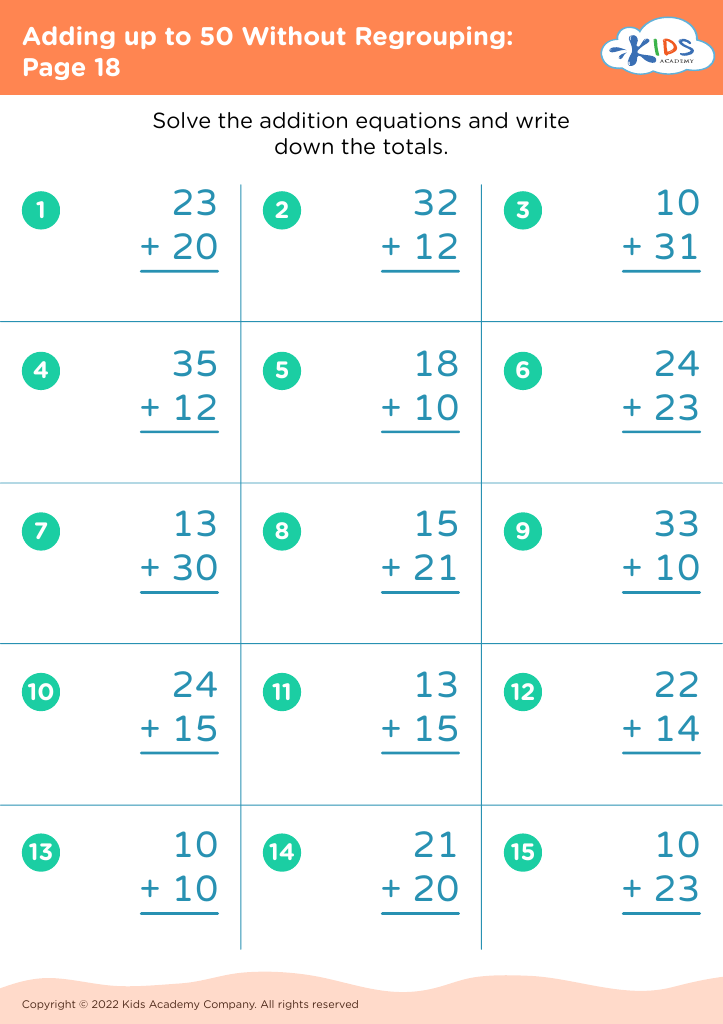
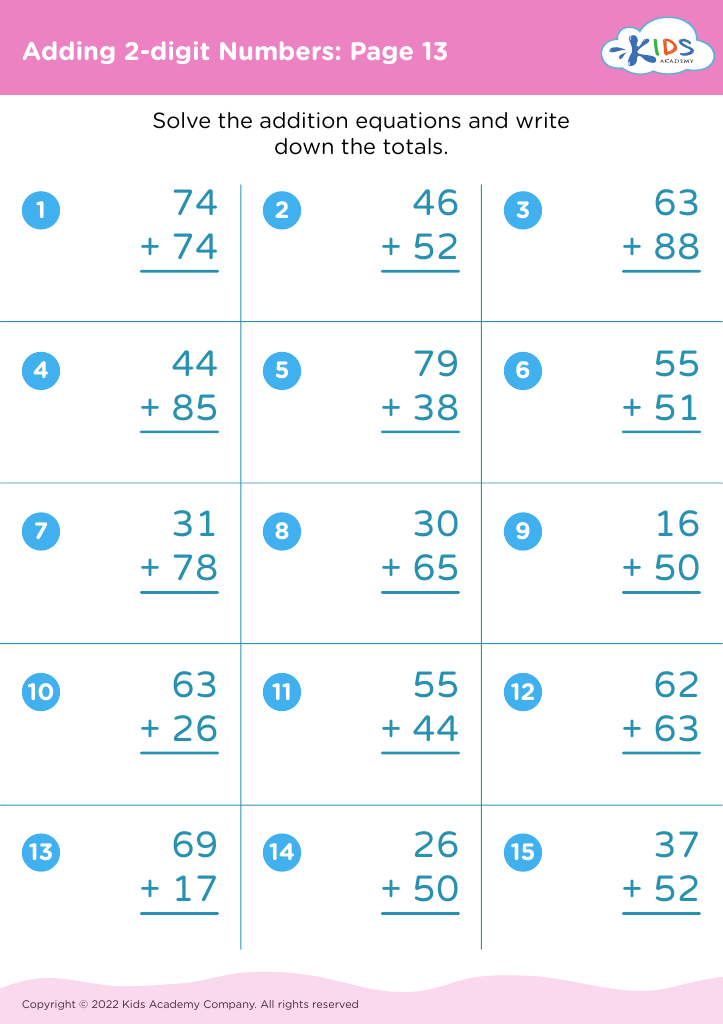
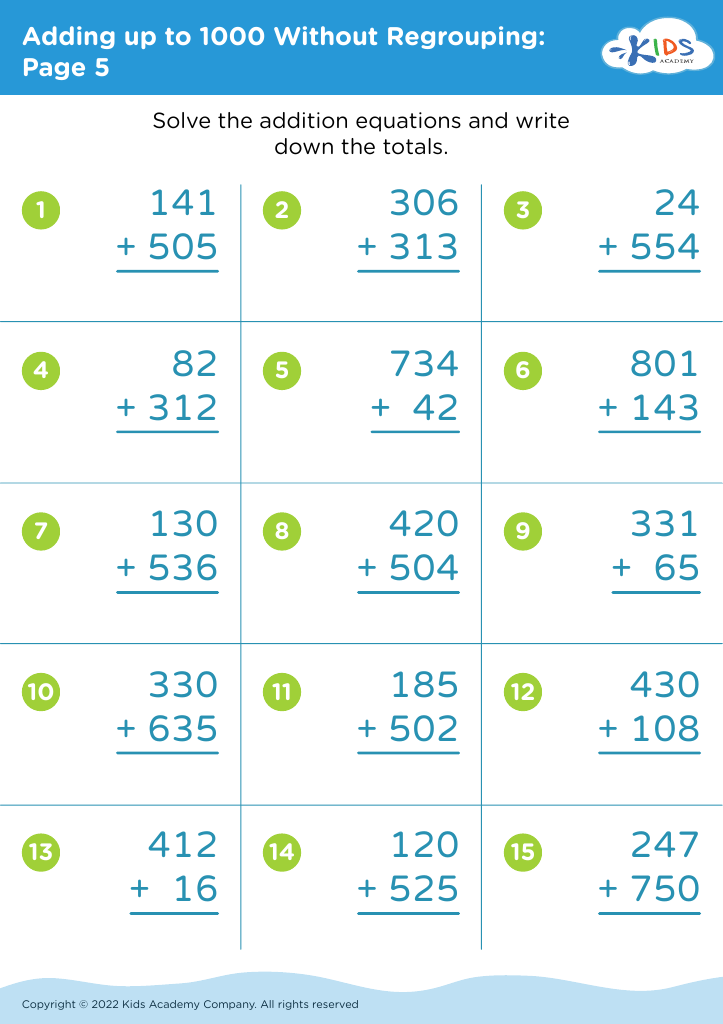
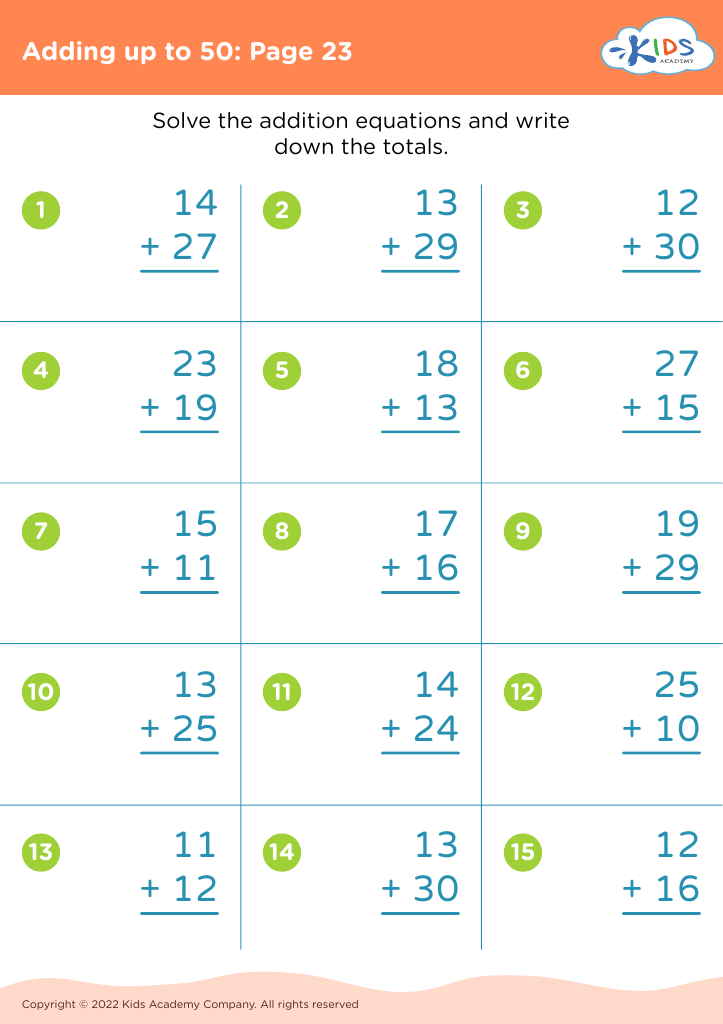
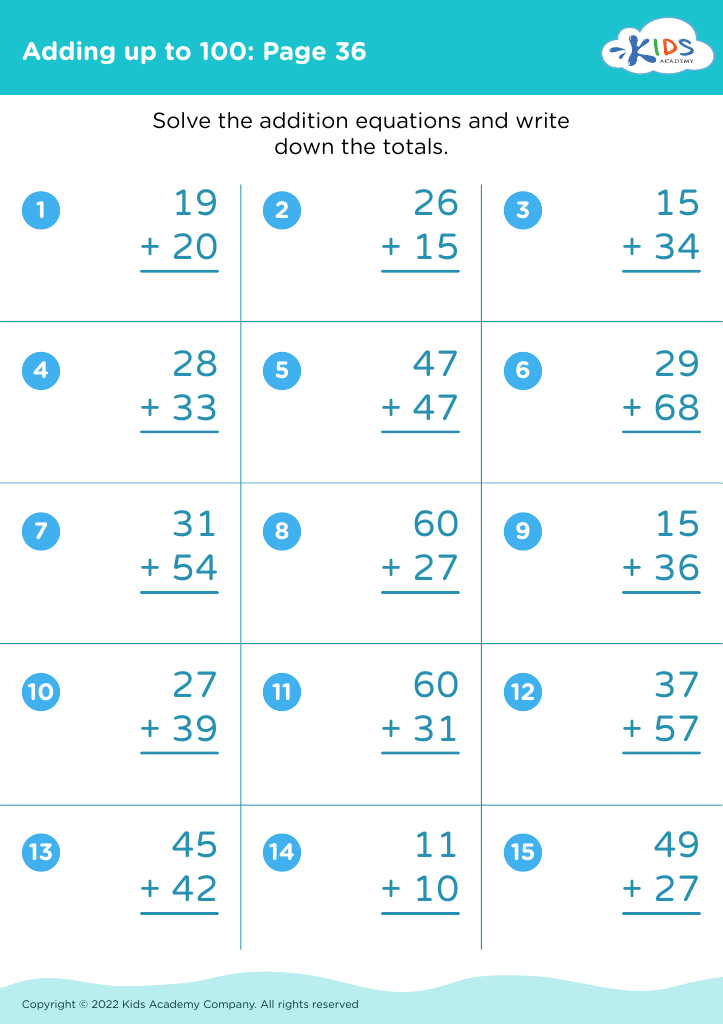








Understanding visual representation in addition for children aged 5-9 is crucial for solidifying foundational math skills. At this developmental stage, children are primarily concrete thinkers and often struggle with abstract concepts. Visual representations, such as number lines, counters, or pictorial images, help bridge the gap between concrete and abstract thinking. They aid in making the concept of addition more tangible and easier to understand.
When parents and teachers incorporate visual aids, they help children see patterns and relationships between numbers, enhancing conceptual understanding rather than mere memorization. Visual tools can make learning interactive and engaging, thereby increasing a child's interest and confidence in math. Furthermore, visual comprehension develops critical thinking and problem-solving skills, carving a smooth pathway for more complex mathematical concepts in the future.
Visual addition methods also support diverse learning styles, catering to those who might struggle with traditional teaching methods. For parents and teachers, investing time in these visual strategies can identify and address potential learning gaps early, establishing a robust mathematical foundation. In sum, focusing on visual representation in addition not only makes learning math accessible and enjoyable for young children, but it also prepares them for future academic success.








