Basic Math Skills Comparison Worksheets for Ages 5-9
3 filtered results
-
From - To
Looking for engaging and educational resources to enhance your child's math skills? Our Basic Math Skills Comparison Worksheets for Ages 5-9 are the perfect solution! These printable worksheets cover crucial comparison concepts such as greater than, less than, and equal to, all designed to boost your child's confidence and accuracy in math. Through fun and interactive activities, young learners will develop a solid foundation in basic math principles, making future math challenges more approachable. Ideal for home or classroom use, these worksheets align with common core standards to support your child's continuous learning journey. Visit our page and spark your child’s love for math today!
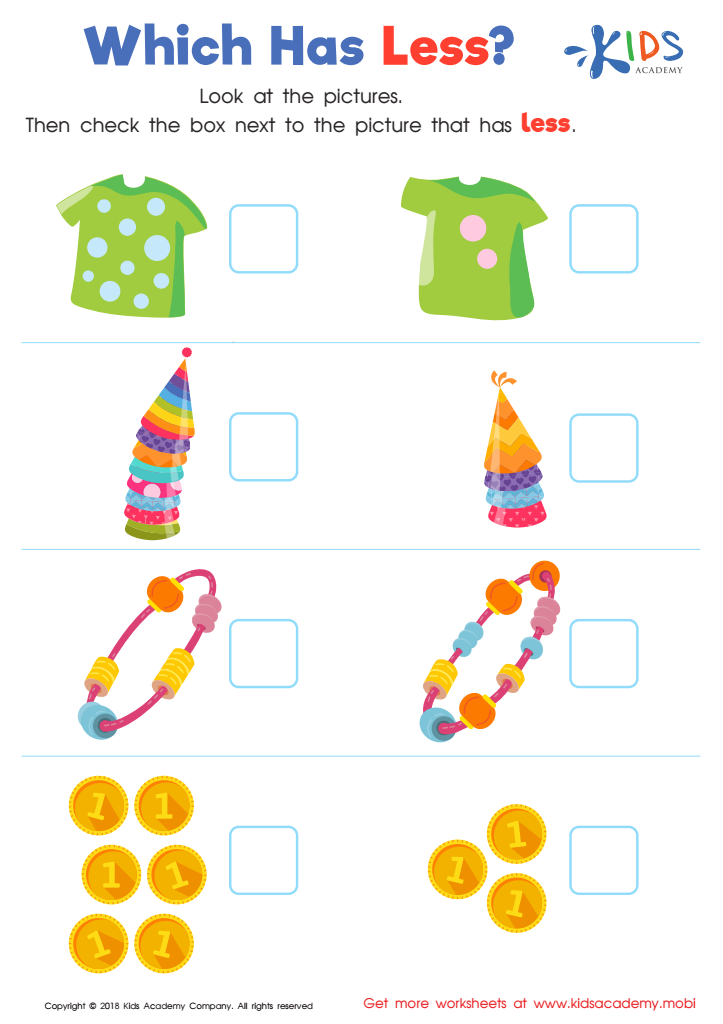
Which Has Less? Worksheet
 Assign to My Students
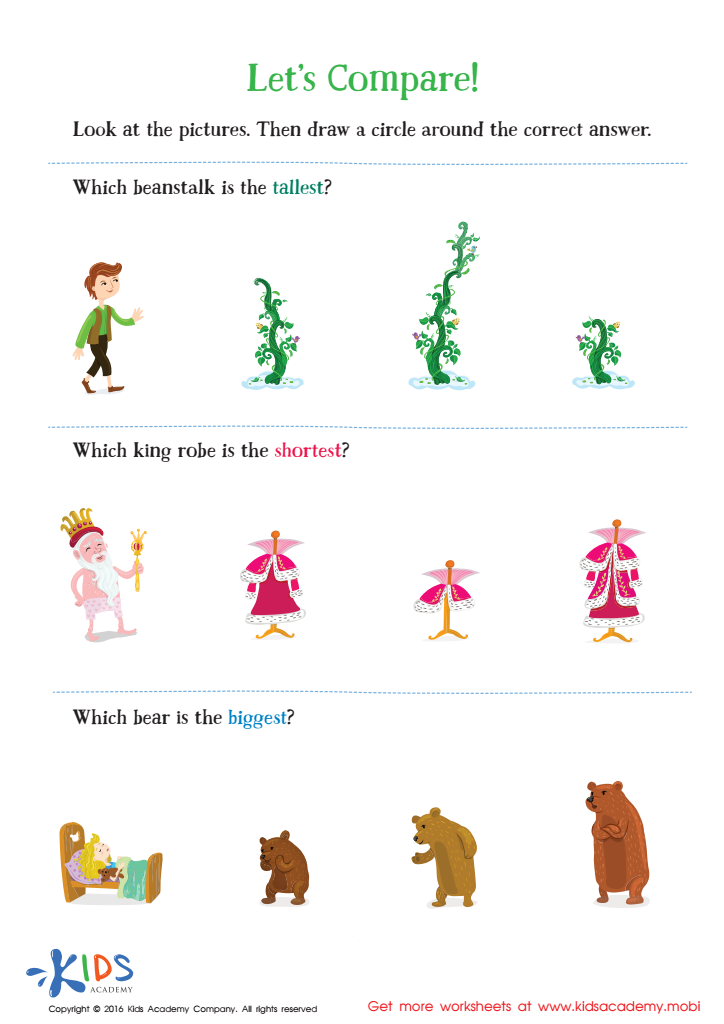
Fairy Tale Worksheet: Let's Compare
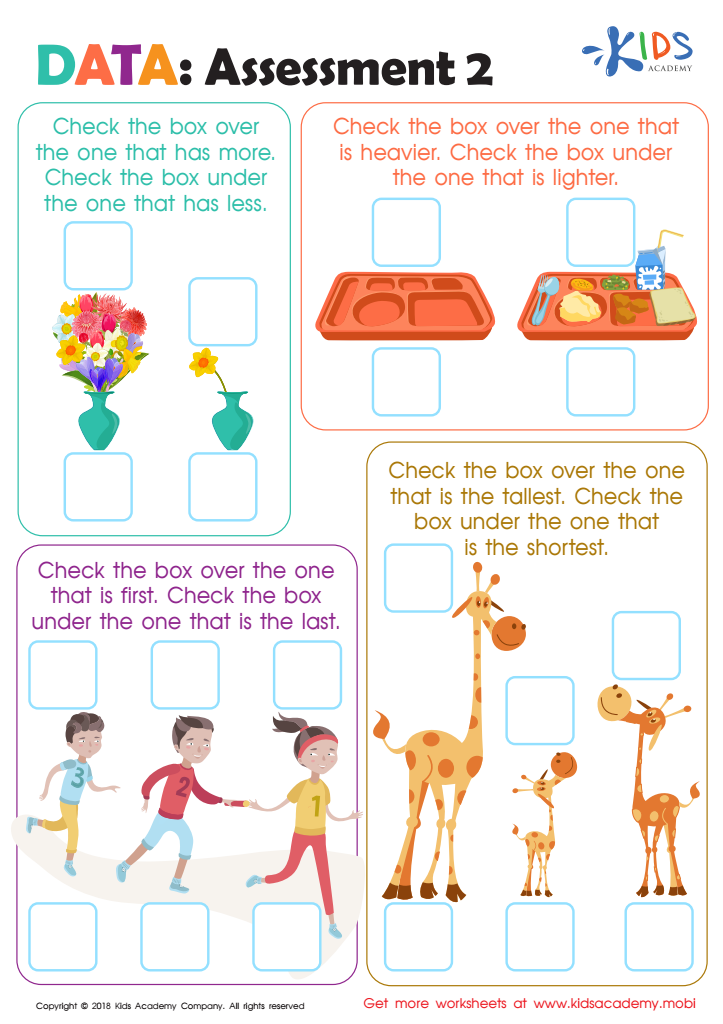
Data: Assessment 2 Worksheet







Basic math skills form the foundation for a child's future academic and everyday life success. Between the ages of 5-9, children develop crucial cognitive abilities, and establishing strong basic math skills during this period is essential. When parents and teachers pay attention to these skills, it ensures that children are building a solid foundation for more complex mathematical concepts introduced later in school.
First, early math skills are integral to overall academic achievement. Studies show that early proficiency in math predicts later success not just in mathematics but in reading and other cognitive tasks as well. This indicates that math skills are interconnected with overall intellectual development.
Second, basic math skills foster critical thinking and problem-solving abilities. Numerical competency helps children enhance their logic and reasoning, which are essential life skills.
Additionally, identifying and addressing gaps in early math skills through comparison can help prevent future learning difficulties. When parents and teachers are aware of a child's progress and potential areas of struggle, intervention strategies such as personalized support or additional resources can be implemented effectively.
Therefore, caring about basic math skill comparison during these formative years not only aids in academic tracking and support but also contributes to the holistic development of a child's learning capabilities and confidence in dealing with everyday numerical problems.








