Critical Thinking Division Worksheets for Ages 5-9
3 filtered results
-
From - To
Our "Critical Thinking Division Worksheets for Ages 5-9" are designed to boost young learners' problem-solving skills while mastering division concepts. Tailored for early grade students, these worksheets engage kids through fun and interactive activities that challenge their minds. By presenting division problems in various formats, children not only practice basic math but also improve their reasoning abilities. Ideal for both classroom and home use, our worksheets make learning division enjoyable and effective. Encourage your child to explore, think critically, and develop a strong mathematical foundation with our high-quality printable resources. Start today and watch them excel!
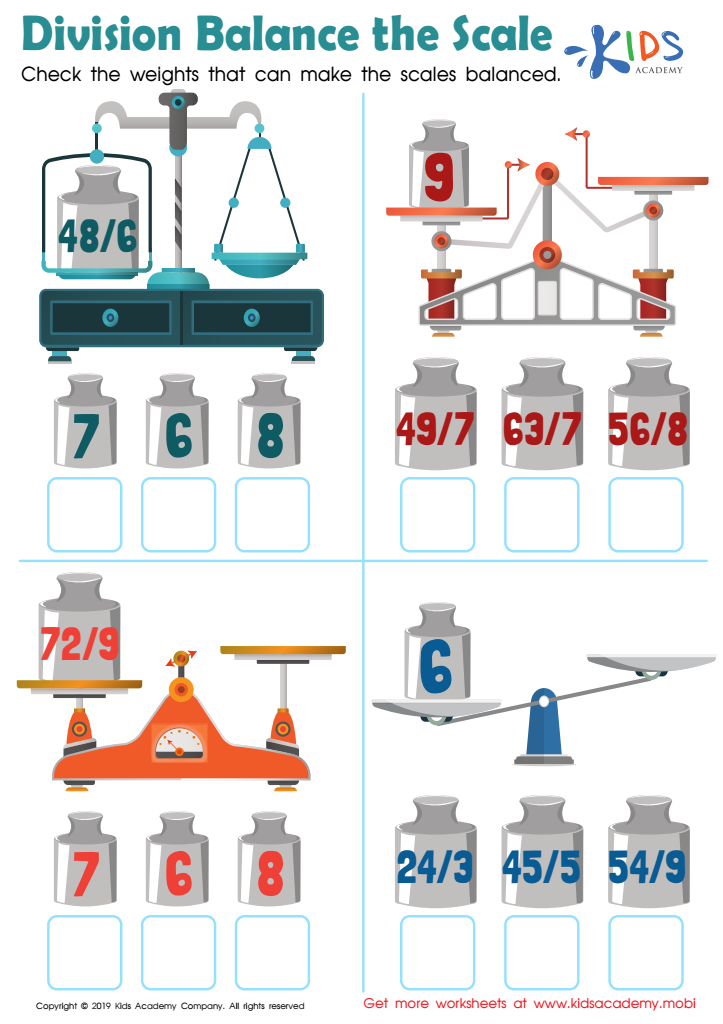
Division Balance the Scale Worksheet
 Assign to My Students
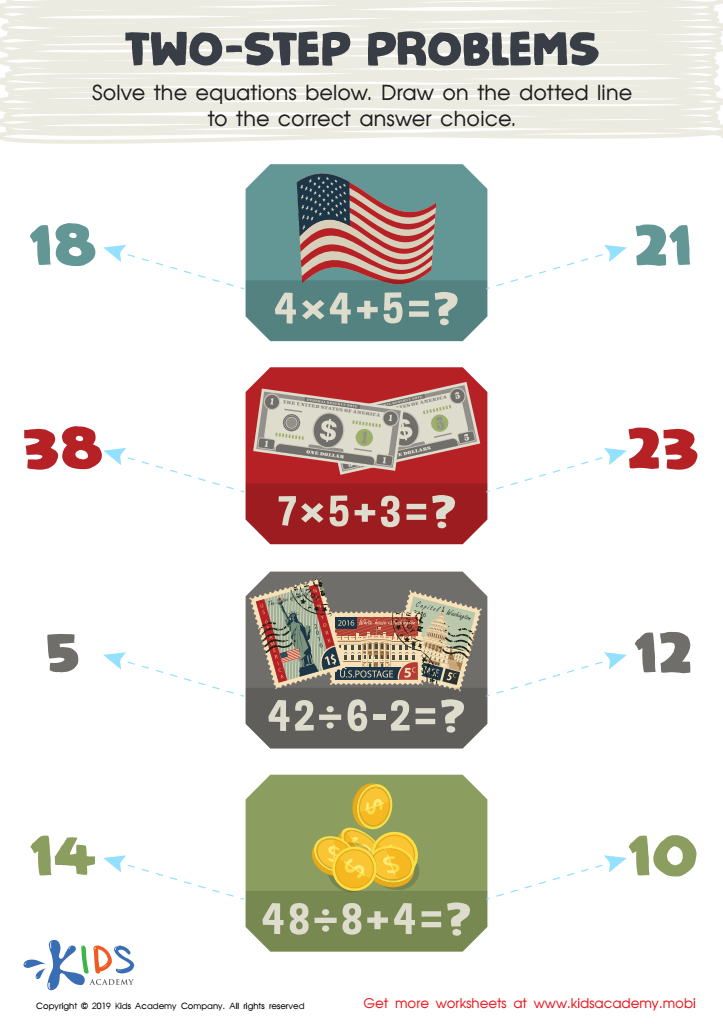
Two-Step Problems Worksheet
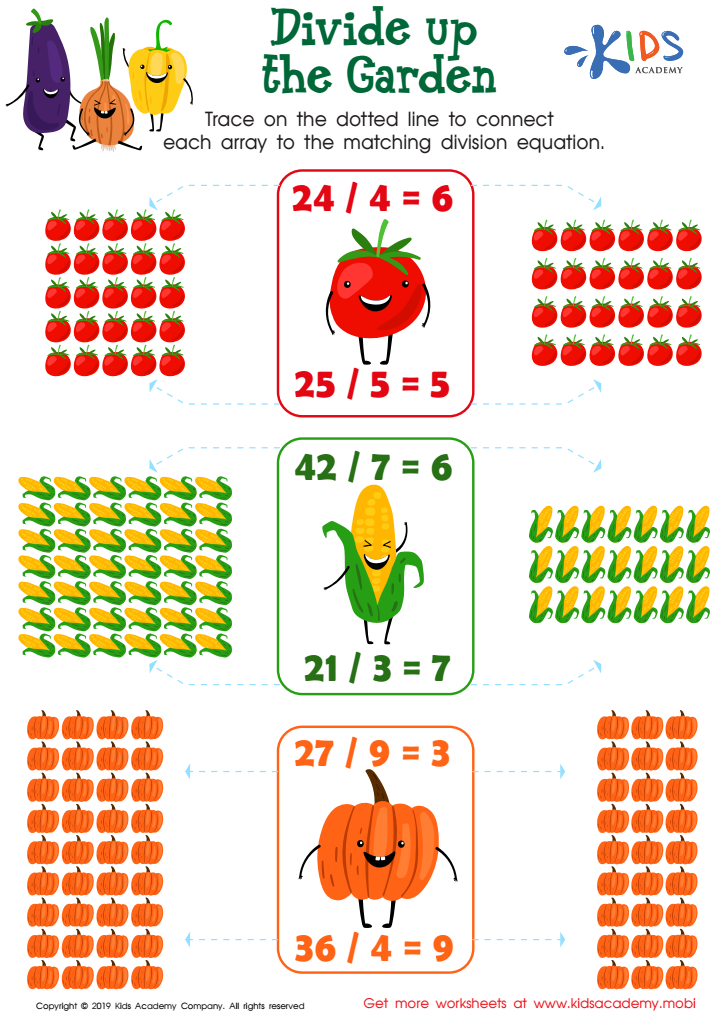
Divide up the Garden Worksheet








Critical thinking is an essential cognitive skill that should be nurtured from a young age, especially in children aged 5-9. At this developmental stage, children's brains are incredibly adaptable and receptive to learning new concepts. Critical thinking equips them with the ability to analyze information, solve problems, and make informed decisions—skills that are foundational for academic success and everyday life.
Introducing critical thinking at an early age enhances children's ability to understand and question the world around them. It encourages curiosity and fosters a love for learning, as kids learn to ask "how" and "why" rather than just memorizing facts. This active engagement with content helps in retaining information longer and understanding it deeply, boosting both their academic performance and intellectual confidence.
Moreover, critical thinking promotes empathy and teamwork by helping children see multiple perspectives and developing their social skills. This is valuable in classroom settings where collaborative projects are common. When children learn to reason and evaluate situations thoughtfully, they're less likely to make hasty decisions and more likely to solve conflicts amicably.
Investing in critical thinking skills for young children provides lifelong benefits. It prepares them not just for the complexities of higher education, but also for a world that values creativity, innovation, and ethical decision-making. Therefore, parents and teachers should prioritize and actively incorporate critical thinking principles and exercises in their early education curriculums.








