Color differentiation Geometry Worksheets for Ages 5-9
3 filtered results
-
From - To
Enhance early math skills with our Color Differentiation Geometry Worksheets designed for ages 5-9. These engaging resources help young learners develop a solid understanding of shapes, patterns, and spatial relationships by using vibrant colors to differentiate geometric figures. Ideal for building both geometry and cognitive skills, these worksheets are perfect for both classroom and home use. Each activity encourages kids to identify, color, and match shapes, making learning fun and interactive. Boost your child's confidence in geometry while enhancing their visual perception and critical thinking. Discover a world of colorful geometry with our expertly crafted worksheets today!
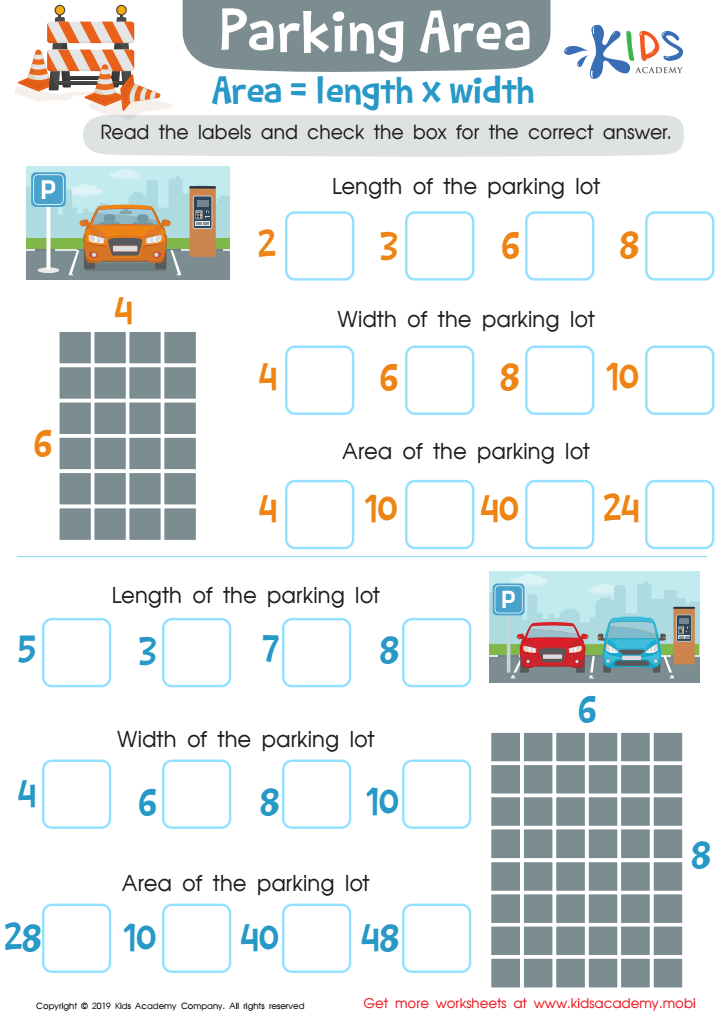
Parking Area Worksheet
 Assign to My Students











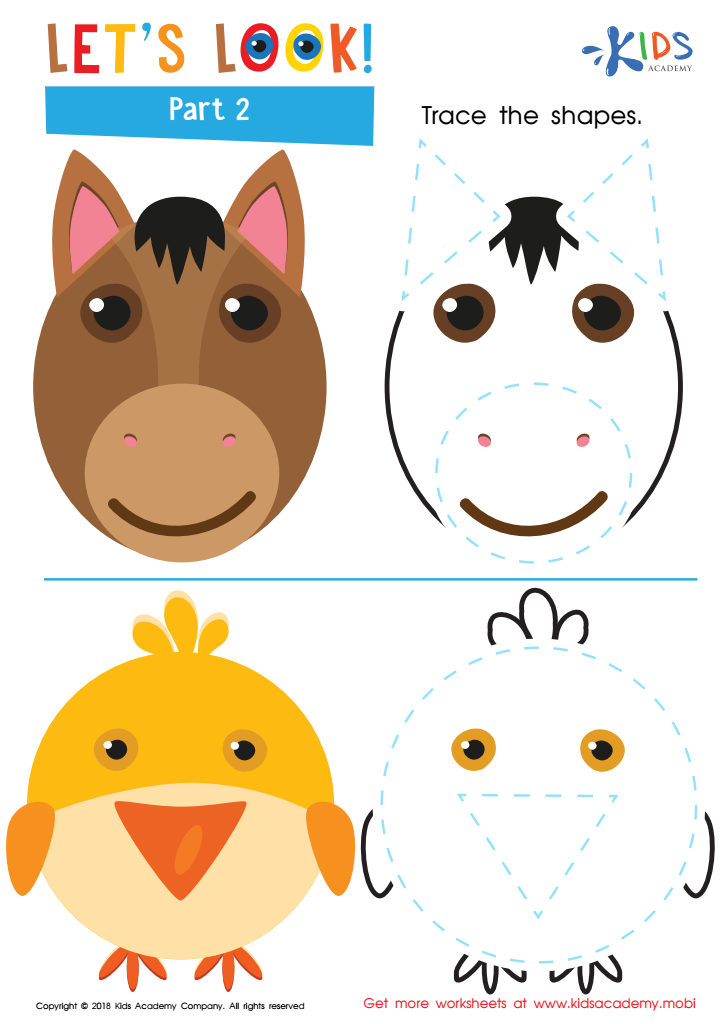
Let's Look! Part 2 Worksheet
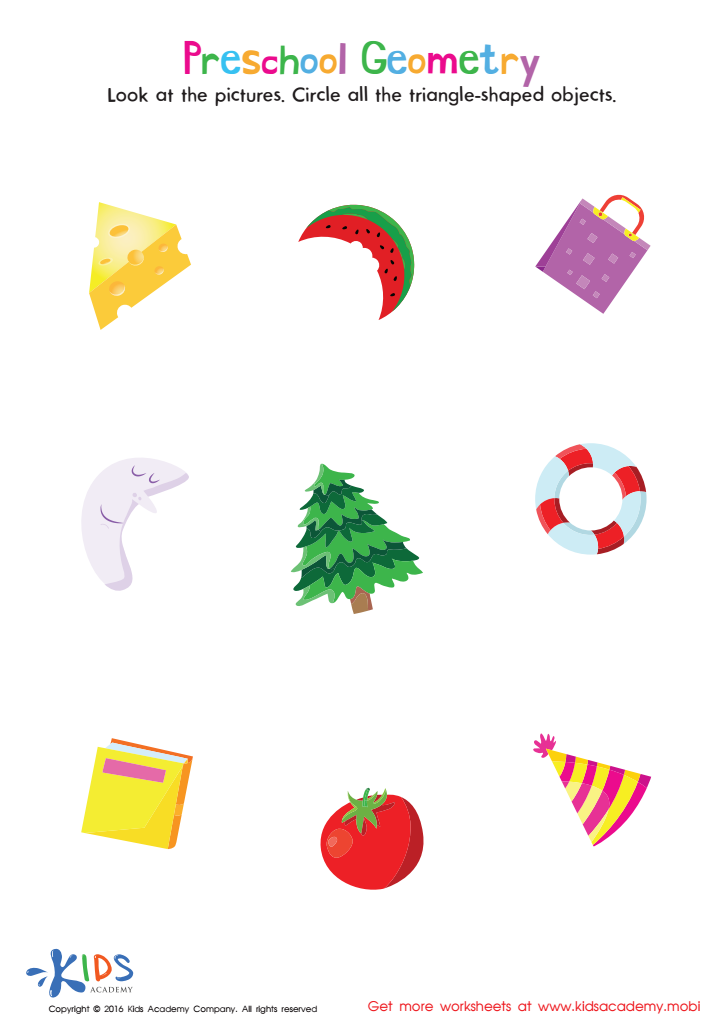








Color differentiation and geometry are foundational skills that significantly impact a child's cognitive and academic development. For children ages 5-9, mastering these elements can enhance numerous essential abilities.
First, color differentiation aids visual discrimination, which is crucial for reading and writing. Recognizing and distinguishing colors help children identify letters and numbers more easily, thereby supporting literacy and numeracy. For example, distinguishing between similar colors helps in identifying subtle differences in text and images, building better comprehension skills.
Geometry, on the other hand, introduces children to spatial reasoning and problem-solving. Learning shapes and their properties lays the groundwork for more advanced mathematical concepts. When children can identify and manipulate shapes, they cultivate analytical thinking, which is critical for subjects such as science, technology, engineering, and mathematics (STEM).
Moreover, combining color differentiation with geometry boosts creativity and fine motor skills. Activities like sorting colored shapes, building with blocks, or drawing geometric patterns engage a child's imagination and enhance hand-eye coordination. These activities also promote critical thinking, as children work through puzzles and games that require them to match shapes and colors according to patterns.
By prioritizing color differentiation and geometry in the early stages, parents and teachers can ensure a well-rounded developmental foundation, preparing children for future academic challenges and everyday tasks that require logical thinking and attention to detail.








