
Color recognition Geometry Worksheets for Ages 5-9
5 filtered results
Difficulty Level
Grade
Age
-
From - To
Subject
Activity
Standards
Unlock the vibrant world of geometry with our Color Recognition Geometry Worksheets for ages 5-9. Designed to blend fun with learning, these worksheets help young learners identify colors and geometric shapes simultaneously. Each activity captivates students' interests, improving their color recognition skills while enhancing geometric understanding. From colorful triangles to bright circles, our engaging, educational printables support visual learning and fine motor skills. Perfect for classroom or home use, these worksheets foster cognitive development and make math enjoyable. Ignite your child’s passion for learning through interactive, color-filled geometric adventures.
Favorites
With answer key
Interactive
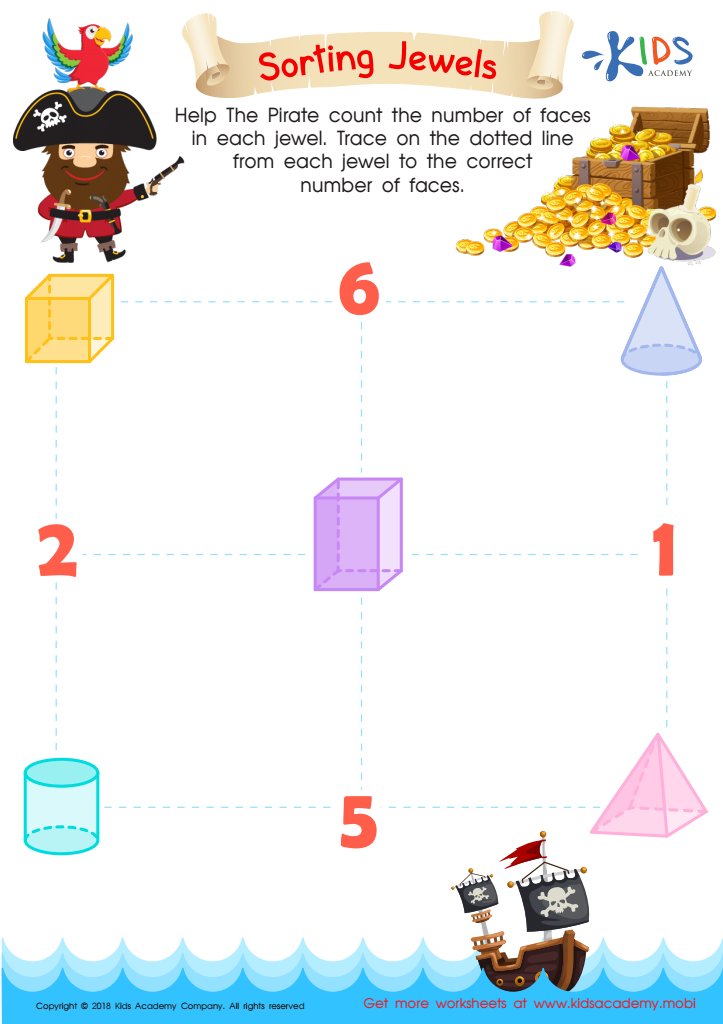
Sorting Jewels Worksheet
Help your kids explore their pirate fantasies with this tracing sheet. Ask them to count the number of faces in each jewel and then trace the dotted line to the correct number. How many faces does a rectangle have? What about a triangle and a cone? This fun worksheet is a great way to teach your kids the basics of identifying the number of faces on shapes.
Sorting Jewels Worksheet
Worksheet











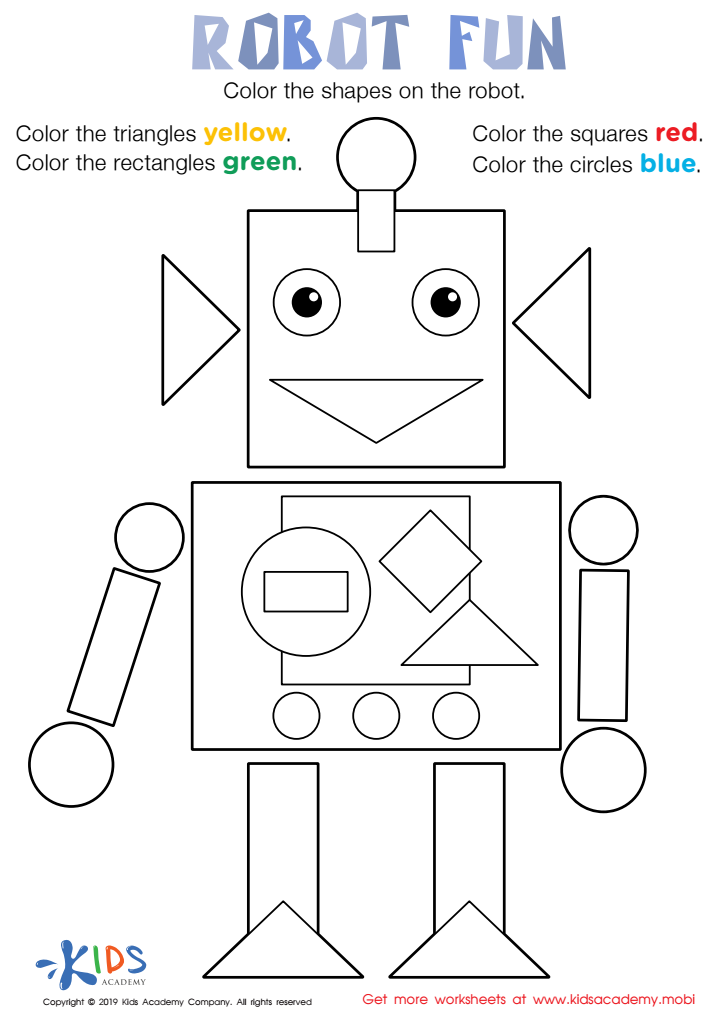
Robot Fun Worksheet
Help your child learn about basic shapes with this fun robot worksheet! Kids practice identifying circles, squares, rectangles and triangles, then color each shape according to directions. Make math practice enjoyable with this coloring page that teaches all four basic shapes - it's an important math skill!
Download (PDF)
 Assign to My Students
Assign to My Students
Robot Fun Worksheet
Worksheet
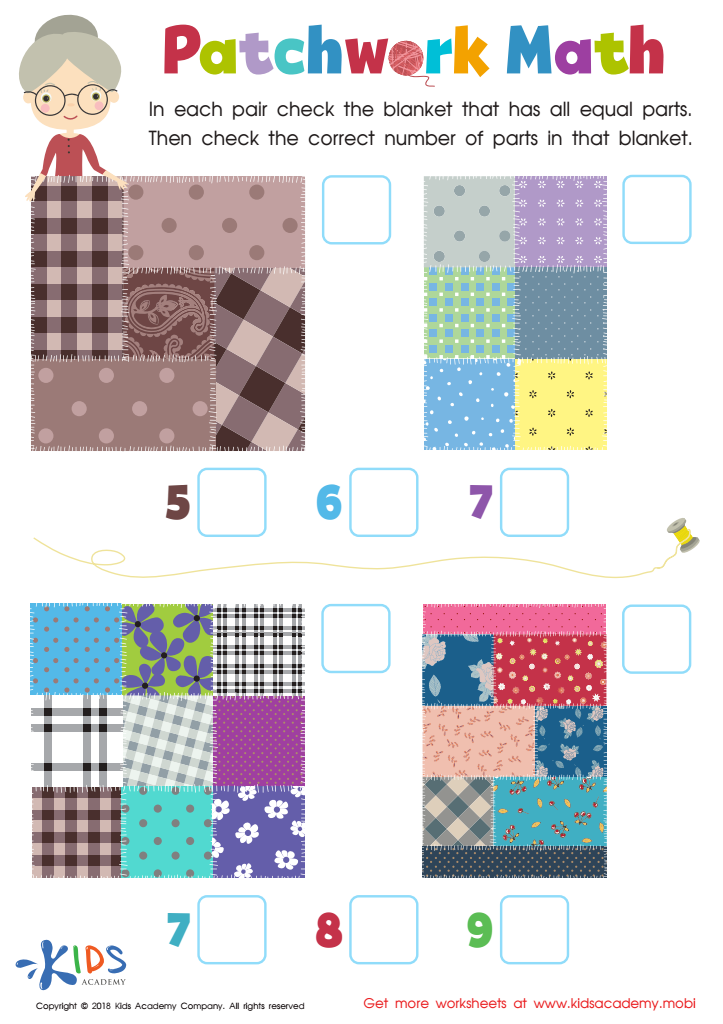
Patchwork Math Worksheet
Test your children's knowledge with this colorful worksheet. They'll need to identify which of the blanket pairs have been cut in equal parts and count the number of parts. Check the provided options to ensure the correct answer.
Patchwork Math Worksheet
Worksheet
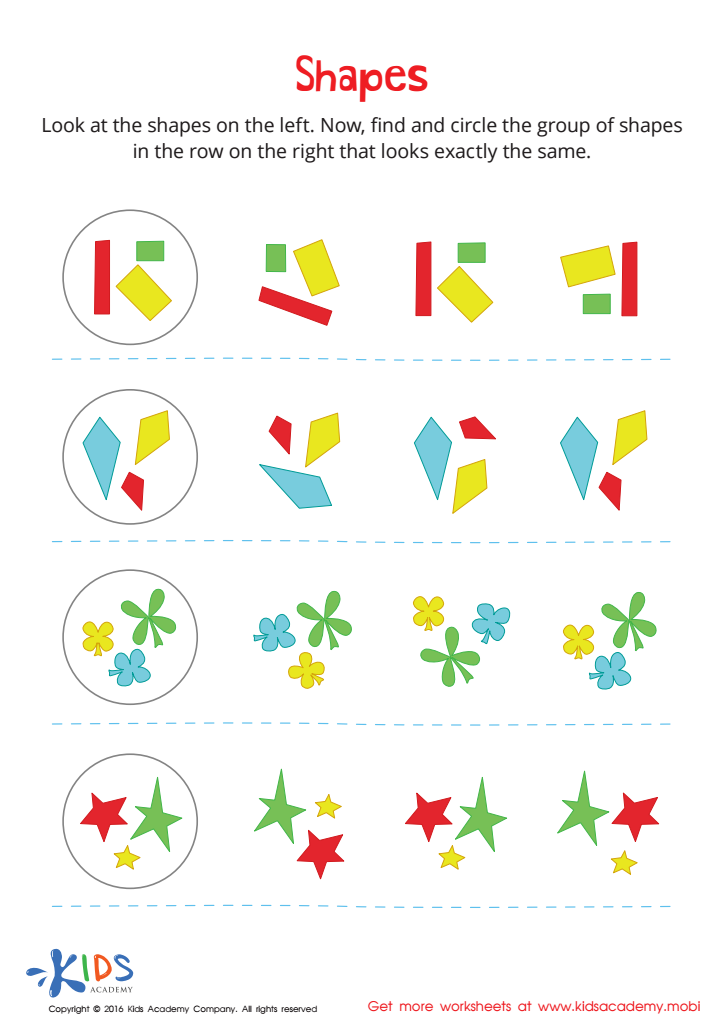
Shapes Worksheet
This fun worksheet will challenge your child to recognize tricky patterns, sort through similar ones, and create strategies to get the right answer. It'll also help them to strengthen problem-solving skills and build confidence. With more challenging tasks, your child will be ready to tackle higher level math and sequencing skills.
Shapes Worksheet
Worksheet
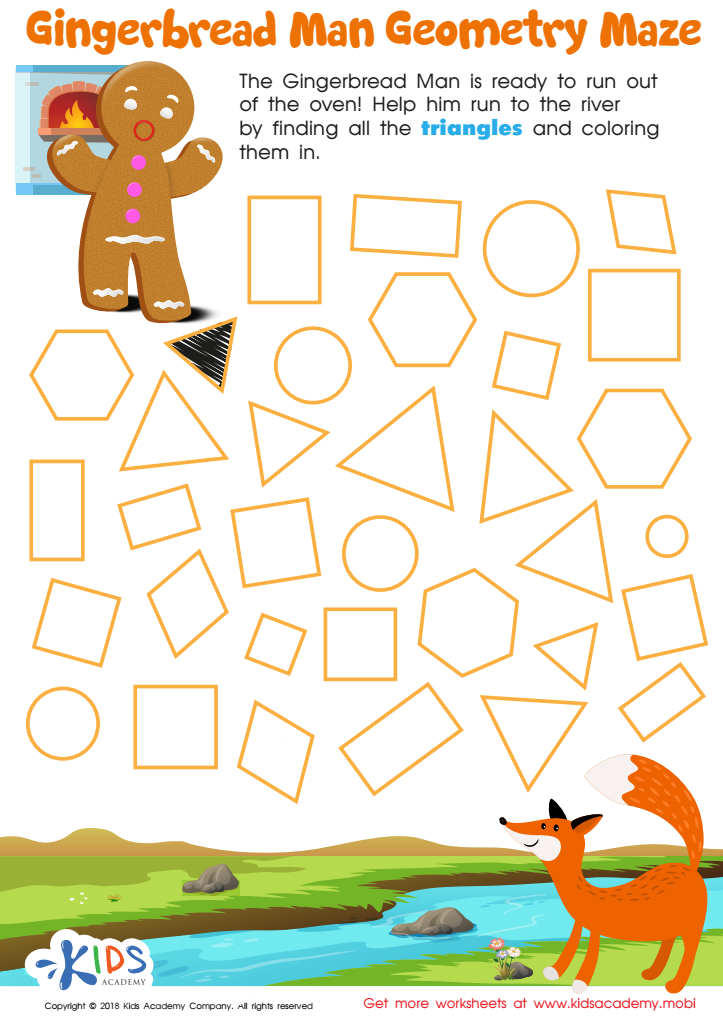
Gingerbread Man Geometry Maze Worksheet
Help a beloved character escape the oven! Kids race through a sea of geometrical shapes, searching for triangles of various sizes. With this free worksheet, they can have fun while learning about similarity of geometrical shapes concepts. Run, run, run as fast as they can!
Gingerbread Man Geometry Maze Worksheet
Worksheet
Join Kids Academy for Free
Who is primarily going to use this learning content?








Color recognition and basic geometric understanding are foundational concepts for children aged 5-9 that serve as building blocks for their broader cognitive, academic, and social development.
Firstly, color recognition enhances visual discrimination skills, which are crucial for interpreting and organizing visual information. This can aid in reading readiness as children learn to differentiate between letters and words. Furthermore, understanding colors helps children articulate their experiences, boosting both their expressive language abilities and emotional intelligence by allowing them to describe their world more vividly and accurately.
Geometry, meanwhile, introduces children to shapes, space, and the relationships between different objects, fostering critical thinking and problem-solving skills. Recognizing and manipulating shapes can improve spatial awareness and fine motor skills, which are essential for tasks such as writing and playing sports.
Math-related skills developed through early geometry help form a solid foundation for more advanced mathematical concepts encountered later. Engaging with geometry also encourages logical reasoning, pattern recognition, and abstract thinking.
Incorporating activities that develop both color recognition and geometric awareness can make learning engaging and interactive, boosting confidence and enthusiasm in young learners. By caring about these areas, parents and teachers play an essential role in promoting cognitive development, academic success, and a lifelong love of learning.








