Logical Reasoning Geometry Worksheets for Ages 5-9
7 filtered results
-
From - To
Enhance your child’s critical thinking and problem-solving skills with our Logical Reasoning Geometry Worksheets designed for ages 5-9. These engaging and educational worksheets help young learners explore shapes, patterns, and spatial relationships while honing their logical reasoning abilities. Through fun activities and creative challenges, children will develop a solid foundation in geometry concepts, preparing them for future math success. Perfect for both classroom use and at-home learning, our worksheets provide endless opportunities to build confidence and support cognitive growth in a playful, interactive manner. Unlock your child’s potential with Kids Academy's expertly crafted resources.
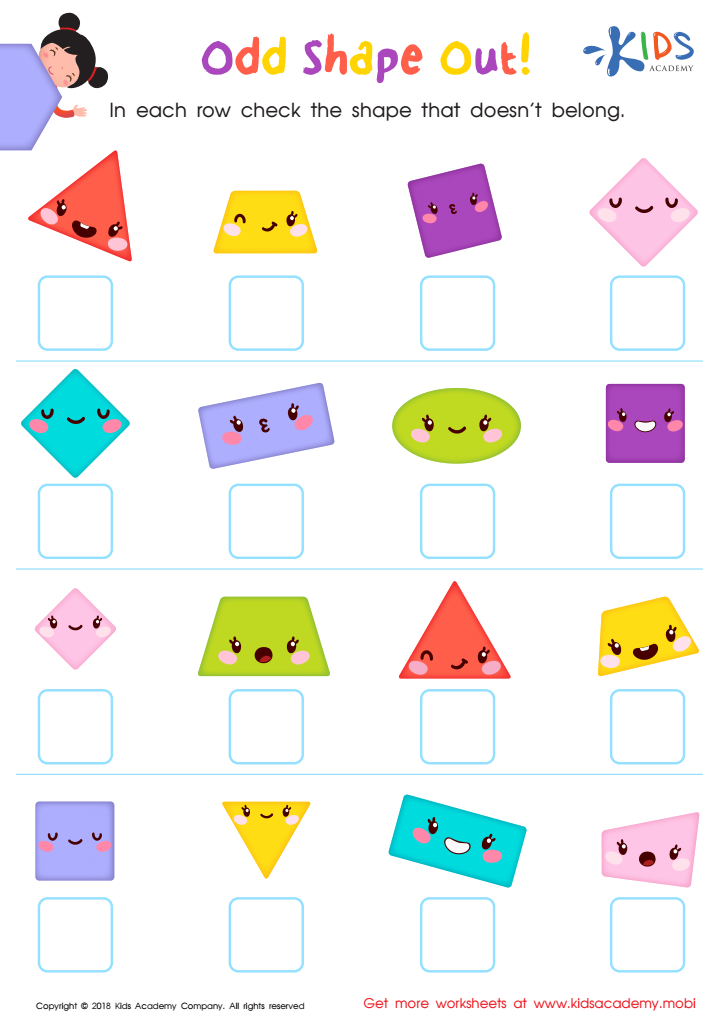
Odd Shape Out Worksheet for Grade 3
 Assign to My Students











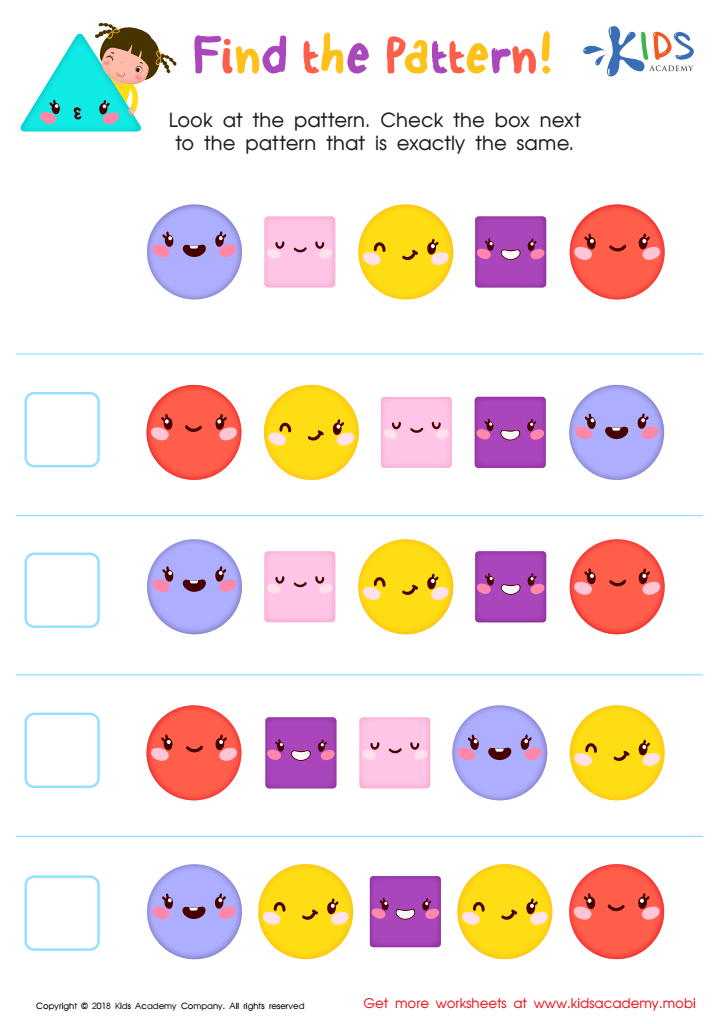
Find the Pattern Worksheet
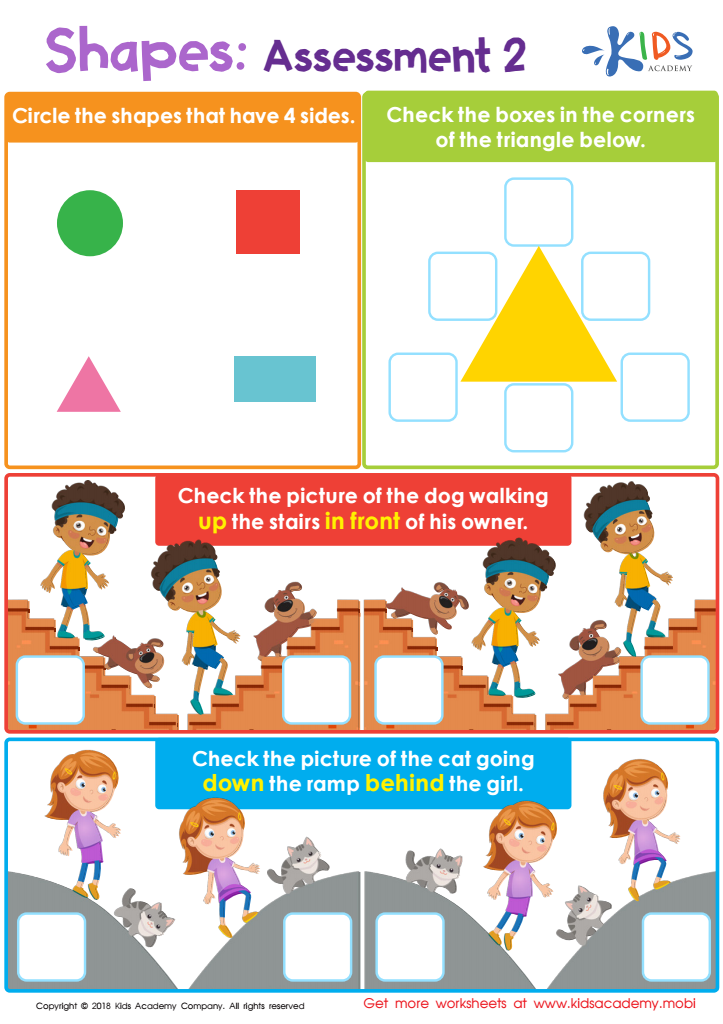
Shapes: Assessment 2 Worksheet
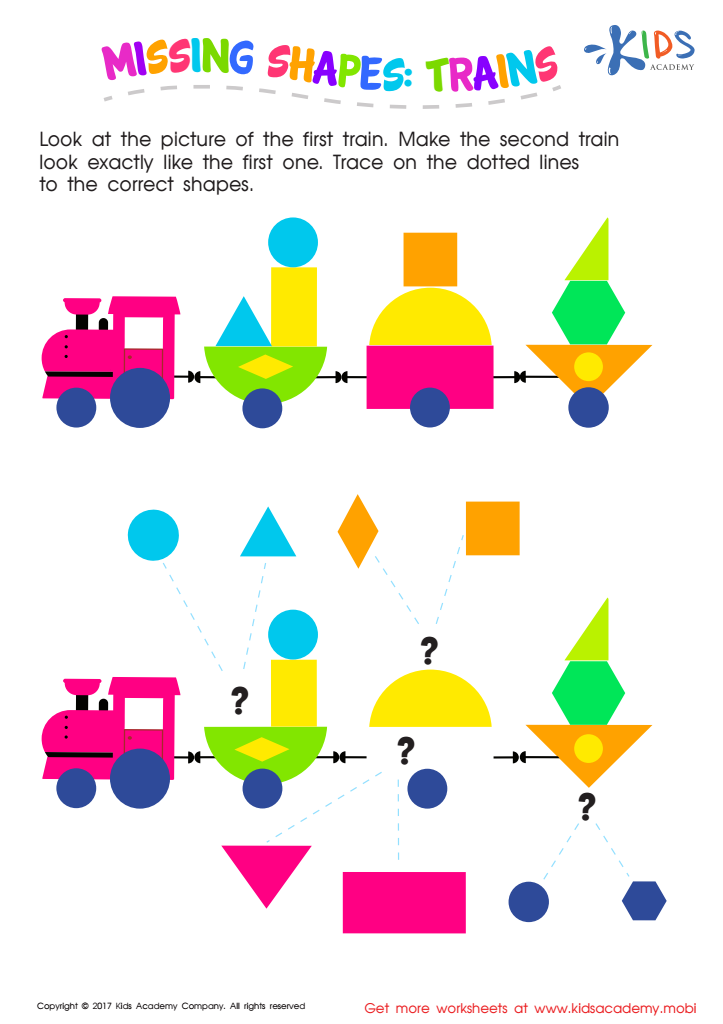
Missing Shapes: Trains Worksheet
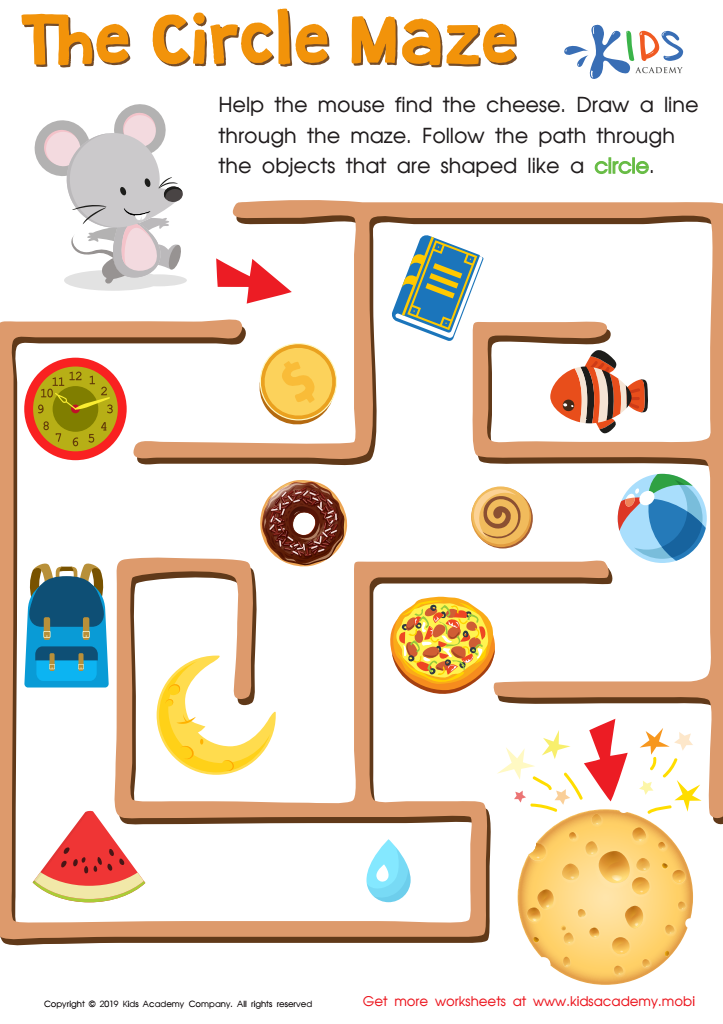
The Circle Maze Worksheet
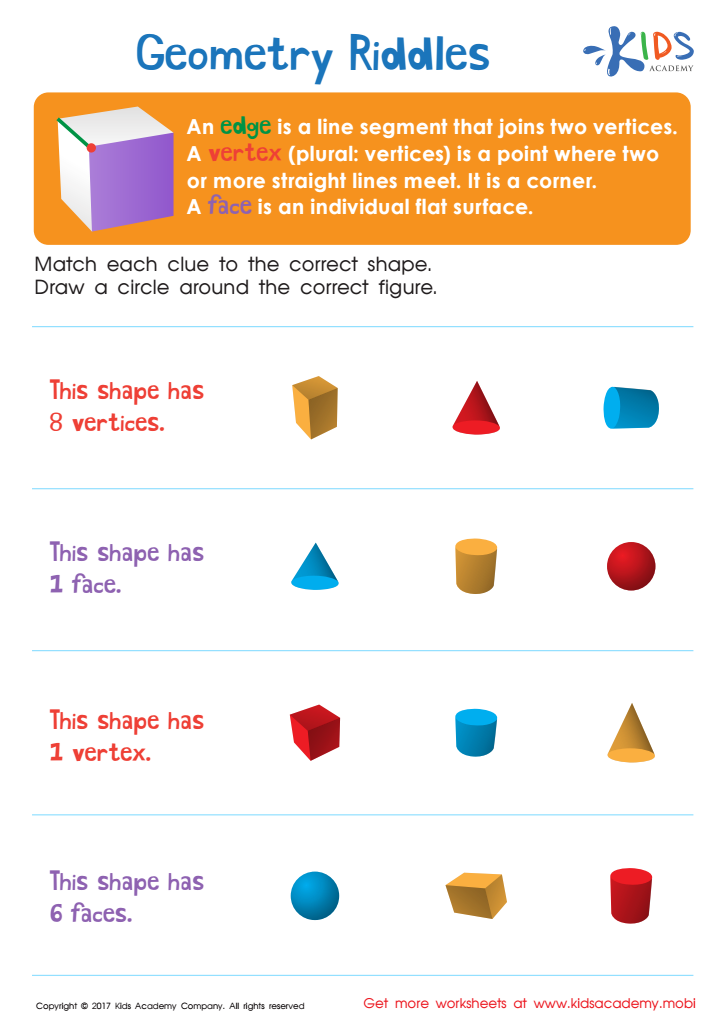
Geometry Riddles Printable








Logical Reasoning Geometry is fundamental for children aged 5-9 because it builds foundational skills necessary for cognitive development and academic success. Fostering these skills at a young age helps children develop critical thinking abilities, boost problem-solving skills, and enhance spatial awareness. Logical reasoning, which involves making sense of shapes, patterns, and spatial relationships, is crucial for understanding more complex mathematical concepts later on. For young learners, engaging with geometry makes abstract math more concrete and visual, making it easier to grasp.
Parents and teachers who introduce children to geometry and logical reasoning activities—like puzzles, block building, and shape sorting—empower them to recognize patterns, draw connections, and understand the world around them in a structured way. These skills translate beyond math; they are vital in everyday situations. For example, understanding shapes and their properties can help a child in practical tasks, from packing a lunchbox to organizing their room.
Moreover, early exposure to logical reasoning and geometry can foster a positive attitude towards learning math. Children who find joy and success in understanding shapes and solving puzzles are more likely to show interest and confidence in future mathematical challenges. Ultimately, developing these skills at an early age prepares children for lifelong learning and problem-solving scenarios across various spheres.








