Pattern recognition Geometry Worksheets for Ages 5-9
3 filtered results
-
From - To
Discover our engaging Pattern Recognition Geometry Worksheets designed specifically for children aged 5-9! These fun and interactive worksheets help young learners develop essential cognitive skills through colorful activities that make learning exciting. Students will explore shapes, patterns, and spatial awareness while enhancing their critical thinking abilities. Each worksheet encourages creativity and analysis, ensuring a strong foundation in geometry concepts. With a variety of questions ranging from identifying patterns to completing sequences, these worksheets are perfect for both classroom and home use. Foster a love for math and geometry in young minds today — let the learning adventure begin!
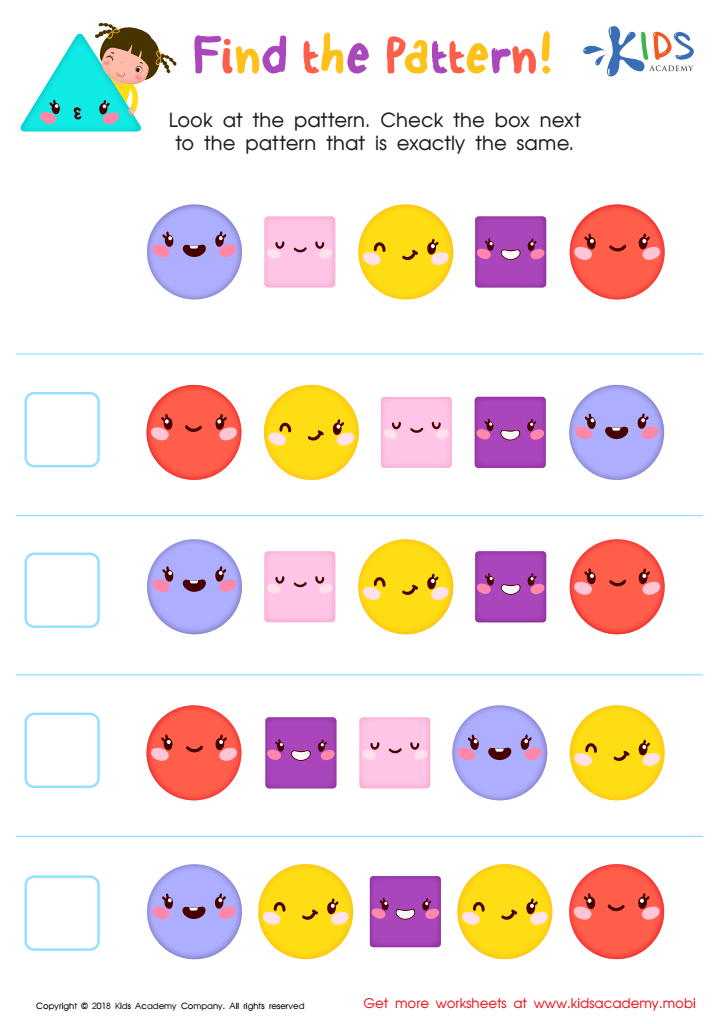
Find the Pattern Worksheet
 Assign to My Students











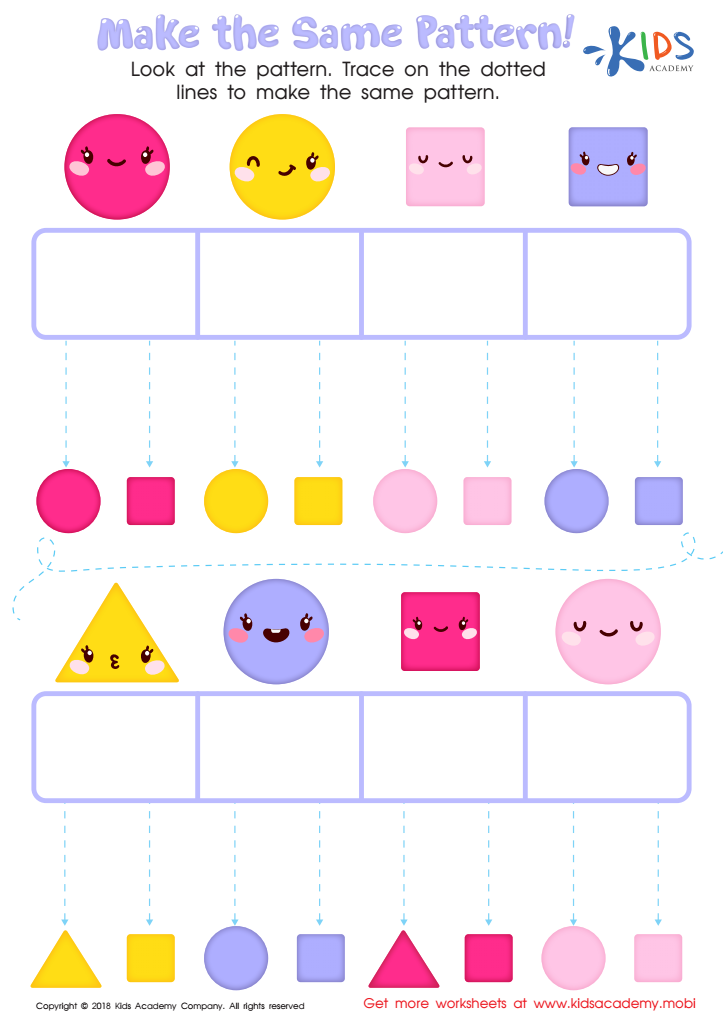
Make the Same Pattern Worksheet
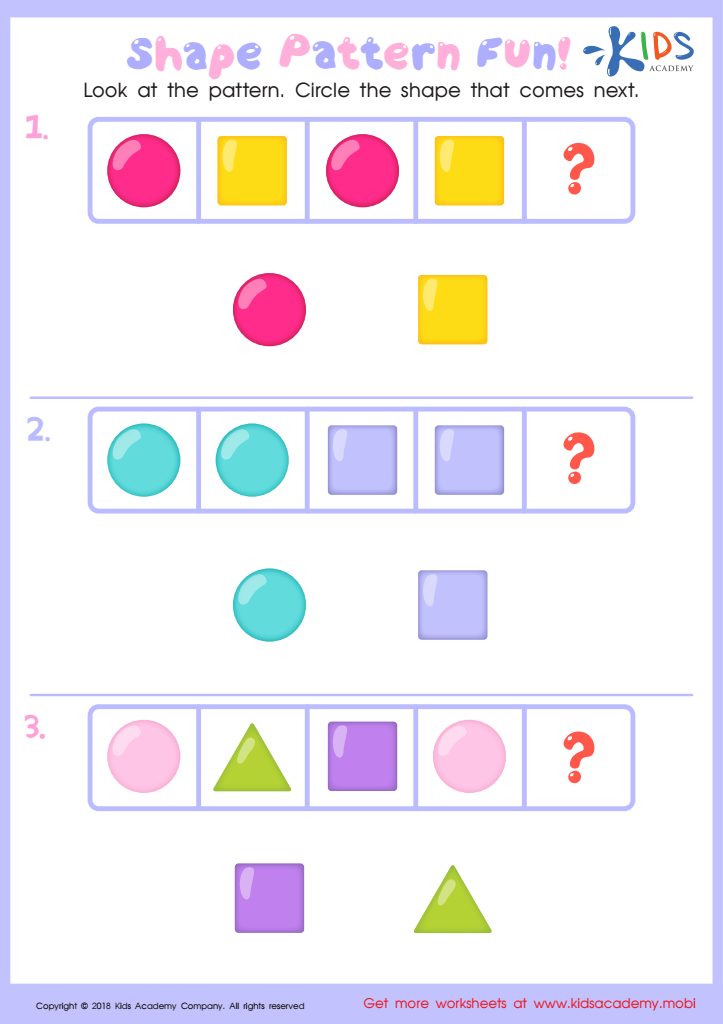
Shape Pattern Fun Worksheet








Pattern recognition in geometry for children aged 5-9 is crucial for their cognitive and mathematical development. At this early age, children begin to understand and interpret the world around them, where patterns serve as building blocks for this comprehension. Recognizing shapes, sizes, and their relationships helps children develop critical thinking skills and enhances their problem-solving abilities.
Engaging in geometric patterns lays the groundwork for more complex mathematical concepts later in life. It introduces kids to essential ideas such as symmetry, tessellation, and spatial awareness. These concepts not only foster mathematical reasoning but also support development in areas such as art and design, science, and technology.
Incorporating pattern recognition into learning allows teachers and parents to create interactive, hands-on experiences. Activities that involve sorting, matching, and building with shapes can stimulate imagination and creativity. These experiences not only make learning enjoyable but also promote collaboration and communication among peers.
Ultimately, understanding geometric patterns equips children with the foundational skills they need for academic success. For parents and teachers, prioritizing this aspect of education ensures children are well-prepared for future learning challenges, creating lifelong learners who are confident in their problem-solving capabilities.








