Spatial reasoning Geometry Worksheets for Ages 5-9
5 filtered results
-
From - To
Explore our engaging Spatial Reasoning Geometry Worksheets designed specifically for children aged 5 to 9! These interactive worksheets foster essential skills in understanding shapes, spatial relationships, and problem-solving. Each activity encourages young learners to visualize, manipulate, and analyze geometric concepts in a fun and approachable manner. Our materials promote critical thinking and support early math education, helping kids develop confidence in their abilities. With colorful illustrations and age-appropriate challenges, these worksheets are perfect for both classroom and home learning. Discover the joy of geometry through engaging exercises that spark creativity and enhance spatial awareness! Start learning today!
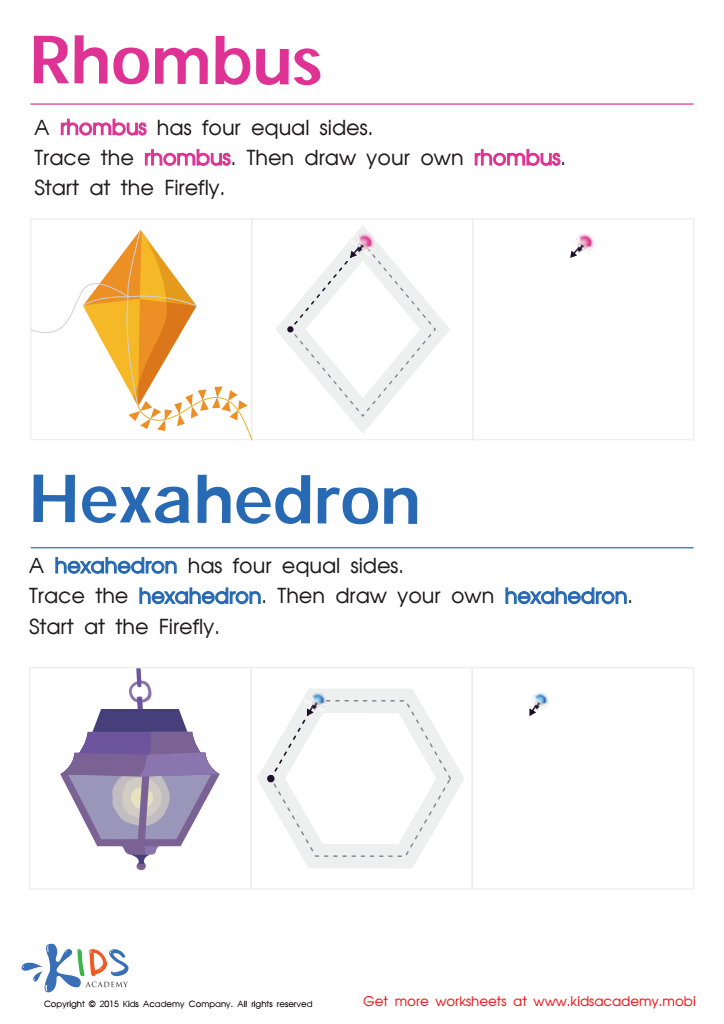
Draw a Rhombus And a Hexahedron Printable
 Assign to My Students











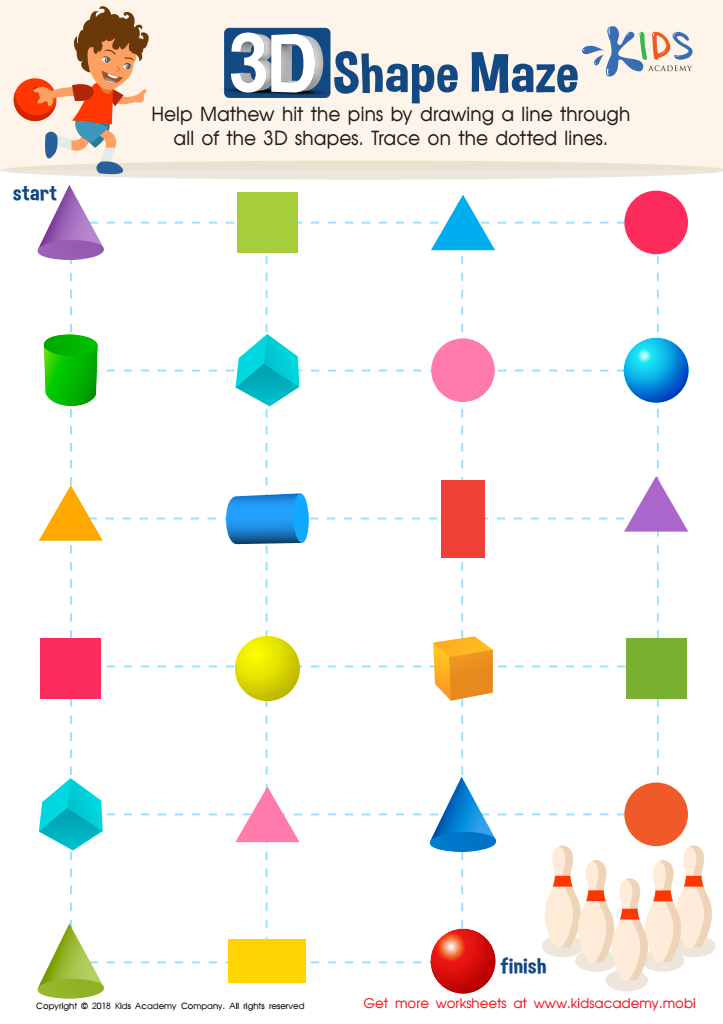
Shapes Maze Geometry Worksheet
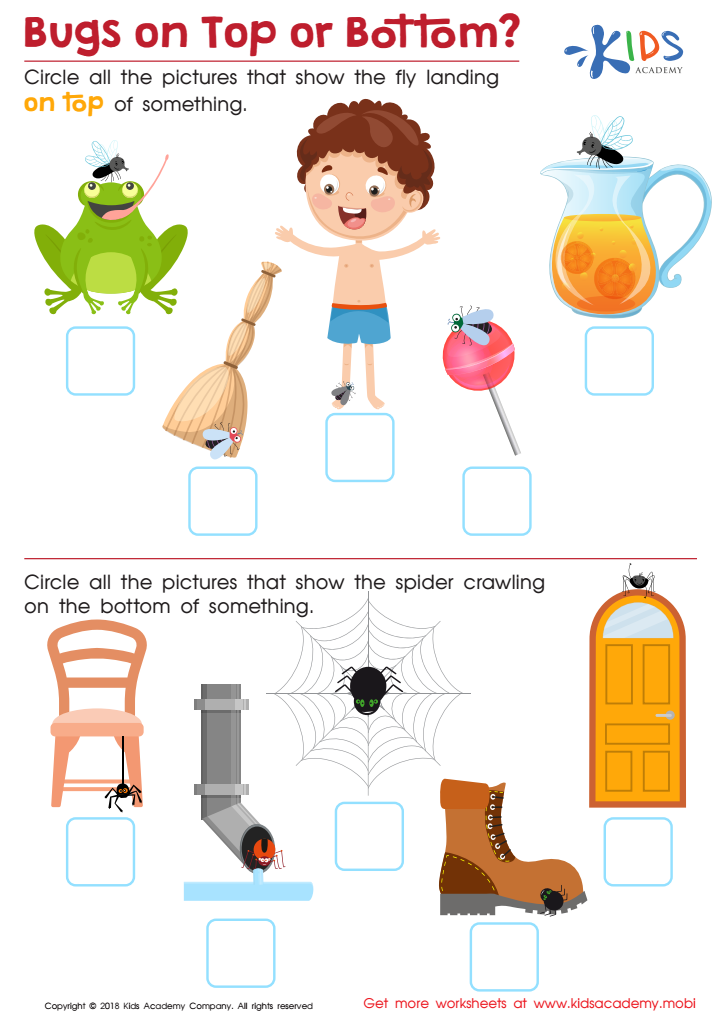
Bugs on Top or Bottom? Worksheet
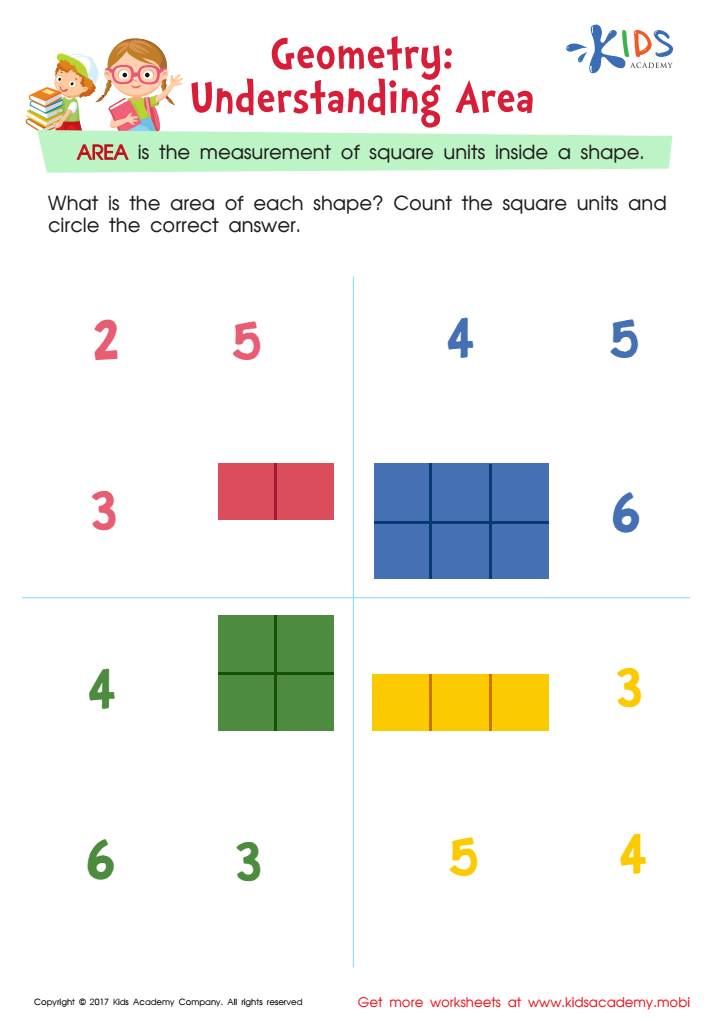
Understanding Area Worksheet
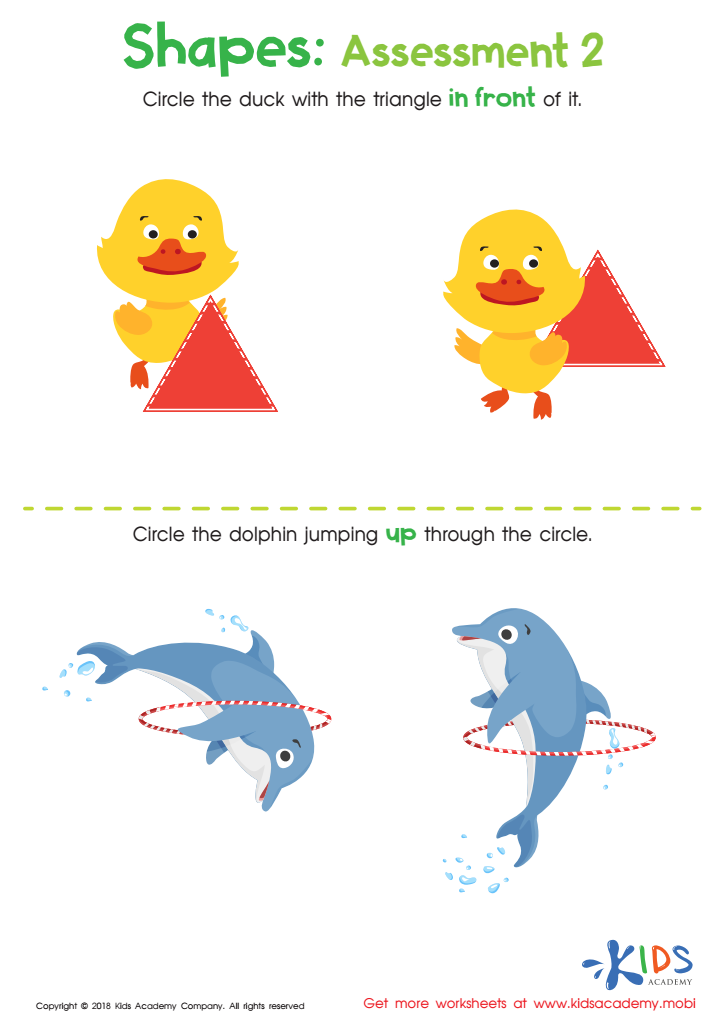
Geometry – Assessment 2 Worksheet








Spatial reasoning is a crucial cognitive skill that directly impacts a child's understanding of geometry and overall mathematical development. For children ages 5 to 9, fostering spatial reasoning enhances their ability to visualize and manipulate objects, which is fundamental to problem-solving in mathematics and daily life. Parents and teachers should care about this skill because it forms the foundation for future learning in STEM (Science, Technology, Engineering, and Mathematics) fields.
In addition, developing spatial skills can improve a child’s proficiency in reading maps, understanding diagrams, and even engaging in artistic activities, all while encouraging critical thinking. Activities that build spatial reasoning, such as puzzles, building blocks, and drawing, promote creativity alongside cognitive development. These experiences prepare children for more abstract concepts in geometry, such as symmetry, patterns, and transformations.
Moreover, fostering spatial reasoning helps address educational disparities and empowers children, building their confidence in their mathematical abilities. When parents and teachers actively engage with children in spatial reasoning activities, they reinforce essential skills that benefit not only academic achievement but also everyday problem-solving outcomes. Engaging with spatial concepts nurtures well-rounded thinkers who can navigate both academic challenges and real-world situations effectively.








