Visual Learning Geometry Worksheets for Ages 5-9
5 filtered results
-
From - To
Dive into our Visual Learning Geometry Worksheets tailored for children ages 5-9! Specially designed to make geometry fun and engaging, our worksheets use vibrant visuals to help young learners easily grasp basic shapes, patterns, and spatial awareness. These printable activities encourage critical thinking and problem-solving through hands-on exploration. Perfect for both classroom learning and home practice, our worksheets are developed by educators to align with educational standards and progress with your child's learning pace. Give your little mathematicians a strong foundation in geometry while keeping them entertained and inspired on their learning journey.
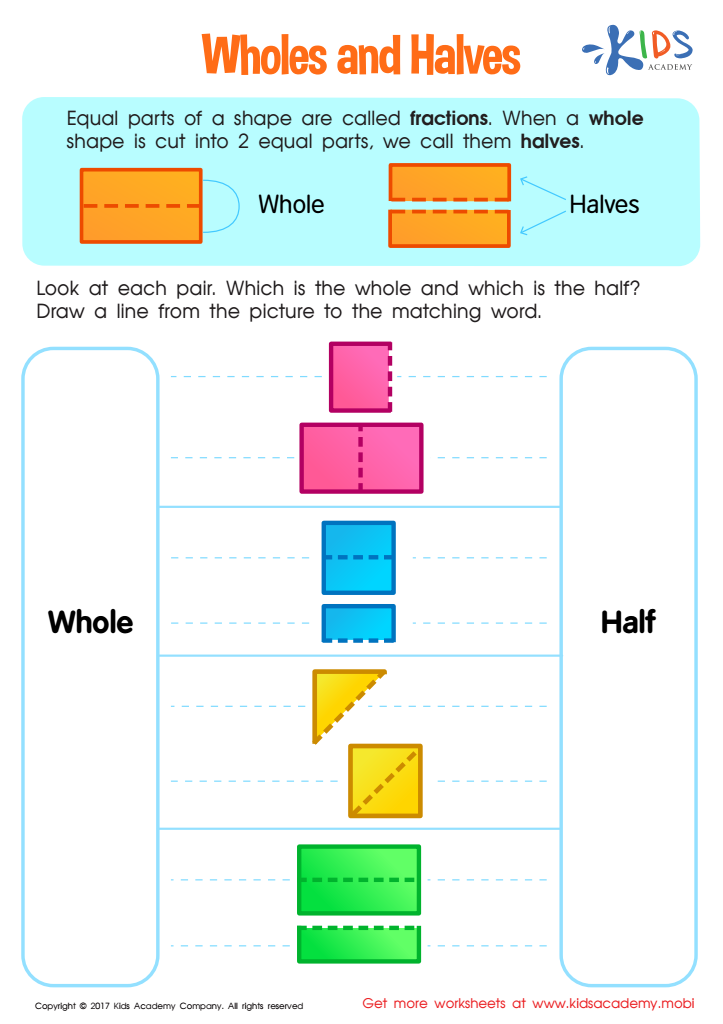
Wholes and Halves Worksheet
 Assign to My Students











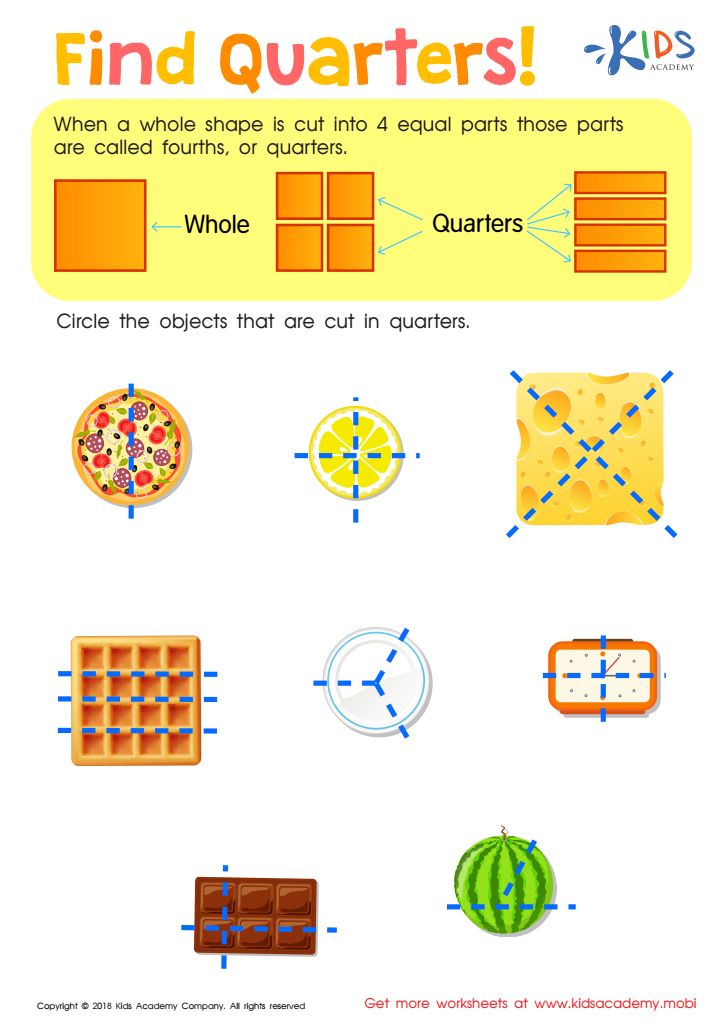
Find Quarters Worksheet
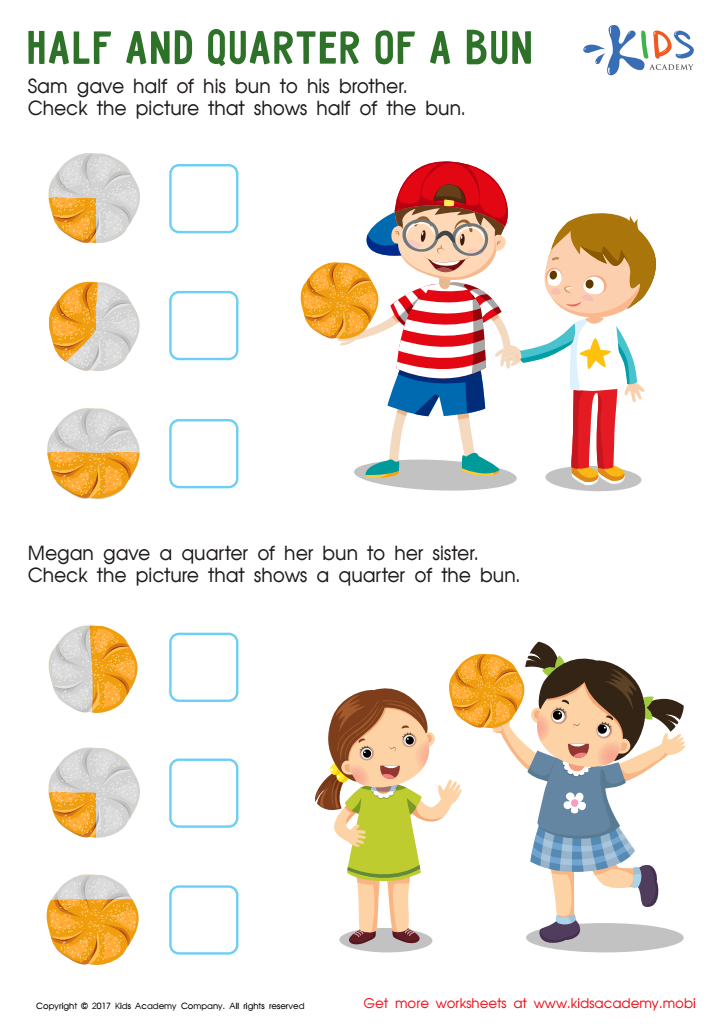
Half and Quarter of a Bun Worksheet
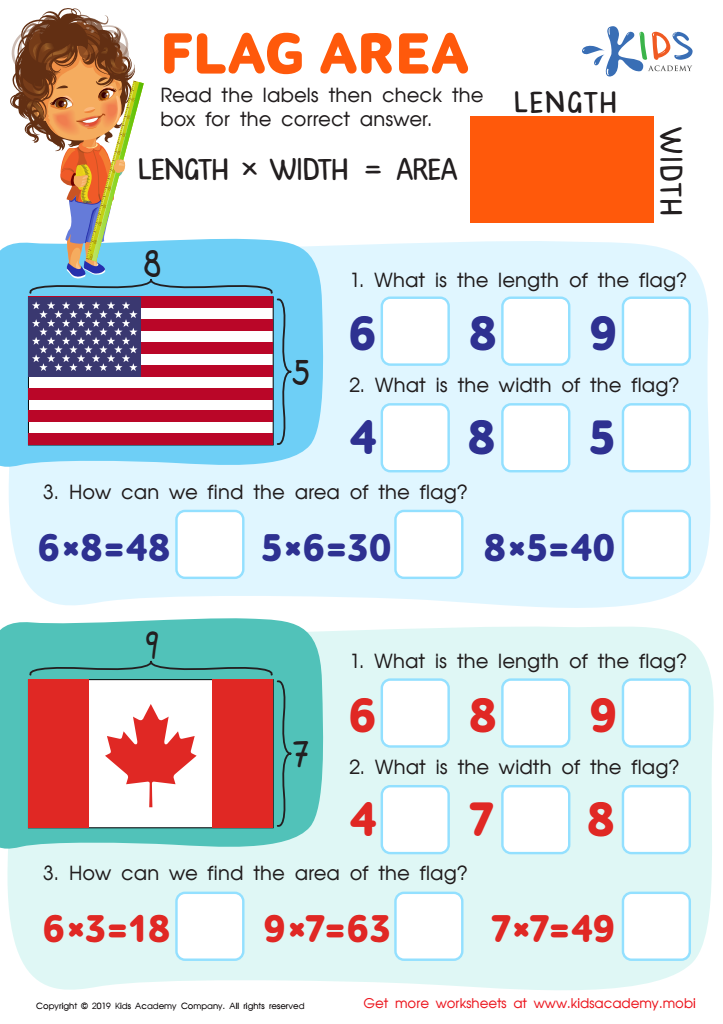
Flag Area Worksheet
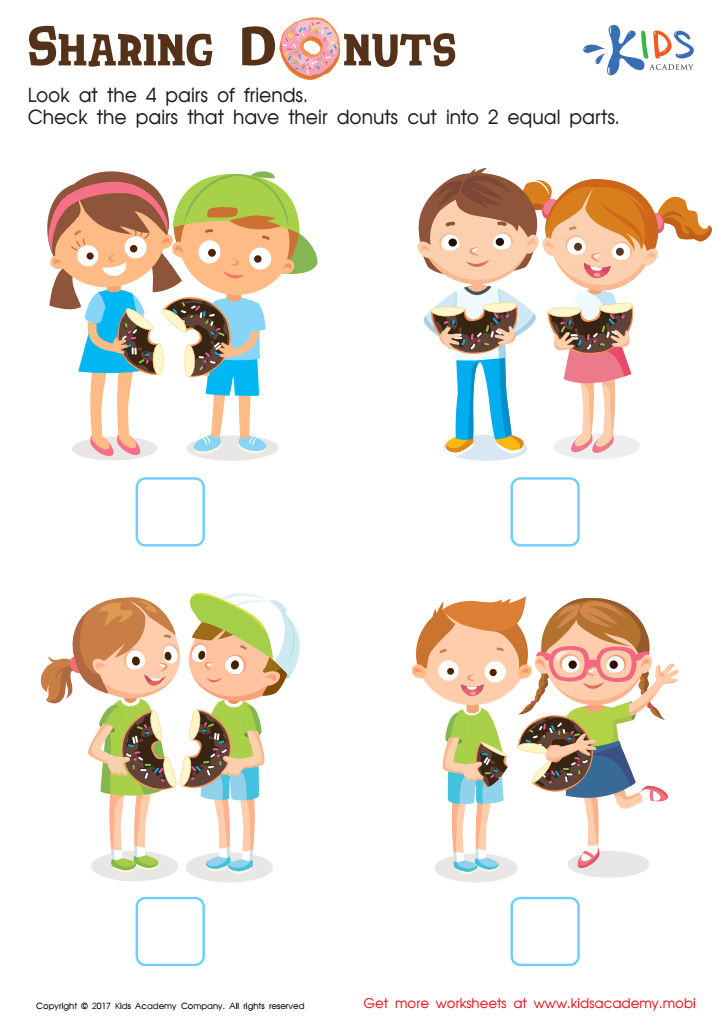
Sharing Donuts Worksheet








Parents and teachers should care about visual learning geometry for children ages 5-9 because it forms the foundation for critical thinking and problem-solving skills central to many aspects of education and daily life. At this vital developmental stage, kids are particularly receptive to visual and spatial information, making geometry a perfect tool to engage their growing minds.
Visual learning in geometry helps children understand shapes, patterns, and spatial relationships, all of which are essential for navigating and interpreting the physical world. These skills go beyond mathematics; they foster the ability to analyze, compare, and categorize information in a structured way. For example, recognizing patterns and understanding spatial orientation are critical to early literacy and numeracy skills.
Moreover, early exposure to geometric concepts can inspire a love for mathematics by making learning feel more interactive and tangible. Activities like drawing shapes, constructing objects with blocks, or identifying shapes around the house make learning both fun and meaningful.
Incorporating visual geometry helps identify and support different learning styles, catering to children who might struggle with abstract concepts or traditional numerical approaches. Emphasizing visual learning geometry at a young age sets children on a path of academic success, creative problem-solving, and heightened spatial awareness, all of which are valuable lifelong skills.








