
Vocabulary Building Geometry Worksheets for Ages 5-9
3 filtered results
Difficulty Level
Grade
Age
-
From - To
Subject
Activity
Standards
Discover our engaging Vocabulary Building Geometry Worksheets, specially designed for Ages 5-9! These interactive worksheets enhance young learners' understanding of geometric concepts while expanding their language skills. Children will explore essential terms through fun activities that include identifying shapes, describing dimensions, and solving age-appropriate challenges. Each sheet promotes critical thinking and creativity, ensuring a holistic approach to mathematics and vocabulary development. Perfect for classroom or home use, these worksheets cater to various learning styles and foster a love for geometry. Download today and watch your child's confidence and vocabulary skills flourish as they discover the world of shapes!
Favorites
With answer key
Interactive
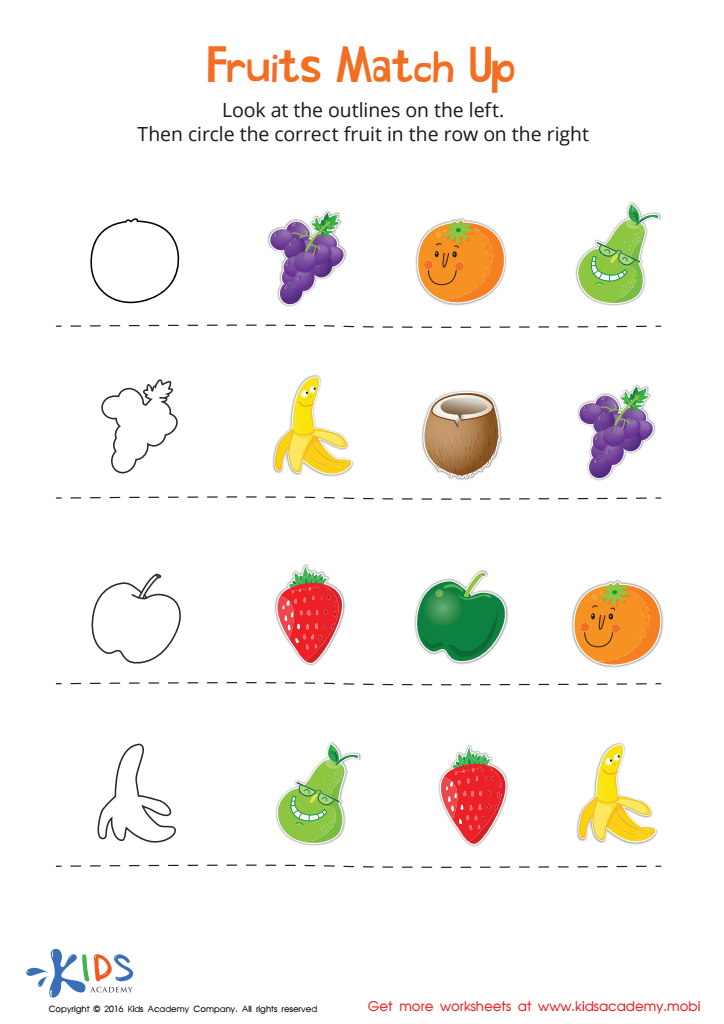
Fruits Match Up Worksheet
Motivate your child to count and sharpen their spatial reasoning skills with this vivid fruit worksheet.
 Assign to My Students
Fruits Match Up Worksheet
Worksheet











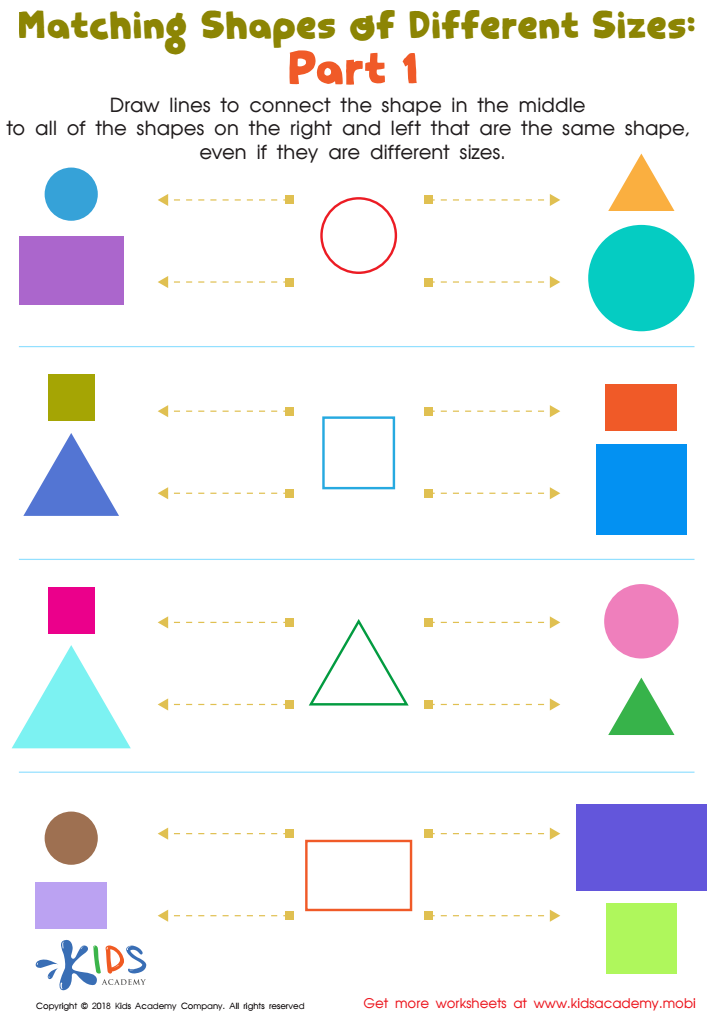
Geometry: part 1 Worksheet
Test your student's shape knowledge with this beginner-level geometry worksheet. This fun, challenging printable PDF will sharpen spacial recognition skills as they match shapes of different sizes. Get started now!
Geometry: part 1 Worksheet
Worksheet
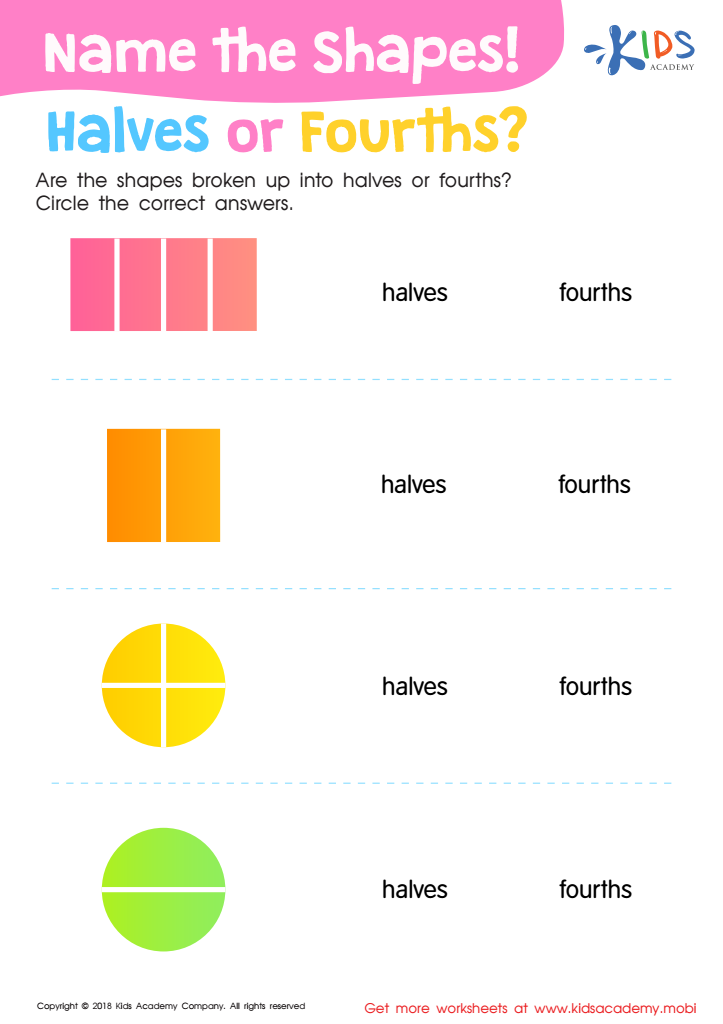
Name the Shapes Halves or Fourths? Worksheet
Before starting, ask your child if they understand what halves and fourths are. If they can answer correctly, move on with the worksheet. Help them circle the right option beside each shape, showing if it's split into halves or fourths.
Name the Shapes Halves or Fourths? Worksheet
Worksheet
Join Kids Academy for Free
Who is primarily going to use this learning content?








Vocabulary building in geometry for children aged 5-9 is essential for several reasons. At this developmental stage, children are curious and eager to learn, making it the perfect time to introduce geometric concepts and vocabulary. Understanding geometric terms lays the foundation for spatial reasoning, critical thinking, and problem-solving skills.
Teaching vocabulary associated with shapes, angles, and spatial relationships equips children with the language they need to articulate their observations and questions. This ability to communicate their thoughts can boost both confidence and academic performance. Moreover, when children learn geometric vocabulary, they begin to connect it with real-world objects, enhancing their understanding of the environment around them and fostering a sense of curiosity.
Furthermore, early exposure to geometry builds a strong mathematical foundation. As children progress in their education, they encounter more complex math concepts; a solid comprehension of basic geometry and associated vocabulary assists them in navigating these challenges. Parents and teachers who promote vocabulary building in geometry are not just teaching specific terms; they are nurturing a holistic approach to learning that integrates critical thinking, creativity, and effective communication, which are vital skills for lifelong success.








