Understanding greater/less than Numbers Worksheets for Ages 5-9
3 filtered results
-
From - To
Enhance your child's math skills with our "Understanding Greater/Less Than Numbers" worksheets designed for ages 5-9. These engaging, printable worksheets focus on helping young learners grasp fundamental mathematical concepts by comparing numbers. Kids will learn to identify which numbers are greater or lesser through fun exercises that build their critical thinking and number sense. Ideal for both classroom and home use, our worksheets ensure foundational math success through interactive, hands-on learning. Visit our page to give your child the confidence and skills they need to excel in their mathematical journey!
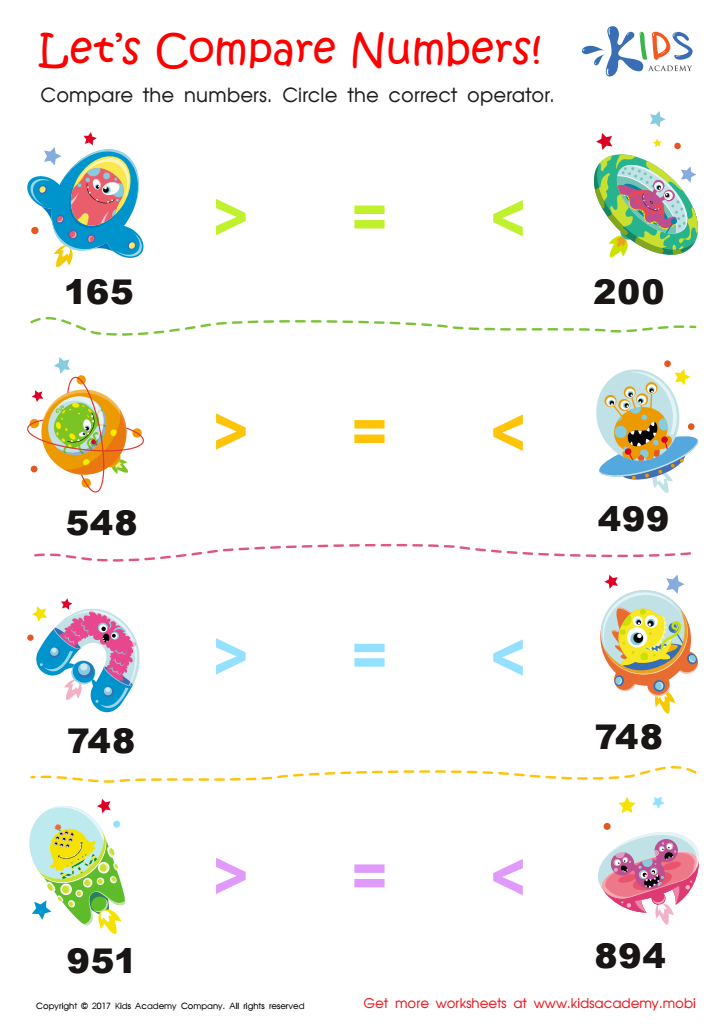
Comparing Numbers Worksheet for 2nd Grade
 Assign to My Students
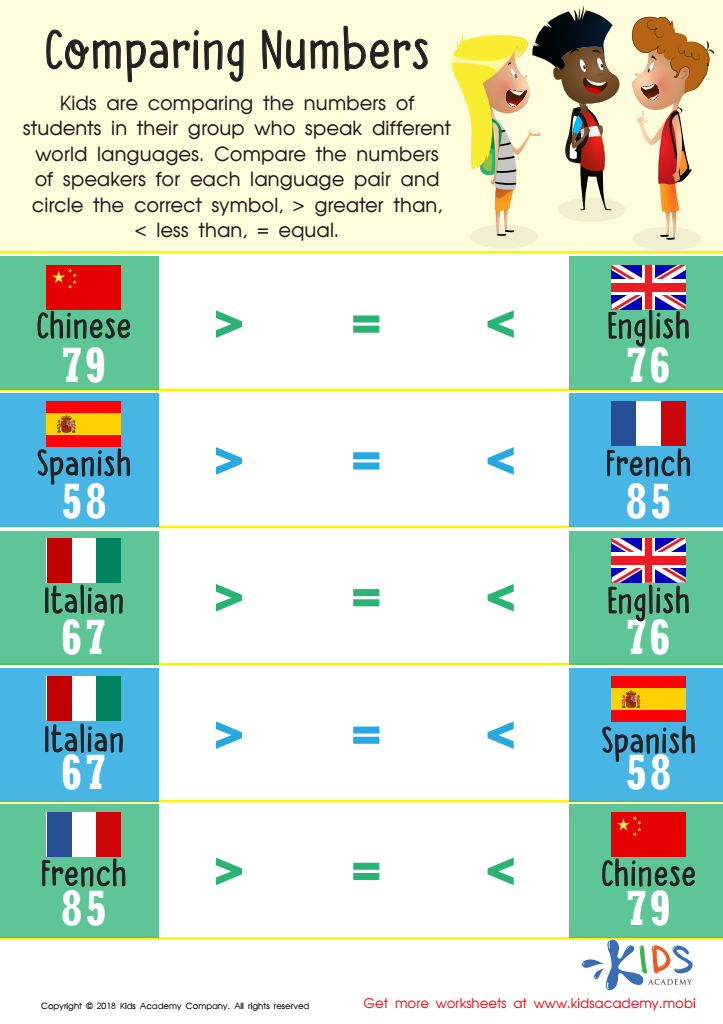
Comparing Numbers Worksheet for 1st Grade
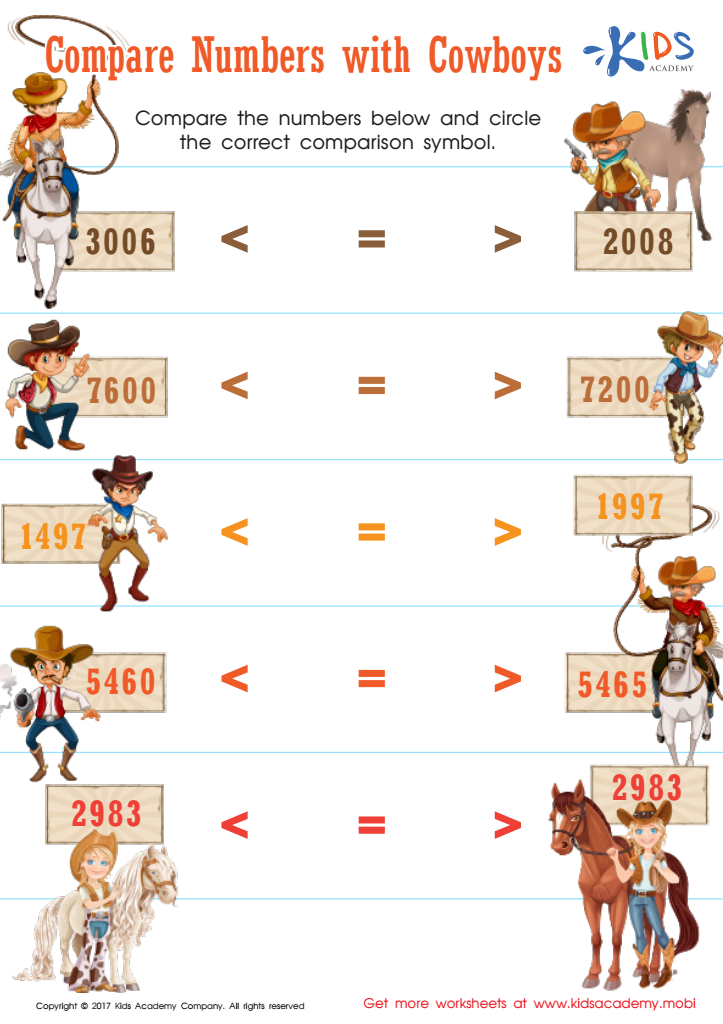
Compare Numbers Worksheet for 3rd Grade




%20(1).jpg)
.jpg)
Understanding the concepts of "greater than" and "less than" is essential for children aged 5-9 as it lays a foundational pillar for their mathematical development. At this crucial age, children are naturally curious and are developing cognitive skills rapidly. Grasping these comparative concepts helps them not only in arithmetic but also in critical thinking and problem-solving.
Firstly, knowing how to compare numbers enhances their number sense, enabling kids to understand the relationships between numbers. This translates directly into real-world skills like understanding time, money, and measurements—fundamentals that they will use throughout their lives.
Secondly, these concepts are building blocks for more complex mathematical operations. Addition, subtraction, and eventually multiplication and division all rely on a solid understanding of how numbers relate to one another. For example, knowing that 8 is greater than 5 makes it easier to understand why adding 3 to 5 equals 8.
For teachers, integrating these concepts into lessons increases engagement, letting kids apply their learning in interactive and practical ways. For parents, reinforcing these ideas through everyday activities and games helps children see the relevance of math in daily life.
Ultimately, ensuring that children understand "greater than" and "less than" prepares them for academic success and equips them with critical life skills.








