Comparing object weights Math Worksheets for Ages 5-9
3 filtered results
-
From - To
Discover our engaging "Comparing Object Weights" math worksheets designed for children ages 5-9! These worksheets provide a fun and interactive way for young learners to explore the concept of weight and comparison through practical activities. Children will develop essential math skills by identifying heavier and lighter objects, comparing weights visually, and practicing their counting skills. Each worksheet is crafted to align with early math standards while promoting critical thinking. Perfect for classroom use or at-home practice, our worksheets make learning about weight enjoyable and accessible. Equip your child with foundational math skills today with our exciting printables!
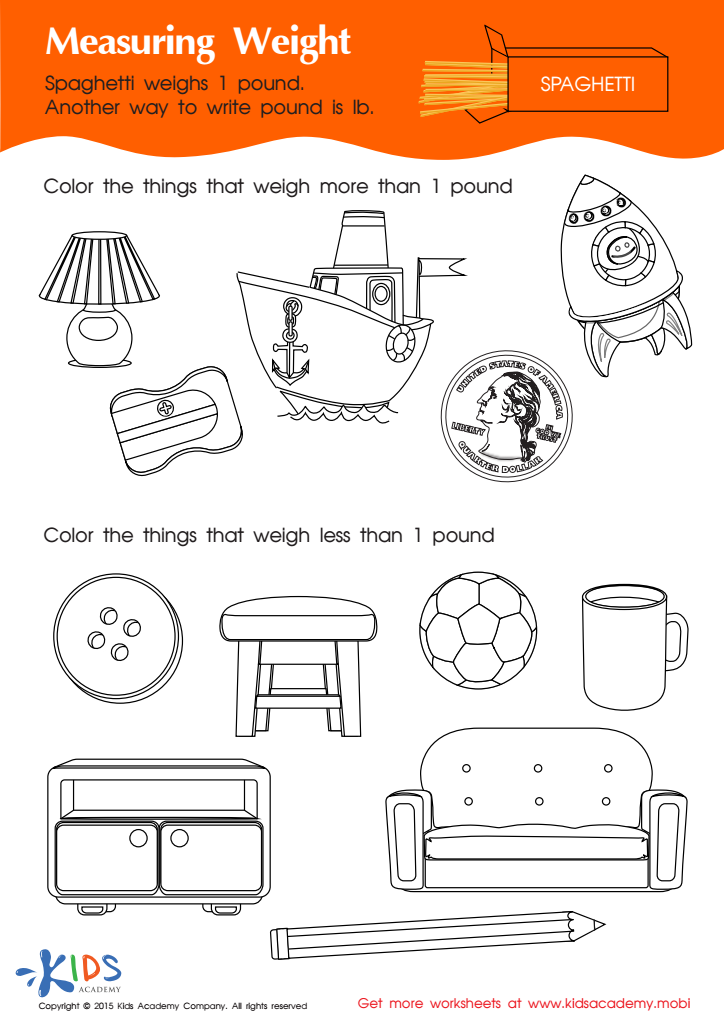
 Assign to My Students
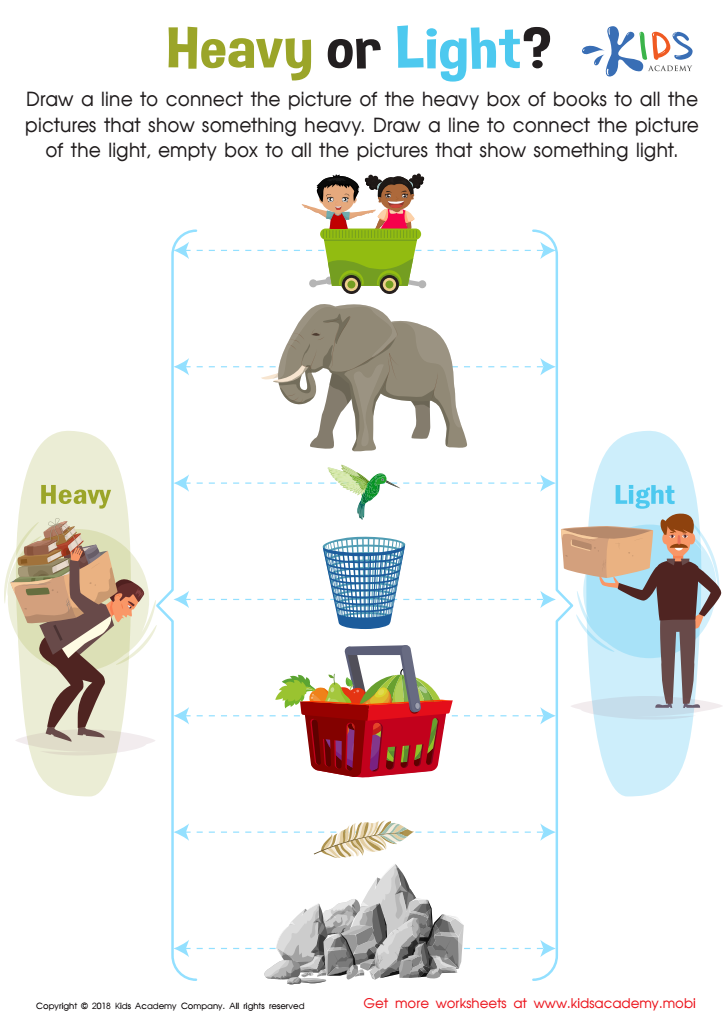
Heavy or Light? Worksheet
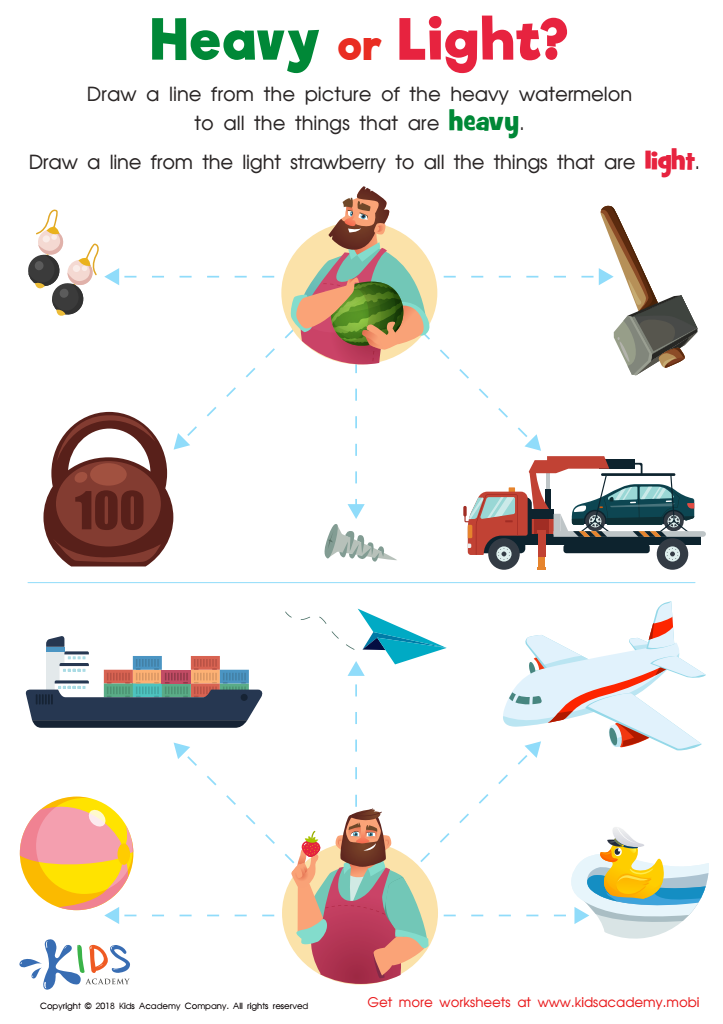
Heavy or Light? Worksheet




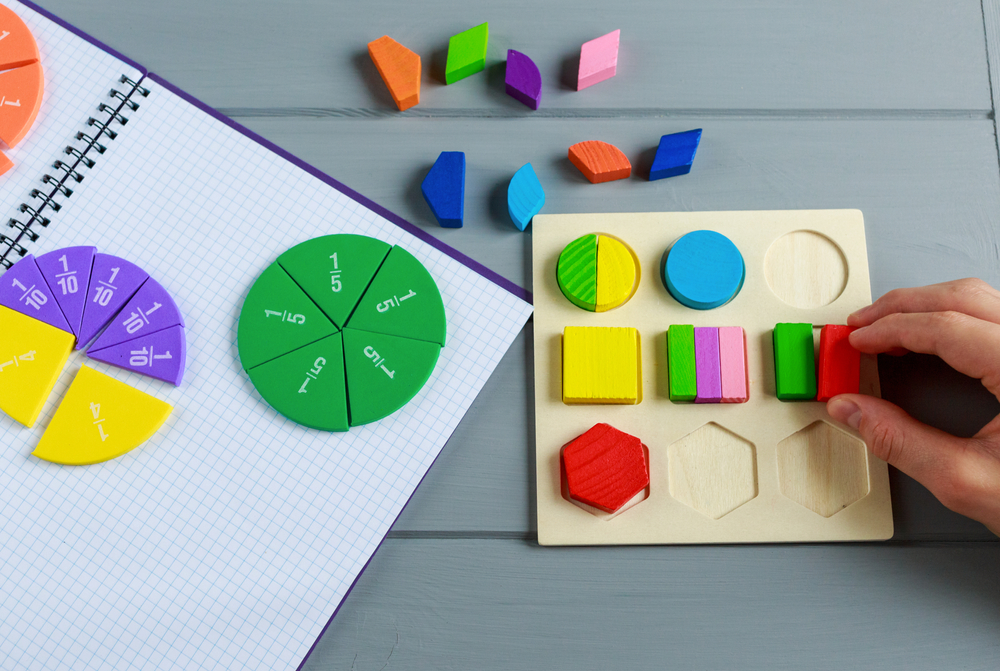


Comparing object weights is a foundational math concept that plays a crucial role in young children’s cognitive development. For ages 5-9, children are naturally curious and eager to understand their surroundings. This activity not only introduces basic mathematical concepts such as "more than," "less than," and "equal to," but it also fosters critical thinking and problem-solving skills. By engaging in weigh comparisons, children learn to make observations, ask questions, and draw conclusions based on their findings.
Additionally, comparing weights introduces concepts of measurement and helps children develop a sense of spatial awareness, which is essential for future math proficiency. These activities can be conducted with everyday objects, making learning relatable and continuous at home and in the classroom.
Furthermore, incorporating hands-on experiences increases engagement, making learning fun and meaningful. When teachers and parents prioritize such activities, they also demonstrate the value of math in everyday life, promoting a positive attitude toward the subject. By nurturing an understanding of comparative weight concepts, they lay the foundation for more complex mathematical reasoning in the future, ultimately contributing to a child’s overall academic success and confidence in their abilities.








