Filters

359 filtered results

Clear all filters
Favorites
With answer key
Interactive

359 filtered results

Difficulty Level

Grade


Check out this FREE Trial Lesson on Math for age 5-9!

A

Favorites
With answer key
Interactive
  • 5-9
  • Counting practice
  • Math
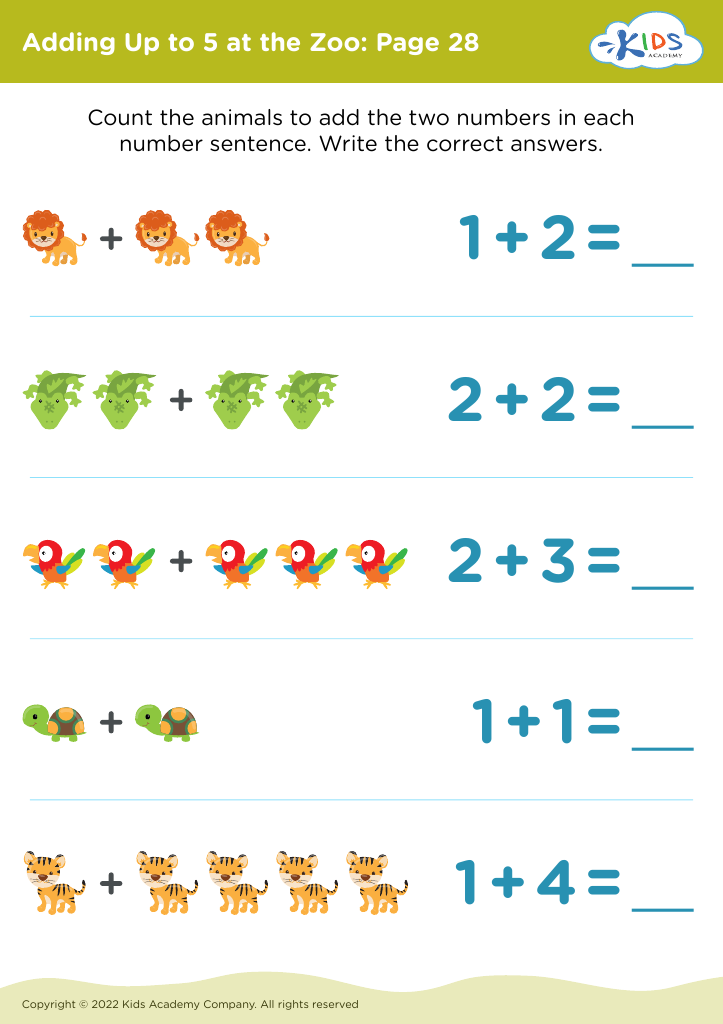
Adding Up to 5 at the Zoo: Page 28
Worksheet
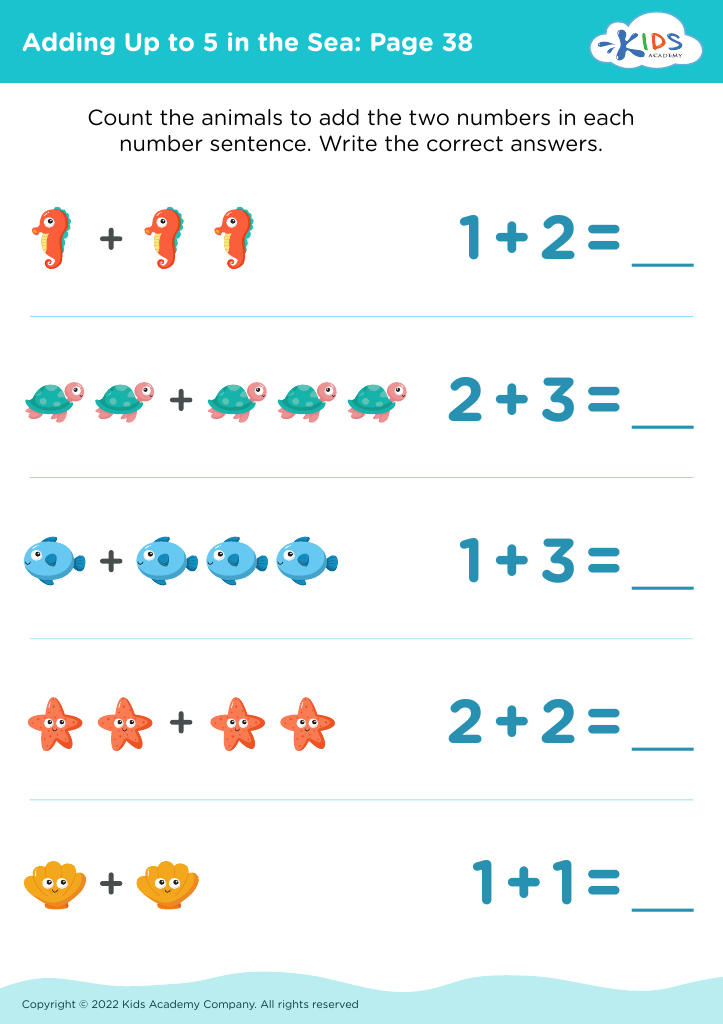
Adding Up to 5 in the Sea: Page 38
Worksheet
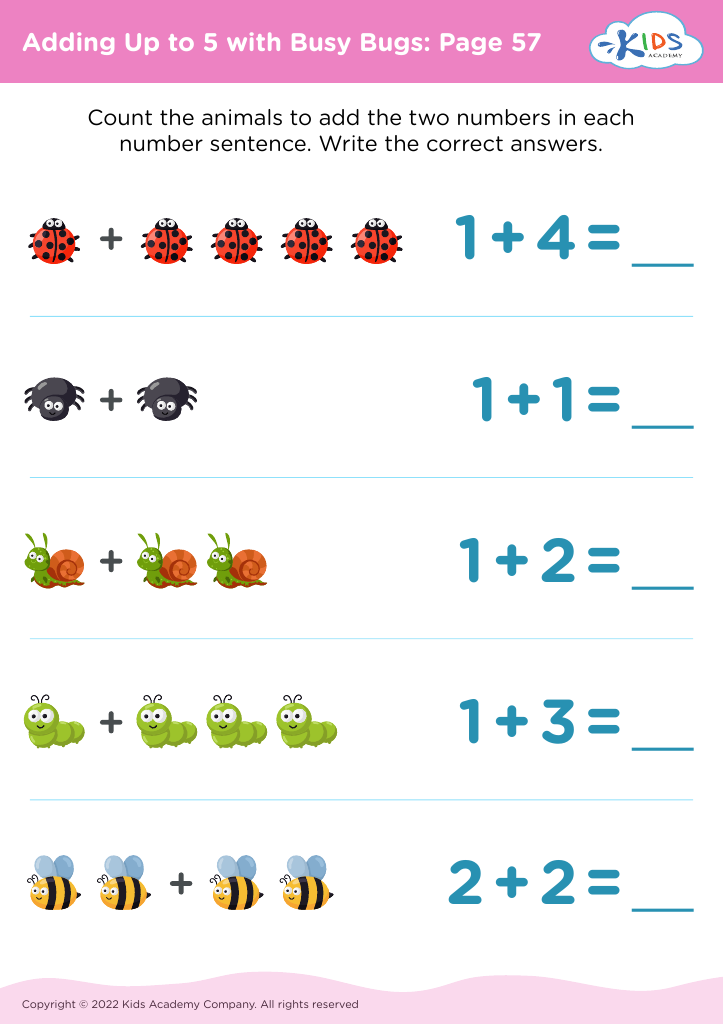
Adding Up to 5 with Busy Bugs: Page 57
Worksheet
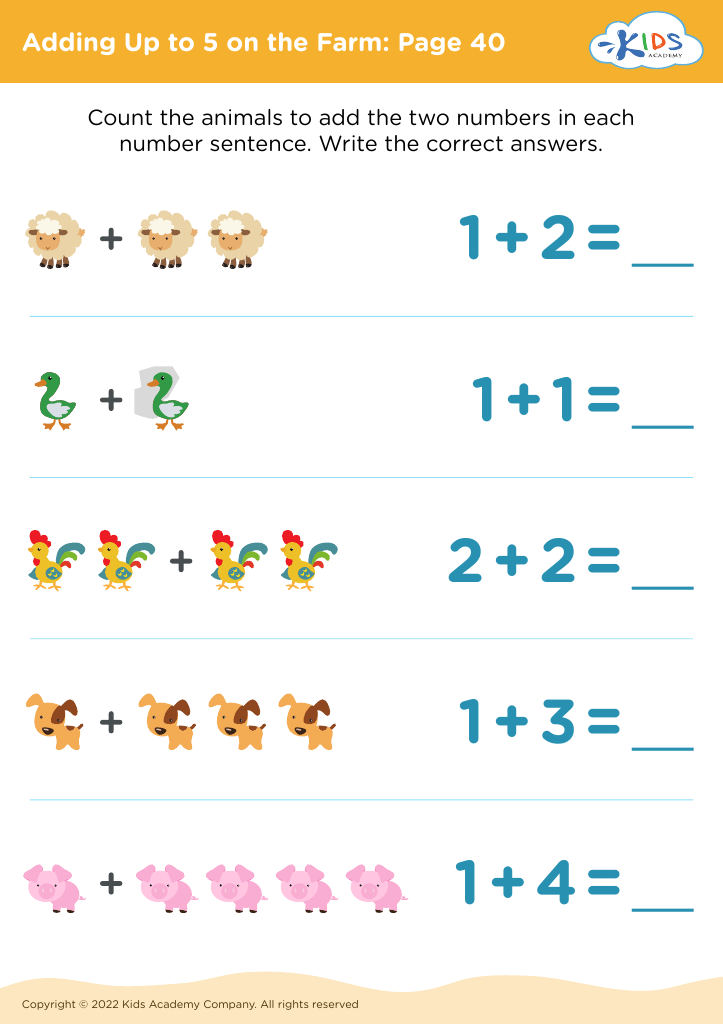
Adding Up to 5 on the Farm: Page 40
Worksheet
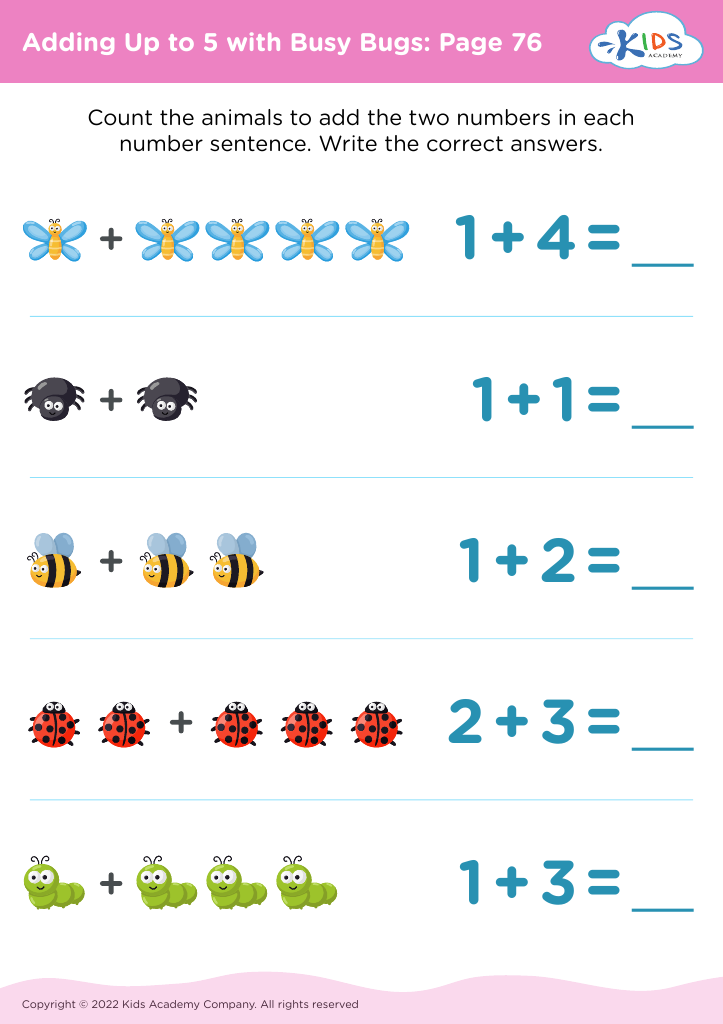
Adding Up to 5 with Busy Bugs: Page 76
Worksheet
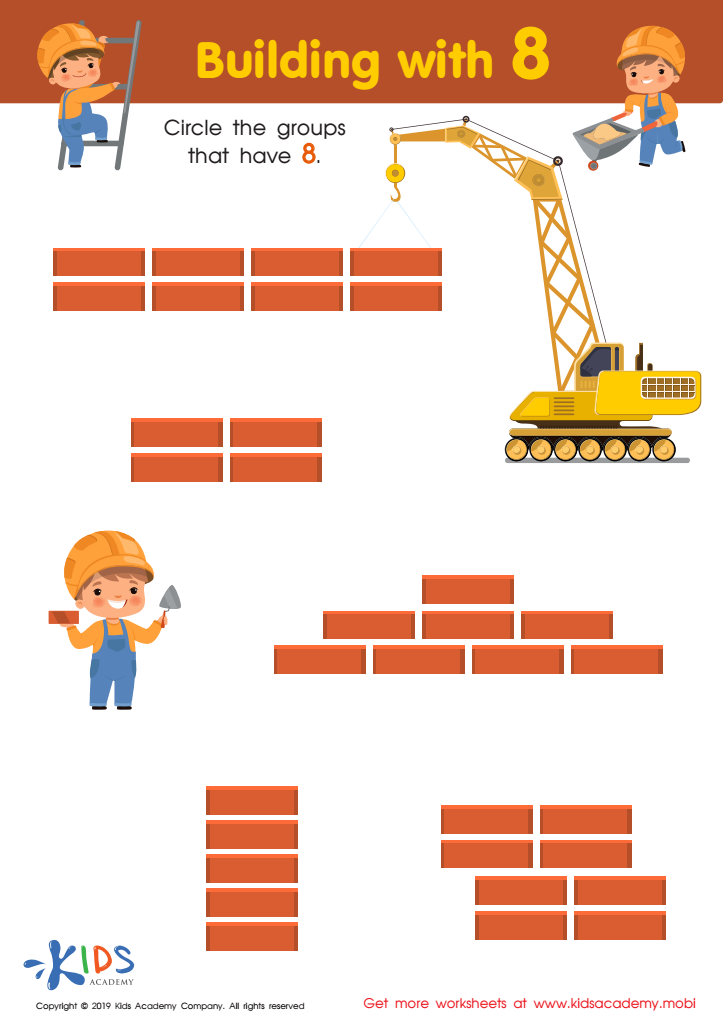
Building with 8 Worksheet

Building with 8 Worksheet

Your child can learn more with this simple exercise! Get them counting and help them circle the groups of 8 bricks. It's a great addition to their post-school lessons, supporting their counting skills. Plus, it's a fun way to learn!
Building with 8 Worksheet
Worksheet
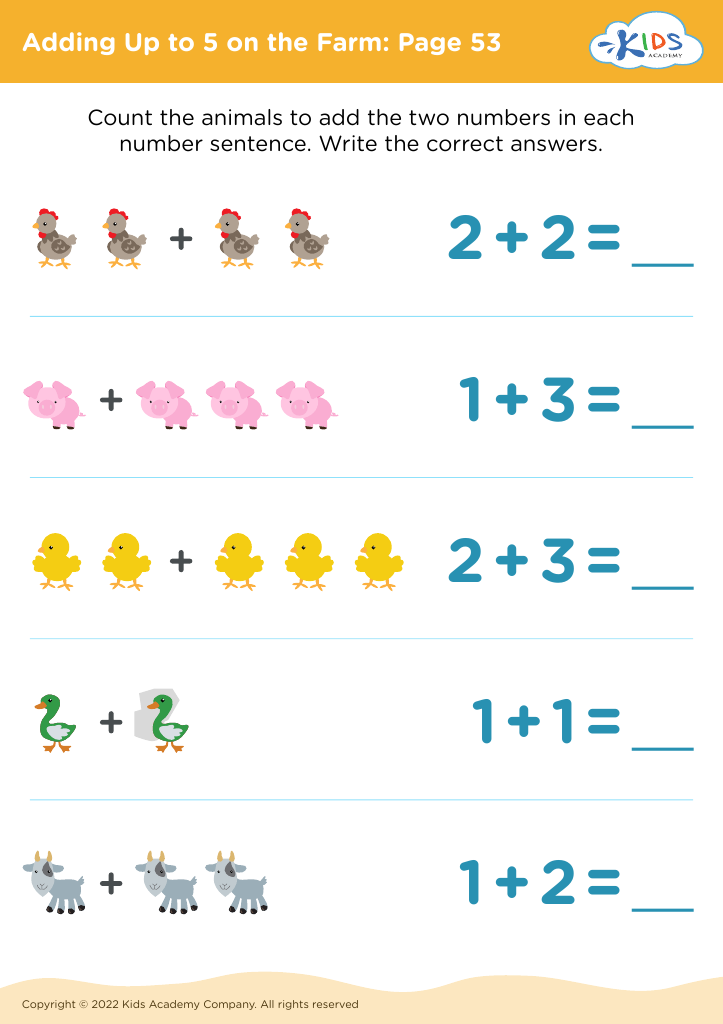
Adding Up to 5 on the Farm: Page 53
Worksheet
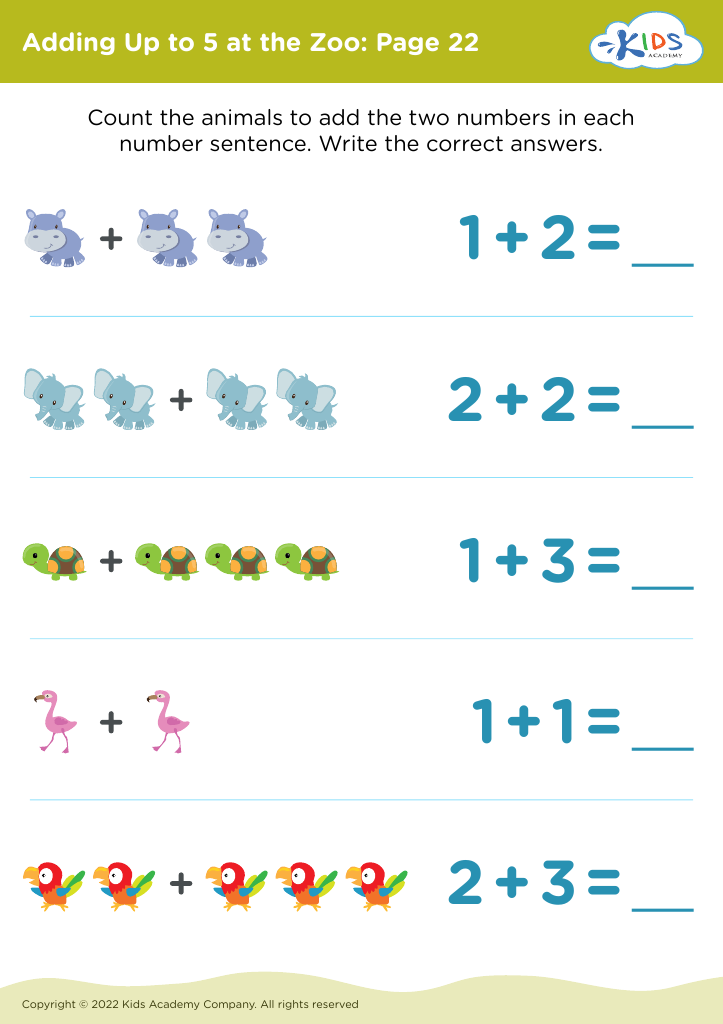
Adding Up to 5 at the Zoo: Page 22
Worksheet
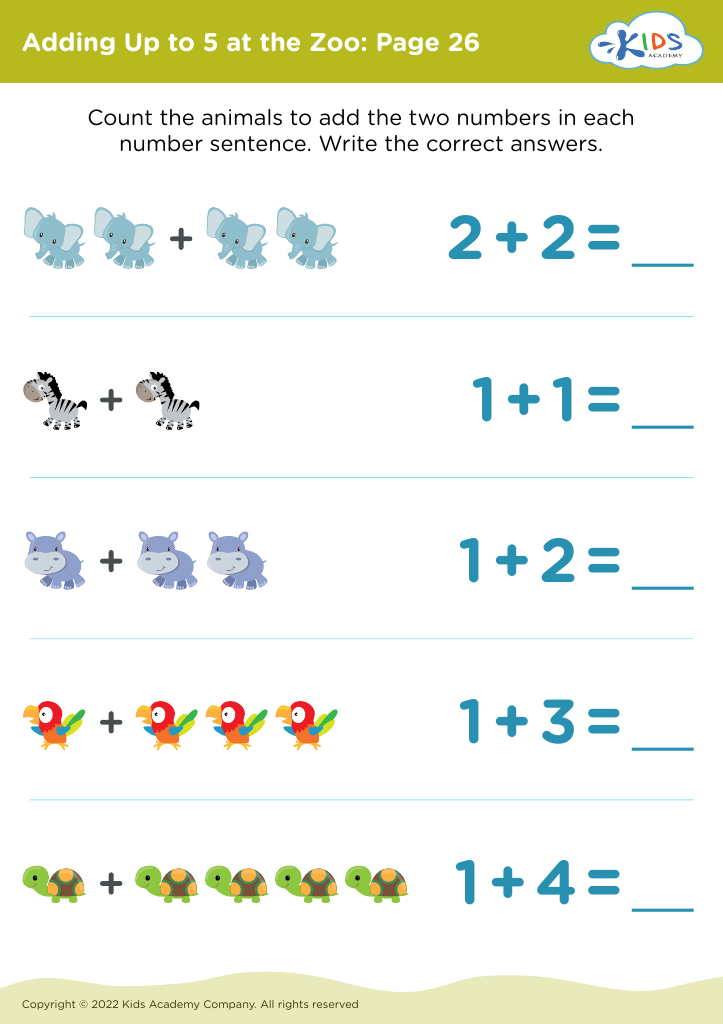
Adding Up to 5 at the Zoo: Page 26
Worksheet
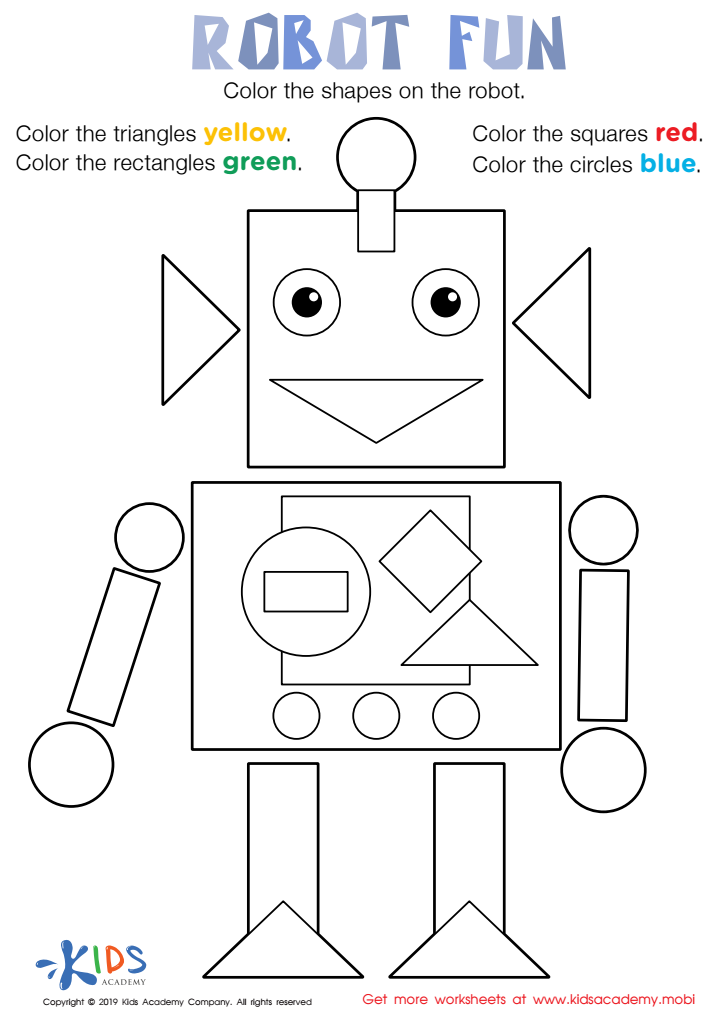
Robot Fun Worksheet
Robot Fun Worksheet

Robot Fun Worksheet

Help your child learn about basic shapes with this fun robot worksheet! Kids practice identifying circles, squares, rectangles and triangles, then color each shape according to directions. Make math practice enjoyable with this coloring page that teaches all four basic shapes - it's an important math skill!
Download (PDF)
Assign to My Students
Robot Fun Worksheet
Worksheet
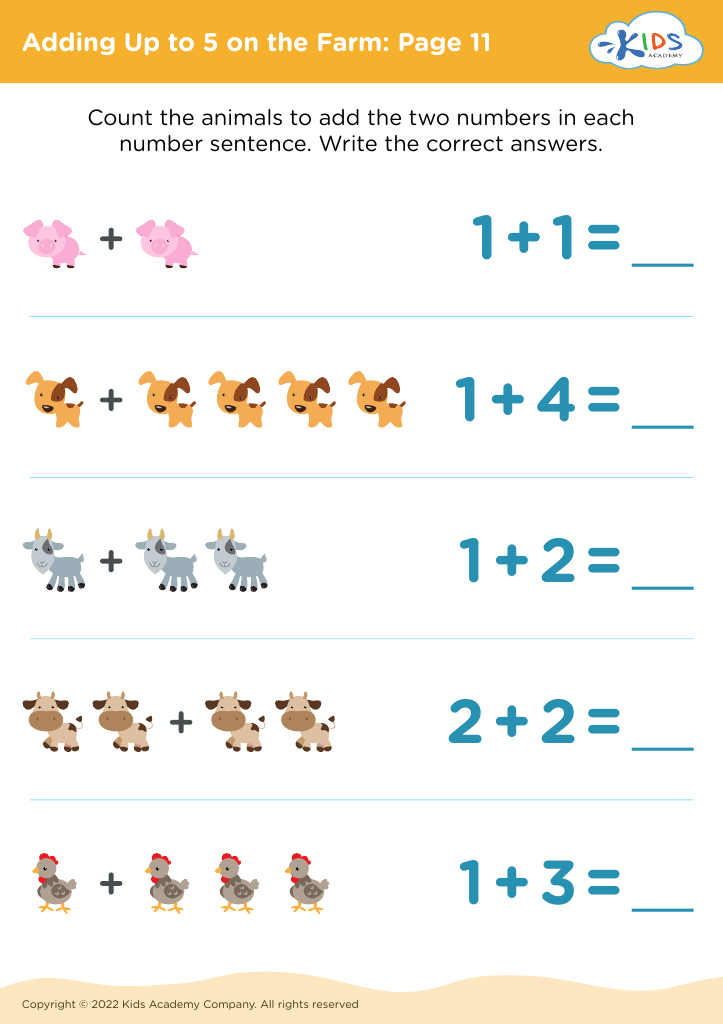
Adding Up to 5 on the Farm: Page 11
Worksheet
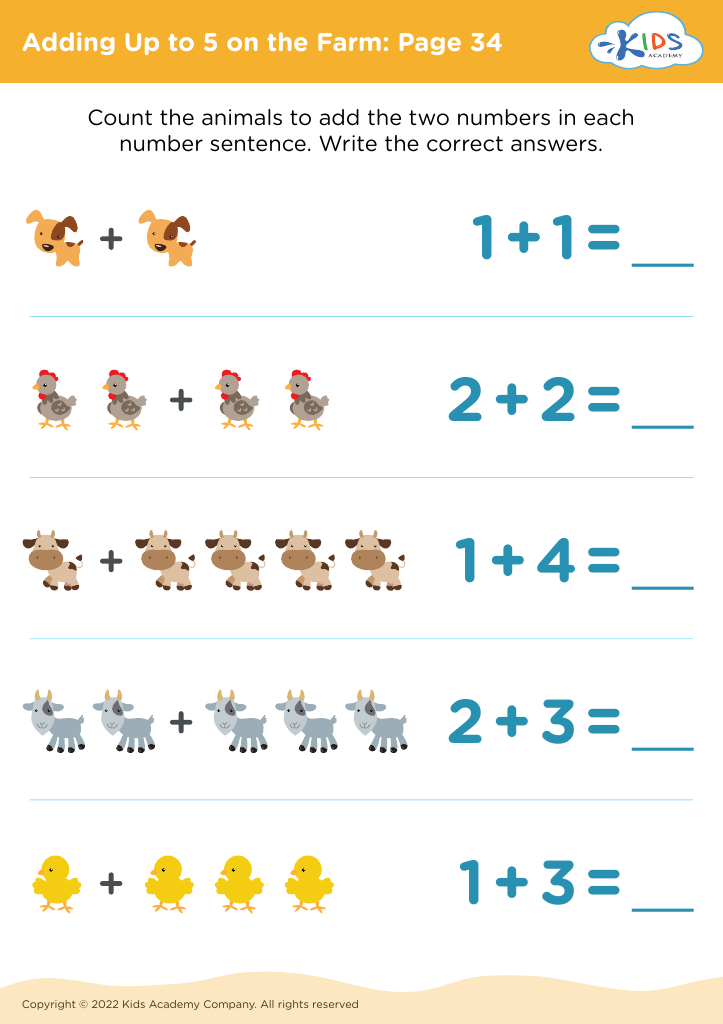
Adding Up to 5 on the Farm: Page 34
Worksheet
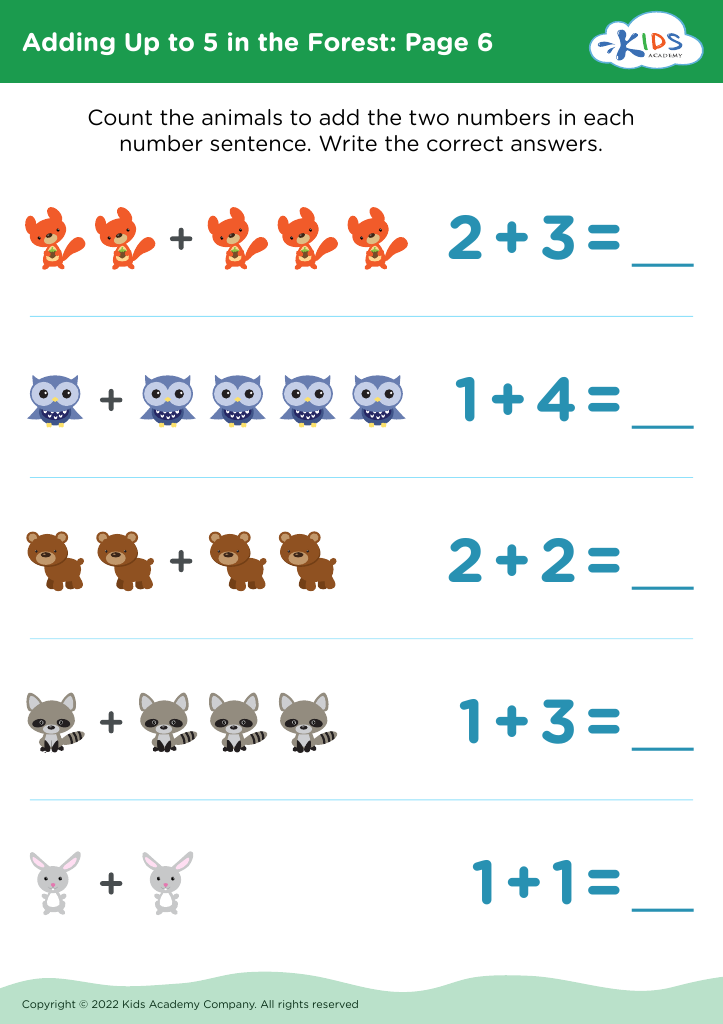
Adding Up to 5 in the Forest: Page 6
Worksheet
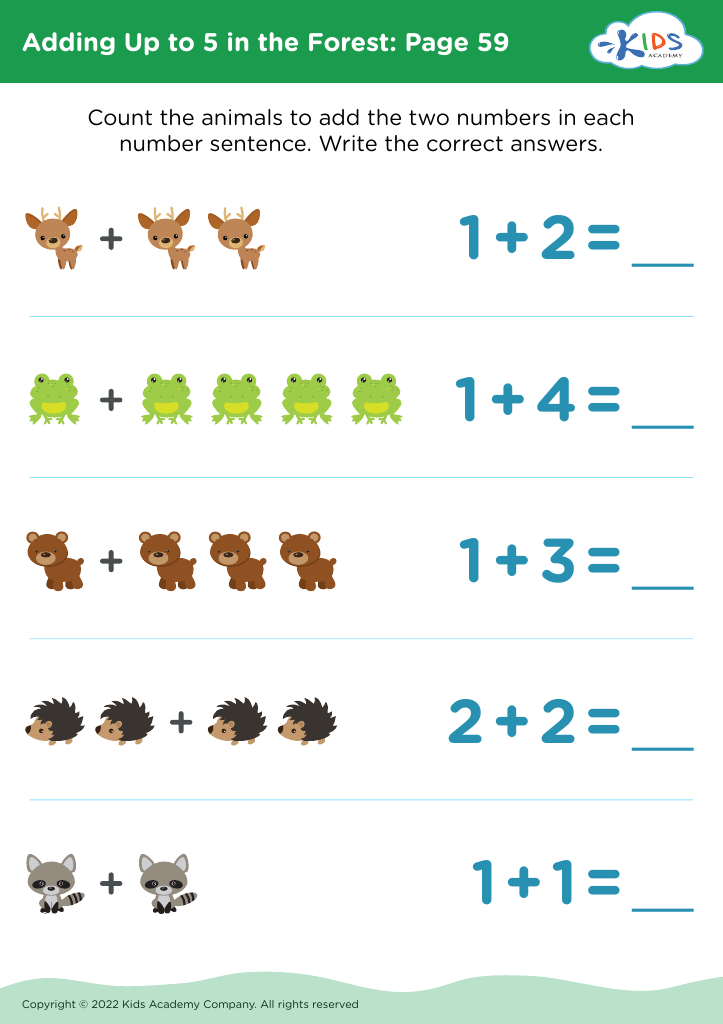
Adding Up to 5 in the Forest: Page 59
Worksheet
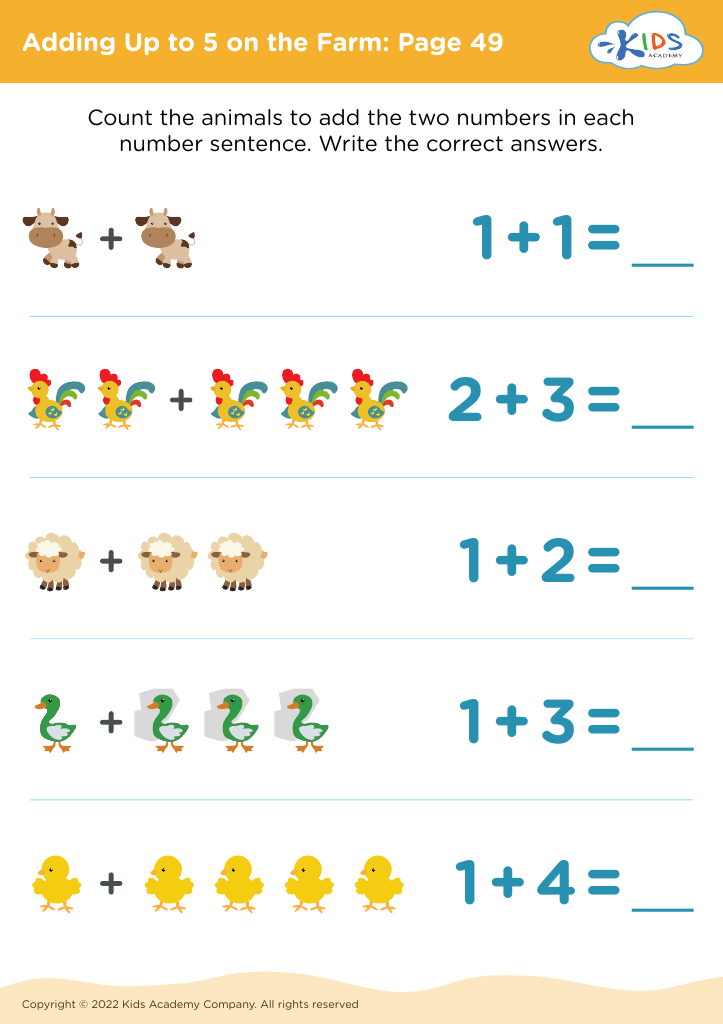
Adding Up to 5 on the Farm: Page 49
Worksheet
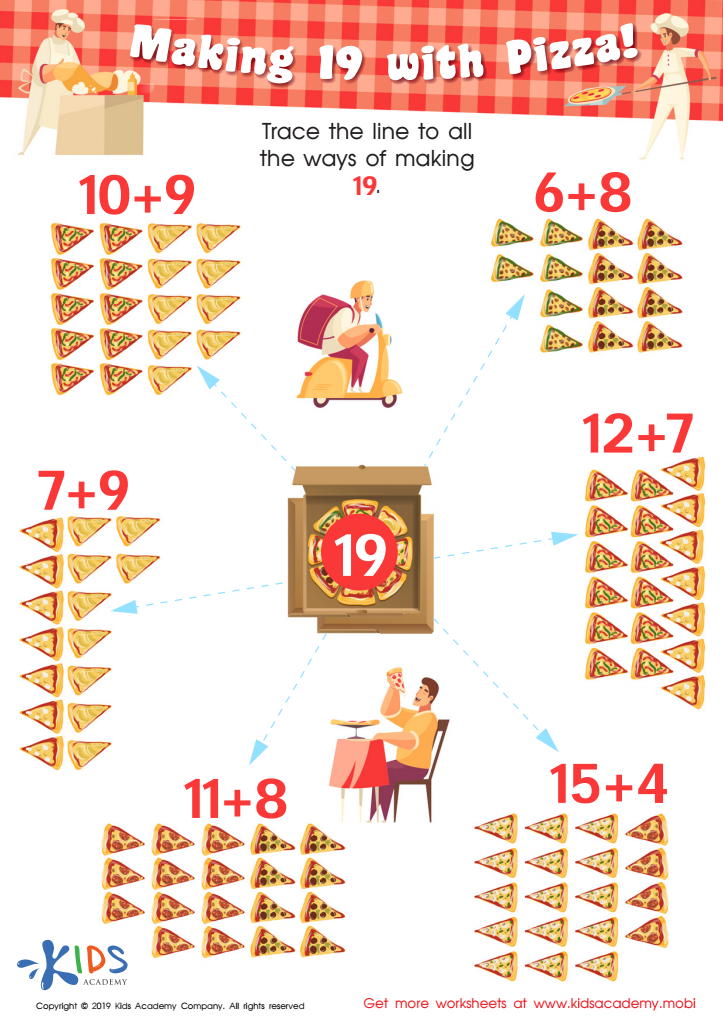
Making 19 with Pizza! Worksheet

Making 19 with Pizza! Worksheet

Who loves pizza? Your kids do! Next time you need to teach them math, make it fun by combining it with something they enjoy. This worksheet uses a pizza-themed problem to help them practice solving equations. Have them trace the line to figure out how to make 19. It's a great way to make learning math fun!
Making 19 with Pizza! Worksheet
Worksheet
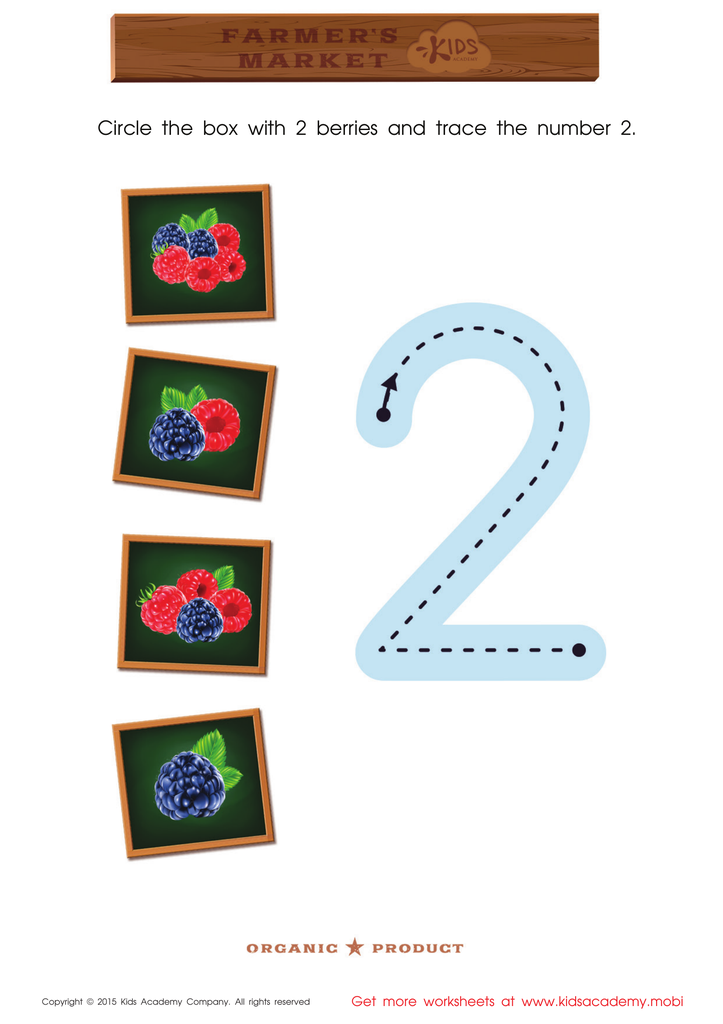
Math Game: Count the Berries and Trace the Number 2

Count the Berries and Trace the Number 2 Printable
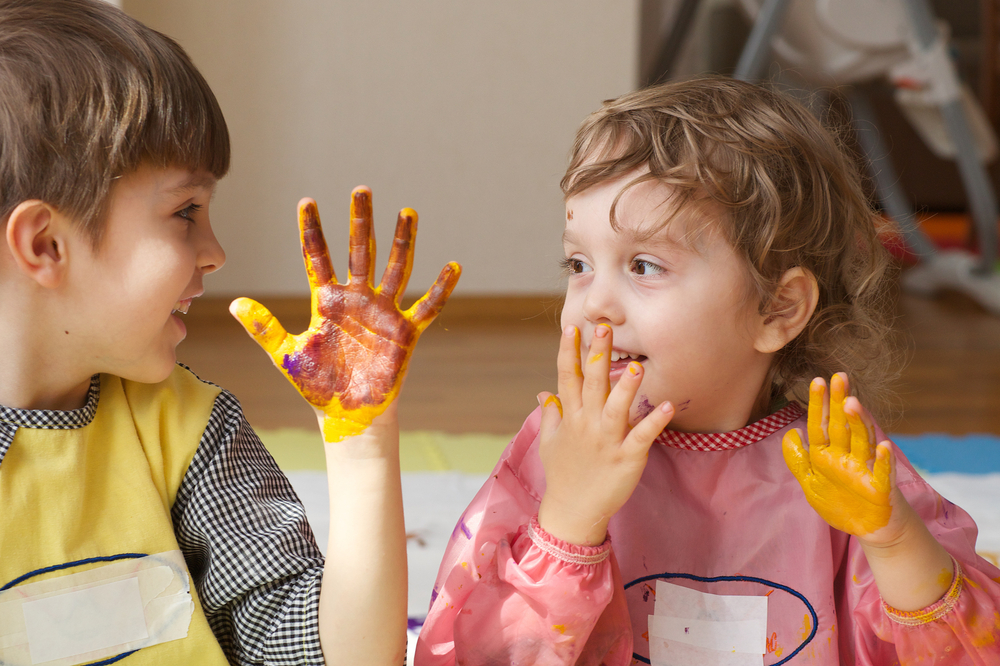
This math worksheet by Kids Academy helps kindergartners count and write number 2. Print it out and urge your kid to count the berries in the boxes, then circle the box with 2 of them. As they trace the number 2, they practice hand motions for good handwriting. More skill-building worksheets available.
Count the Berries and Trace the Number 2 Printable
Worksheet
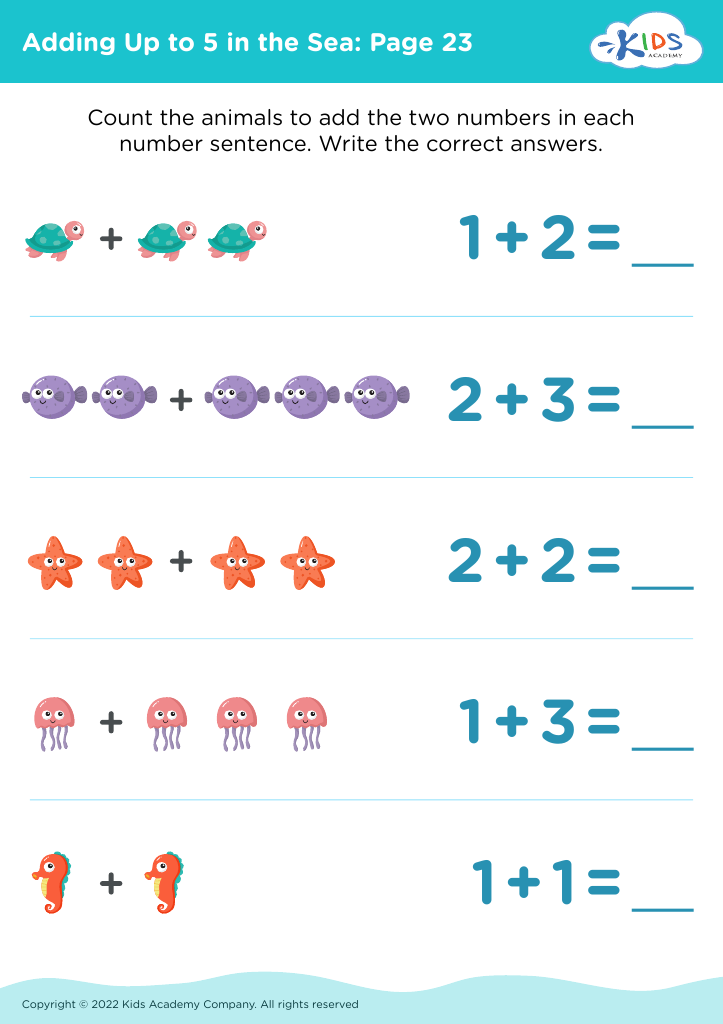
Adding Up to 5 in the Sea: Page 23
Worksheet
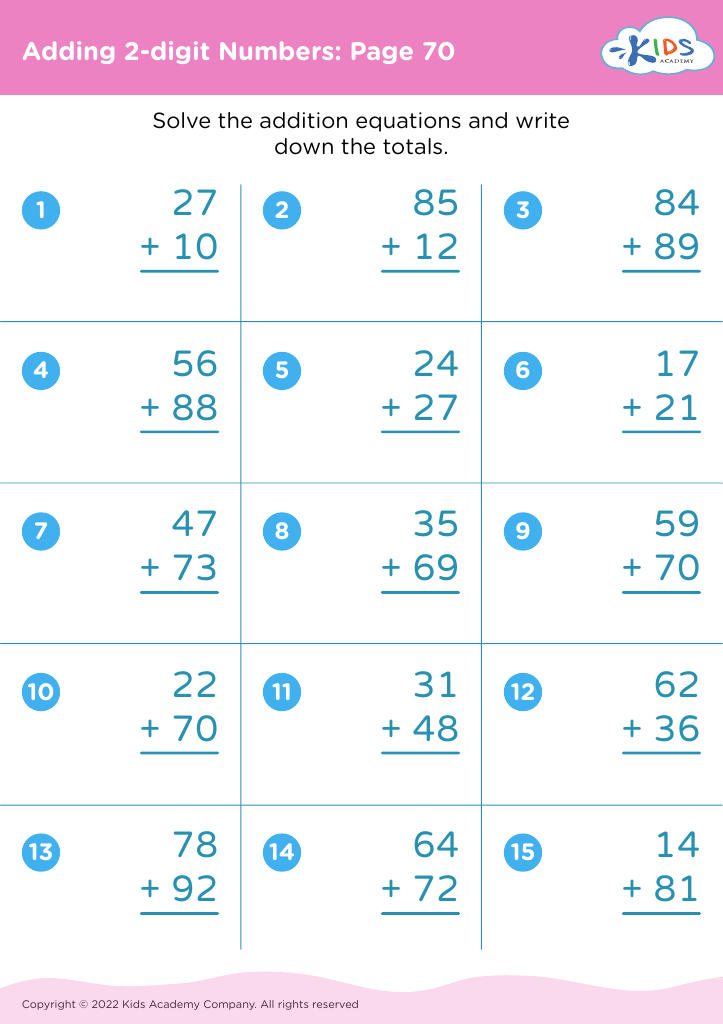
Adding 2-digit Numbers: Page 70

Adding 2-digit Numbers: Page 70

Adding 2-digit Numbers: Page 70
Worksheet
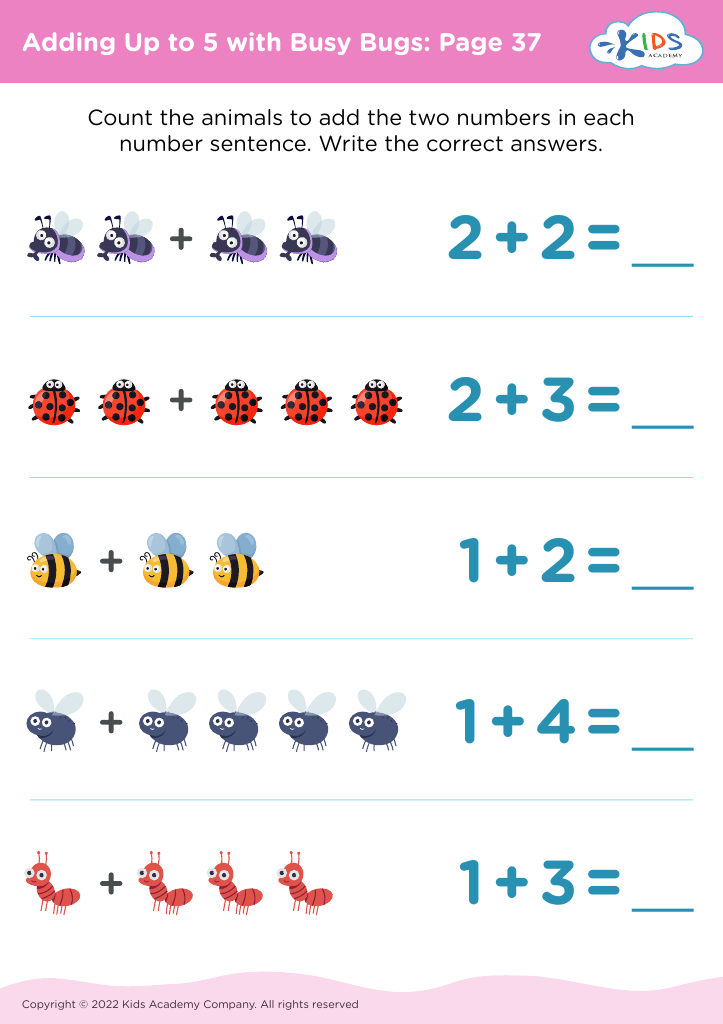
Adding Up to 5 with Busy Bugs: Page 37
Worksheet
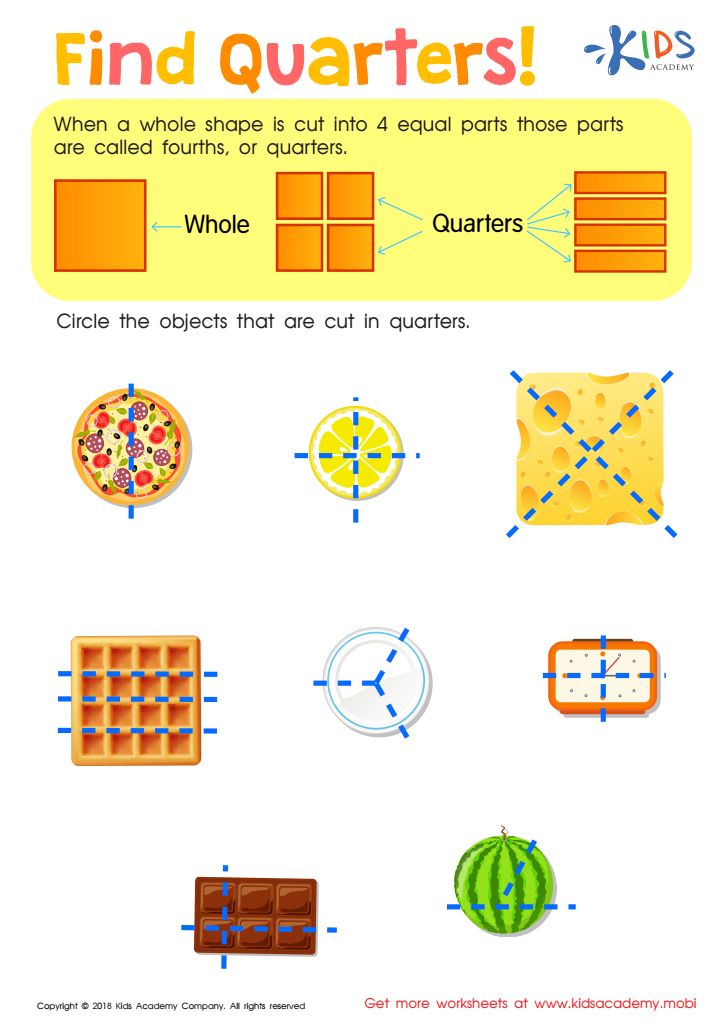
Find Quarters Worksheet

Find Quarters Worksheet

Ask your child if they know what it is called when a shape is cut into two equal parts. If yes, introduce them to quarters. Tell them that when a shape is cut into 4 equal parts, each part is called a quarter. Have them do this exercise by finding and circling objects split into quarters.
Find Quarters Worksheet
Worksheet
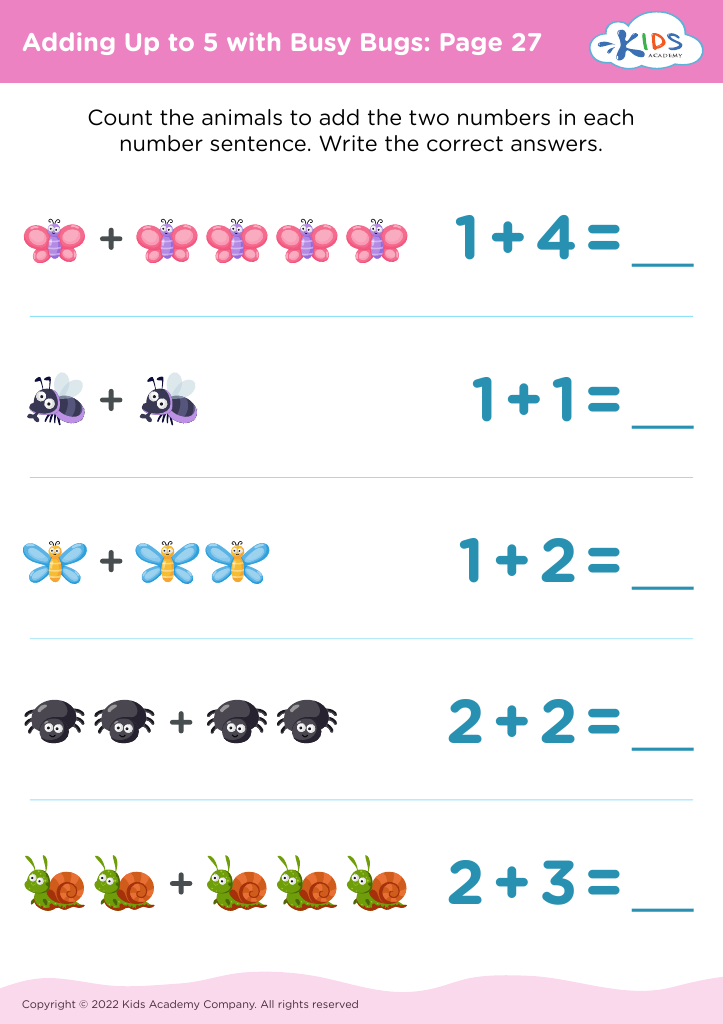
Adding Up to 5 with Busy Bugs: Page 27
Worksheet
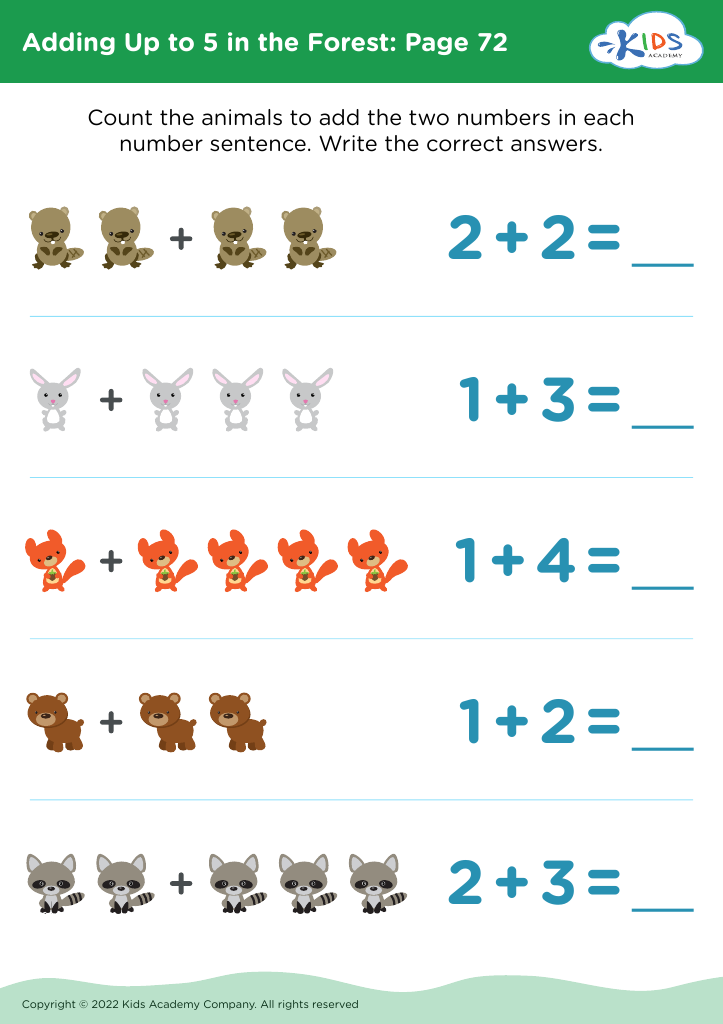
Adding Up to 5 in the Forest: Page 72
Worksheet
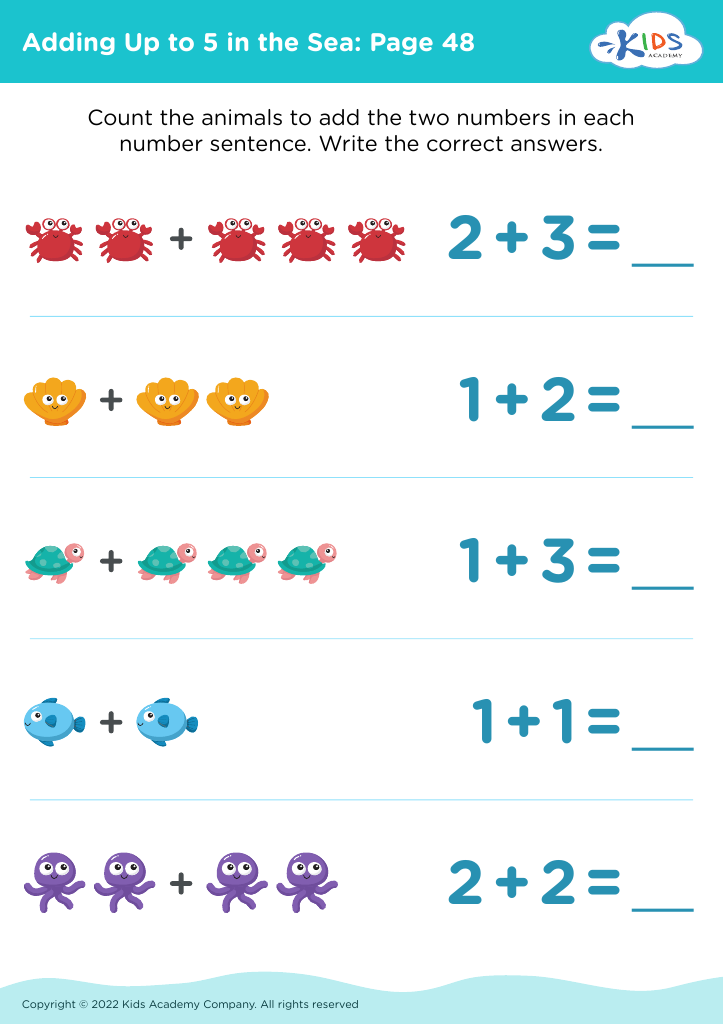
Adding Up to 5 in the Sea: Page 48
Worksheet


Counting practice in early math education is crucial for children aged 5-9, building the foundational skills necessary for more complex mathematical concepts. At this developmental stage, kids are highly receptive to learning mathematical constructs, making counting a pivotal aspect of their educational journey.

For one, counting helps children grasp the idea of number sequences, which is integral to understanding the more complicated concepts of addition, subtraction, and eventually multiplication and division. By practicing counting, children also enhance their number sense, allowing them to perceive the relationships between numbers, such as noting that ten is larger than six or breaking down numbers into parts (e.g., seeing that eight can be made with three and five).

Moreover, counting practice aids in developing other cognitive skills, such as attention to detail and fine motor skills, when children are counting objects and marking them off. Consistent counting practice reinforces memory retention and pattern recognition, both of which are essential academic skills beyond mathematics.

Counting is foundational in nurturing problem-solving capabilities and logical thinking, skill sets that are beneficial across all subjects and daily life scenarios. Parents and teachers who prioritize and incorporate counting practice into daily activities provide children with the confidence and competence to tackle more advanced math topics, setting a positive trajectory for lifelong learning.