Developing analytical skills Math Worksheets for Ages 5-9
4 filtered results
-
From - To
Unlock your child's potential with our "Developing Analytical Skills Math Worksheets" designed for ages 5-9. At Kids Academy, we offer a range of printable math worksheets that focus on cultivating analytical thinking through fun and engaging exercises. These worksheets cover various topics, including problem-solving, pattern recognition, logical reasoning, and more, ensuring that young minds not only learn mathematics but also develop critical thinking skills. Perfect for both classroom and home use, our worksheets provide children with the solid foundation they need to excel in their academic journey. Empower your child to think analytically and succeed with Kids Academy!
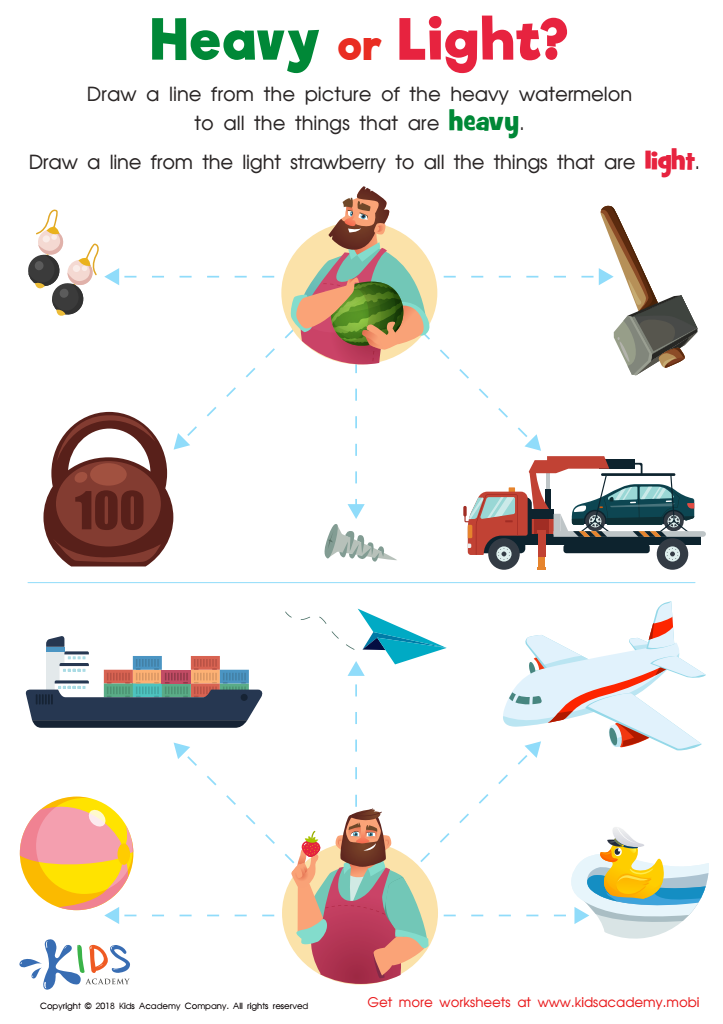
Heavy or Light? Worksheet
 Assign to My Students
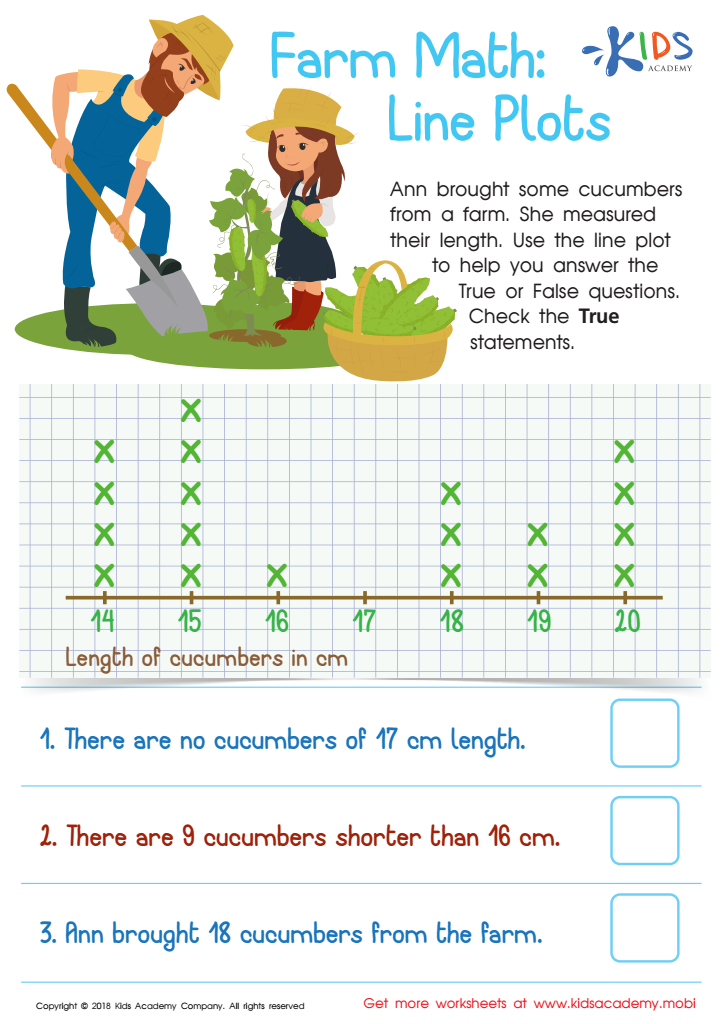
Farm Math: Line Plots Worksheet








Developing analytical skills in math for children aged 5-9 is crucial for their overall cognitive development and lays a foundational block for their future learning. During these formative years, children are highly receptive to new concepts, and fostering analytical skills can significantly enhance their problem-solving abilities, critical thinking, and logical reasoning.
Math is inherently analytical, requiring children to recognize patterns, understand relationships, and make connections between concepts. By engaging young minds with math in a fun and interactive way, parents and teachers can help children develop the ability to break down complex problems into simpler, more manageable parts. This approach not only aids in mathematical understanding but also translates into other academic areas and real-life situations.
When children develop strong analytical skills early on, they become more confident learners. They can approach challenges with a structured mindset, leading to higher academic achievement and a positive attitude towards learning. Furthermore, these skills are essential in a world increasingly driven by technology and data, where analytical thinking is paramount.
Therefore, investing time and resources in developing these skills at an early age doesn't just prepare children for academic success; it equips them with essential life skills. By doing so, parents and teachers can foster a generation of innovative thinkers and problem solvers.








