Enhance problem-solving skills Math Worksheets for Ages 5-9
8 filtered results
-
From - To
Unlock your child's potential with our "Enhance Problem-Solving Skills Math Worksheets" designed for ages 5-9. These engaging worksheets promote critical thinking and reasoning, helping young learners tackle math problems with confidence. Featuring a variety of fun, age-appropriate activities, children will explore essential concepts like addition, subtraction, shapes, and patterns while developing their analytical skills. Our resources align with educational standards and encourage independent learning and creativity. Whether in the classroom or at home, these worksheets provide an effective way for children to enhance their math abilities while enjoying the process. Get started today and watch your child's problem-solving skills soar!
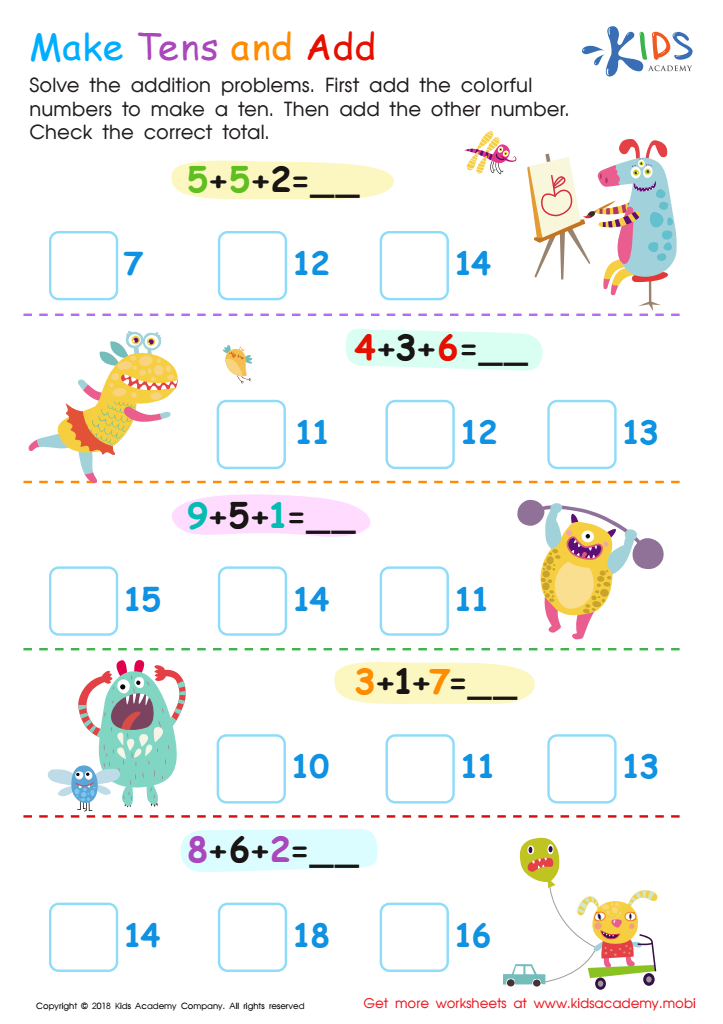
Make Tens and Add Worksheet
 Assign to My Students
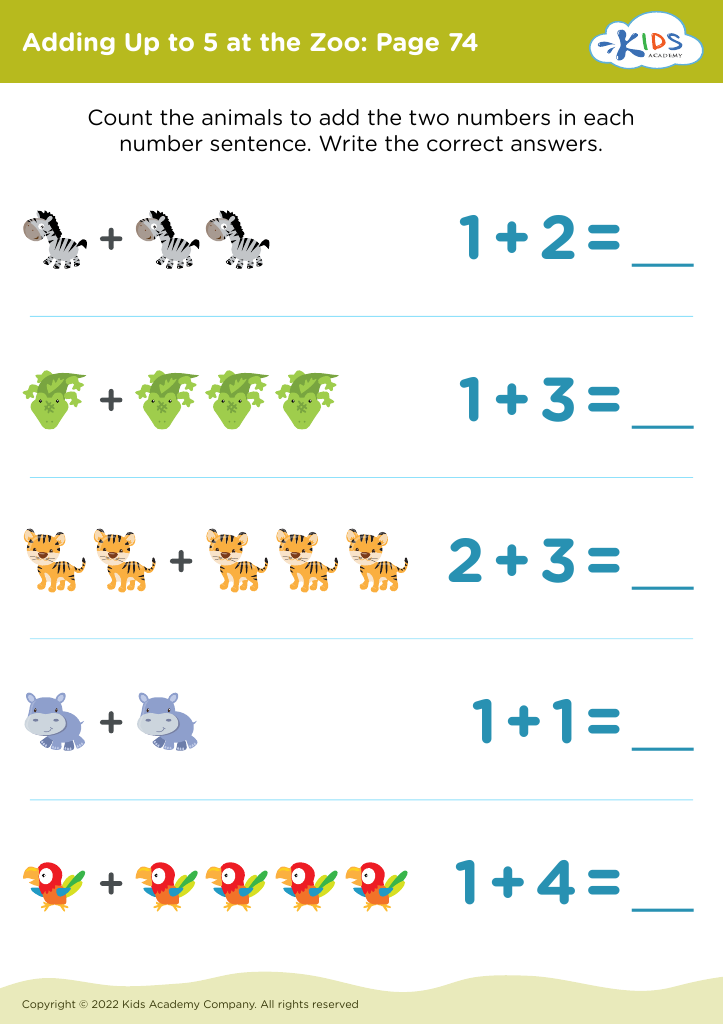
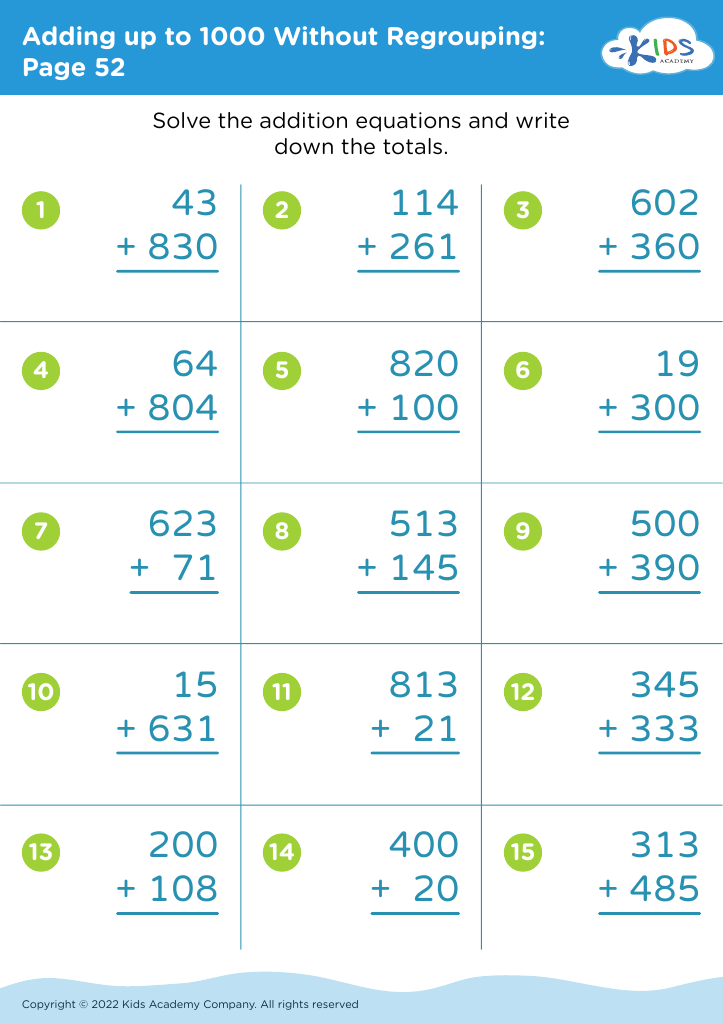
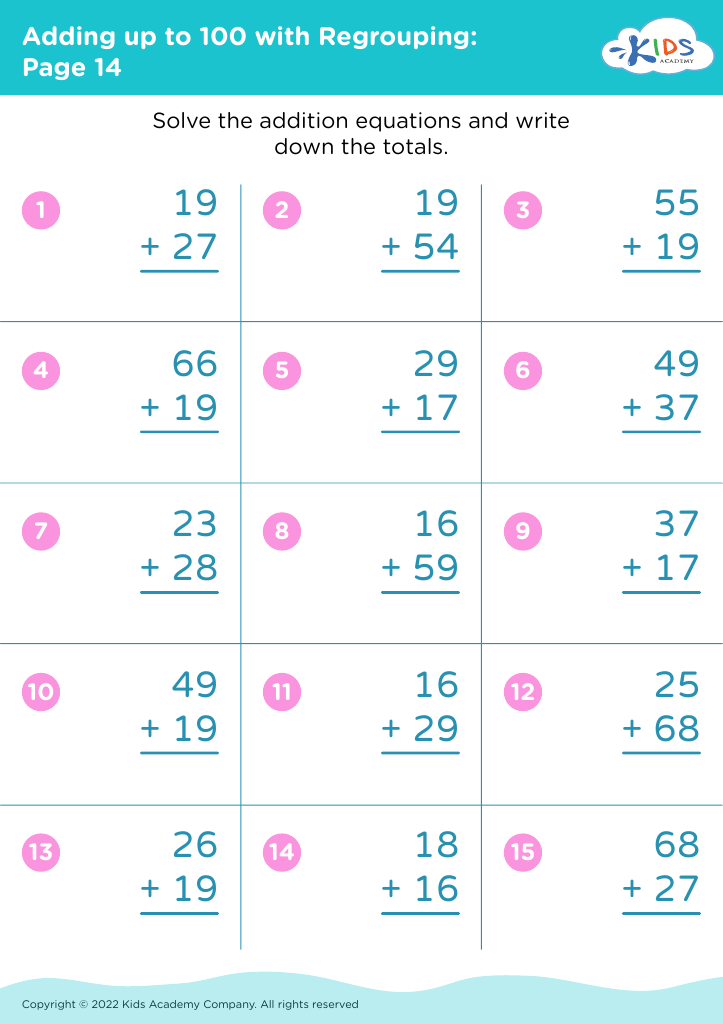
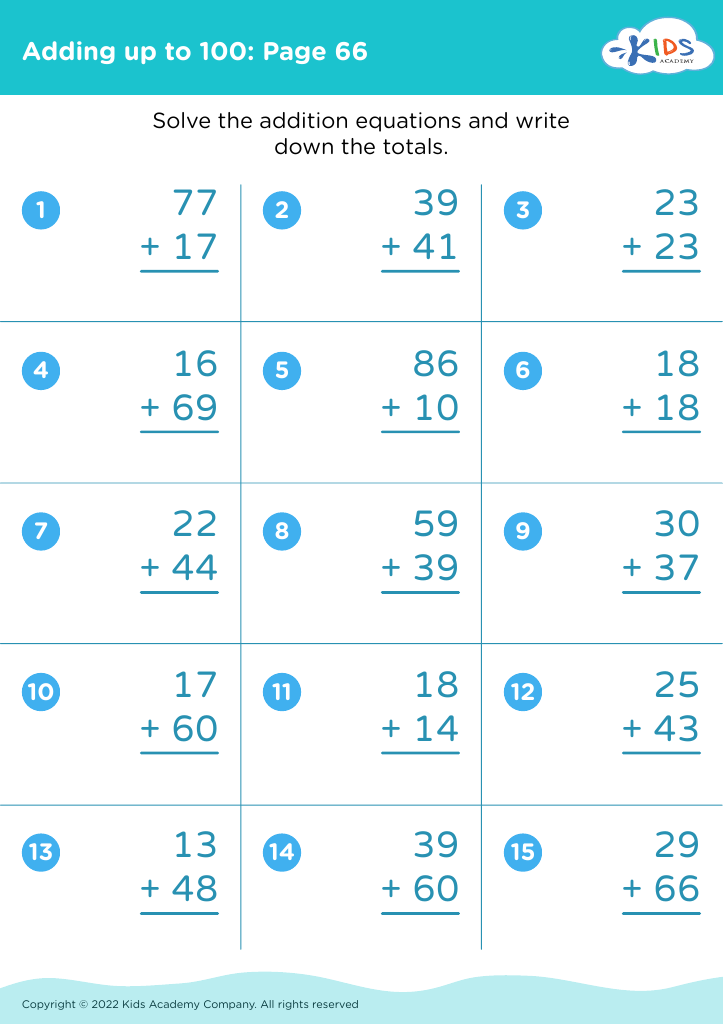
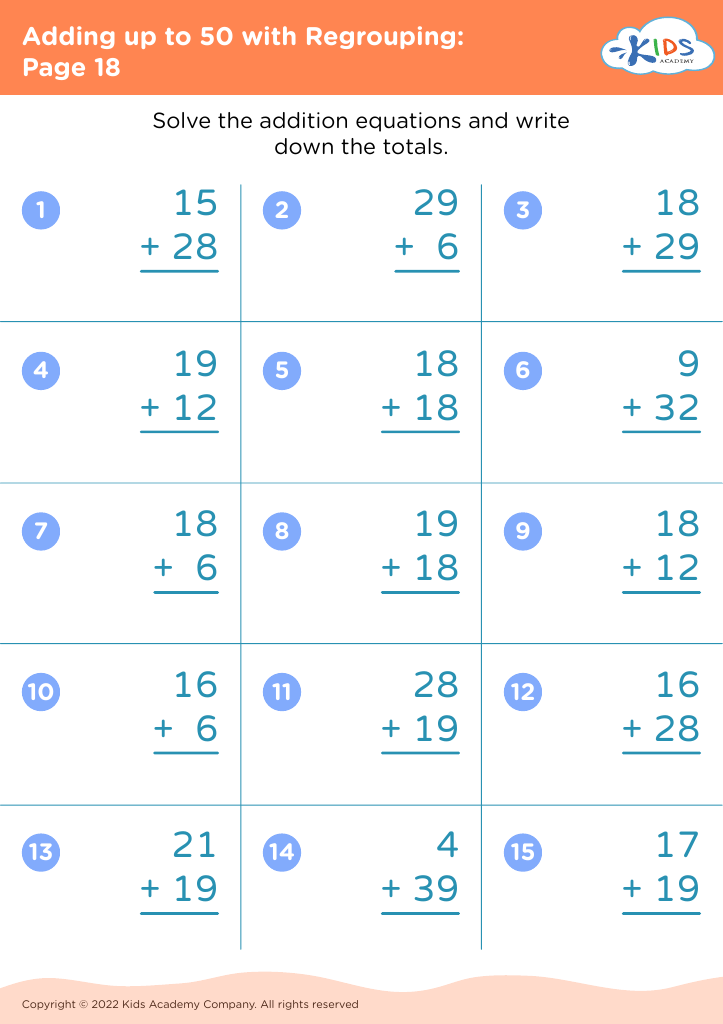
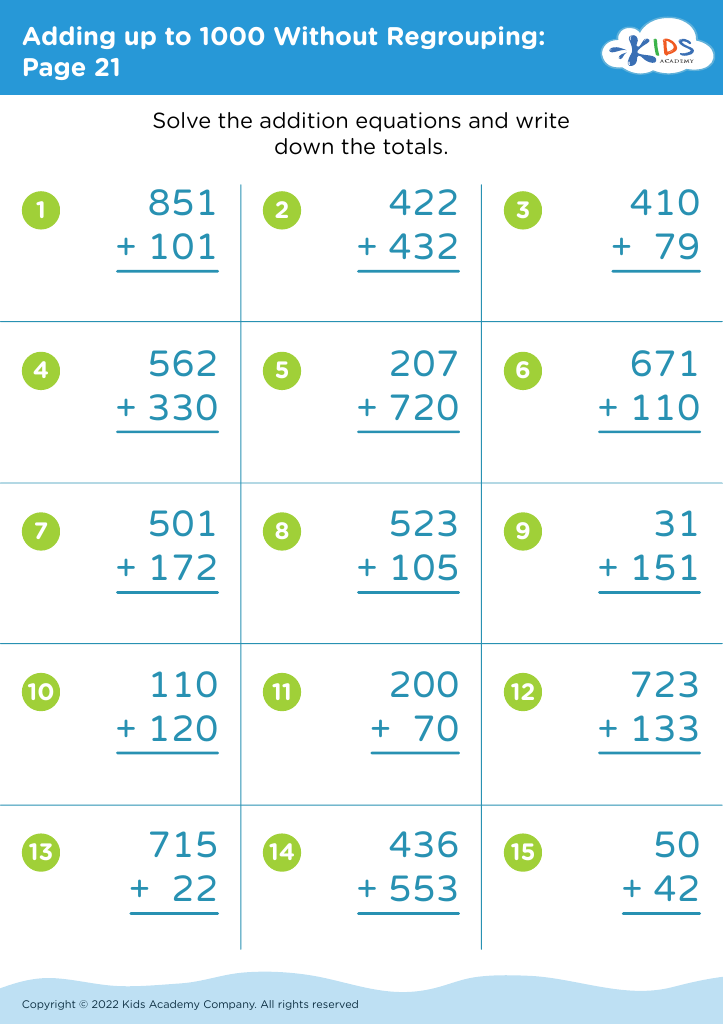
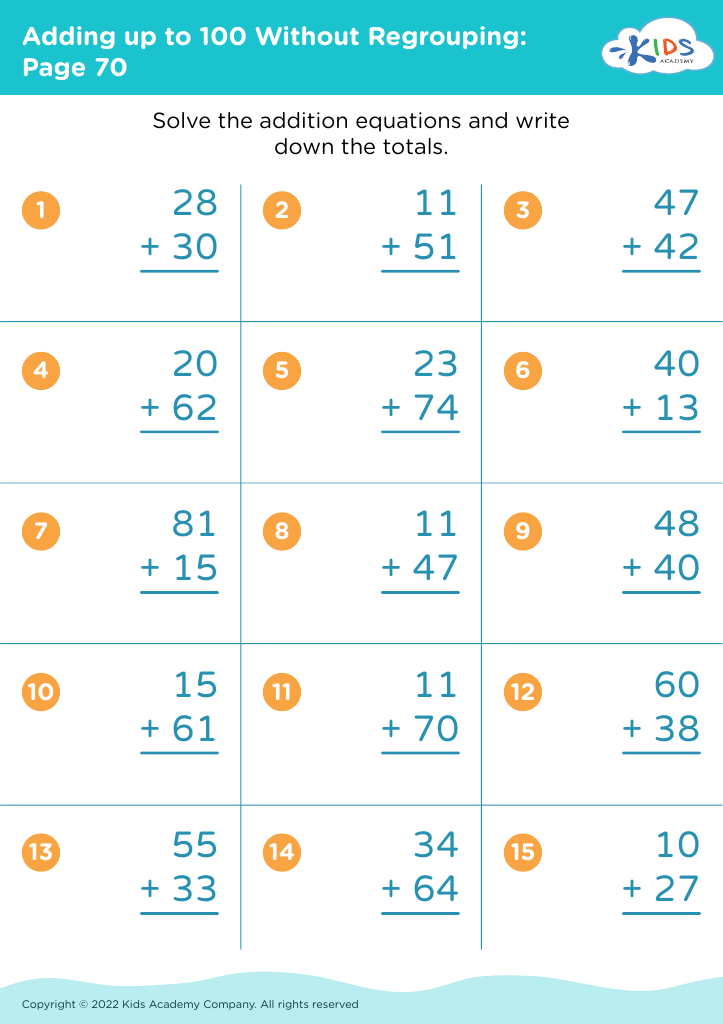








Parents and teachers should care about enhancing problem-solving skills in math for children aged 5 to 9 because these skills lay the foundation for lifelong learning and critical thinking. At this young age, children are naturally curious and eager to explore their world. By nurturing their mathematical problem-solving skills, educators and caregivers can tap into this curiosity and guide them toward logical reasoning and analytical thinking.
Developing problem-solving abilities early on helps children approach challenges with confidence. As they learn to analyze situations, devise strategies, and evaluate outcomes, they gain resilience and persistence. These skills not only benefit their mathematical understanding but also transfer to other subjects and real-life situations.
Furthermore, enhancing problem-solving skills promotes discussions and collaborative learning, fostering communication abilities and teamwork. In a supportive environment, children learn the value of different perspectives and methods in finding solutions.
Ultimately, investing in the development of problem-solving skills is crucial for equipping children with the tools to navigate their education and future careers effectively. Parents and teachers play a pivotal role in encouraging this growth, making it imperative for them to prioritize such skills in early math education.








