
Enhancing fine motor skills Math Worksheets for Ages 5-9
3 filtered results
Difficulty Level
Grade
Age
-
From - To
Subject
Activity
Standards
Unlock your child's potential with our "Enhancing Fine Motor Skills Math Worksheets" for ages 5-9! These engaging worksheets combine math practice with activities designed to strengthen fine motor abilities, vital for young learners. Featuring fun exercises like tracing numbers, cutting shapes, and connecting dots, students develop coordination and confidence while mastering early math concepts. Our resources cater to various learning styles, ensuring every child can thrive. As they complete each worksheet, kids will enhance both their mathematical understanding and motor skills, setting a solid foundation for future learning. Explore our collection today and watch your child excel in a playful way!
Favorites
With answer key
Interactive
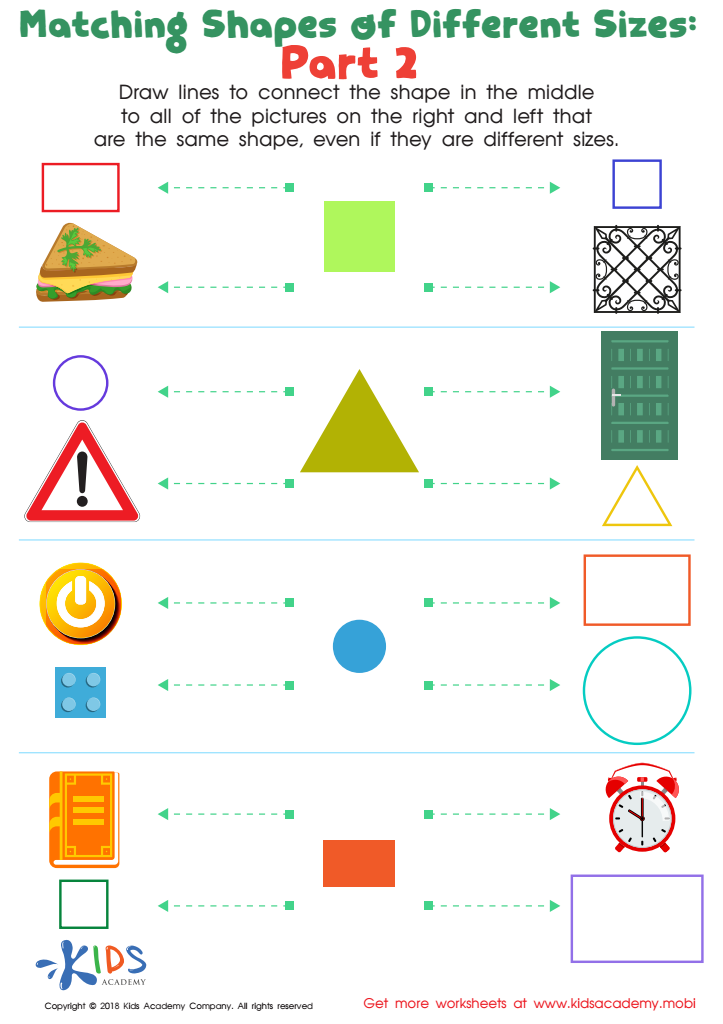
Geometry: Part 2 Worksheet
Third grade geometry gets a challenge with this free worksheet. Kids match shapes to everyday objects like sandwiches, alarm clocks and books for a better understanding of geometry in their lives. Printable pdf is included.
 Assign to My Students
Geometry: Part 2 Worksheet
Worksheet
Join Kids Academy for Free
Who is primarily going to use this learning content?








Enhancing fine motor skills in young children, particularly those aged 5-9, is crucial for their overall development, especially in relation to mathematics. Fine motor skills involve the small muscles in hands and fingers and are essential for tasks such as writing, drawing, and manipulating numbers and shapes – all foundational aspects of math learning.
When children develop strong fine motor skills, they are better equipped to handle math tools, such as pencils, rulers, scissors, and manipulatives like blocks or counters. This tactile experience strengthens their understanding of mathematical concepts, as children learn to visualize and physically engage with numbers and shapes. Activities that require precision, like counting objects or creating patterns, also improve their hand-eye coordination, leading to enhanced concentration and confidence in problem-solving.
Additionally, fine motor skills development in early childhood promotes cognitive skills, including critical thinking and spatial awareness, which are vital for more complex mathematical understanding. Parents and teachers who foster these skills through engaging activities—like arts and crafts, counting games, or building projects—empower children to approach math with enthusiasm. Ultimately, a strong foundation in both fine motor skills and mathematics supports lifelong learning and prepares children for future academic success.








