Fraction simplification Math Worksheets for Ages 5-9 - Page 3
58 filtered results
-
From - To
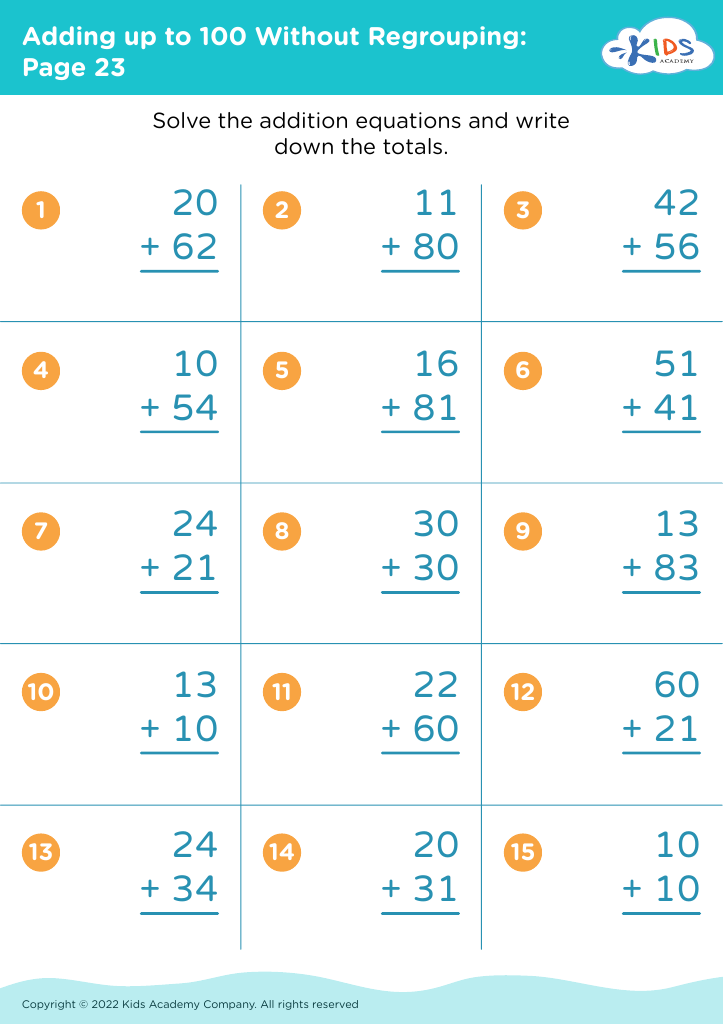
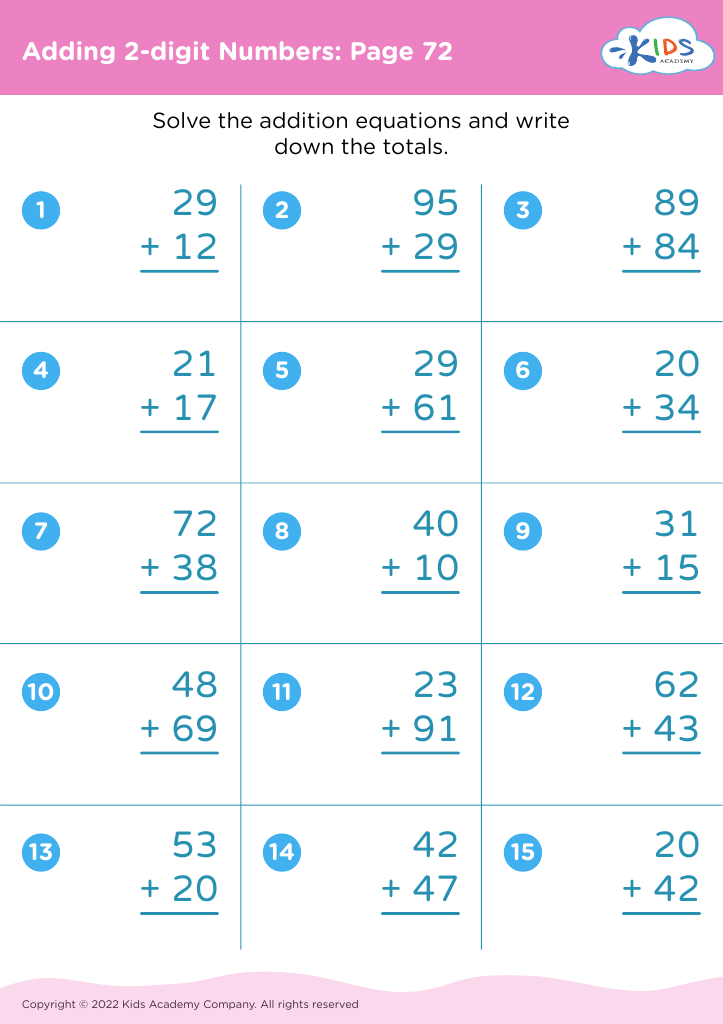
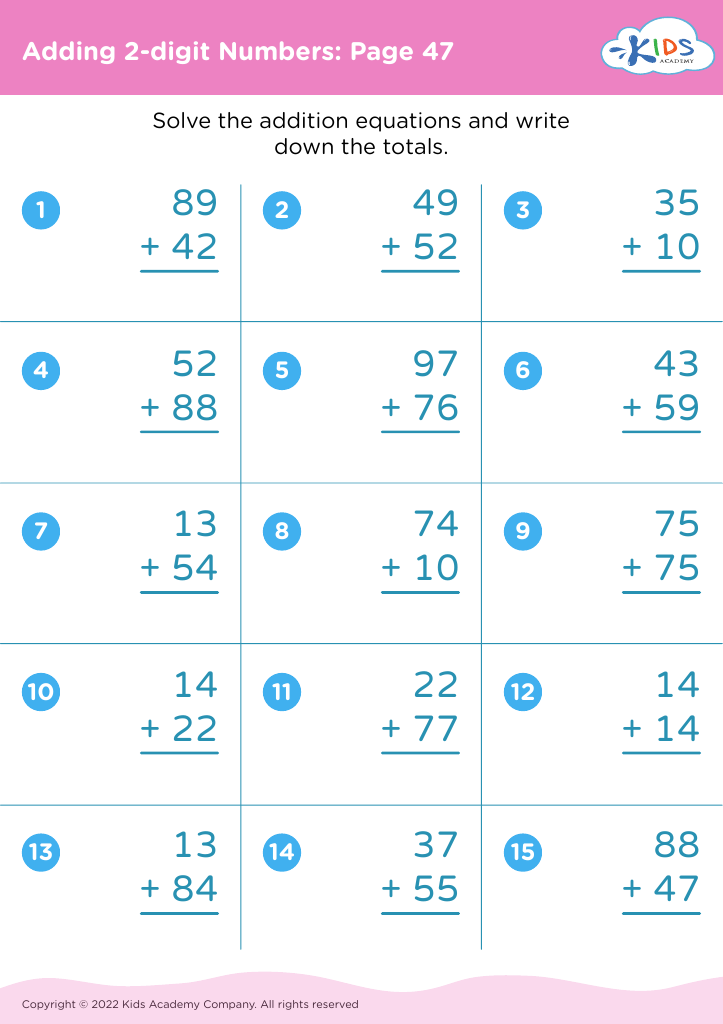
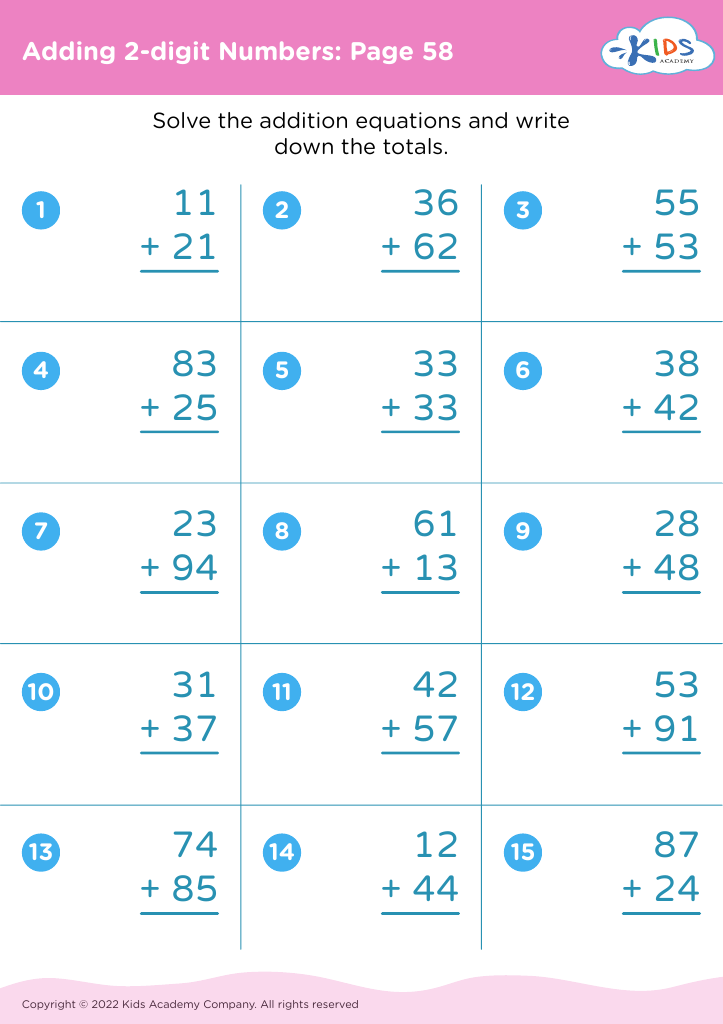







Understanding fraction simplification is a crucial mathematical skill for children aged 5-9, and both parents and teachers play a vital role in fostering this understanding.
At this age, children are developing foundational math skills, and simplification of fractions helps them recognize numerical relationships. It introduces concepts like equivalence, division, and the essential understanding of part-whole relationships. An early grasp of these ideas can build confidence and prepare students for more advanced mathematical concepts in later grades.
By promoting fraction simplification, educators and parents can enhance critical thinking and problem-solving skills. This process encourages kids to take a holistic view of numbers and understand that fractions are not just abstract notions, but represent real-life scenarios, such as sharing food or dividing items.
Moreover, reinforcing these skills at home or in the classroom can harness a child’s curiosity about math. Engaging learning activities and games centered around fractions can make math enjoyable, reducing the stigma that some children may associate with the subject.
Ultimately, focusing on fraction simplification lays the groundwork for a solid mathematical education, paving the way for academic success and a positive attitude towards learning in other subject areas as well.








