Practicing division Math Worksheets for Ages 5-9
3 filtered results
-
From - To
Enhance your child's math skills with our engaging practicing division worksheets designed specifically for ages 5-9. At Kids Academy, we understand the importance of a strong foundation in math, and our comprehensive resources make learning division enjoyable and effective. Each worksheet is crafted to cater to different skill levels, ensuring that every child finds the right challenge. From simple problems to more complex scenarios, children will build confidence as they master division concepts through fun exercises. Download our printable worksheets today and watch your little learners thrive in their mathematical journey! Strengthen their skills and make learning math a joy!
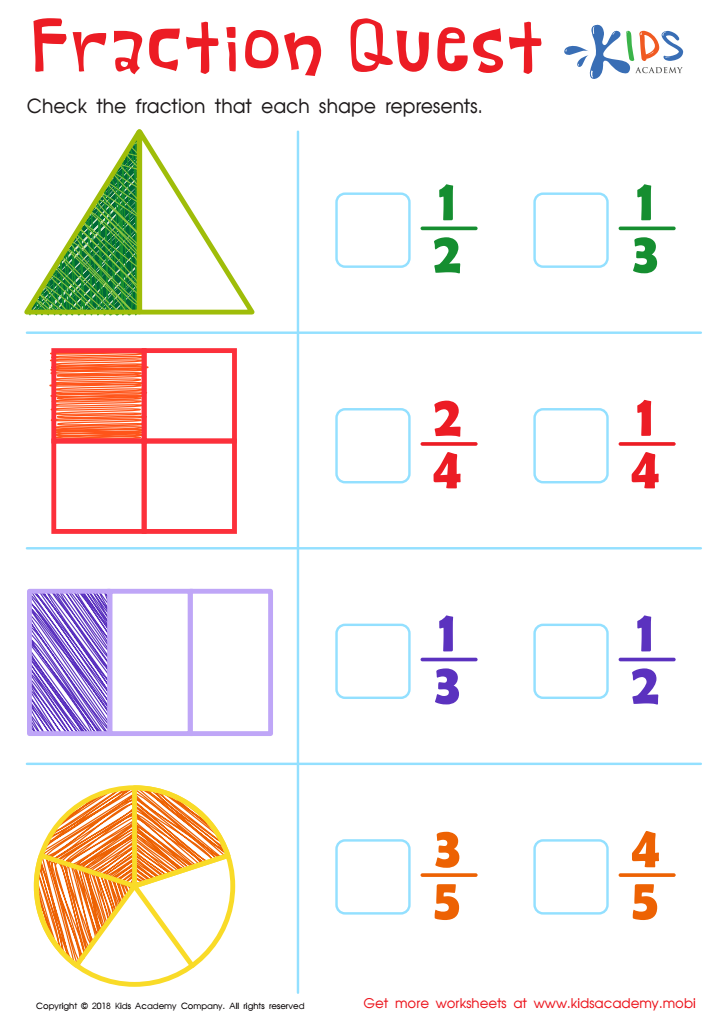
Fraction Quest Worksheet
 Assign to My Students






Practicing division for children aged 5-9 is crucial for several reasons. Firstly, division is a foundational math skill that forms the basis for more complex mathematical concepts. Early mastery helps to instill confidence and a positive attitude towards math, setting the stage for future learning.
By practicing division at this young age, children develop essential problem-solving skills and logical reasoning. They learn to think critically about fair sharing, grouping, and partitioning, which are valuable skills beyond academics. Furthermore, understanding division helps children relate math to real-life situations, such as sharing snacks, organizing toys, or distributing items among friends.
Additionally, regular practice fosters number sense and numerical fluency, essential not only for academic success but for everyday decision-making and money management as they grow older. Moreover, it encourages a growth mindset, as children learn that skills can develop through practice, even when they initially find concepts challenging.
Involvement from parents and teachers with fun, engaging division activities can create a positive math learning environment, making it an enjoyable and effective experience. Ultimately, supporting early division practice helps lay a strong foundation for lifelong math skills and boosts overall academic achievement.








