Recognize shapes Math Worksheets for Ages 5-9
9 filtered results
-
From - To
Discover our engaging "Recognize Shapes" math worksheets designed specifically for children aged 5 to 9! These worksheets provide a fun and interactive way for young learners to identify and differentiate various shapes, helping to build a strong foundation in math skills. With vibrant visuals and age-appropriate activities, kids will enjoy exploring circles, squares, triangles, and more, while developing their recognition skills. Our worksheets support early mathematical understanding through practice and play, making learning enjoyable. Perfect for parents and educators looking to enhance shape recognition in a classroom or at home. Start your child’s shape recognition journey today!
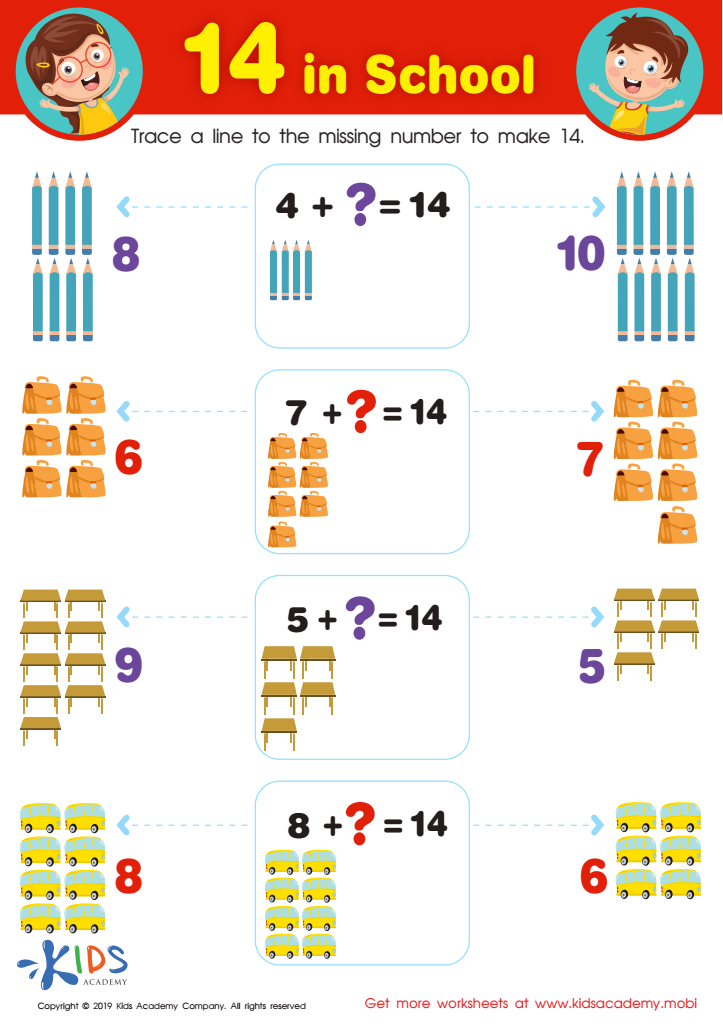
14 in School Worksheet
 Assign to My Students




.jpg)
.jpg)

Recognizing shapes is a foundational math skill crucial for children aged 5-9. First, it forms the building block for more advanced geometry concepts encountered later in education. Children who can identify and categorize shapes develop visual-spatial skills, which support problem-solving and logical thinking. This foundational knowledge aids in everyday tasks, like sorting objects or understanding surroundings, enhancing their ability to relate academic learning to real-world experiences.
Moreover, the process of recognizing shapes improves attention and focus among young learners. Activities such as classifying shapes involve critical thinking and observational skills, fostering cognitive development. Teachers and parents can utilize this skill to engage children in interactive learning experiences — from scavenger hunts for specific shapes to art projects that encourage creativity while reinforcing math concepts.
Additionally, encouraging shape recognition can instill confidence in young learners, paving the way for further mathematical understanding. It makes math enjoyable and accessible, breaking down the anxiety often associated with the subject, which can be crucial for future learning success. Ultimately, vested interest from parents and teachers in nurturing shape recognition contributes to a child’s holistic development, instilling a lifelong appreciation for mathematics and its practical applications.








