Spatial understanding Math Worksheets for Ages 5-9
4 filtered results
-
From - To
Unlock your child's potential with our Spatial Understanding Math Worksheets, designed for ages 5-9. These engaging worksheets from Kids Academy help young learners develop essential skills such as shape recognition, spatial awareness, and problem-solving. Our activities are crafted to make learning fun and interactive, ensuring your child grasps foundational concepts while staying motivated. Perfect for both classroom and home use, these worksheets provide a solid foundation for future math success. Foster your child's mathematical growth and spatial intelligence with Kids Academy’s expertly designed resources. Visit us today to explore our full range of educational materials!
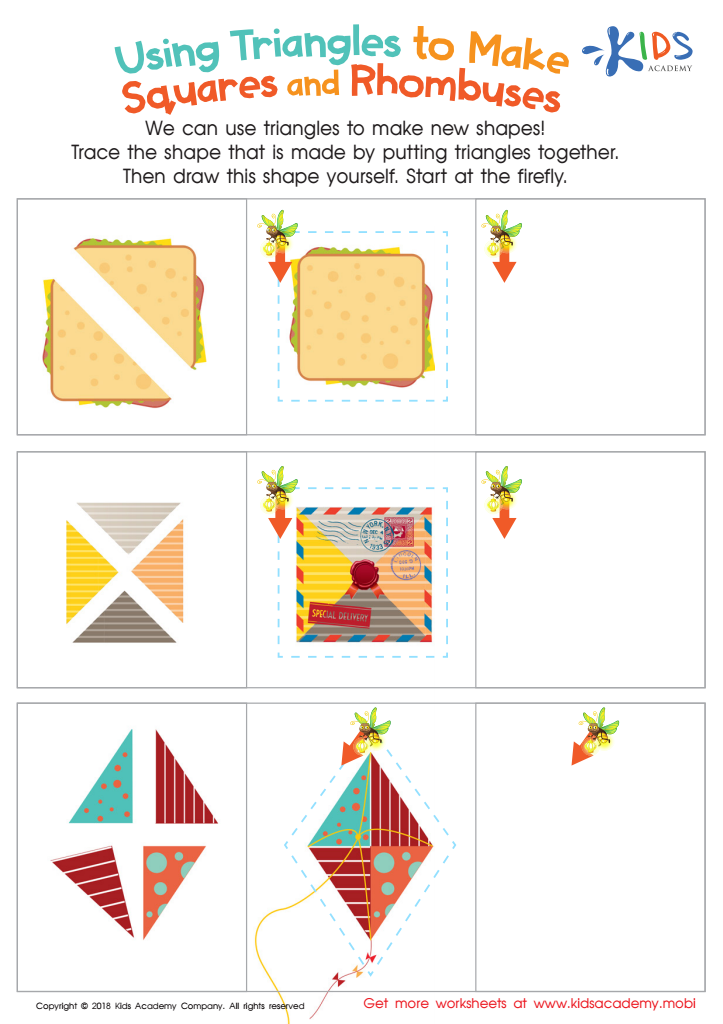
Using Triangles to Make Squares and Rhombuses Worksheet
 Assign to My Students
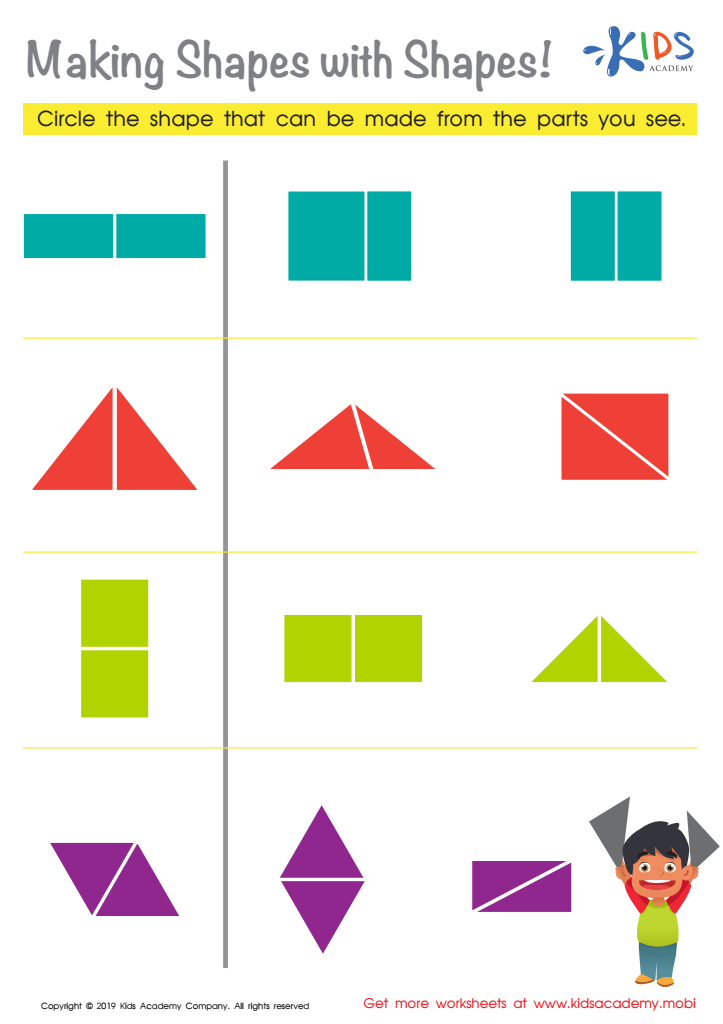
Making Shapes with Shapes Worksheet
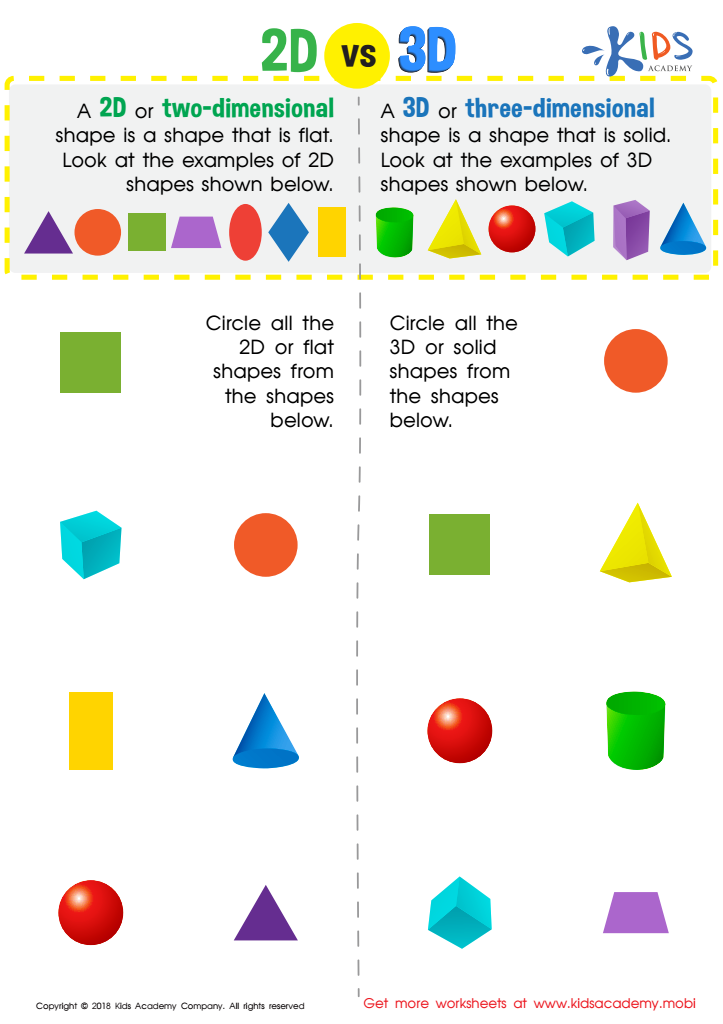
2D vs 3D Shapes Worksheet



%20(1).jpg)




Spatial understanding is a fundamental component of early childhood education that significantly impacts overall academic success and daily functioning. For children aged 5-9, spatial awareness helps them navigate and comprehend the world around them, forming the basis for essential cognitive skills.
Firstly, spatial understanding enhances early math skills. Activities involving shapes, patterns, and spatial relationships lay the groundwork for more complex math concepts such as geometry, measurement, and reasoning. Recognizing how shapes fit together or how objects move through space translates into abilities vital for solving math problems.
Furthermore, developing spatial skills supports reading and writing. Understanding the orientation of letters and how they form words requires a sense of spatial arrangement. Children who excel in spatial tasks often show improved performance in literacy as well.
Spatial understanding also contributes to motor skills. Drawing, building with blocks, and assembling puzzles help improve hand-eye coordination and fine motor abilities, crucial for writing and other academic tasks.
Additionally, nurturing these skills enhances problem-solving and creativity. Engaging in activities requiring spatial reasoning encourages kids to think critically, experiment, and invent new solutions.
Adults, including parents and teachers, play a key role in fostering spatial skills through engaging activities and daily interactions. By emphasizing spatial understanding, they provide children with tools crucial for a well-rounded education and a confident approach to learning challenges ahead.








