Understanding number patterns Math Worksheets for Ages 5-9
6 filtered results
-
From - To
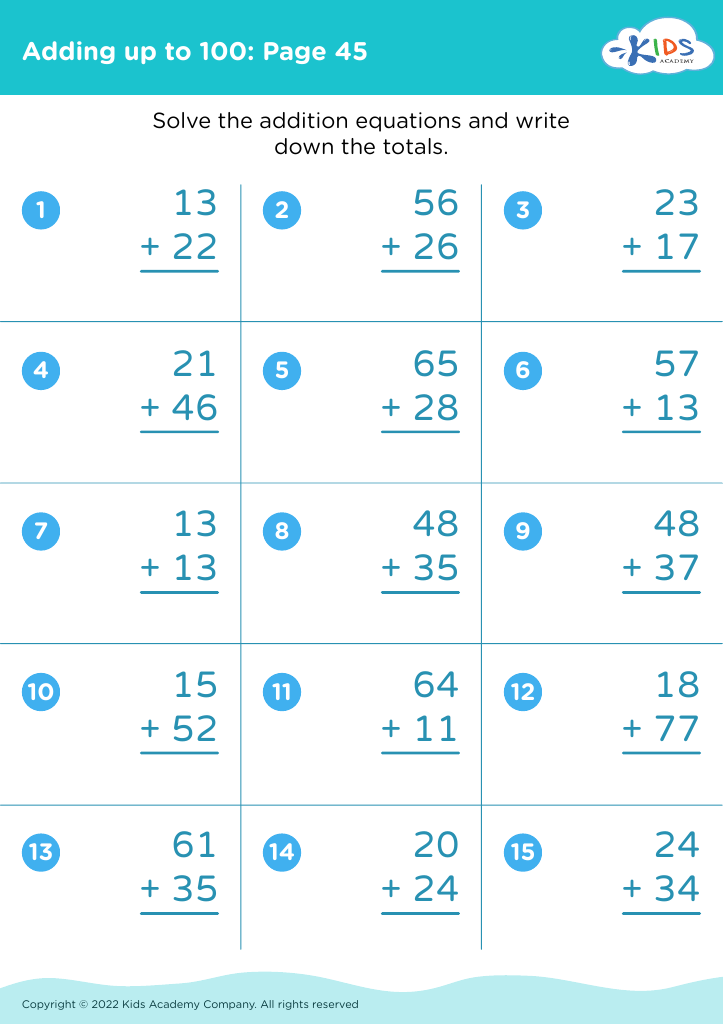
Engage young minds with our "Understanding Number Patterns Math Worksheets for Ages 5-9." These expertly designed worksheets help children grasp the concept of number sequences, enhancing their problem-solving and critical thinking skills. Through engaging exercises and colorful visuals, kids will practice identifying patterns and predicting the next numbers in a sequence. Ideal for both classroom and home learning, these worksheets provide a fun and educational way to build a strong math foundation. Perfect for young learners, these resources will boost their confidence and pave the way for advanced mathematical concepts. Start exploring number patterns with us today!
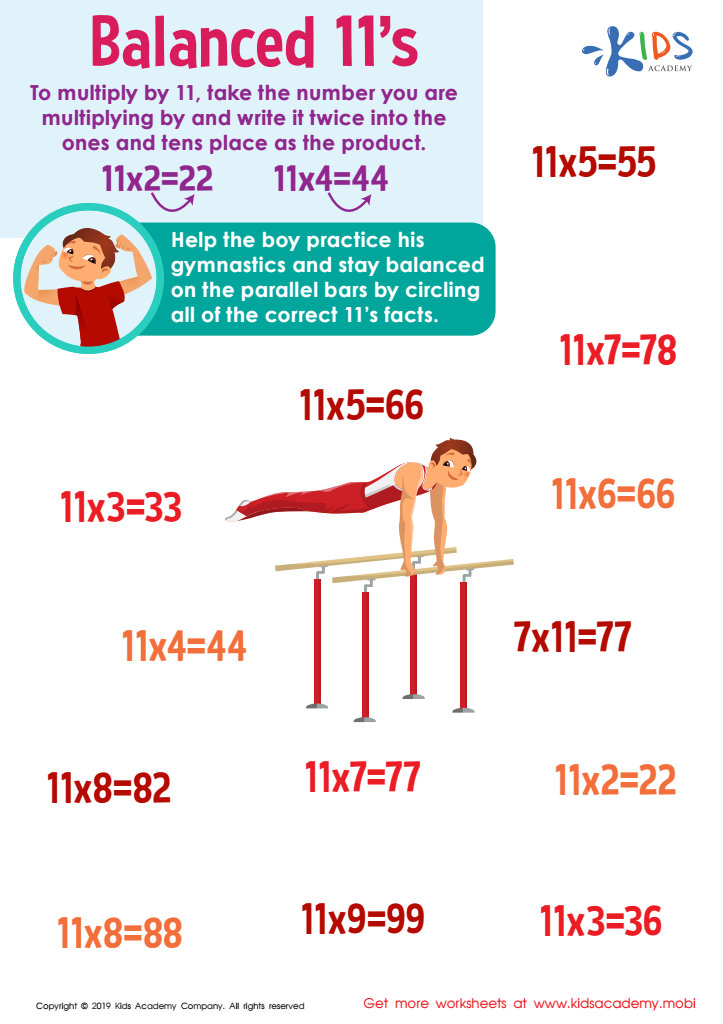
Balanced 11s Worksheet
 Assign to My Students
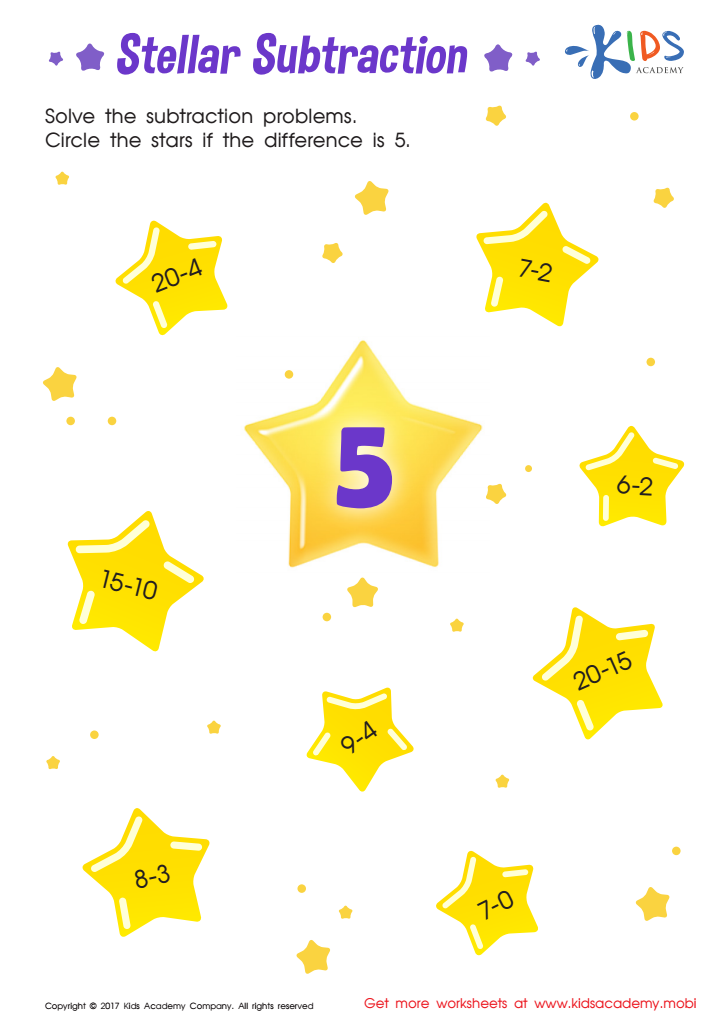
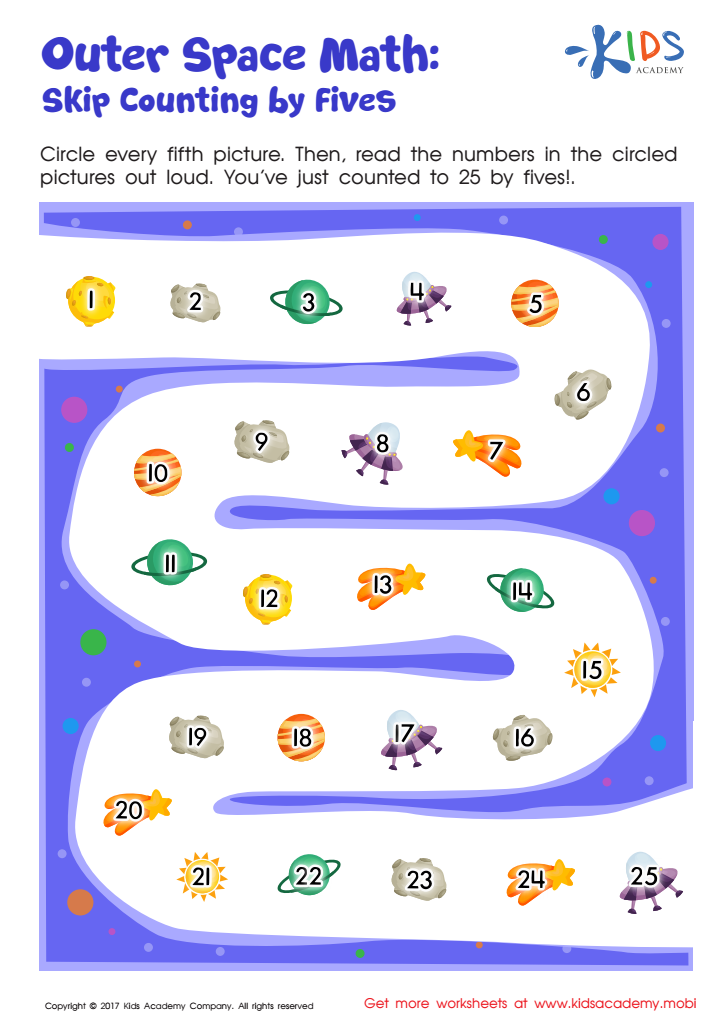
Skip Counting by 5s: Outer Space Math Printable
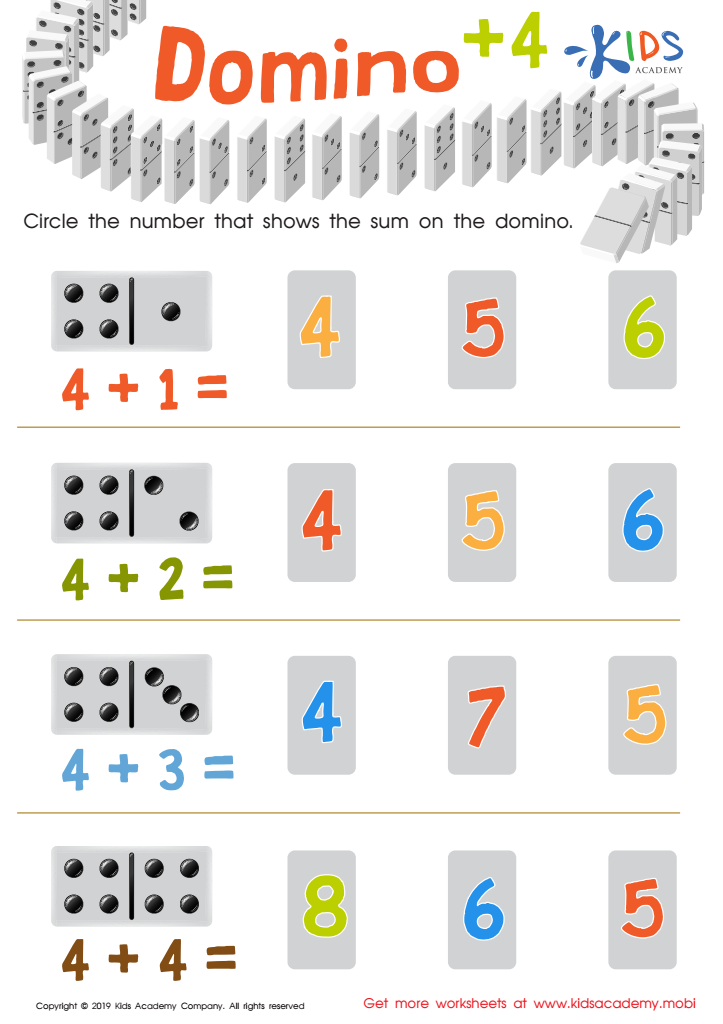
Domino +4 Worksheet
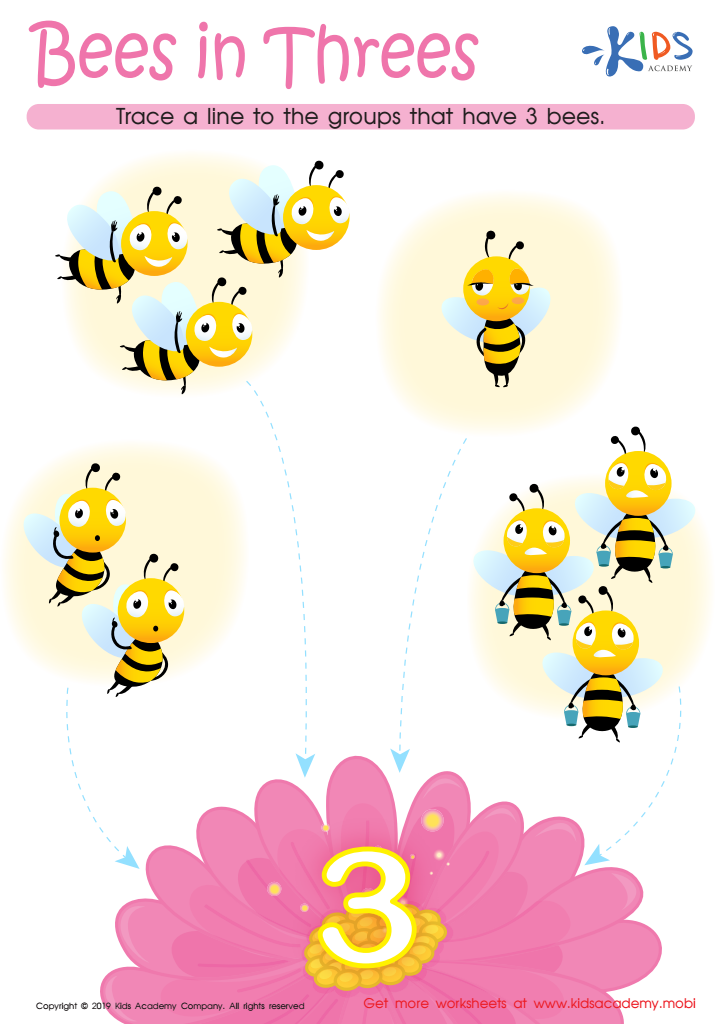
Bees in Threes Worksheet






Understanding number patterns is crucial for young children, as it lays the foundation for essential math skills and critical thinking. For ages 5-9, developing this understanding helps in recognizing relationships between numbers, which is core to their future learning of arithmetic, algebra, and problem-solving.
Number patterns training helps children improve their ability to predict and extend number sequences through a hands-on and visual approach, making abstract concepts more concrete. For example, counting by twos, fives, or tens not only strengthens basic counting skills but also readies young learners for multiplication and the broader concept of factoring.
Moreover, engaging children in activities related to number patterns enhances their analytical thinking and ability to identify and follow rules, which are skills beneficial beyond mathematics. It encourages a growth mindset and fosters perseverance as students explore patterns and find solutions through trial and error.
Finally, understanding mathematica patterns in early education can stimulate curiosity and joy in learning numbers, forming a positive relationship with mathematics from the start. This enthusiasm and self-confidence are critical as these attitudes greatly influence academic success in future complex topics. Hence, both teachers and parents should prioritize this aspect of math education to nurture well-rounded, competent, and motivated young learners.








