
Understanding sizes Math Worksheets for Ages 5-9
4 filtered results
Difficulty Level
Grade
Age
-
From - To
Subject
Activity
Standards
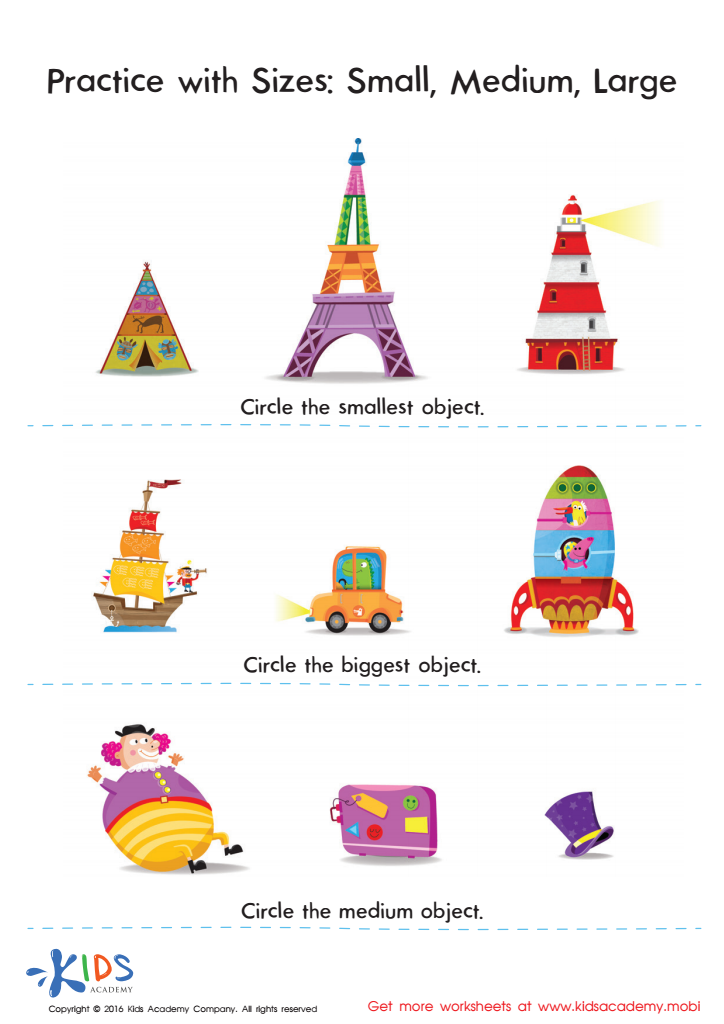
Explore our "Understanding Sizes Math Worksheets for Ages 5-9" to help young learners grasp the concept of size effortlessly. Designed for children in this critical developmental stage, these engaging activities foster comprehension of small, medium, and large objects through interactive tasks. By comparing and contrasting different sizes, kids enhance their spatial awareness and problem-solving skills. Perfect for classroom use or home practice, these carefully crafted worksheets are visually appealing and aligned with educational standards. Empower your child’s mathematical foundation with fun exercises that build confidence and proficiency in understanding sizes. Start exploring today and watch their abilities grow!
Favorites
With answer key
Interactive
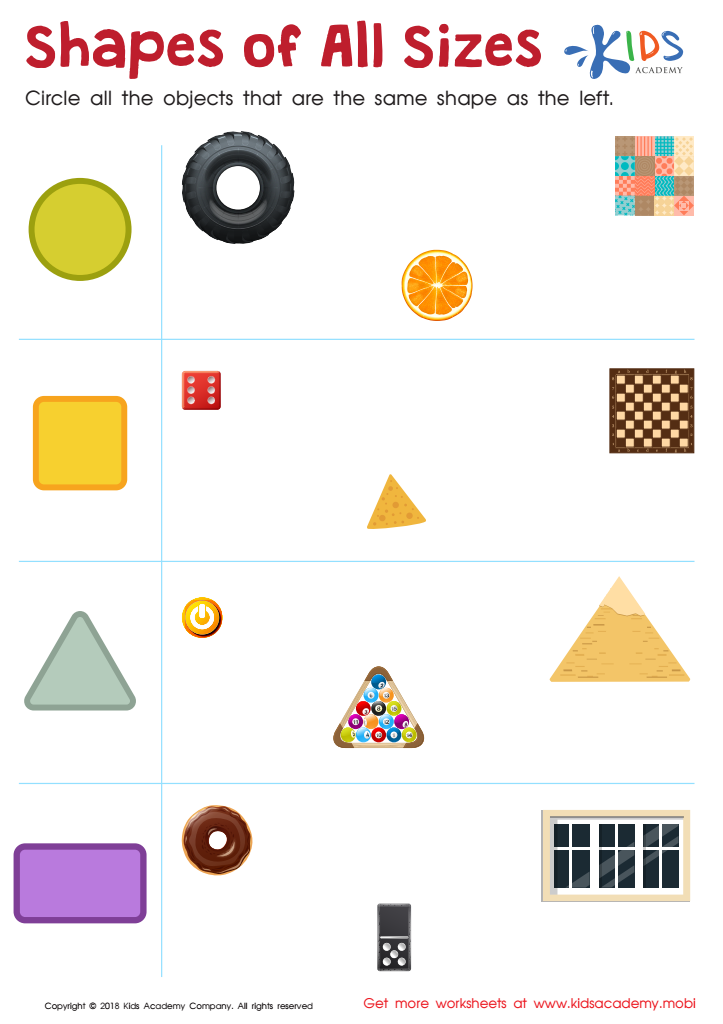
Shapes of All Sizes Worksheet
Students will have fun comparing basic shapes to familiar objects with this worksheet. It's an excellent way to help them recognize similarities in geometric shapes, building strong foundations for understanding congruence and similarity.
 Assign to My Students
Shapes of All Sizes Worksheet
Worksheet
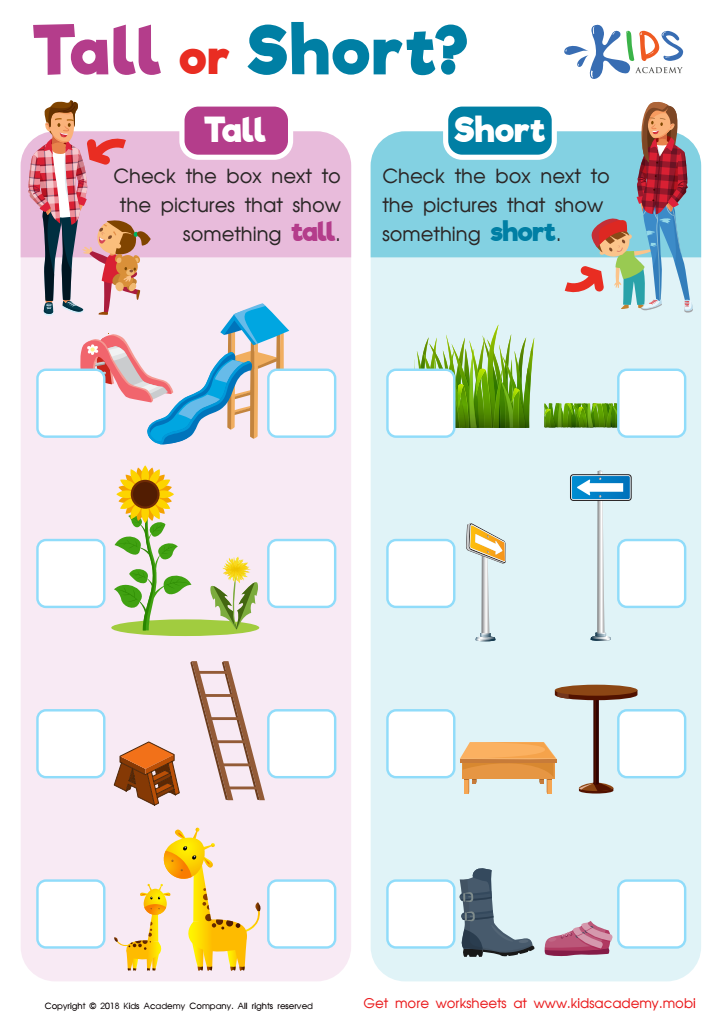
Tall or Short? Worksheet
Comparing tall and short objects is an early math skill. Our free worksheet uses fun colors and pictures to help kids practice. This will give them a head start for higher-level measurement skills, and they'll remember tangible objects for comparison.
Tall or Short? Worksheet
Worksheet
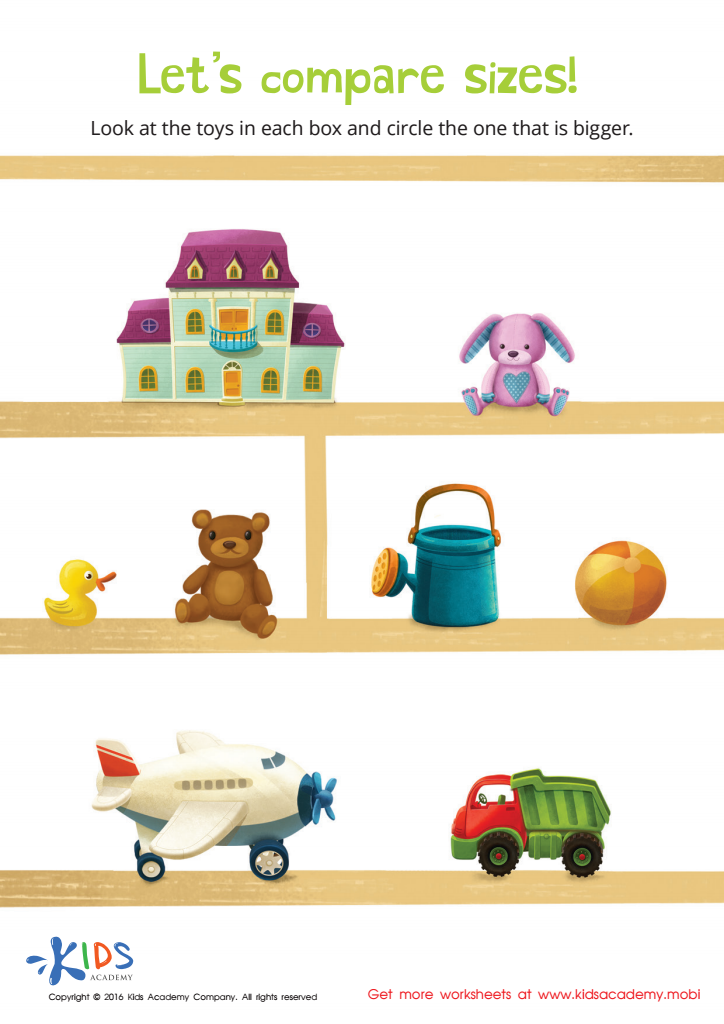
Classifying by Size Sorting Worksheet
Help your preschooler recognize differences in size using this fun worksheet! Your child will engage in important spatial recognition and problem-solving skills while talking with you about objects that can be small or large. Enjoy the vibrant pictures together!
Classifying by Size Sorting Worksheet
Worksheet
Join Kids Academy for Free
Who is primarily going to use this learning content?



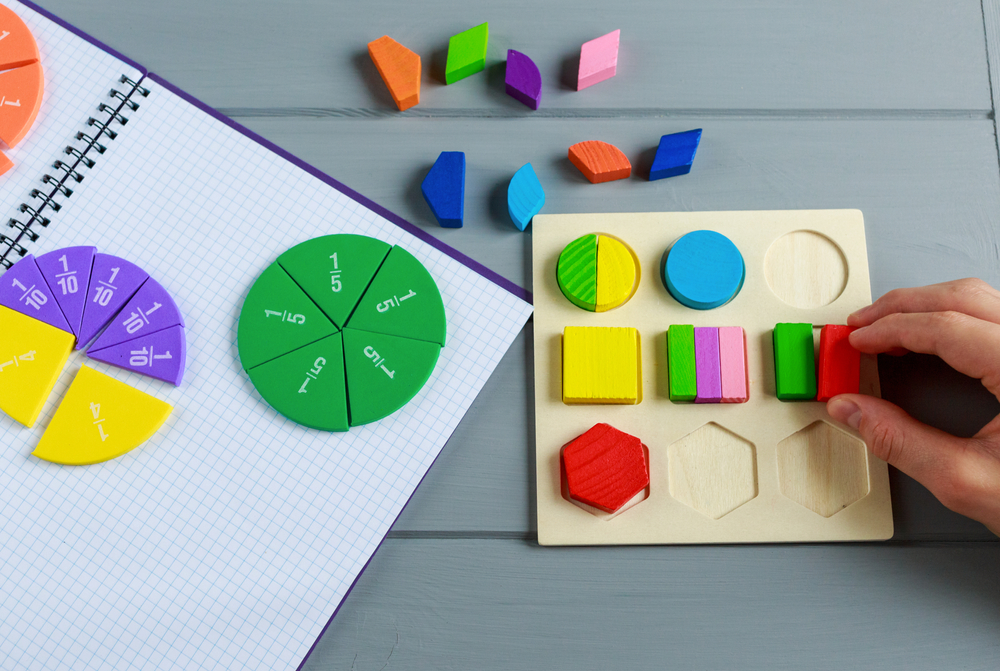



Understanding sizes in math for children ages 5-9 is crucial for several reasons, and both parents and teachers play vital roles in nurturing this foundational skill. Firstly, grasping the concepts of size, comparison, and measurement sets the stage for essential mathematical learning. It helps kids develop spatial awareness and the ability to reason quantitatively—skills they will build upon in later years to understand more complex math problems. For example, recognizing that one object is bigger or smaller than another translates into comprehending greater-than and less-than relationships, an early introduction to number sense, and arithmetic.
Secondly, understanding sizes aids practical life skills. Children frequently encounter situations requiring size evaluation, such as fitting toys in a box or sharing resources. These experiences integrate math with real-life applications, promoting deeper engagement and understanding.
Socially and emotionally, mastering these concepts boosts a child's confidence. When children successfully apply their knowledge to solve everyday problems, they feel competent and motivated to tackle more challenging tasks. As active supporters in their education, parents and teachers can use everyday items and situations—cutting a pizza, comparing shoe sizes, or filling a jug—to make learning about sizes an interactive and enjoyable endeavor. Prioritizing these activities helps lay a strong mathematical foundation critical for future academic success.








