Number Sequencing Matching Worksheets for Ages 5-9
4 filtered results
-
From - To
Discover the perfect resource to boost your child's numeracy skills with our Number Sequencing Matching Worksheets designed for ages 5-9. These engaging, printable worksheets from Kids Academy focus on helping young learners enhance their understanding of number sequences in a fun and interactive way. By matching numbers in a sequence, children will develop crucial math skills including counting and recognizing numerical order. Ideal for both classroom and home learning, these worksheets make learning exciting and effective. Download now to support your child's mathematical journey and watch their confidence grow as they master number sequencing!
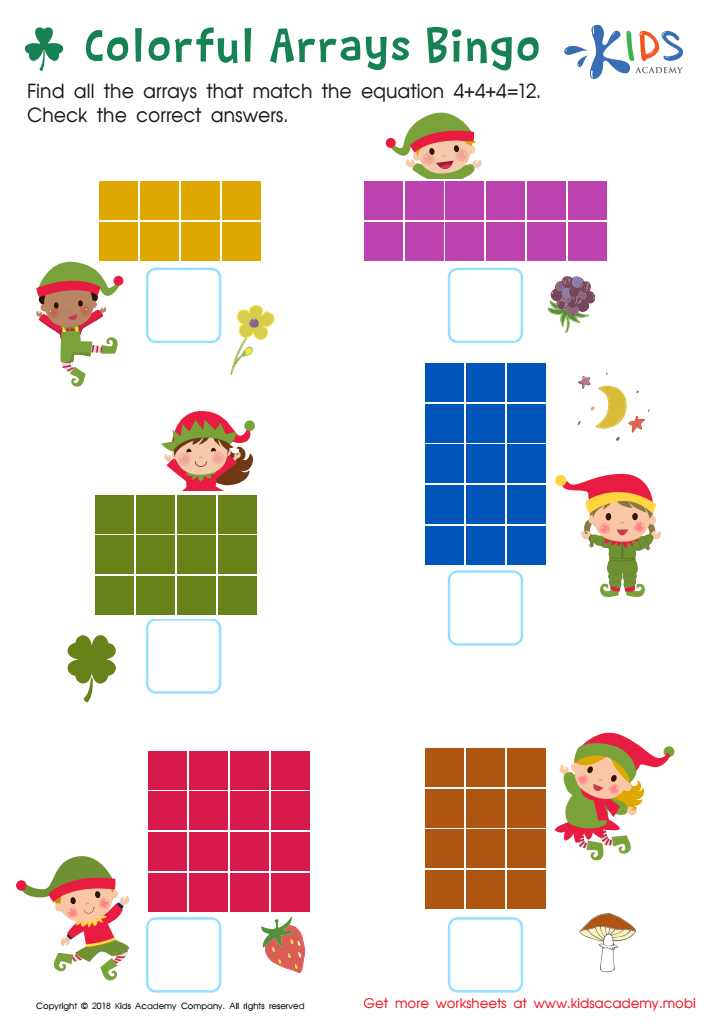
Colorful Arrays Bingo Worksheet
 Assign to My Students
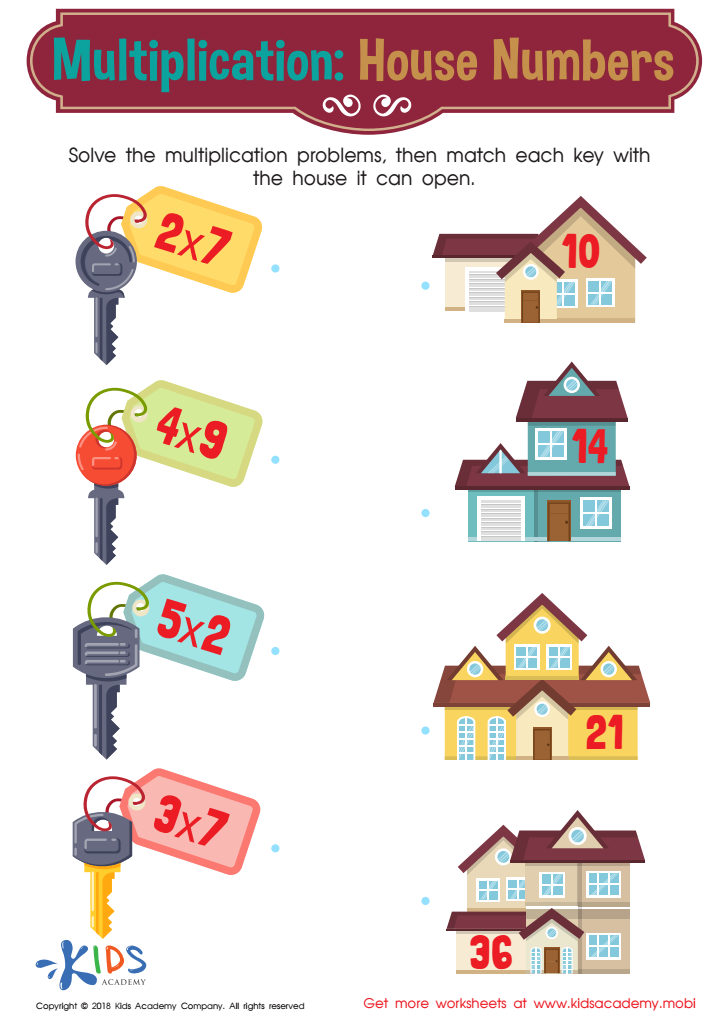
House Numbers Worksheet
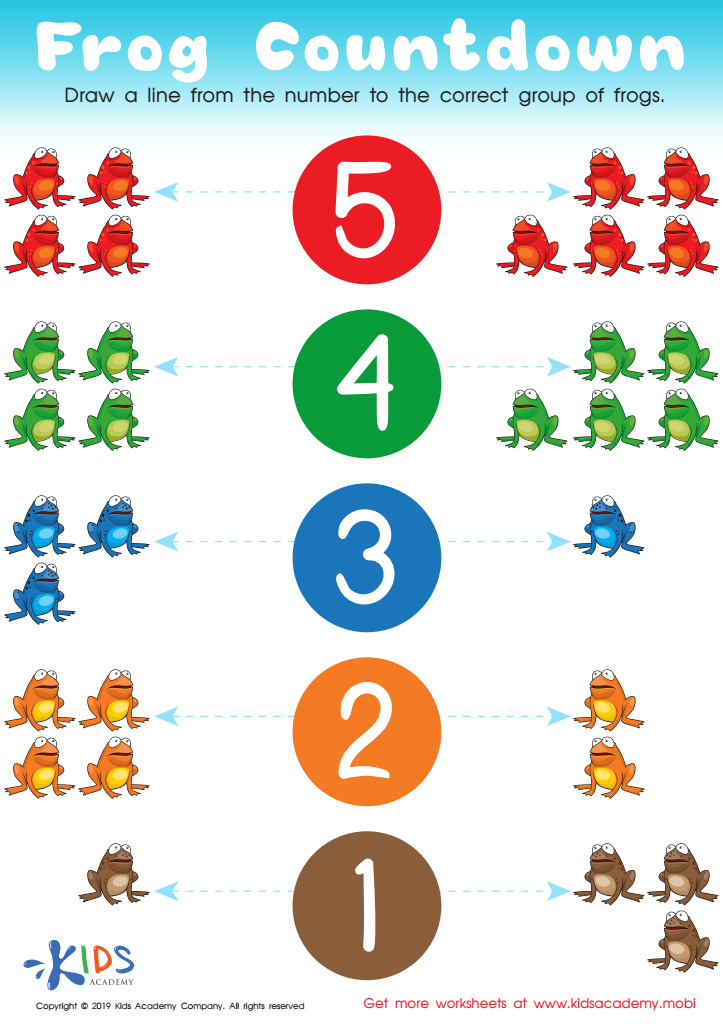
Frog Countdown Worksheet
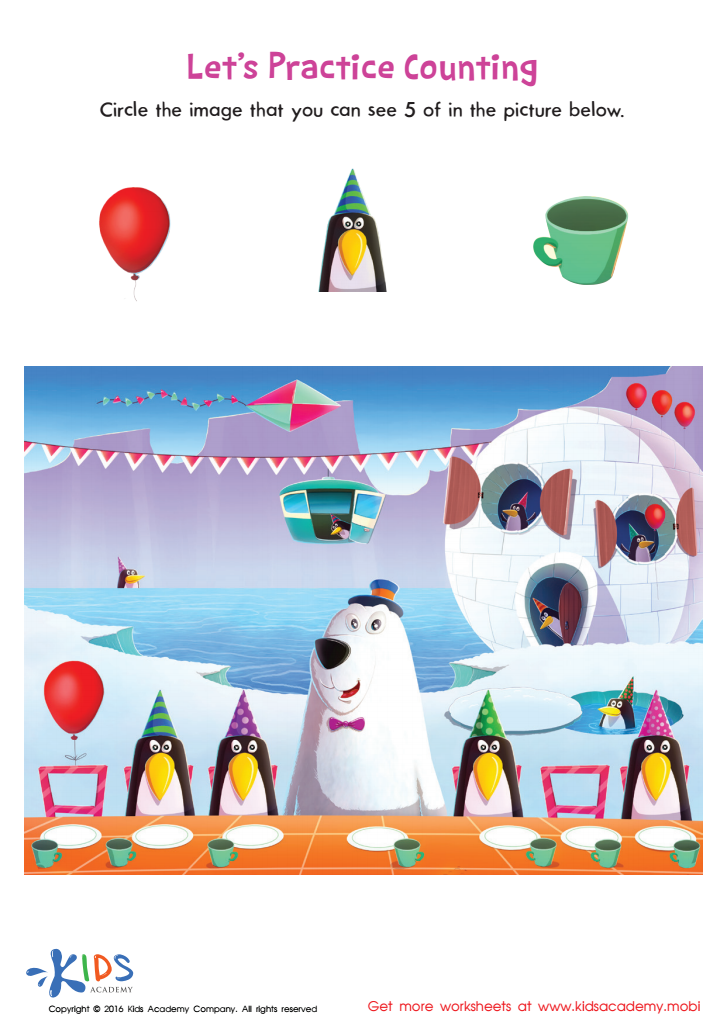
Counting Worksheet: Let's Practice Counting








Number sequencing and matching are crucial foundational skills for children aged 5-9, primarily because they lay the groundwork for future mathematical learning and cognitive development. Firstly, understanding sequences helps children recognize patterns, preparing them for more complicated mathematical concepts like addition, subtraction, multiplication, and division.
Practicing number sequencing enhances a child’s ability to understand order and logical progression. This is important not only in math but also in everyday activities that require following steps or instructions, such as counting money, navigating linear time concepts (days, months, seasons), and organizing tasks.
Sequencing and matching also significantly bolster children’s memory skills, as they involve retaining and recalling numerical orders. This exercise activates cognitive processes that are essential for problem-solving and critical thinking.
Furthermore, success in these early mathematical concepts offers a confidence boost and triggers a positive attitude towards learning. When children conquer foundational skills like number sequencing, they build self-esteem, which encourages them to tackle more challenging tasks with resilience.
For teachers and parents, investing time and resources in these basic exercises means supporting the development of a well-rounded, confident, and mathematically-adept individual, setting the child on a successful academic trajectory. Therefore, prioritizing activities that reinforce number sequencing and matching is a key strategy in early childhood education.








