Comparing object weights Measurement Worksheets for Ages 5-9
3 filtered results
-
From - To
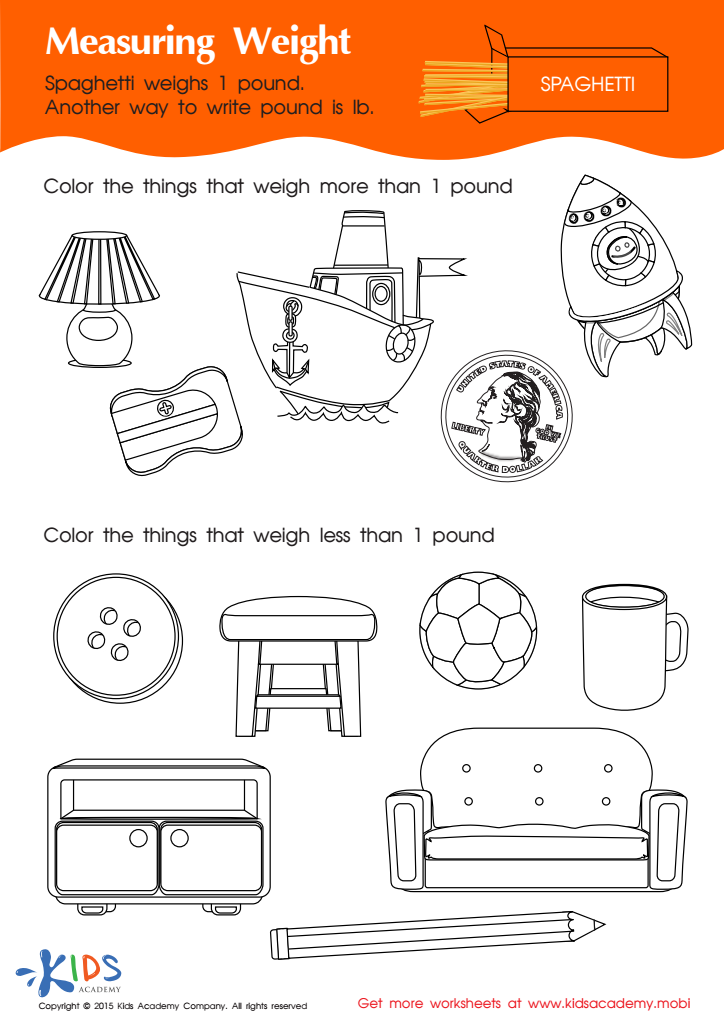
Unlock your child's understanding of weight with our "Comparing Object Weights Measurement Worksheets" designed specifically for ages 5 to 9. These engaging and interactive worksheets encourage young learners to explore fundamental concepts of weight comparison through colorful illustrations and relatable examples. By participating in hands-on activities, children will enhance their critical thinking and problem-solving skills while gaining confidence in their measurement abilities. Our worksheets effectively align with early education standards, making them a valuable resource for both educators and parents. Help your child master the art of weight comparison and make learning fun with our comprehensive worksheets today!
 Assign to My Students
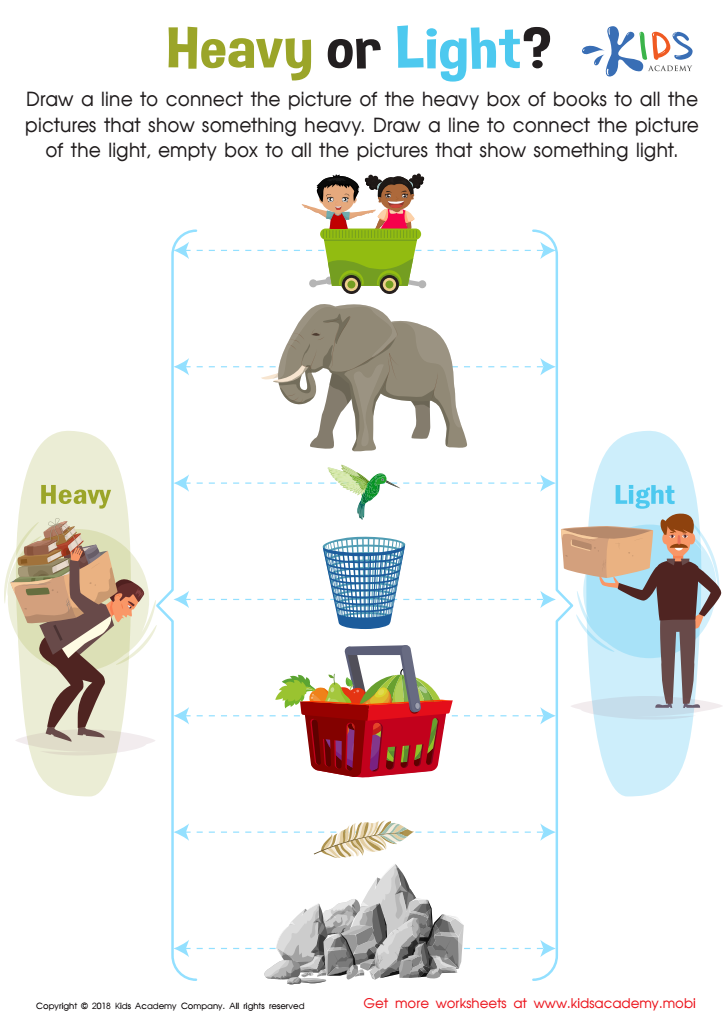
Heavy or Light? Worksheet
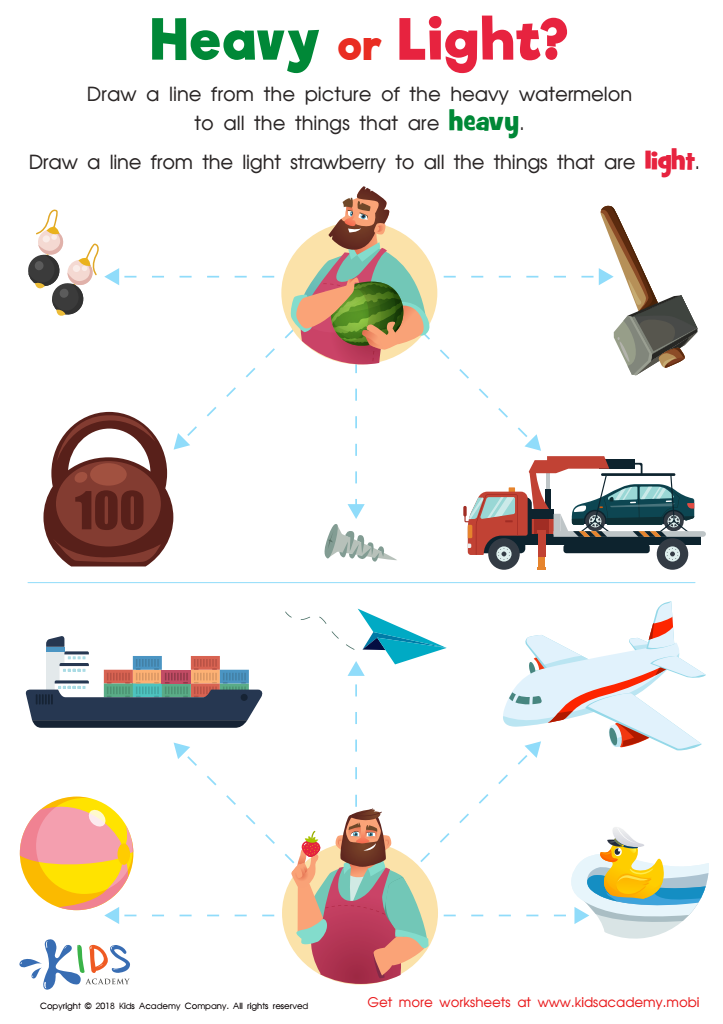
Heavy or Light? Worksheet








Comparing object weights is a fundamental concept in early education that significantly enhances children's cognitive and sensory development. For children aged 5-9, engaging in weight comparison activities fosters critical thinking, problem-solving skills, and an understanding of measurement principles.
By learning to compare weights, children develop their ability to classify, compare, and make observations, which is essential for their overall mathematical understanding. These activities also promote hands-on learning, helping children to visualize concepts and connect them to real-life situations, such as weighing fruits at the grocery store or portions in the kitchen.
Moreover, comparing object weights encourages fine motor skills as children manipulate and balance various objects on scales. It allows for meaningful conversations about heavier and lighter, which enriches their vocabulary and language skills.
Parents and teachers also play a vital role in reinforcing these concepts at home and in the classroom. Engaging children in simple weight comparison games can stimulate curiosity and create a positive attitude toward math and science. Overall, this foundational knowledge builds the groundwork for more complex scientific and mathematical concepts in later grades, making it crucial for parents and educators to support and prioritize these learning experiences.








