
Vocabulary enhancement Measurement Worksheets for Ages 5-9
4 filtered results
Difficulty Level
Grade
Age
-
From - To
Subject
Activity
Standards
Boost your child's vocabulary with our engaging Vocabulary Enhancement Measurement Worksheets designed specifically for ages 5-9! These worksheets focus on enriching language skills through fun, age-appropriate activities that integrate measurement concepts. Ideal for early learners, the worksheets incorporate relatable contexts to ensure children grasp terminology related to length, width, height, and weight while building their vocabulary. Perfect for both classroom settings and at-home learning, these resources are designed to foster a love for language and learning. Enhance your students' verbal skills today with our interactive and educational measurement worksheets that make learning an enjoyable experience!
Favorites
With answer key
Interactive
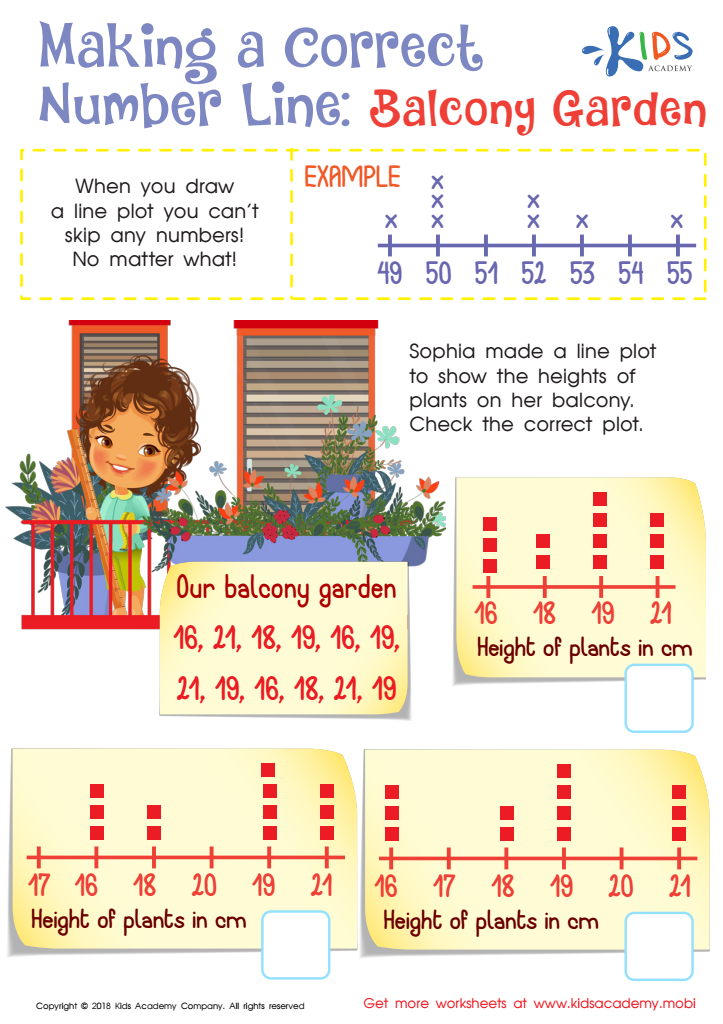
Making a Correct Number Line: Balcony Garden Worksheet
Teach your child to draw and identify a line plot with this worksheet. Have them help Sophia check her plot for the heights of plants in her balcony, ensuring no numbers are skipped. Line plots are a great way to quickly organize information and an essential skill your child needs.
 Assign to My Students
Making a Correct Number Line: Balcony Garden Worksheet
Worksheet
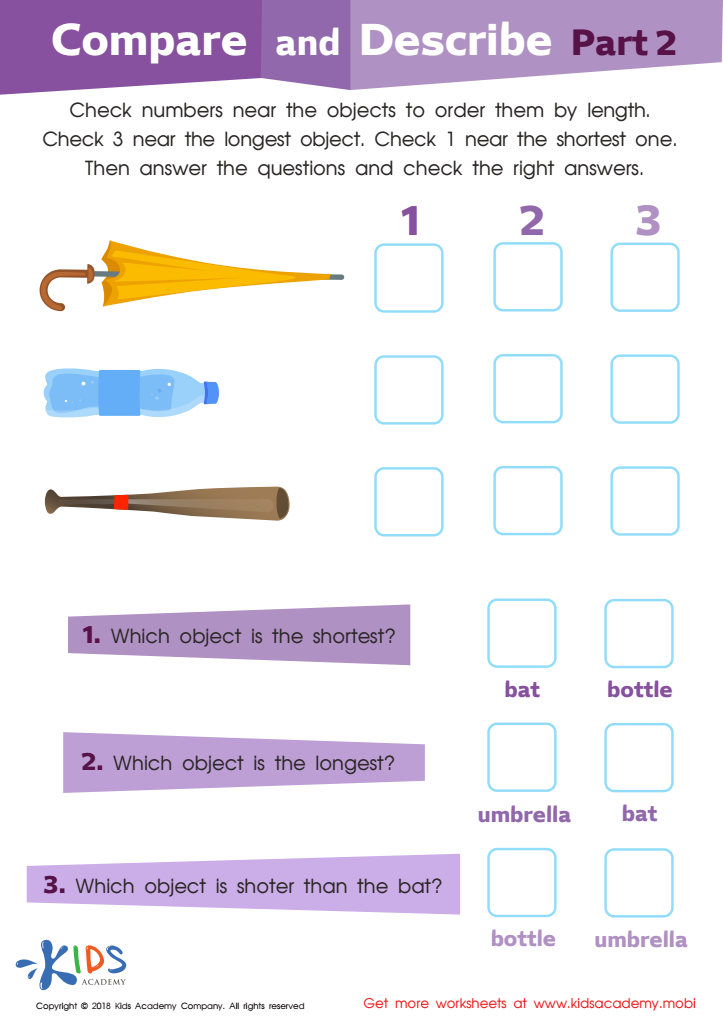
Compare and Describe: Part 2 Worksheet
Help kids hone their comparison skills with this fun measurement worksheet! Kids will sort objects by length and check off the boxes as they go. At the bottom, they'll read the questions and take a final look at the images to complete the exercise. An exciting way to learn measurement!
Compare and Describe: Part 2 Worksheet
Worksheet
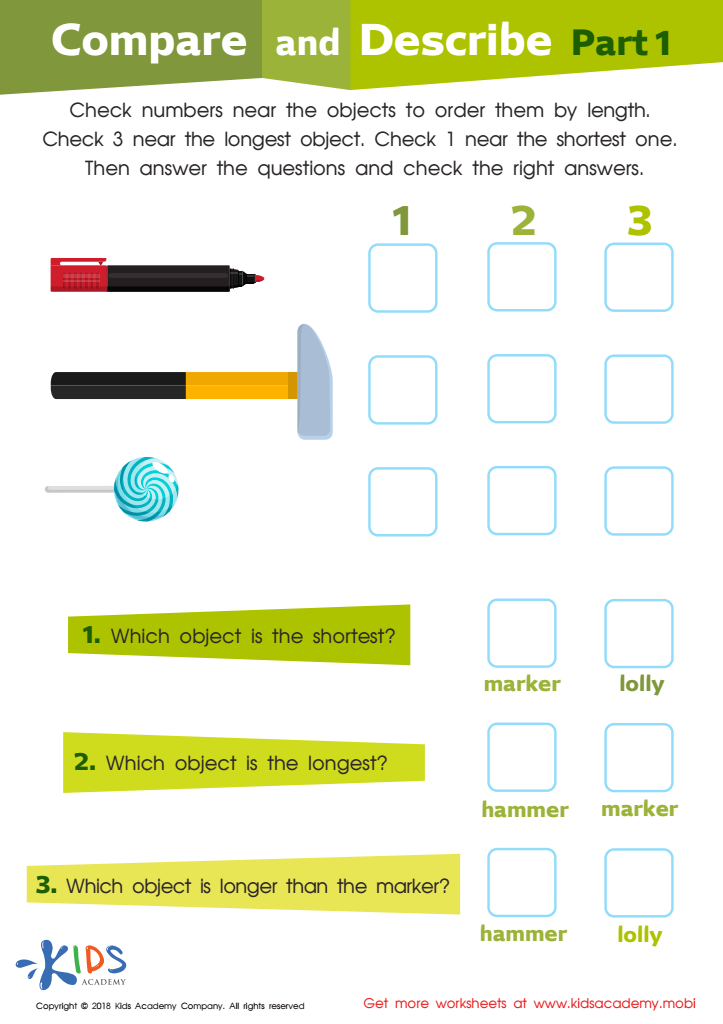
Compare and Describe: Part 1 Worksheet
In this worksheet from Kids Academy, kids can start learning measurement in stages. Observe the images, then compare their length - which one is shortest? Which one is longest? Answer the questions at the bottom to complete the sheet. It's an easy way to help kids understand measurement basics.
Compare and Describe: Part 1 Worksheet
Worksheet
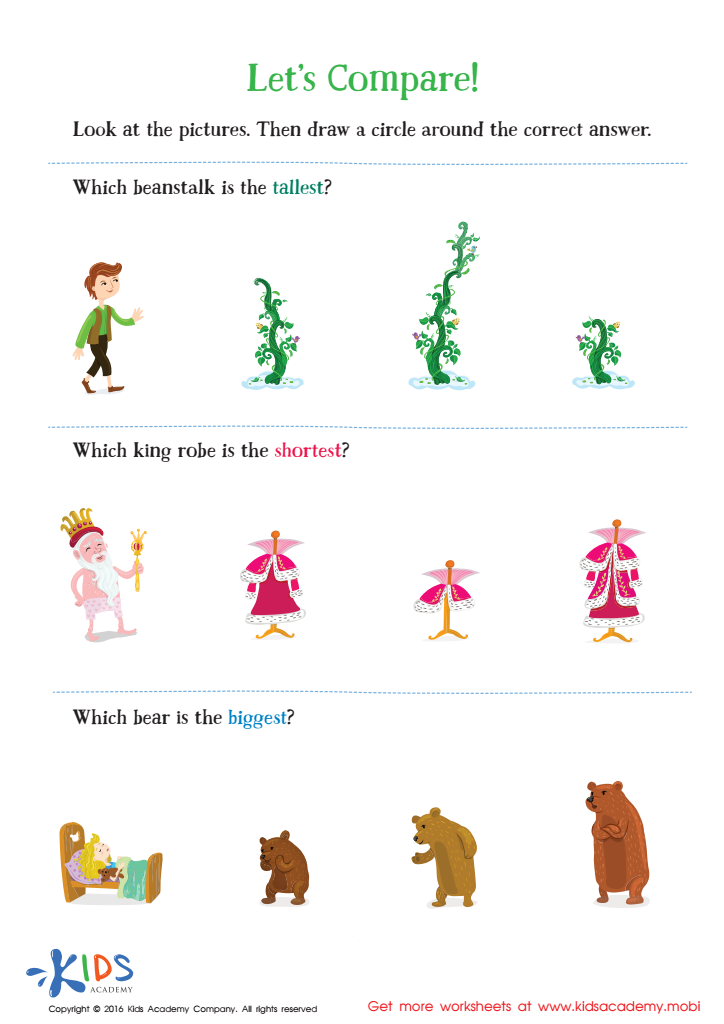
Fairy Tale Worksheet: Let's Compare
Preschoolers need to recognize different sizes of objects. This worksheet combines fun fairy tales with size practice, helping them read, problem solve, and sort through pictures. Your child will love the images and be eager to complete it. Enhance their learning by talking about the tales to build comprehension.
Fairy Tale Worksheet: Let's Compare
Worksheet
Join Kids Academy for Free
Who is primarily going to use this learning content?








Vocabulary enhancement measurement for children aged 5-9 is crucial for several reasons. First, vocabulary development forms the backbone of language acquisition and literacy skills. A robust vocabulary enables young learners to comprehend texts more effectively, facilitating better reading fluency and overall academic success. By measuring vocabulary growth, educators and parents can identify areas where a child may need additional support or enrichment, tailoring instruction to each child's unique needs.
Furthermore, a strong vocabulary enhances communication abilities. Children who can express themselves clearly are more likely to engage in meaningful conversations and ask questions about the world around them, fostering curiosity and critical thinking skills. This measurement also helps in setting clear benchmarks and goals, motivating both children and educators through visible progress.
In this pivotal period of cognitive and social development, early vocabulary enhancement helps build confidence in learning. As children expand their vocabulary, they better articulate their thoughts and feelings, leading to improved social interactions and emotional regulation. Therefore, parents and teachers should prioritize vocabulary enhancement measurement as a fundamental aspect of early education, ensuring children receive the necessary support to thrive academically and socially during these formative years.








