
Animal Classification Sorting Worksheets for Ages 5-9
3 filtered results
Difficulty Level
Grade
Age
-
From - To
Subject
Activity
Standards
Discover engaging Animal Classification Sorting Worksheets tailored for ages 5-9! Our fun, printable worksheets assist young learners in understanding animal categories, promoting critical thinking and fine motor skills. Each activity encourages kids to sort animals into groups like mammals, birds, reptiles, fish, and amphibians through vibrant illustrations and interactive tasks. Perfect for use at home or in the classroom, these worksheets support both independent learning and guided instruction. Help your child or students foster a love for biology and nature while mastering animal classification. Download today for an enriching educational experience!
Favorites
With answer key
Interactive
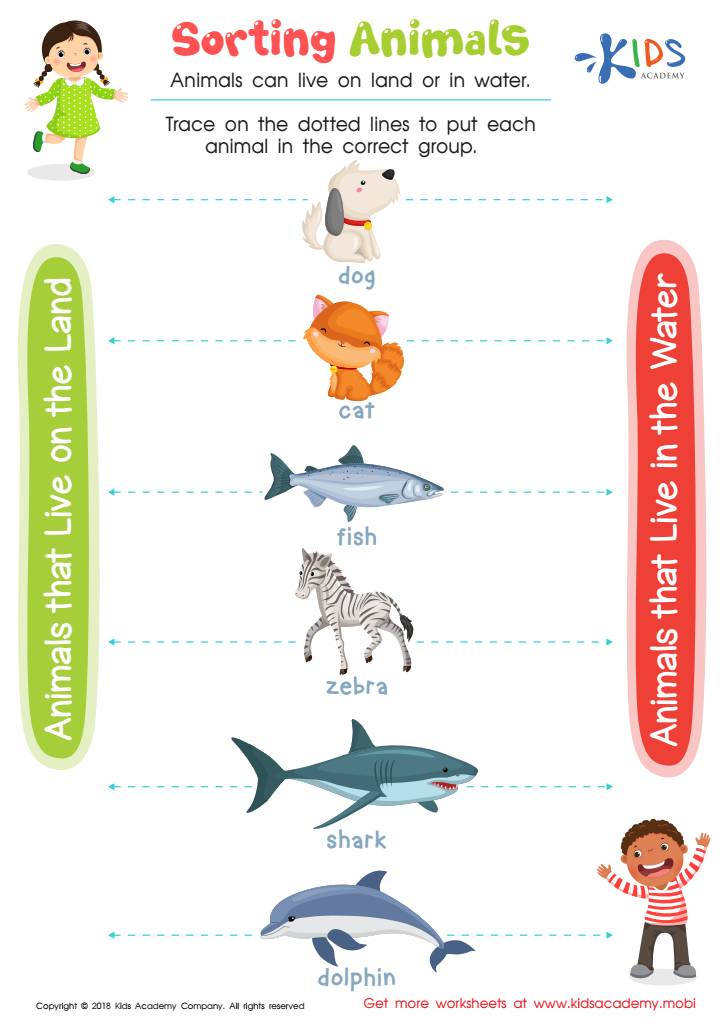
Sorting Animals Worksheet
Your kids will love this free, interactive worksheet! With image clues, they can read and trace the animal names, and then sort them into groups of land or water animals. It's an enjoyable way to boost their critical thinking, fine motor and prior knowledge skills.
 Assign to My Students
Sorting Animals Worksheet
Worksheet
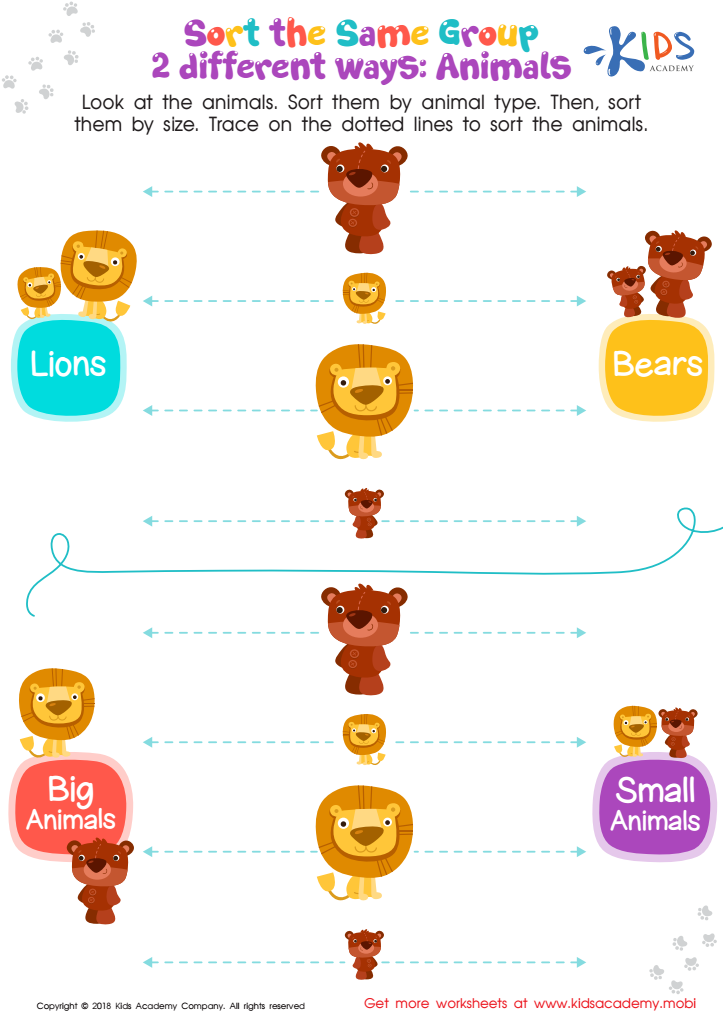
Sort the Same Group 2 Different Ways: Animals Worksheet
Look at the animals with your child. Ask them to name them, then sort them by type (e.g. lions and bears). Next, help them sort by size, tracing the dotted lines. This will teach them sorting skills.
Sort the Same Group 2 Different Ways: Animals Worksheet
Worksheet
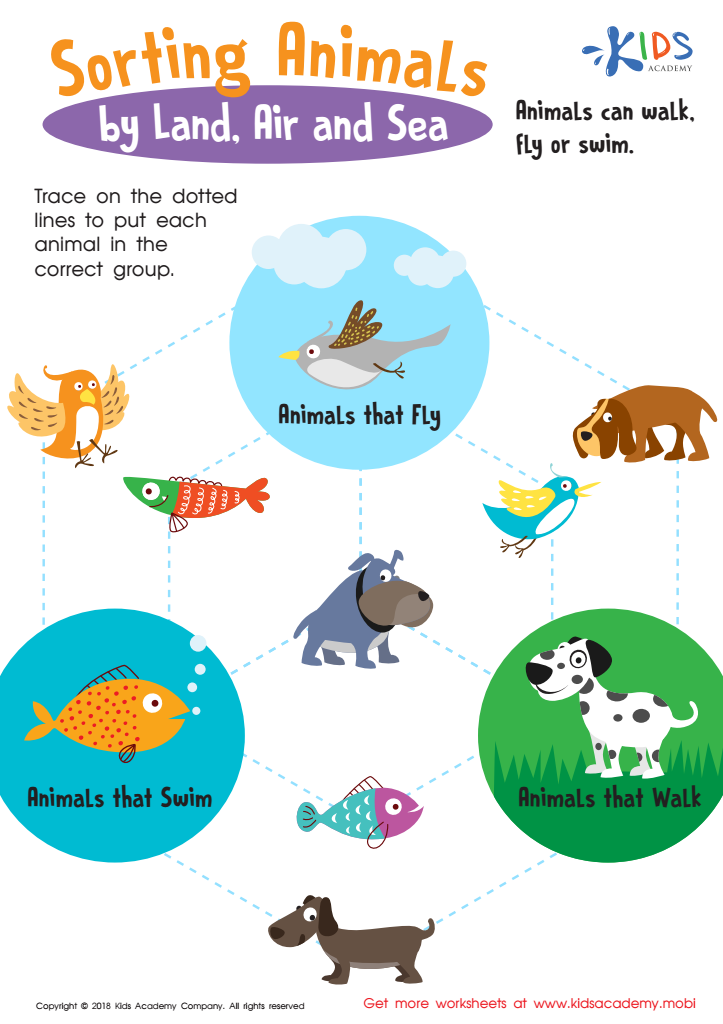
Sorting Animals by Land, Air and Sea Worksheet
Kids will use critical thinking and fine motor skills with this worksheet! They'll analyze animal traits and draw lines to sort them into groups of those that fly, swim, or walk. It's a fun way to hone skills and have a great time!
Sorting Animals by Land, Air and Sea Worksheet
Worksheet
Join Kids Academy for Free
Who is primarily going to use this learning content?







Animal classification sorting is an engaging and educational activity that offers multiple benefits for children aged 5-9. First and foremost, it helps to develop cognitive skills. By sorting animals into different categories, children learn to recognize similarities and differences, which enhances their critical thinking and problem-solving abilities. This foundational exercise lays the groundwork for more complex scientific understanding later in their educational journey.
Additionally, this activity aids in vocabulary expansion. As children learn terms like "mammal," "reptile," "amphibian," "bird," and "fish," they enrich their language skills and become more articulate in discussing scientific topics. This can spark an early interest in biology and the natural world, nurturing future scientists and informed citizens.
Furthermore, animal classification sorting promotes organizational skills and logical reasoning. It teaches children how to categorize and consider multiple attributes simultaneously, which are essential life skills. This activity also meets educational standards in subjects like science and literacy, providing a well-rounded learning experience that's both fun and informative.
Parents and teachers should care about animal classification sorting because it cultivates intellectual curiosity, builds fundamental educational skills, and encourages a lifelong love for learning about the living world. By supporting this activity, they contribute significantly to a child's comprehensive developmental process.








