Visual discrimination Sorting Worksheets for Ages 5-9
3 filtered results
-
From - To
Enhance your child's visual discrimination skills with our engaging Sorting Worksheets designed for ages 5-9. These worksheets help children recognize patterns, identify differences, and categorize items, crucial for developing early math and reading skills. Our activities are fun, colorful, and age-appropriate, making learning enjoyable. They boost critical thinking and attention to detail, progressing from simple to complex sorting tasks. Perfect for classroom use or at-home practice, these worksheets provide a solid foundation for academic success. Start your child's journey toward sharper observation and distinction abilities with our expertly crafted visual discrimination sorting activities.
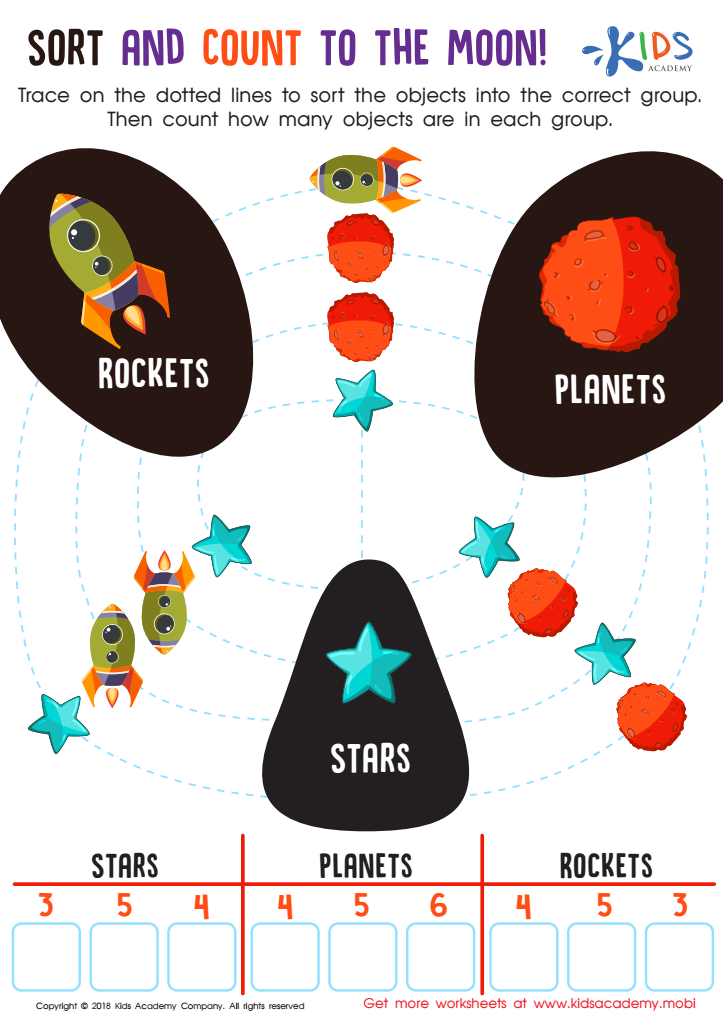
Sort and Count to the Moon Worksheet
 Assign to My Students
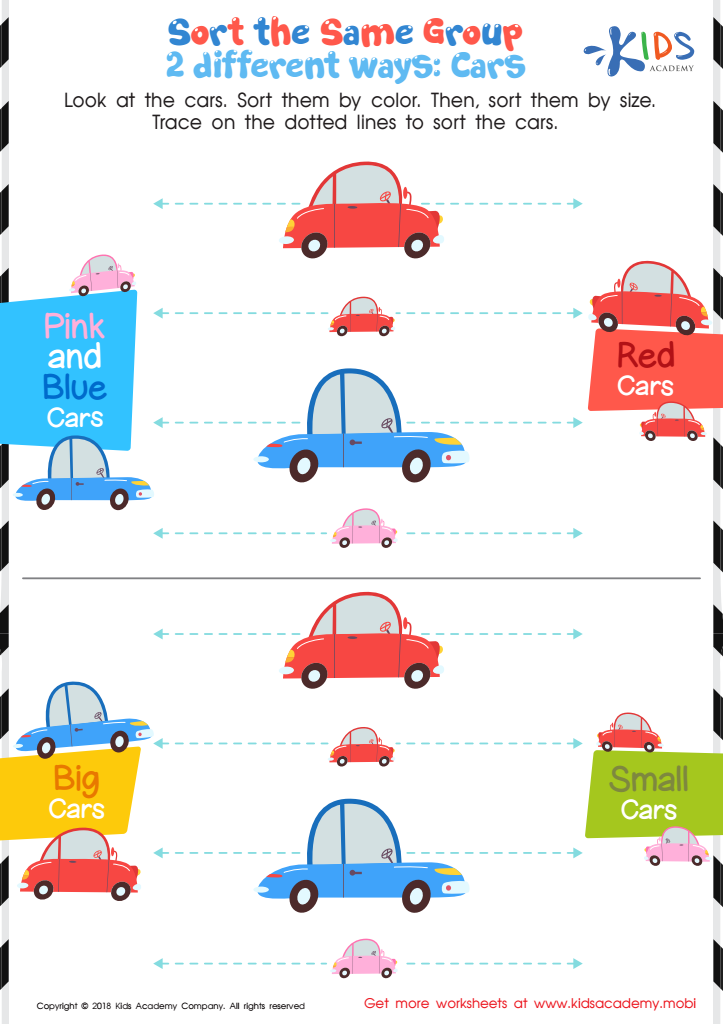
Sort the Same Group 2 Different Ways: Cars Worksheet
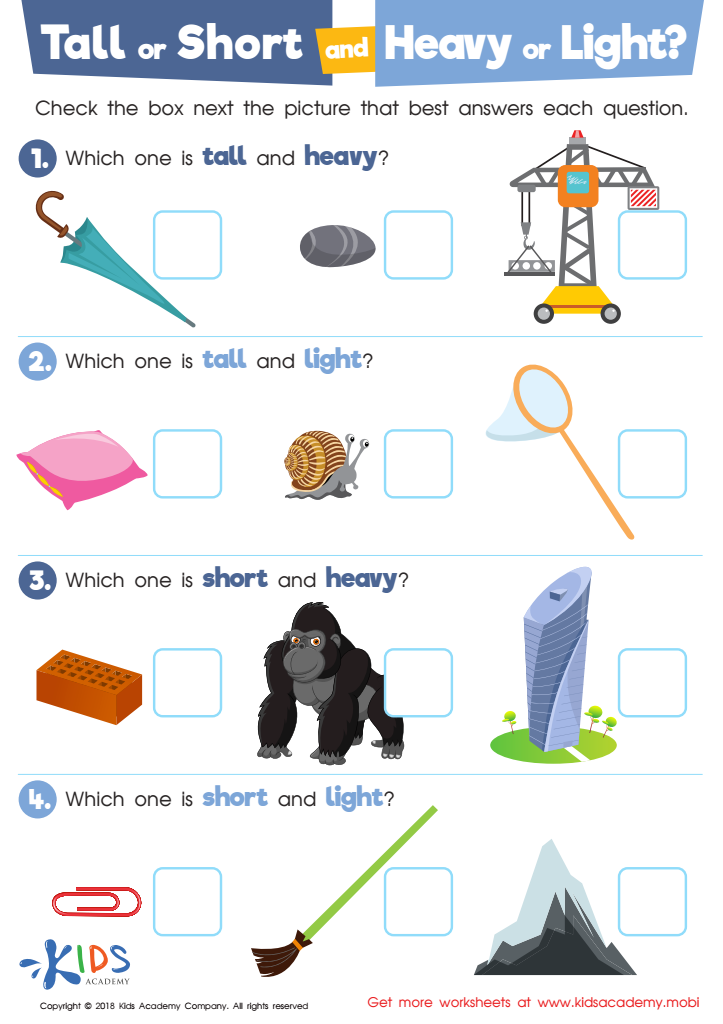
Tall or Short and Heavy or Light? Worksheet








Visual discrimination sorting is a critical skill for children aged 5-9, serving as a foundation for reading, writing, and other academic endeavors. At its core, visual discrimination is the ability to differentiate among various shapes, colors, letters, and patterns, which directly impacts a child's ability to recognize and understand written symbols and numbers.
When parents and teachers emphasize visual discrimination sorting, they help children develop the necessary skills to categorize and organize visual information effectively. This forms the basis for letter recognition, crucial for reading fluency. For example, distinguishing between similar letters like 'b' and 'd' or 'p' and 'q' can be challenging without strong visual discrimination abilities. Moreover, sorting activities engage fine motor skills and foster attention to detail, benefiting overall cognitive development.
Visual discrimination is also pivotal in mathematics, where recognizing patterns and differentiating shapes and numbers are key. Beyond academics, activities that target these skills enhance problem-solving abilities and promote an organized approach to tasks.
Parents and teachers should care about cultivating visual discrimination through sorting because it lays the groundwork for literacy and numeracy, nurtures cognitive and motor development, and fosters lifelong learning skills. Identifying and addressing visual discrimination issues early can prevent future academic struggles and build children's confidence and competence in essential learning domains.








