Counting skills Word Problems Worksheets for Ages 5-9
12 filtered results
-
From - To
Boost your child’s counting proficiency with our comprehensive "Counting Skills Word Problems Worksheets" crafted for ages 5-9. Designed by educational experts, these worksheets combine engaging word problems with essential counting exercises to enhance mathematical abilities and critical thinking. Each worksheet presents relatable scenarios to capture young learners' interest, fostering both confidence and a love for math. Ideal for classroom use or at-home practice, our worksheets provide a fun and challenging way for children to master counting skills while solving practical problems. Dive into a world of interactive learning and watch your child’s counting skills soar!
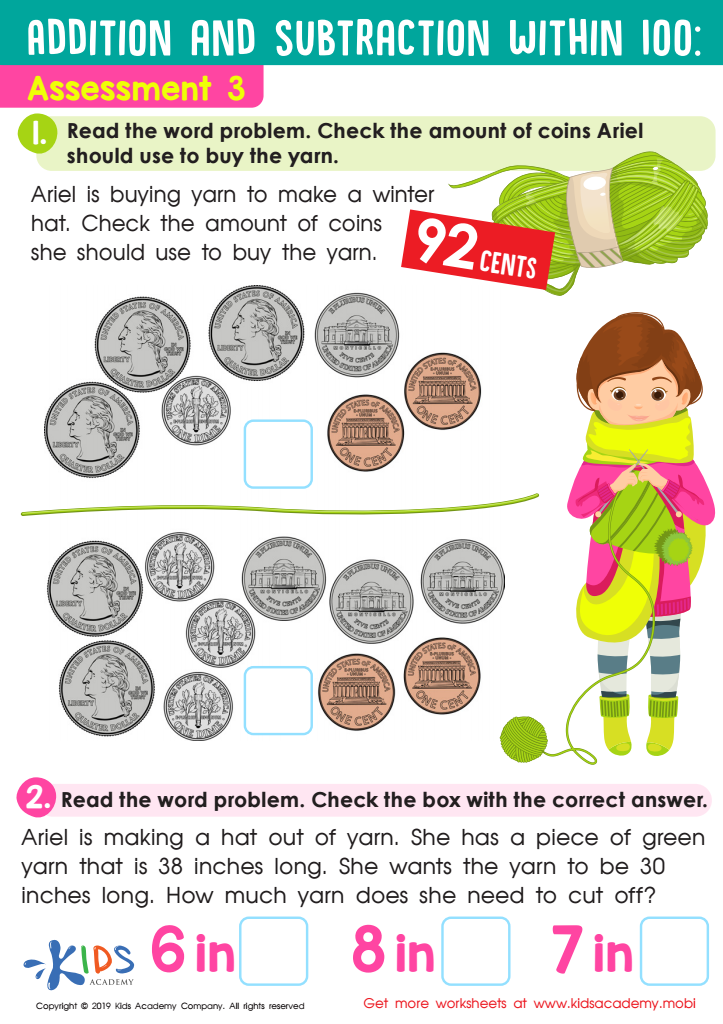
Assessment 3 Math Worksheet
 Assign to My Students
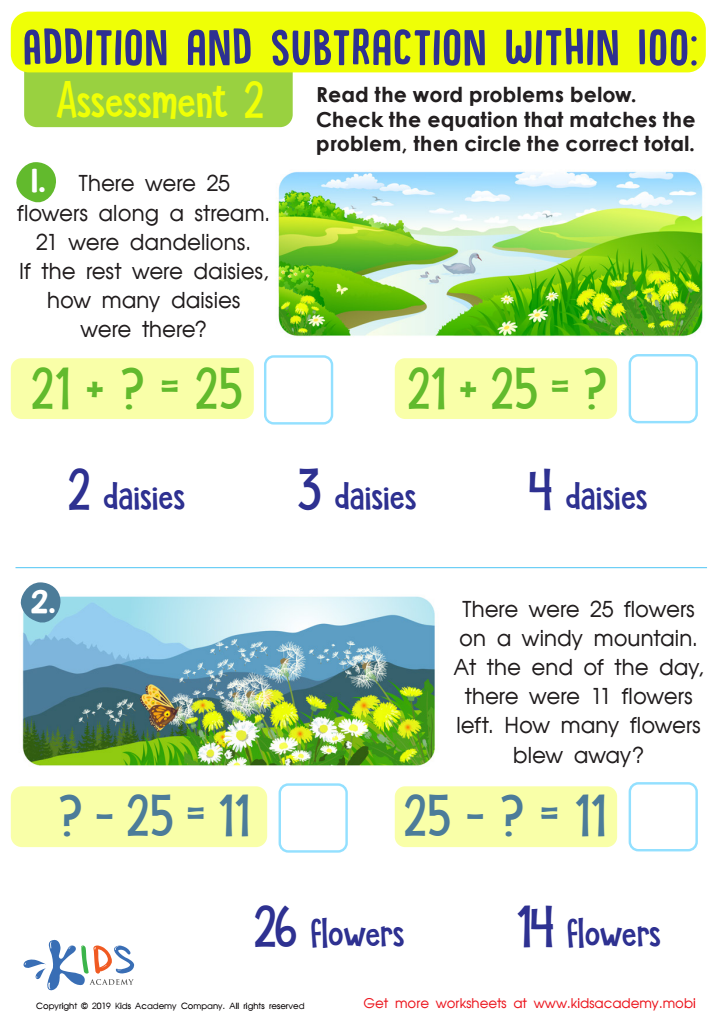
Assessment 2 Math Worksheet
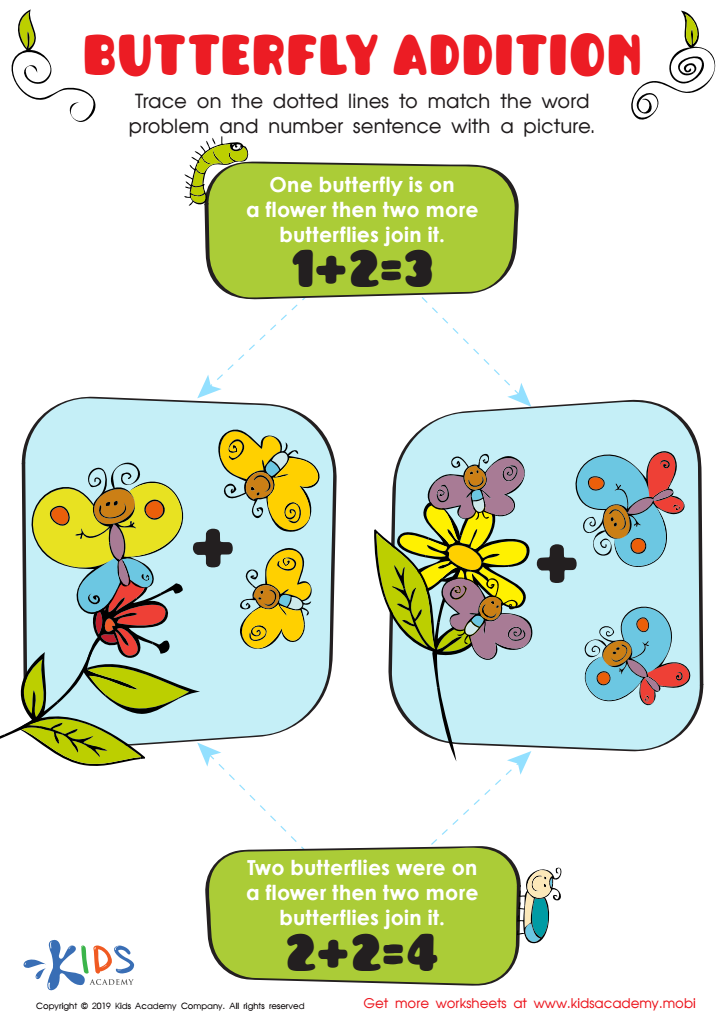
Butterfly Addition Worksheet
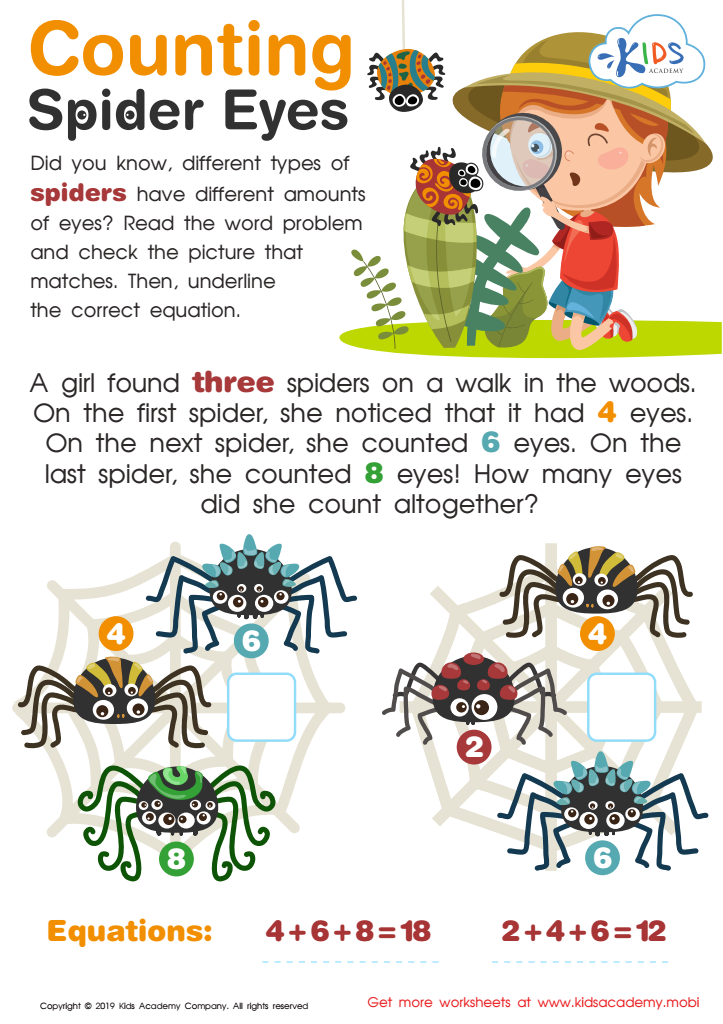
Counting Spider Eyes Worksheet
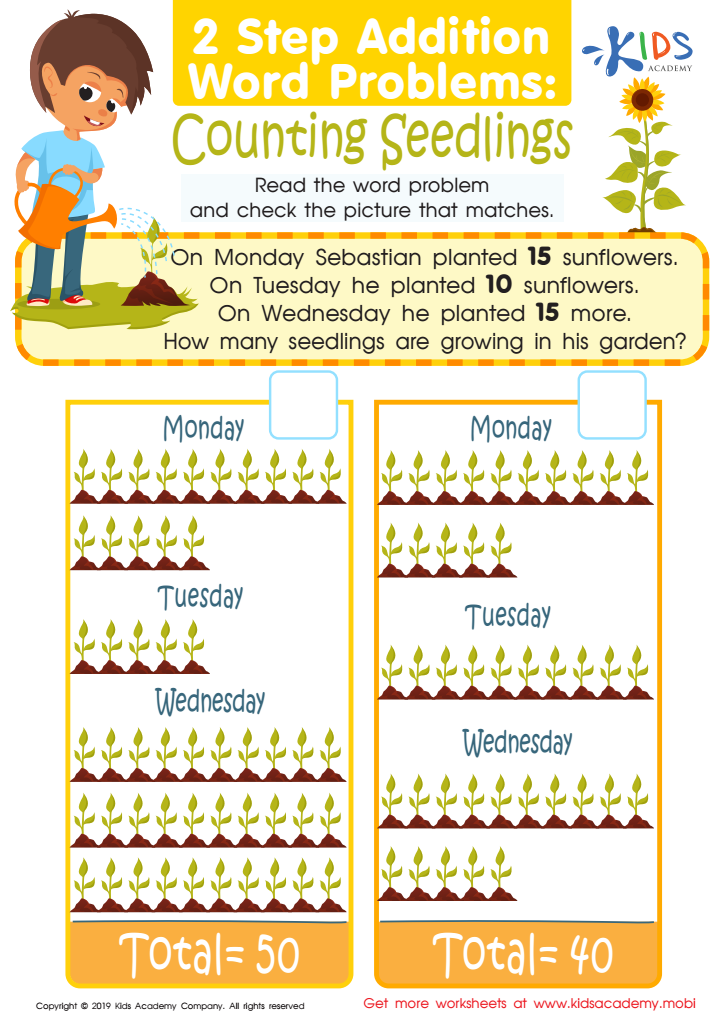
Counting Seedlings Worksheet
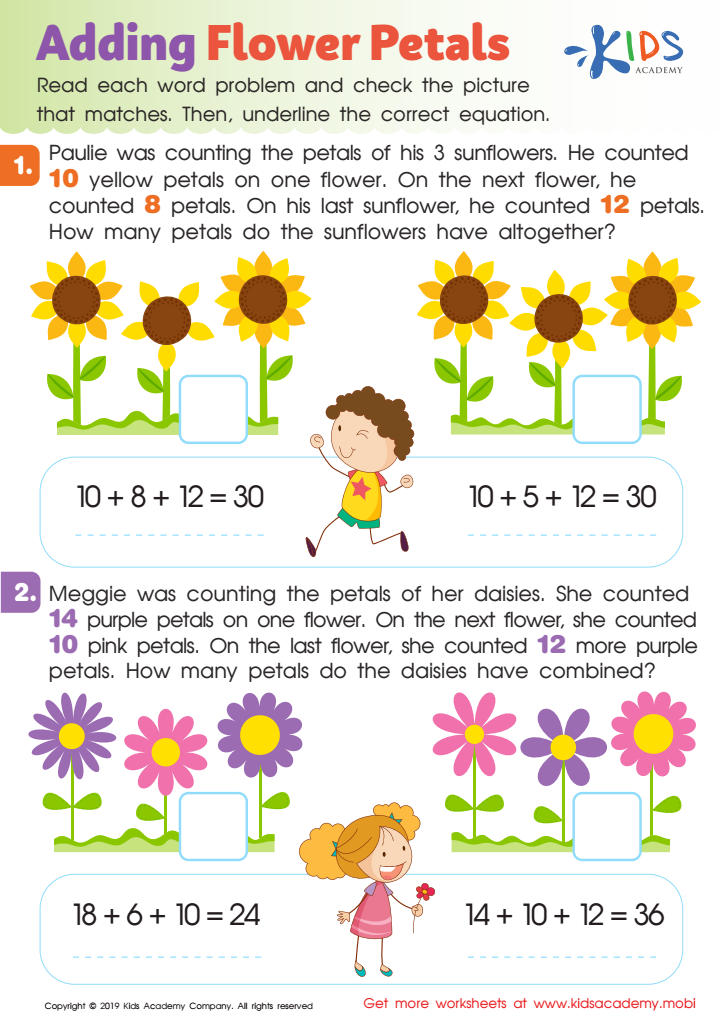
Adding Flower Petals Worksheet
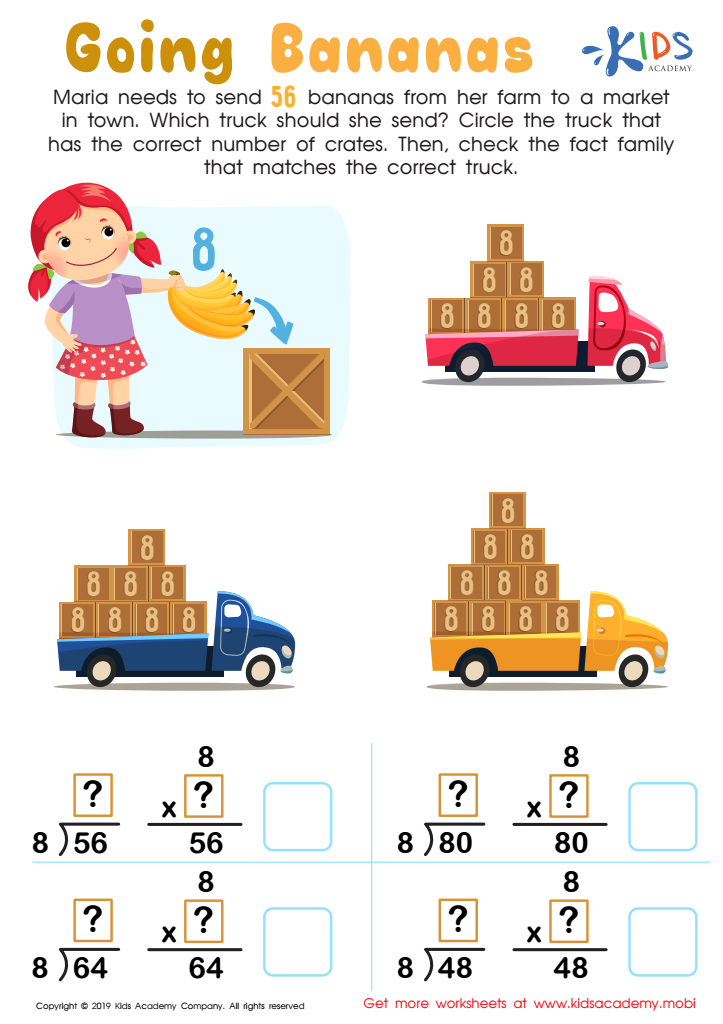
Going Bananas Worksheet
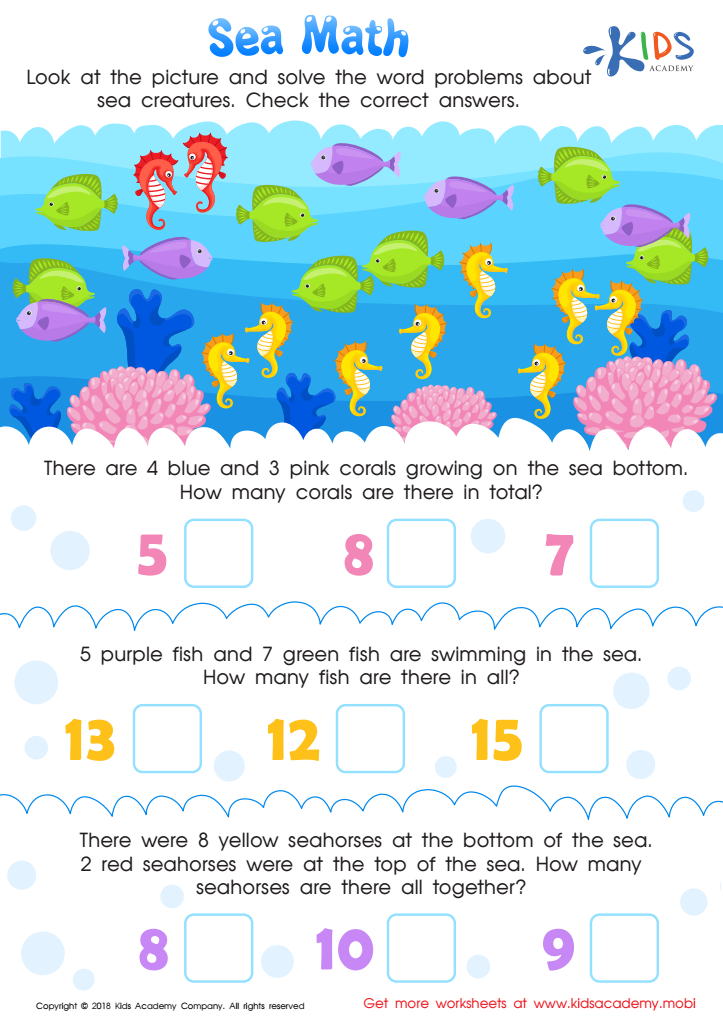
Sea Math Worksheet
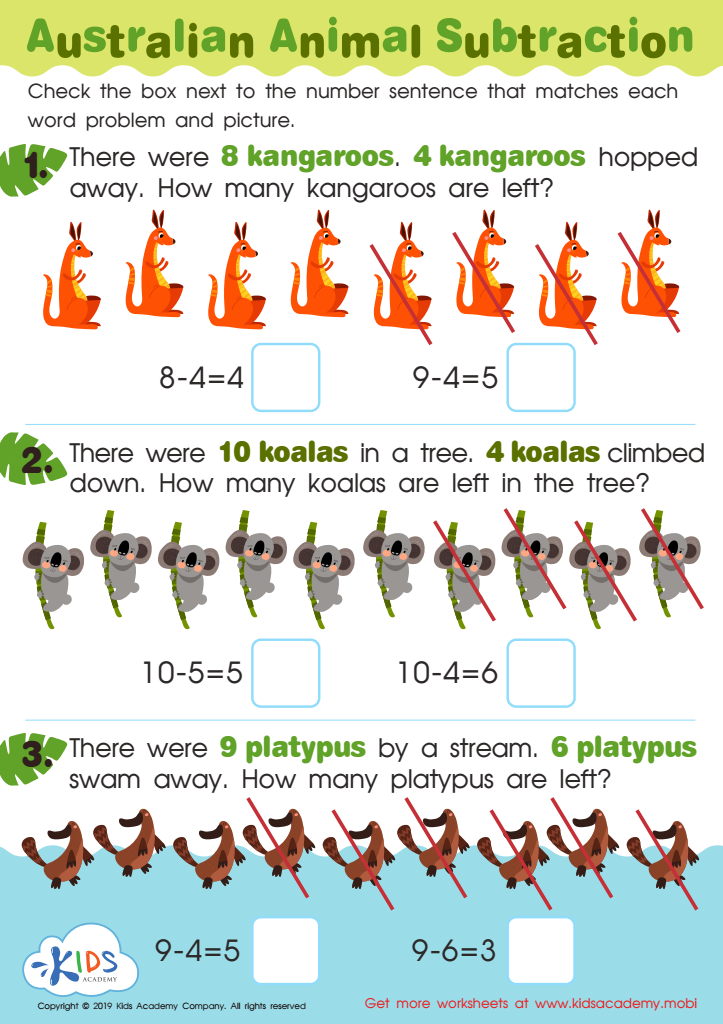
Australian Animal Subtraction Worksheet
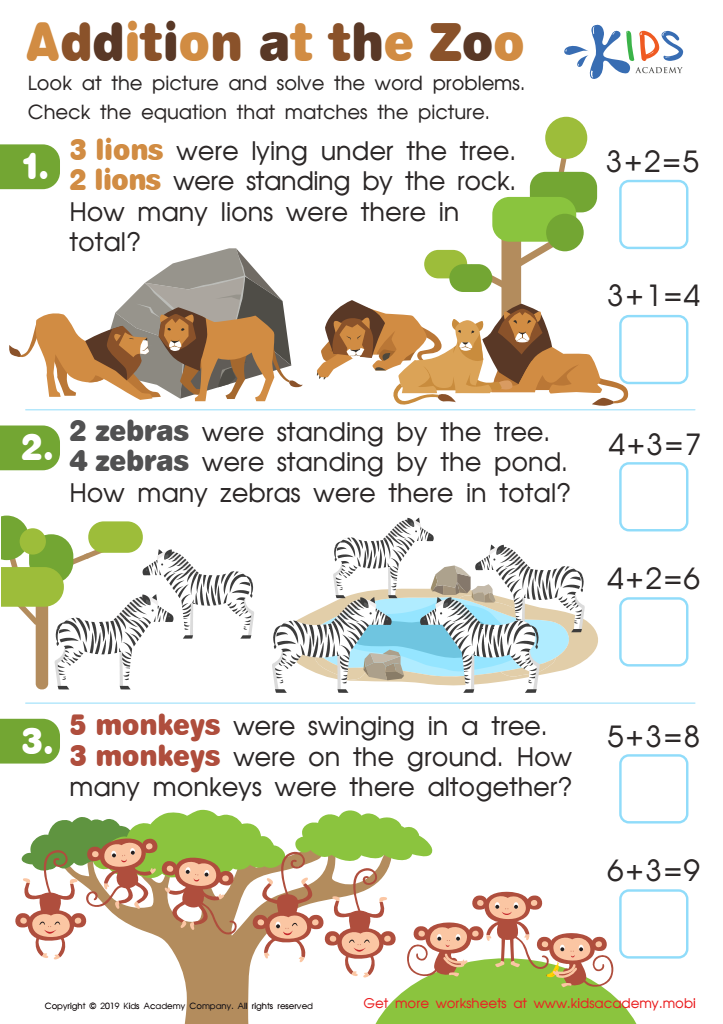
Addition at the Zoo Worksheet
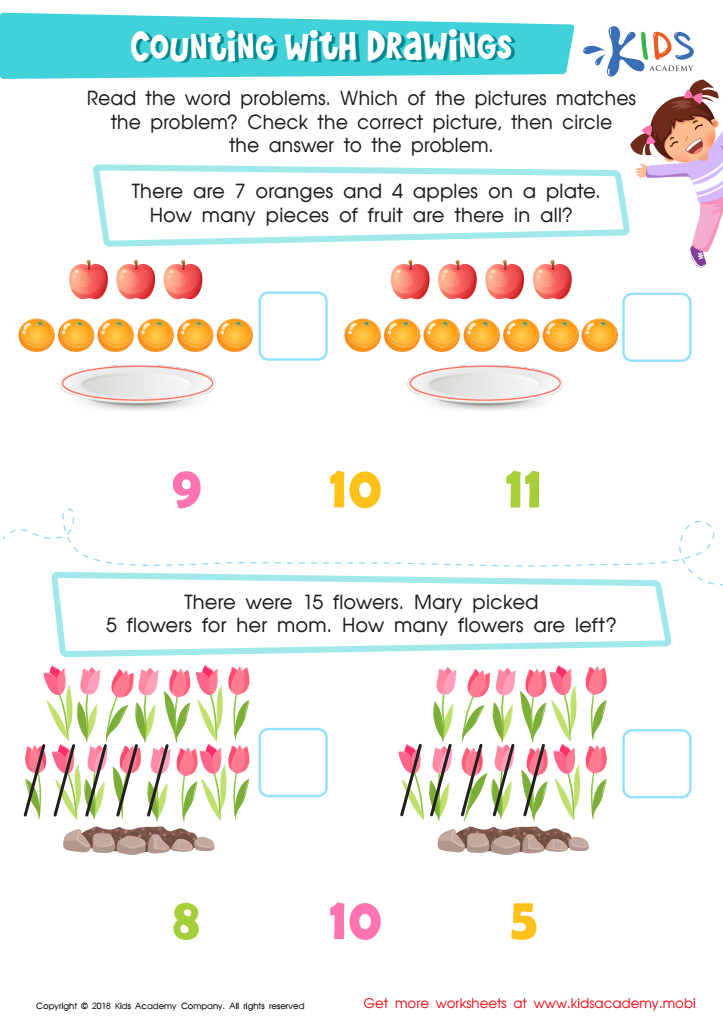
Counting with Drawings:Fruits & Flowers Worksheet
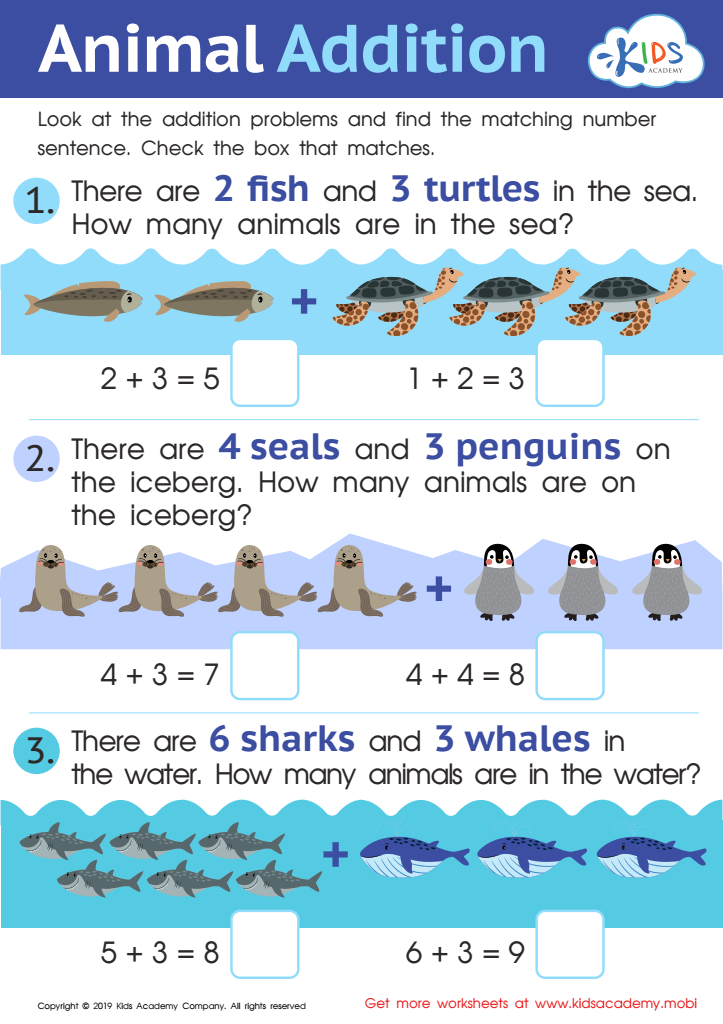
Animal Addition Worksheet








Counting skills and word problems for children aged 5-9 lay the groundwork for essential mathematical understanding, directly influencing their academic success and practical life skills. At this formative age, children develop a foundational numeracy skill set, which is vital for their future educational journey.
Counting skills encompass more than just reciting numbers; they involve recognizing patterns, understanding the concept of quantity, and grasping the basics of addition, subtraction, and place value. These skills translate directly to real-life tasks, such as distributing items evenly, telling time, and managing money, making them crucial for day-to-day functionality.
Word problems elevate counting skills by embedding mathematical concepts into engaging, relatable contexts. This fosters not only numerical competence but also enhances critical thinking and problem-solving abilities. When children decipher word problems, they learn to translate words into numerical operations, a key skill that bridges literacy and numeracy.
Moreover, mastering these skills bolsters a child’s confidence and can lead to a positive attitude towards mathematics, reducing the likelihood of math anxiety. Encouraging strong counting and word problem-solving skills from an early age sets the stage for students to excel in more complex mathematical topics and interconnected academic subjects later on.
Therefore, investing time and effort into developing these foundational skills is imperative for equipping children with the essential tools for lifelong learning and practical living.








