Subtraction skills Word Problems Worksheets for Ages 5-9
6 filtered results
-
From - To
Our "Subtraction Skills Word Problems Worksheets for Ages 5-9" offer engaging, age-appropriate activities designed to enhance children's understanding of subtraction through real-world scenarios. These worksheets encourage critical thinking and problem-solving as young learners navigate fun word problems that relate to everyday situations. With varied difficulty levels, they will develop their mathematical reasoning while honing their reading comprehension skills. Ideal for classroom use or at-home practice, these worksheets foster a love for math while supporting essential subtraction skills. Watch your child gain confidence and mastery in subtraction, making math enjoyable and accessible. Gear up for a fun learning experience today!
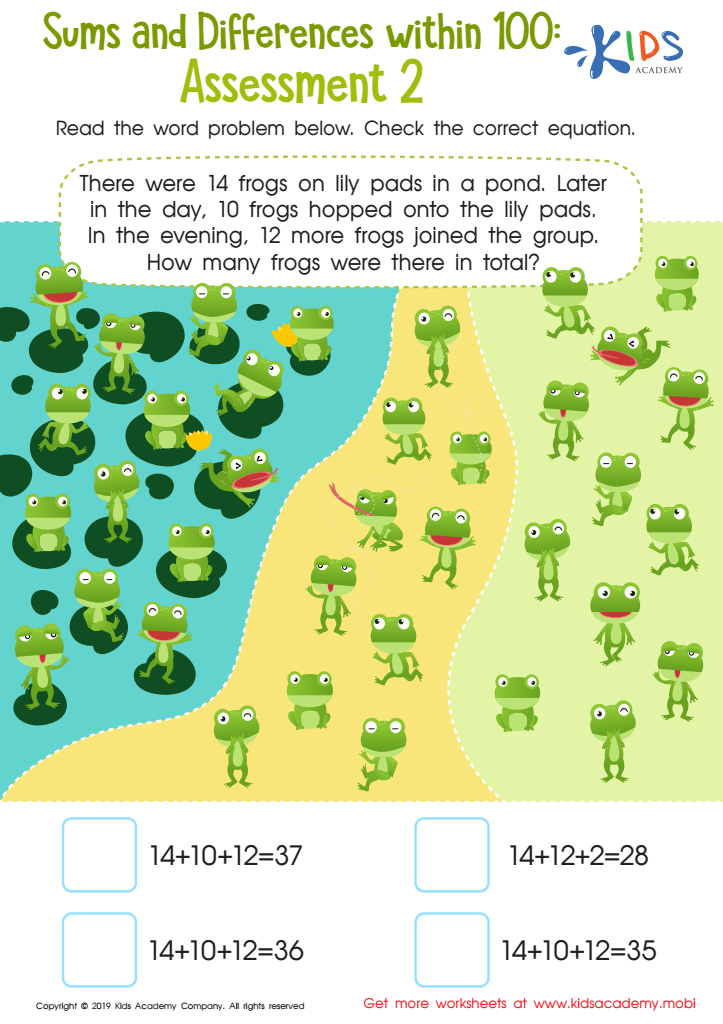
Sums and Differences Within 1 - Assessment 2 Worksheet
 Assign to My Students
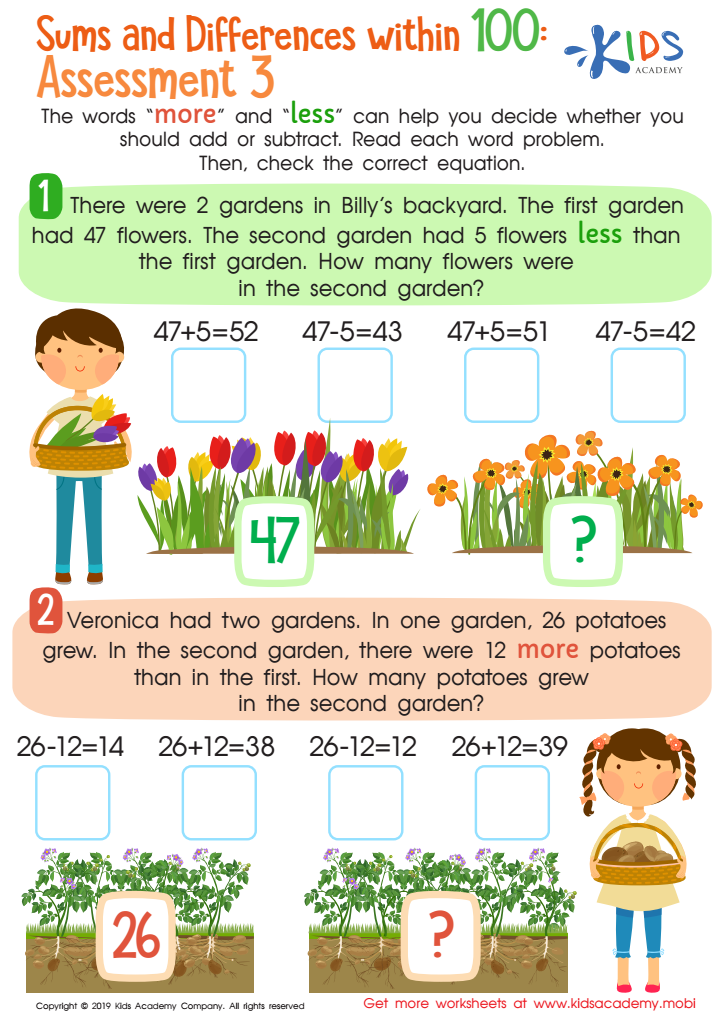
Sums and Differences Within 1 - Assessment 3 Worksheet
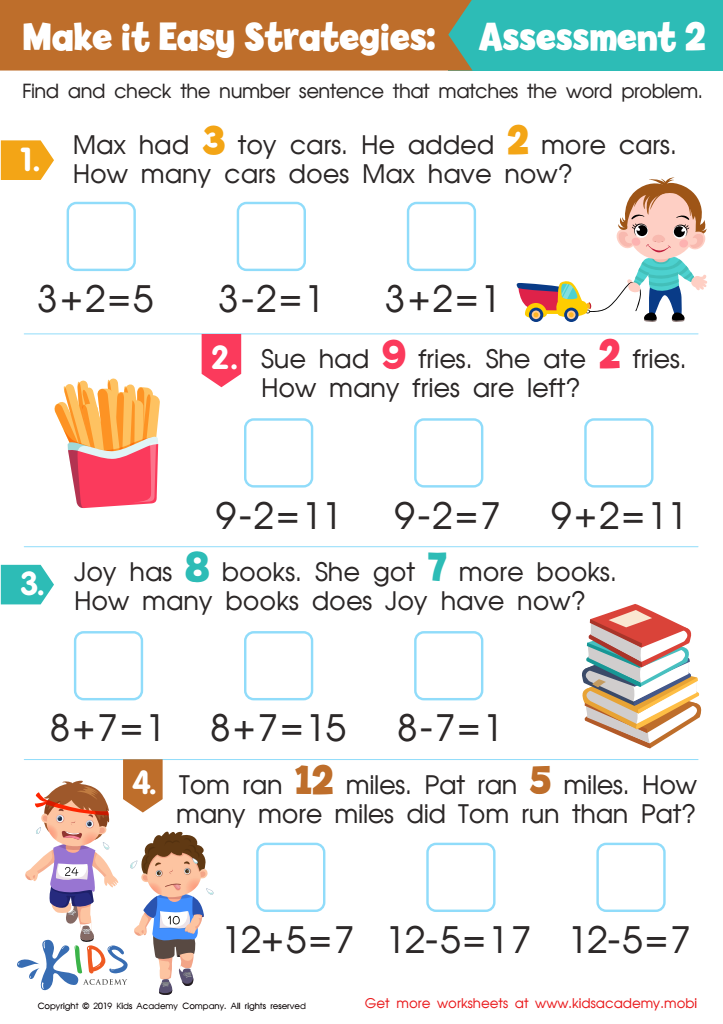
Make it Easy Strategies: Assessment 2 Worksheet
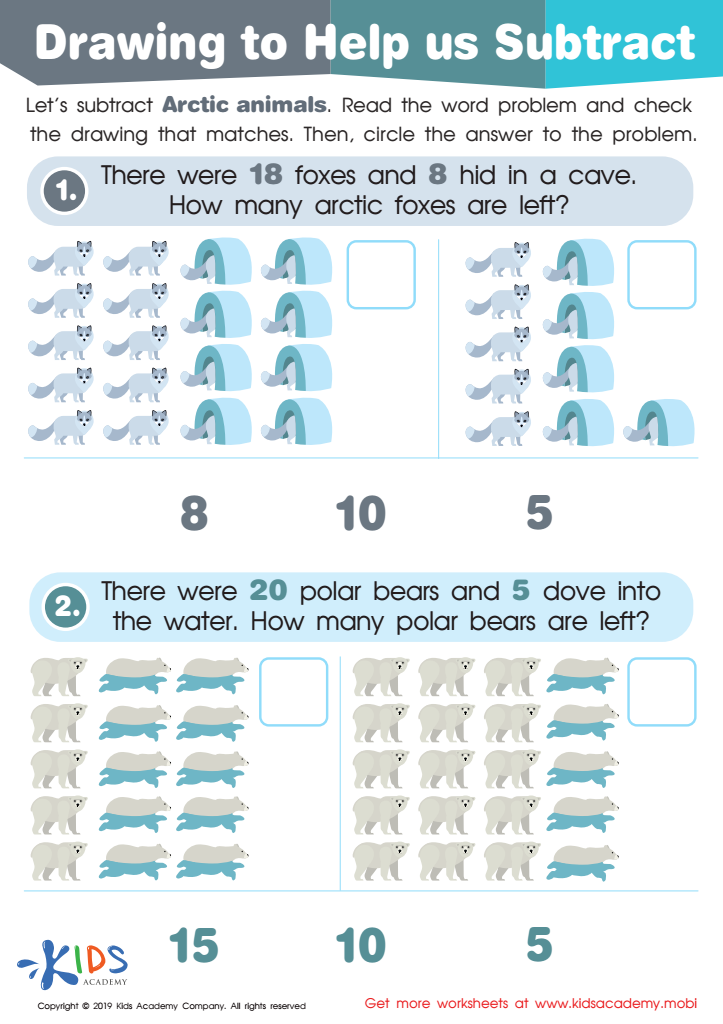
Drawing to Help Us Subtract Worksheet
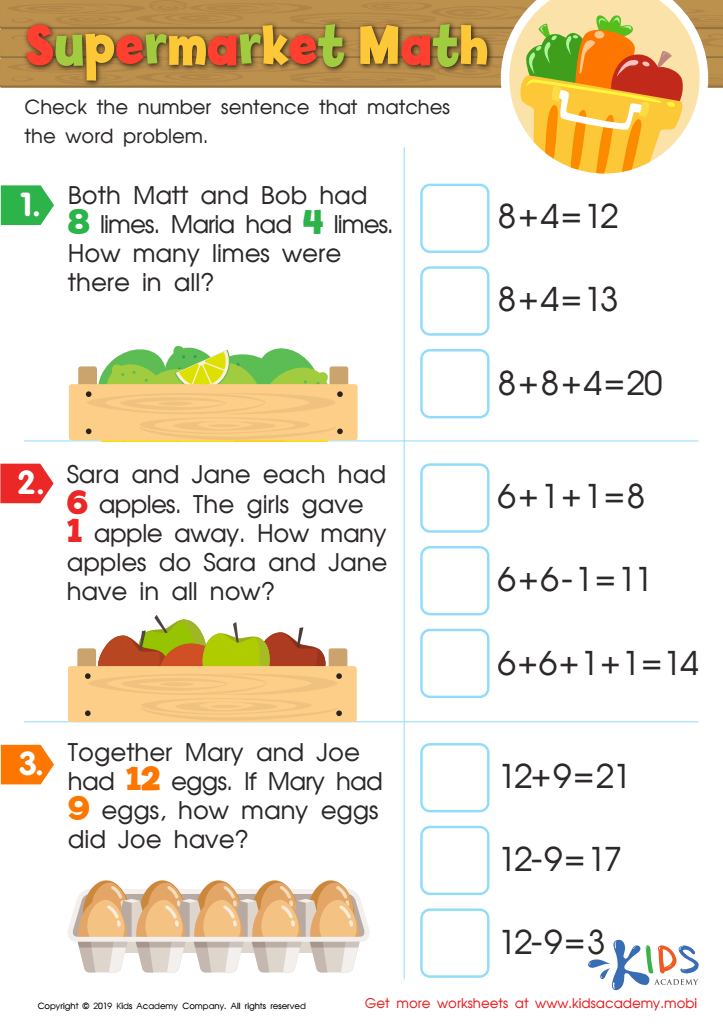
Supermarket Math Worksheet
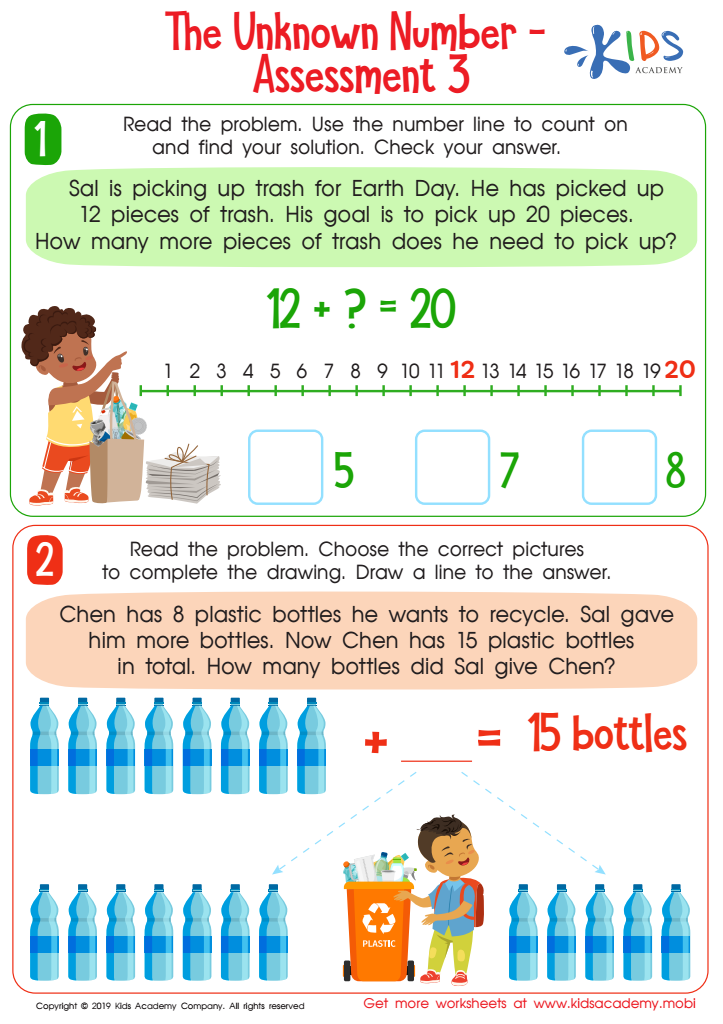
The Unknown Number - Assessment 3 Worksheet








Parents and teachers should prioritize subtraction skills and word problems for children ages 5-9 because these foundational concepts play a crucial role in their overall mathematical development. Subtraction promotes critical thinking and problem-solving abilities as children learn to analyze situations and determine the best approach to find solutions.
Effective subtraction skills foster a sense of confidence and independence in young learners, empowering them to tackle more complex mathematical tasks later in life. Word problems engage students in real-world scenarios, helping them understand how subtraction applies beyond the classroom. They encourage children to read carefully, extract essential information, and brainstorm connections, thus enhancing their literacy skills alongside their math capabilities.
Moreover, proficiency in subtraction is linked to success in future mathematical concepts. In addition to impacting their performance in math, these skills contribute to cognitive development, enhancing logical reasoning and analytical thinking.
By cultivating subtraction skills in low-pressure, supportive environments, parents and teachers can help foster a love for math and nurture a growth mindset. The ability to navigate and solve word problems ensures that students are equipped with the necessary tools for lifelong learning and problem-solving, preparing them for academic success and everyday challenges.








