Animal identification Reading Worksheets for Ages 5-9
6 filtered results
-
From - To
Discover our engaging Animal Identification Reading Worksheets designed specifically for children aged 5-9! These worksheets provide a fun and interactive way for young learners to explore various animals while enhancing their reading skills. Each resource focuses on vocabulary-building and comprehension, with vibrant illustrations that captivate children's imaginations. Activities include matching animals with their names, identifying characteristics, and connecting them to their habitats. Perfect for classroom use or at-home learning, these worksheets foster a love for reading while promoting awareness of the animal kingdom. Download them today and watch your child become an enthusiastic learner as they delve into the world of animals!
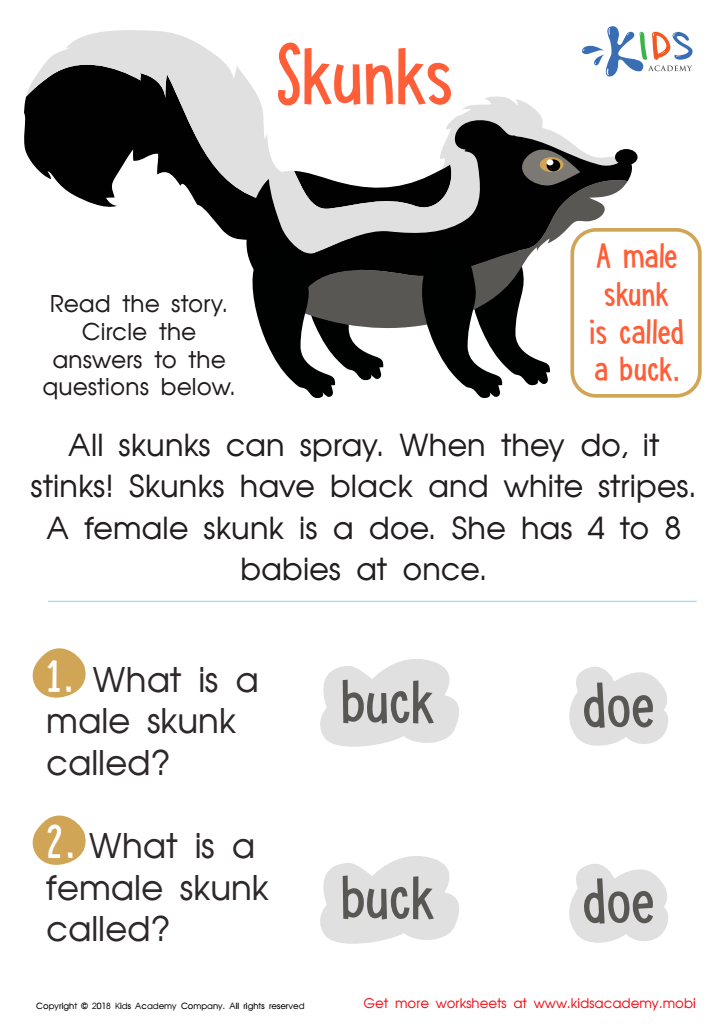
Skunks Worksheet
 Assign to My Students
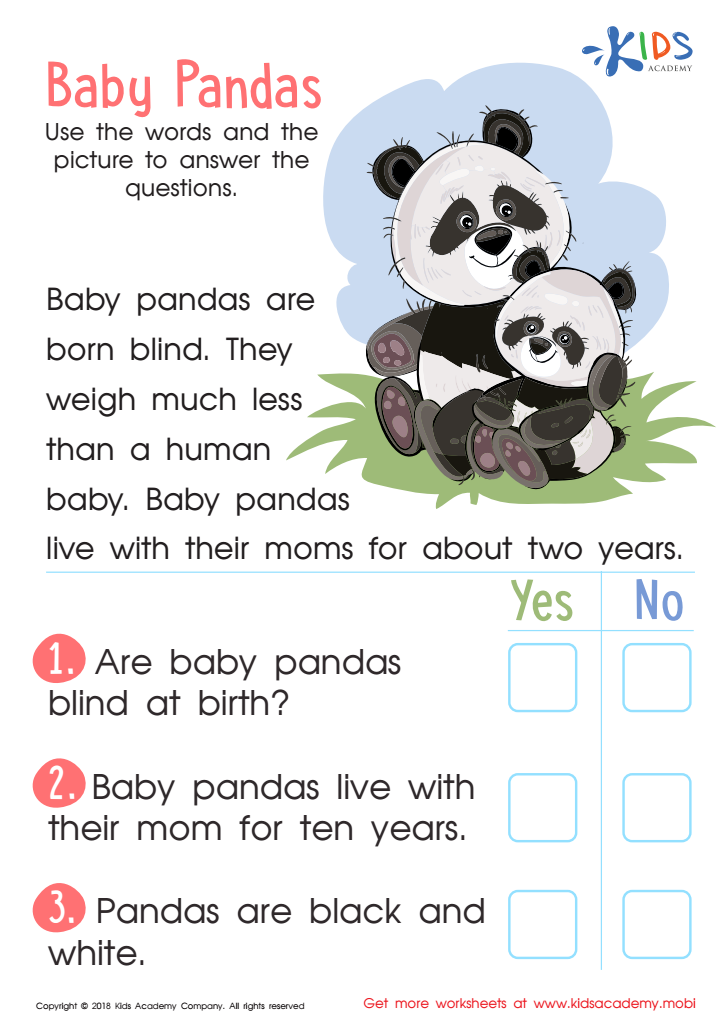
Baby Pandas Worksheet
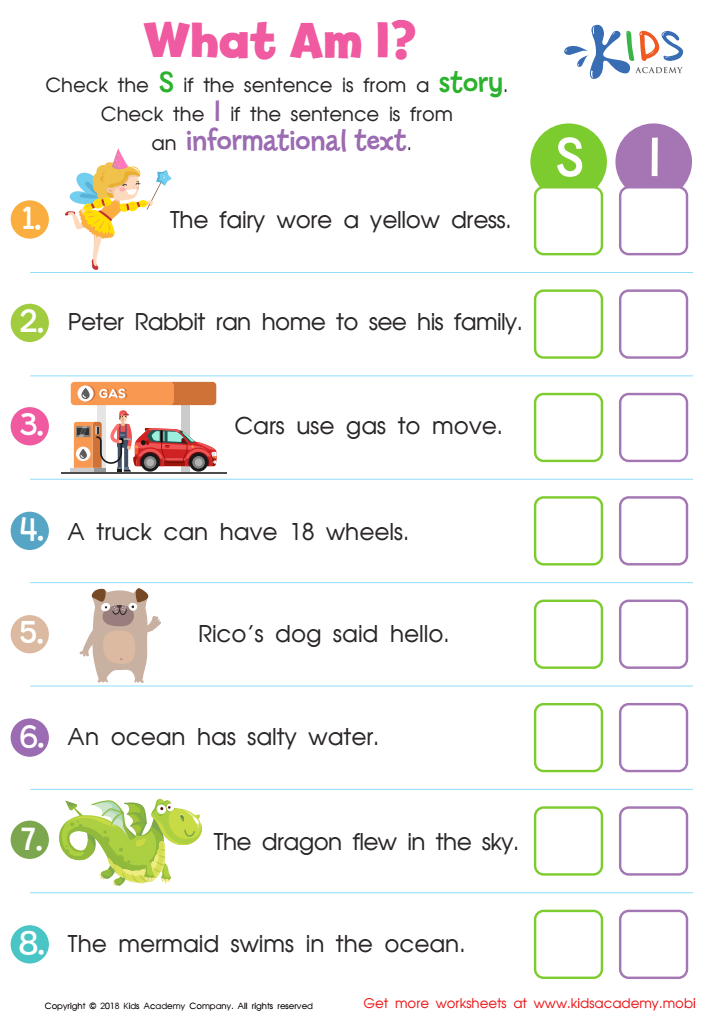
What Am I? Worksheet
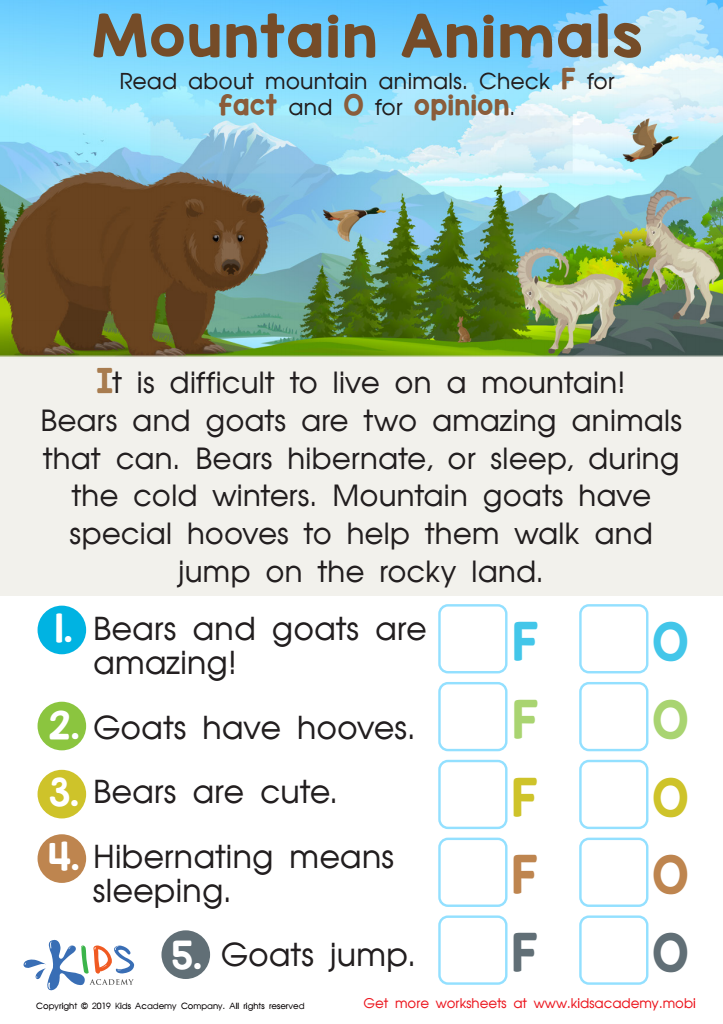
Mountain Animals Worksheet
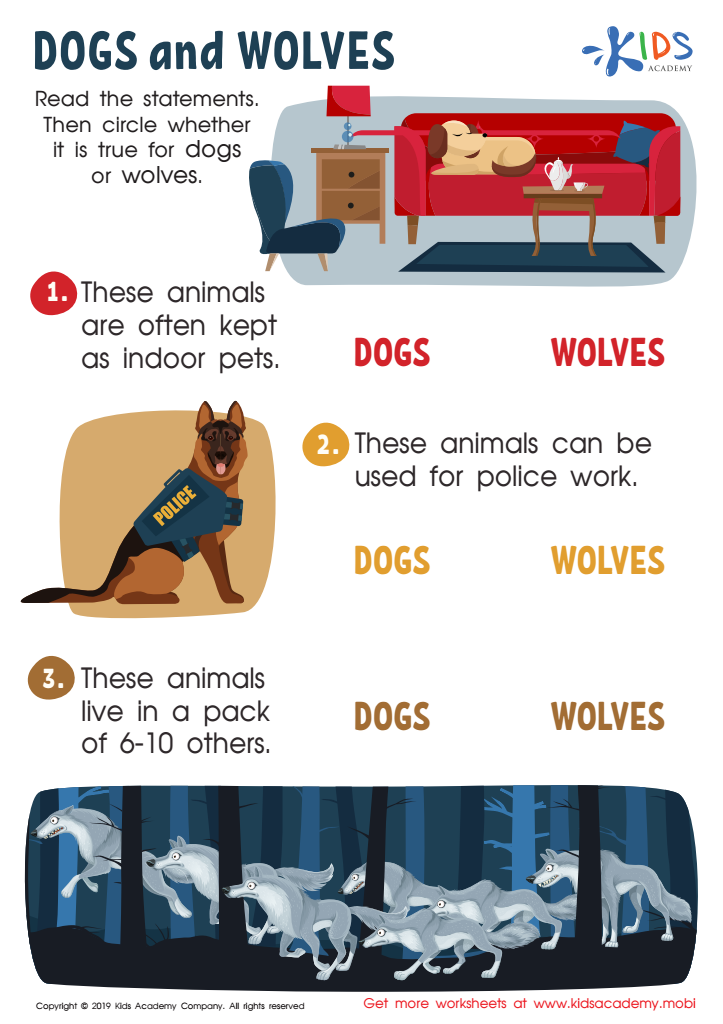
Dogs and Wolves Worksheet








Animal identification reading for ages 5-9 plays a crucial role in early childhood education, as it nurtures a child's curiosity about the natural world. At this developmental stage, children are eager to learn, and understanding various animals helps foster a love for nature and promotes critical thinking skills. Engaging young readers in animal identification not only enhances their vocabulary through the introduction of new terms but also builds reading comprehension as they connect words with images and concepts.
Moreover, this reading genre encourages observation skills, as children learn to recognize different species, habitats, and behaviors. It invites discussions about biodiversity and environmental stewardship, teaching children the importance of conservation from an early age. Parents and teachers who prioritizing this type of reading contribute to forming a foundational knowledge base, supporting children's cognitive development and encouraging inquiry-based learning.
Furthermore, animal identification materials can serve as tools for fun and interactive learning experiences, helping to create a love for reading. By promoting storytelling related to animals, adults can foster imagination while reinforcing literacy skills. Engaging young minds in animal identification reading is not just about education; it’s about nurturing responsible, informed future citizens who respect and appreciate our planet’s diversity.








