Identifying story elements Reading Worksheets for Ages 5-9
4 filtered results
-
From - To
Discover our engaging "Identifying Story Elements" reading worksheets for ages 5-9 at Kids Academy. These expertly crafted resources help young readers identify key story components like characters, settings, and plots, fostering a deeper understanding and love of reading. Each worksheet is designed to captivate young minds with colorful illustrations and age-appropriate activities that challenge and delight. Perfect for both classroom and home use, our worksheets support critical thinking and literacy development in early learners. Start your child’s reading journey with these exciting and educational tools today! Visit our website to explore our extensive collection.
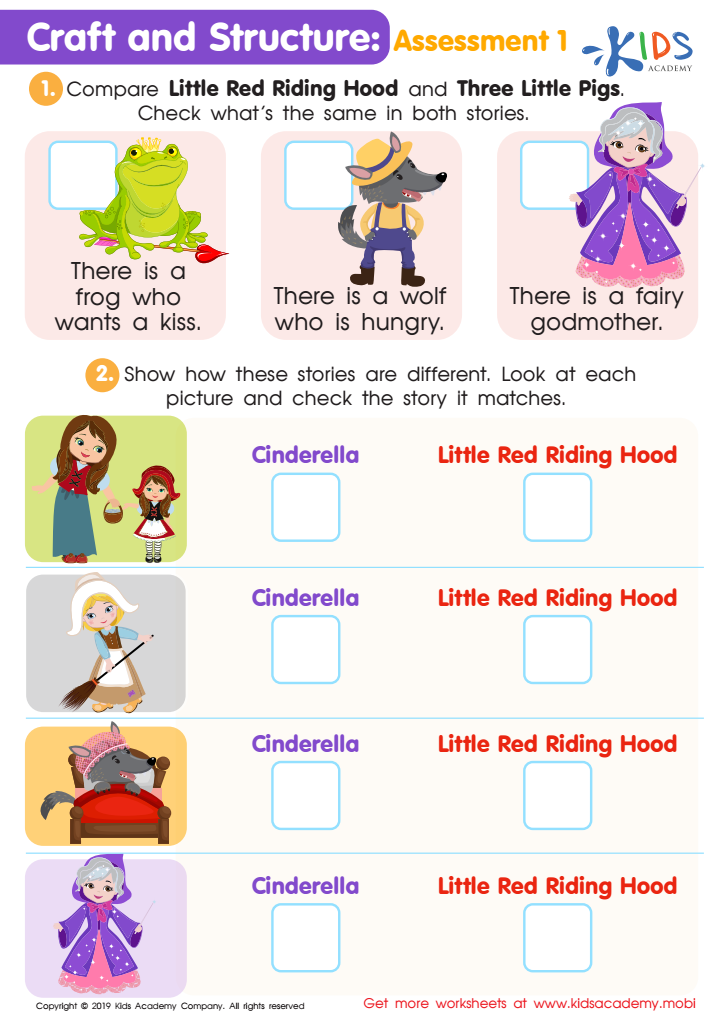
Craft and Structure: Assessment 1 Worksheet
 Assign to My Students
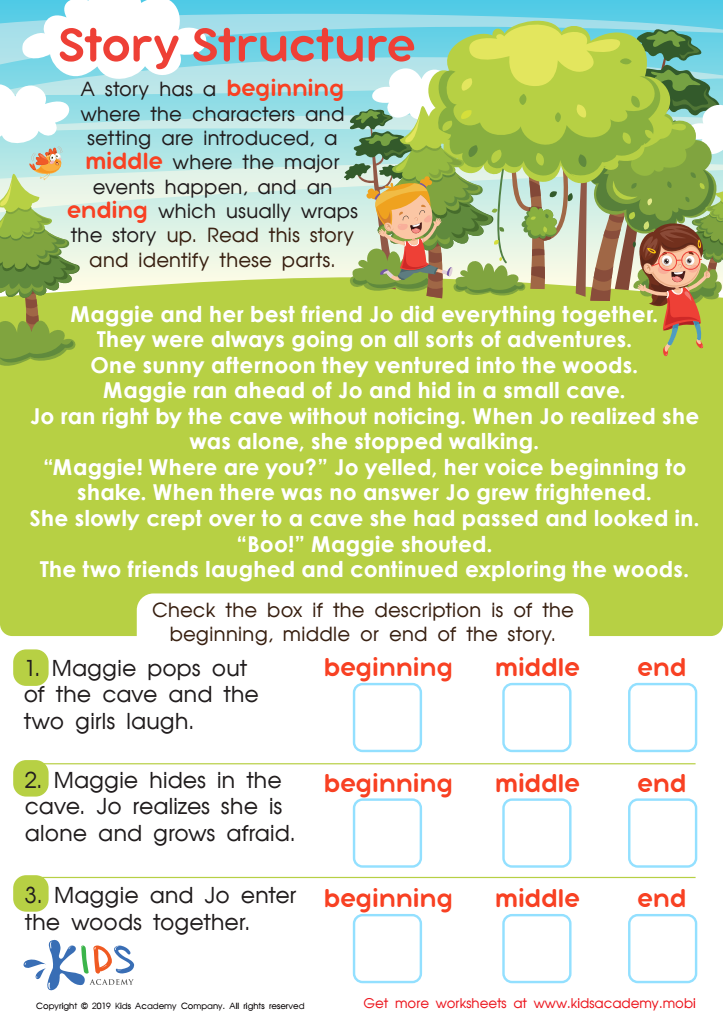
Story Structure Worksheet
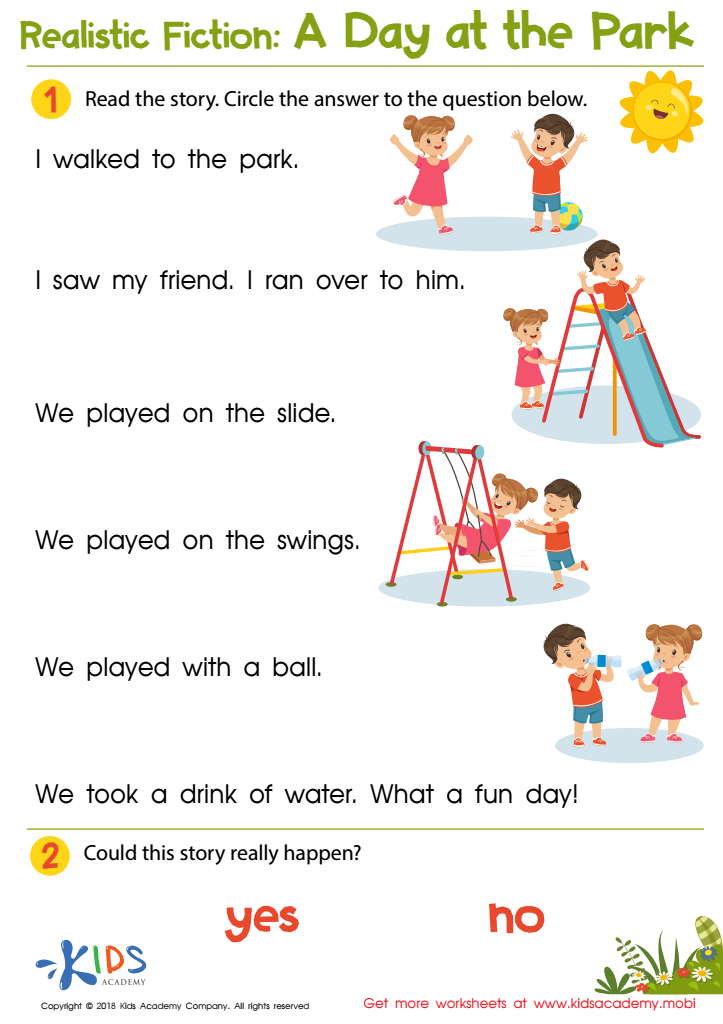
A Day at the Park Worksheet
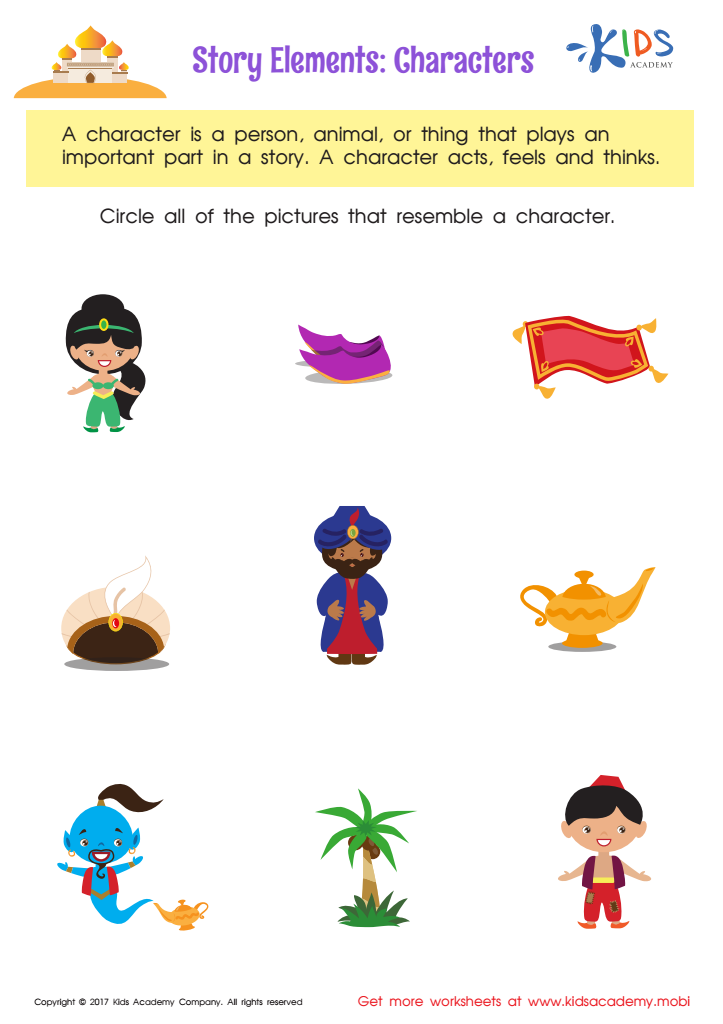
Story Elements Printable







Identifying story elements, such as characters, setting, plot, conflict, and resolution, is critical for young readers aged 5-9 and should be of significant concern for both parents and teachers. Understanding these elements helps children to comprehend and engage with the narrative, transitioning them from simple decoding to deeper comprehension skills. Recognizing characters and setting allows children to visualize and emotionally connect with the story, making reading a more immersive experience. A clear grasp of the plot, including conflicts and resolutions, enables young readers to follow the sequence of events and understand cause-and-effect relationships, aiding in critical thinking.
Additionally, identifying story elements enhances vocabulary, as students learn descriptive words used in different contexts. Discussing story elements can facilitate discussions about themes and morals, helping children explore values and life lessons. This not only fosters empathy by encouraging them to understand characters' perspectives but also promotes creativity as they learn to tell their own stories.
Moreover, engaging with these elements builds foundational skills for more complex reading and writing tasks in later academic years. Teachers and parents who prioritize teaching story elements are thus equipping children with essential literacy skills, preparing them for lifelong learning and critical thinking.








