Practice addition Reading Worksheets for Ages 5-9
3 filtered results
-
From - To
Discover engaging and interactive practice addition reading worksheets designed specifically for ages 5 to 9! Our thoughtfully crafted activities help young learners build essential math skills by combining reading comprehension with addition exercises. Each worksheet is filled with colorful illustrations and age-appropriate challenges that make learning fun and enjoyable. Whether in the classroom or at home, these worksheets foster a positive learning environment, encouraging curiosity and confidence in math. Perfect for developing critical thinking and problem-solving skills, our practice addition worksheets allow children to practice familiar math concepts while enhancing their reading abilities. Start your child's math journey today!
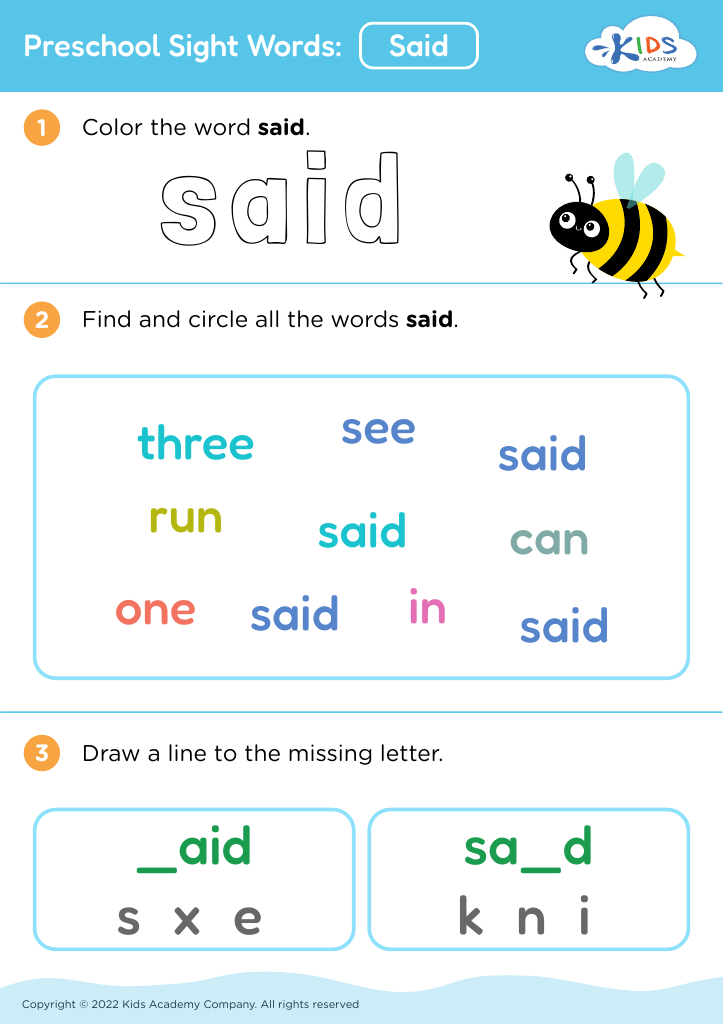
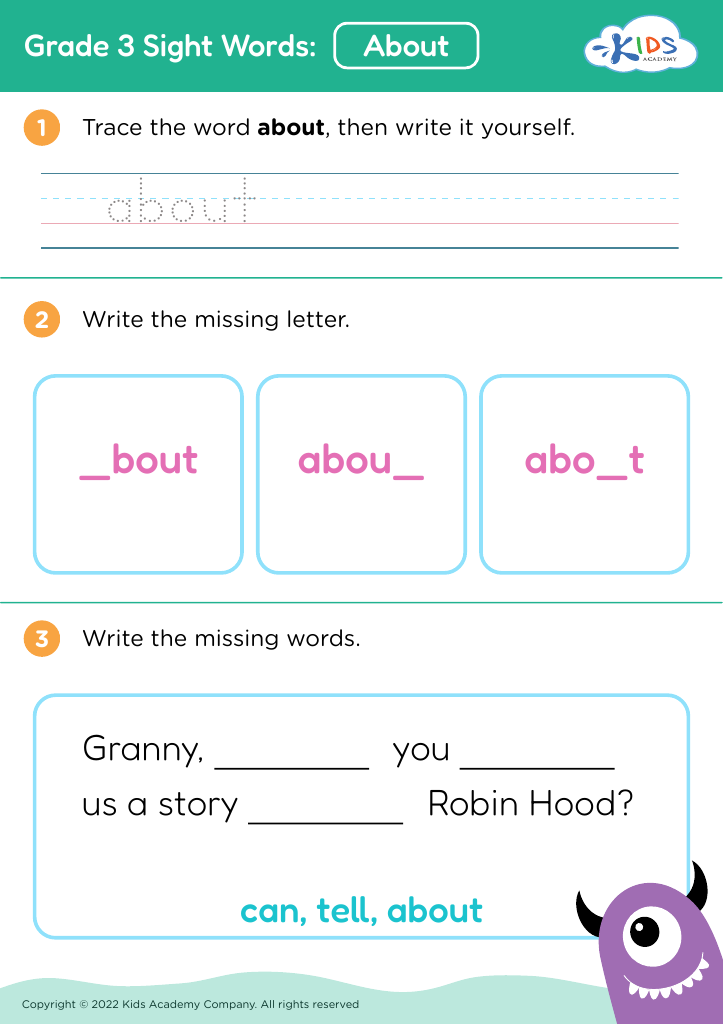
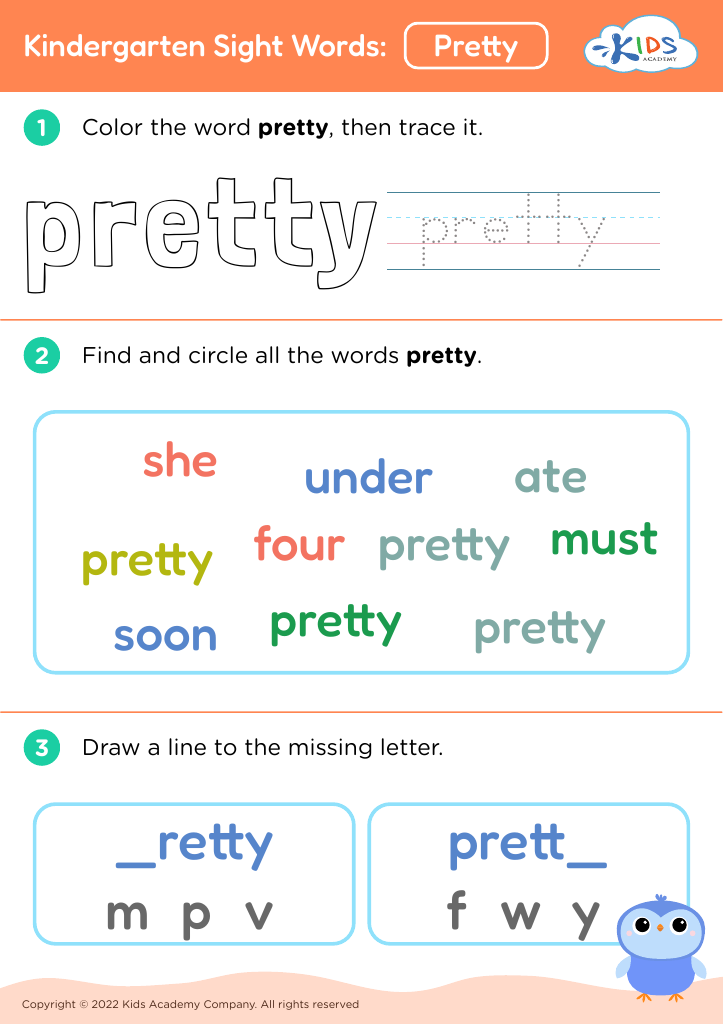








Parents and teachers play a crucial role in developing foundational skills in young learners, and practice in addition reading for children aged 5-9 is essential for several reasons. First, this age group is at a critical developmental stage where early literacy and numeracy skills create a strong base for future learning. By blending reading with addition practice, children are encouraged to engage with math in a context that enhances their understanding and retention of concepts.
Moreover, integration of reading and addition encourages problem-solving and critical thinking skills. When children read problem scenarios, they learn to visualize mathematical concepts, which aids their comprehension and application of addition in various contexts. This practice not only boosts their mathematical skills but also enhances language proficiency, enabling them to articulate their reasoning clearly.
Additionally, fostering confidence in adding and reading simultaneously promotes a sense of accomplishment in children. It can ignite a love for learning, gradually reducing the anxiety often associated with math. With consistent practice, children become proficient and capable, leading to improved performance in both subjects as they advance in school. Ultimately, parents and teachers should emphasize this holistic approach to ensure children develop balanced, well-rounded skill sets for lifelong success.








