Understanding Sequences Reading Worksheets for Ages 5-9
4 filtered results
-
From - To
Discover our engaging "Understanding Sequences Reading Worksheets" designed specifically for children aged 5-9! These resources provide young learners with fun activities to improve their reading comprehension skills by exploring the concept of sequencing. Through interactive exercises, kids will learn to recognize the order of events, develop critical thinking, and enhance their narrative skills. Whether at home or in the classroom, these worksheets encourage students to make connections between ideas, fostering a love for reading while building essential literacy skills. Perfect for educators and parents alike, our worksheets make learning sequences enjoyable and effective. Explore our collection and support your child’s reading journey!
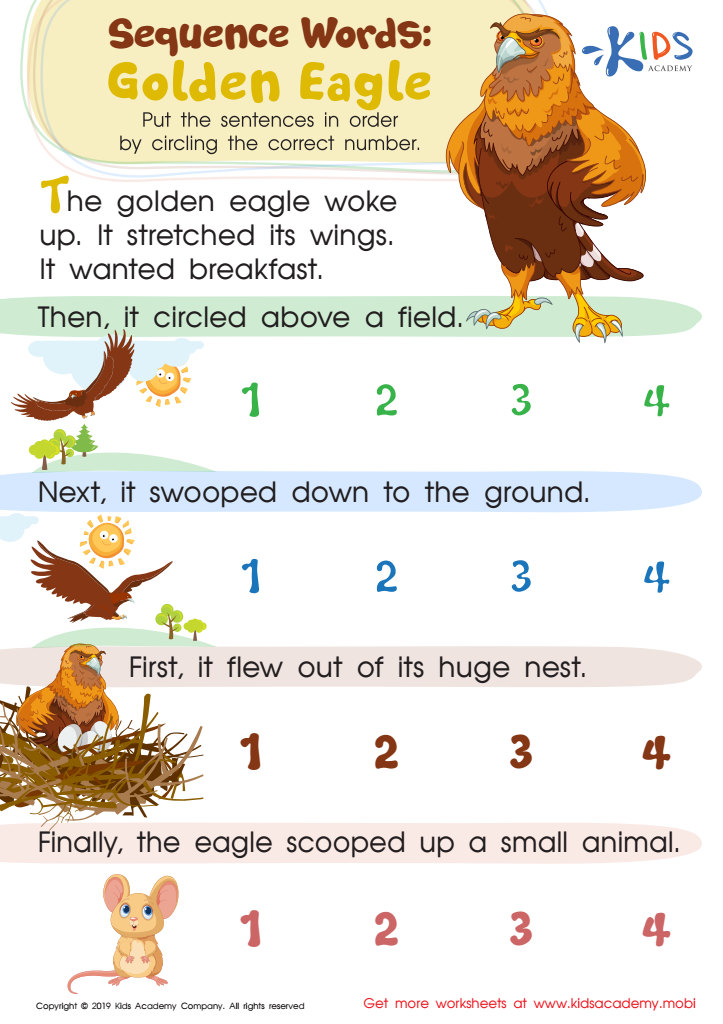
Sequence Word Eagle Worksheet
 Assign to My Students
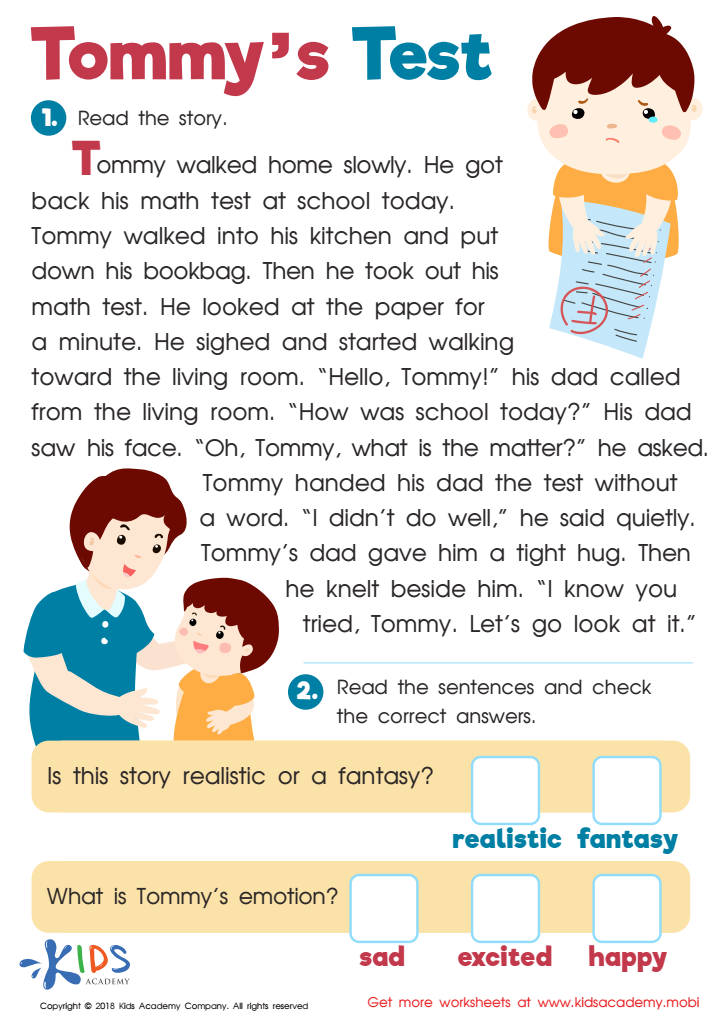
Tommys Test Worksheet
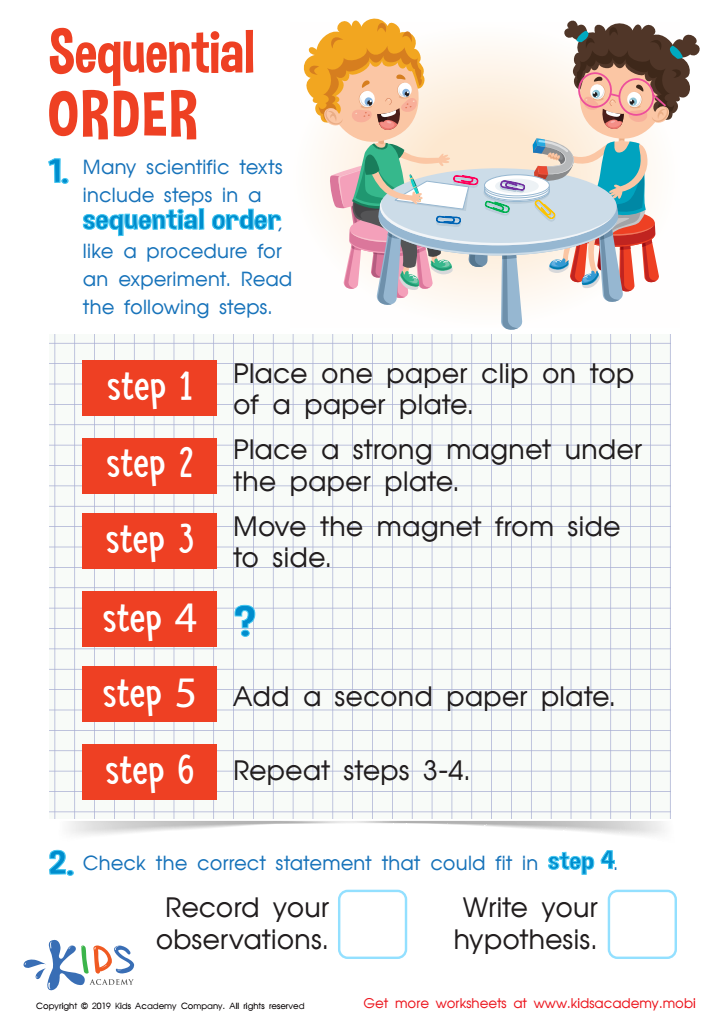
Sequencential Order Worksheet
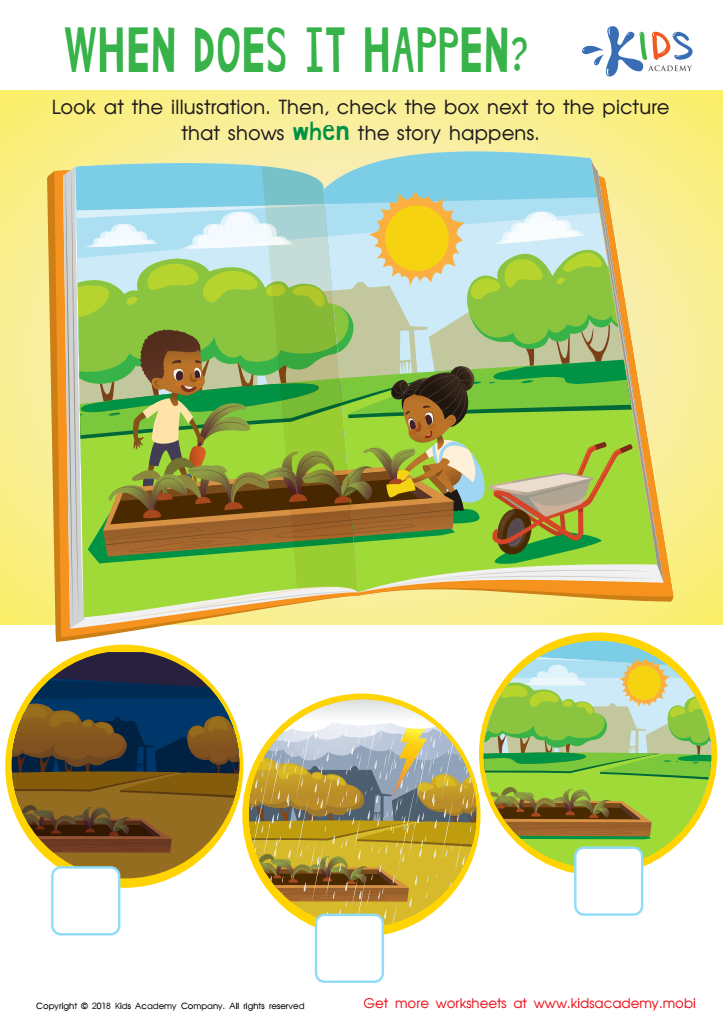
When Does It Happen? Worksheet






Understanding sequences in reading is crucial for children aged 5-9 as it lays the foundational building blocks for effective literacy skills. At this age, children begin to make connections between events, characters, and ideas in stories, which fosters comprehension and critical thinking. Sequences help young readers grasp the order of events, allowing them to anticipate outcomes and engage more fully with the material.
When parents and teachers emphasize the importance of sequences, they enrich children's storytelling abilities and enhance their capacity to make inferences. Additionally, a solid understanding of sequences supports children's ability to follow instructions, whether in reading or everyday tasks, creating a confident, independent learner.
By nurturing sequence comprehension, parents and teachers open the doorway to higher-level thinking skills, helping children analyze, summarize, and convey narratives effectively. This skill also carries over into other subjects, such as math and science, where sequential patterns are prevalent.
Moreover, engaging children with sequenced stories—such as picture books and well-structured plots—can foster a love of reading. Ultimately, prioritizing sequence understanding not only aids academic growth but also enhances communication skills, empathy, and emotional intelligence through the shared experiences of reading.








