Verb identification Reading Worksheets for Ages 5-9
3 filtered results
-
From - To
Enhance your child's reading skills with our engaging Verb Identification Reading Worksheets designed for ages 5-9! These fun and interactive sheets provide young learners with a solid foundation in recognizing and using verbs in sentences. Each worksheet includes varied activities such as matching, filling in the blanks, and sentence completion, making learning enjoyable. Our resources cater to different reading levels, ensuring every child can participate and thrive. Ideal for classroom use or at-home learning, these worksheets will help boost your child's reading confidence and comprehension skills. Explore the importance of verbs in a playful way—let's ignite a love for reading today!
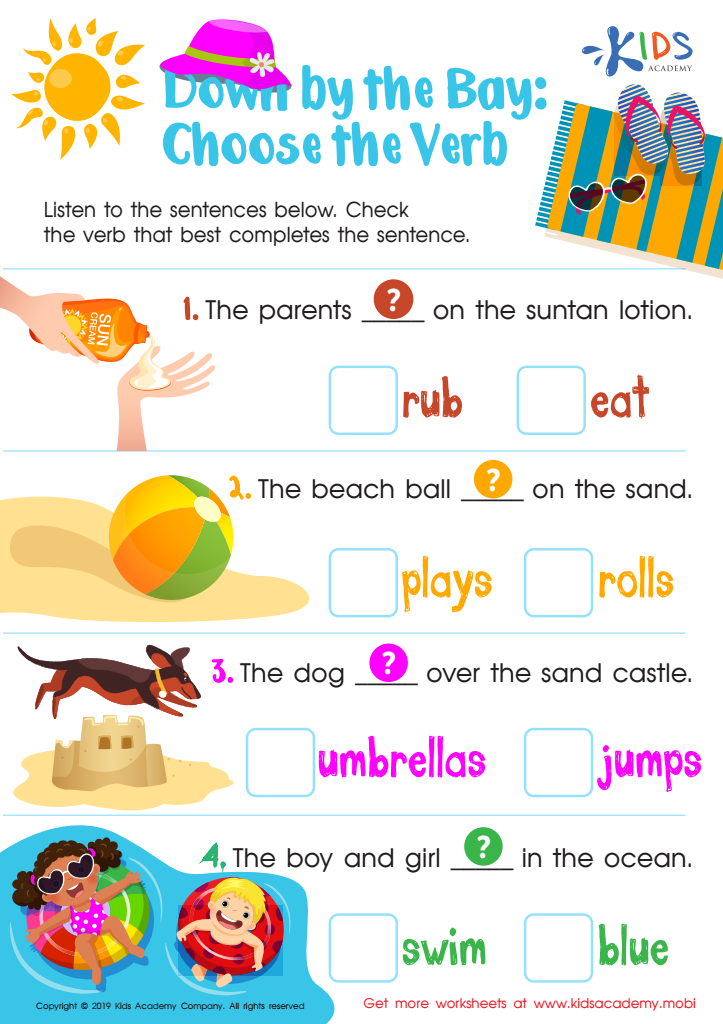
Down by the Bay: Choose the Verb Worksheet
 Assign to My Students
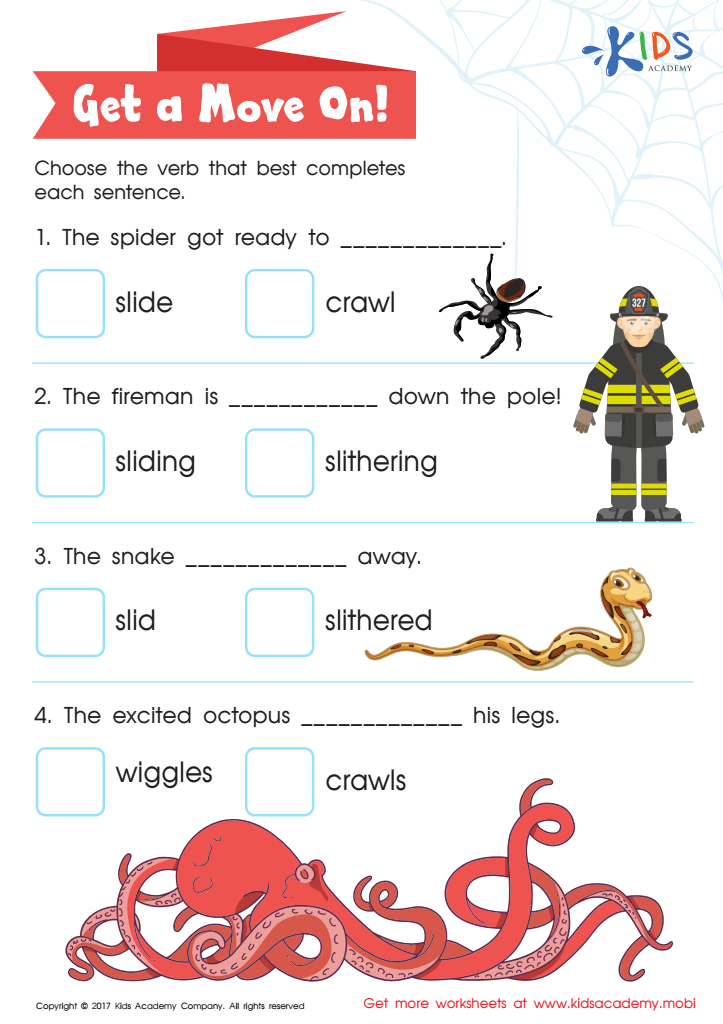
Verb Worksheet
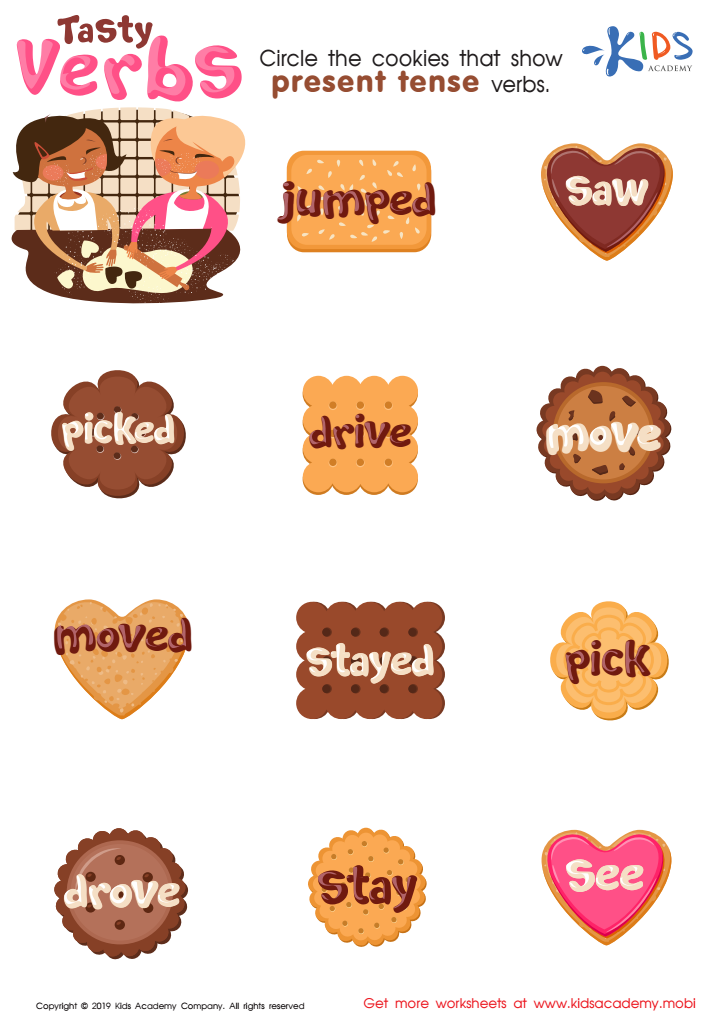
Tasty Verbs Worksheet







Verb identification is crucial for children aged 5-9 as it lays the foundation for their reading and writing skills. Verbs are action words that not only provide meaning to sentences but also help children understand the structure of language. By identifying verbs, young learners enhance their ability to comprehend narratives, follow instructions, and express their thoughts clearly.
Parents and teachers should care about verb identification because it directly affects a child's literacy development. When children can recognize verbs, they become more engaged readers, able to infer meaning and visualize actions within texts, leading to improved comprehension. Furthermore, awareness of verbs helps children construct their own sentences, fostering creative expression.
In a broader context, verb identification supports critical thinking skills. As children analyze and discuss the actions taking place in stories, they cultivate a deeper understanding of character motivations and plot development. Encouraging verb identification also promotes vocabulary growth, as children encounter and learn new action words.
Ultimately, fostering this skill creates confident, competent readers and writers who are better prepared for future academic challenges. Ensuring children can identify verbs equips them with essential tools for effective communication and comprehension in their educational journey.








