Character analysis Reading Comprehension Worksheets for Ages 5-9
5 filtered results
-
From - To
Explore our engaging Character Analysis Reading Comprehension Worksheets designed specifically for children aged 5-9! These worksheets help young readers enhance their understanding of story characters, promoting critical thinking and empathy. Each worksheet includes enjoyable passages paired with thought-provoking questions that encourage students to examine character traits, motivations, and relationships within stories. Perfect for classrooms, homeschooling, or extra practice, our resources foster a love for reading while building essential comprehension skills. Spark your child's imagination and understanding of literature with our fun, interactive character analysis activities. Empower your little learners to delve deeper into the characters they encounter!
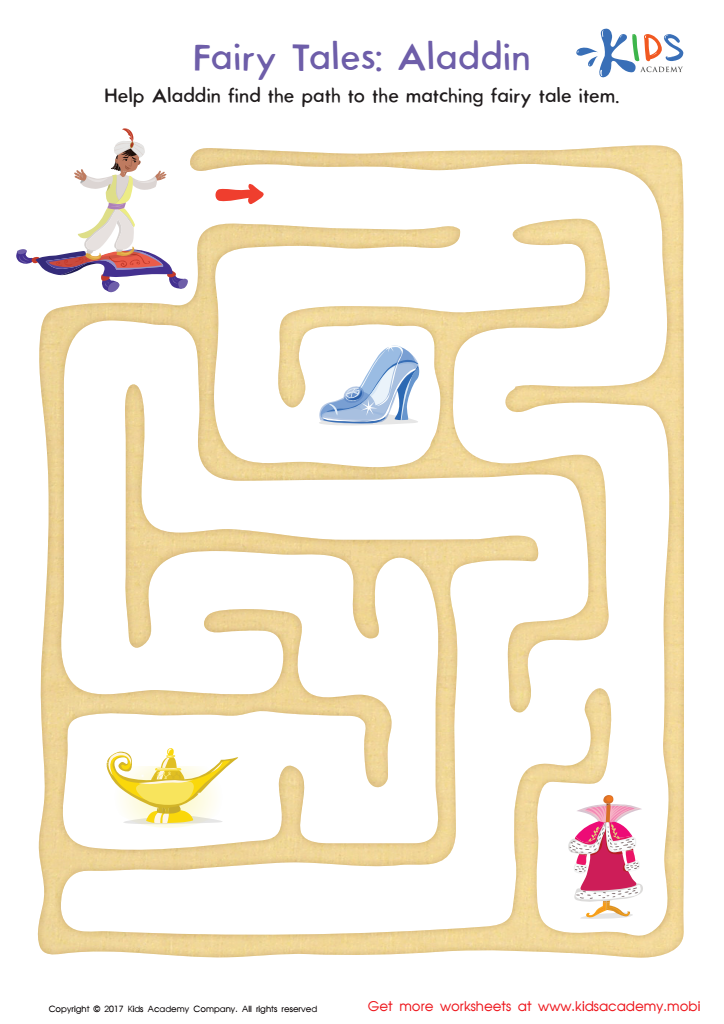
Fairy Tales Aladdin Printable
 Assign to My Students
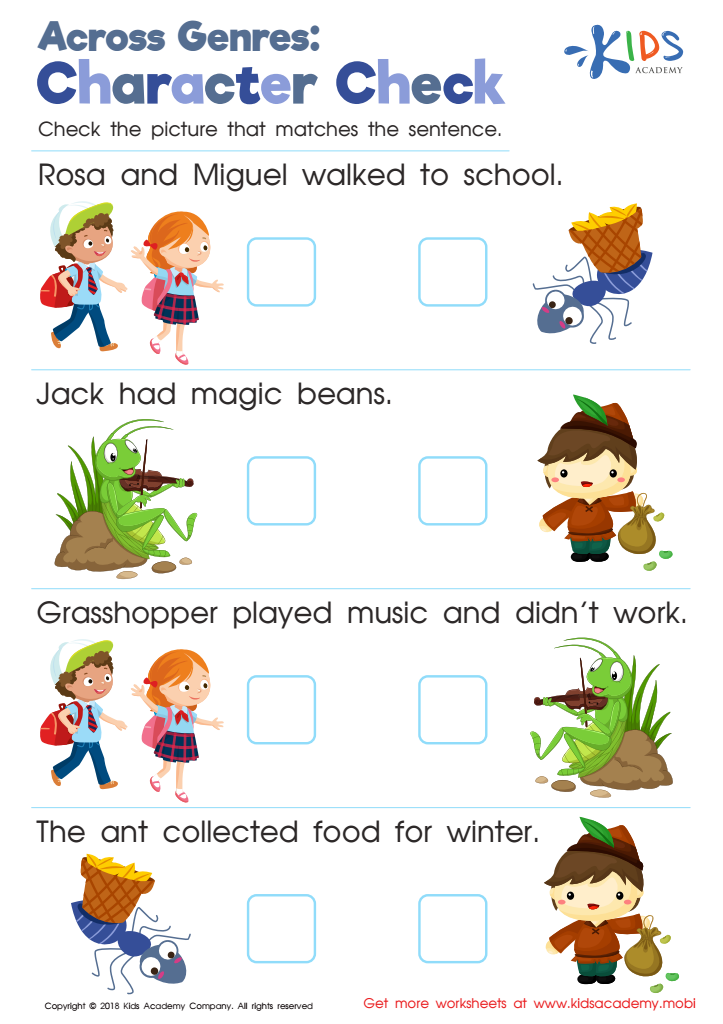
Across Genres: Character Check Worksheet
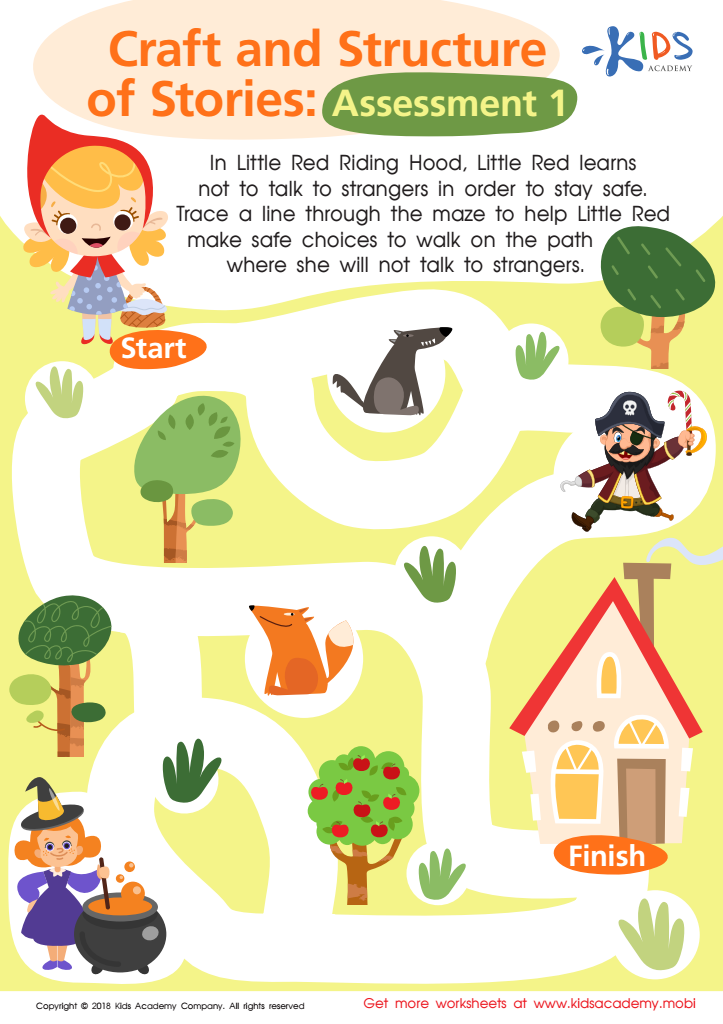
Craft and Structure of Stories: Assessment 1 Worksheet
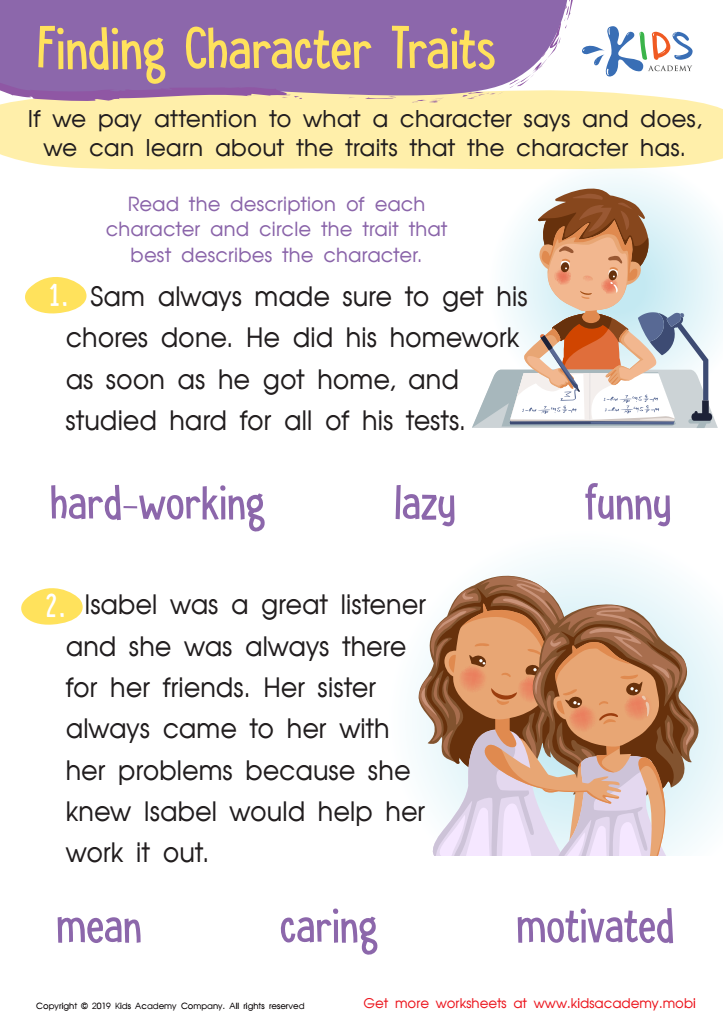
Finding Character Traits Worksheet
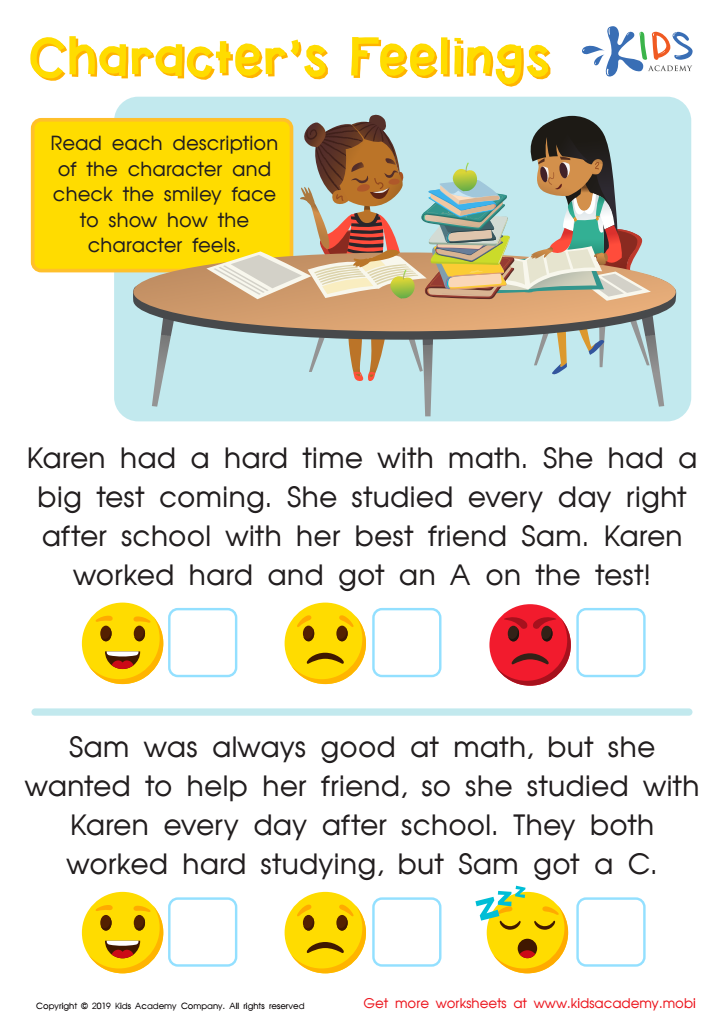
Character’s Feelings Worksheet




.jpg)



Character analysis in reading comprehension is essential for children aged 5-9, as it fosters critical thinking, empathy, and deeper understanding of stories. By examining characters' traits, motivations, and relationships, young learners enhance their ability to interpret texts, which is a foundational reading skill. Appreciating different perspectives helps children to develop empathy and social awareness, enabling them to relate to others in real life.
Moreover, discussing characters encourages children to ask questions and make predictions, promoting engagement and active learning. This process strengthens their vocabulary and comprehension skills, as they become familiar with complex language and narrative structures.
For parents and teachers, understanding character dynamics provides insightful opportunities to discuss moral lessons and values present in stories, reinforcing social and emotional learning. These conversations can lead to important life skills, like resilience and problem-solving, as children reflect on how characters navigate challenges.
Encouraging character analysis creates a more enriching literary experience, igniting a lifelong love for reading while building essential developmental skills. Ultimately, instilling a habit of thoughtful reading in early years sets the foundation for advanced comprehension abilities as students progress in their educational journeys.








