Shape Recognition Reading Comprehension Worksheets for Ages 5-9
4 filtered results
-
From - To
Our Shape Recognition Reading Comprehension Worksheets for ages 5-9 are designed to combine crucial early math skills with engaging literacy activities. Each worksheet helps children identify and understand various shapes while also improving their reading comprehension abilities. By following simple stories and directions, kids can enhance their recognition of circles, squares, triangles, and more. Perfect for both classroom settings and at-home learning, these printable resources are fun, educational, and aligned with common core standards. Foster your child’s developmental skills by exploring our collection today and watch as their confidence and knowledge grow exponentially!
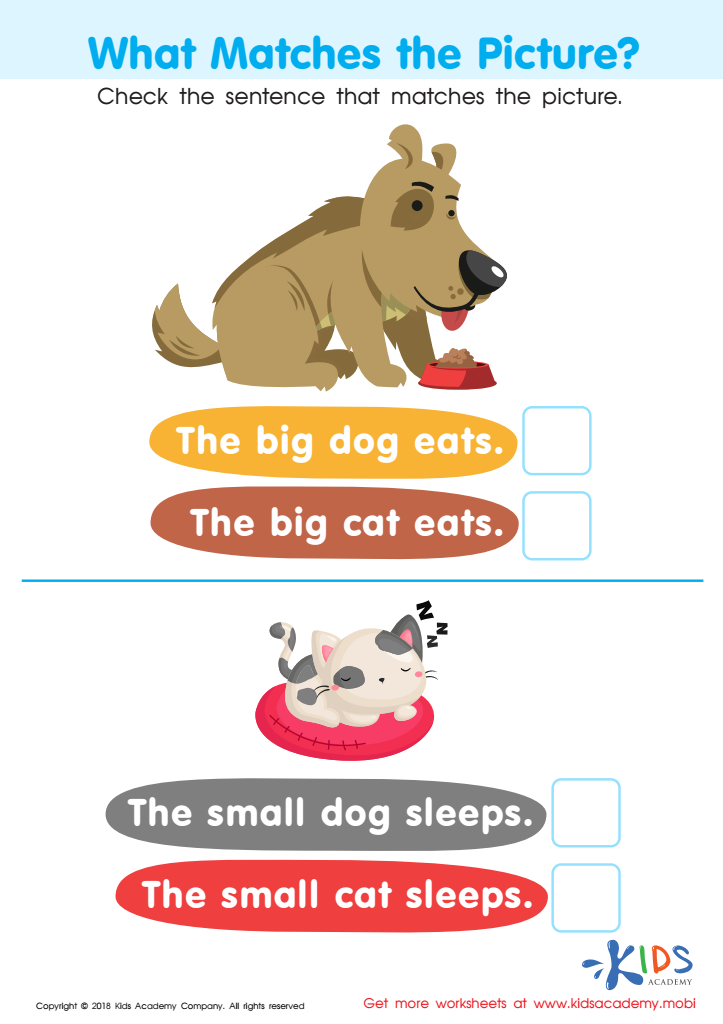
What Matches the Picture? Worksheet
 Assign to My Students
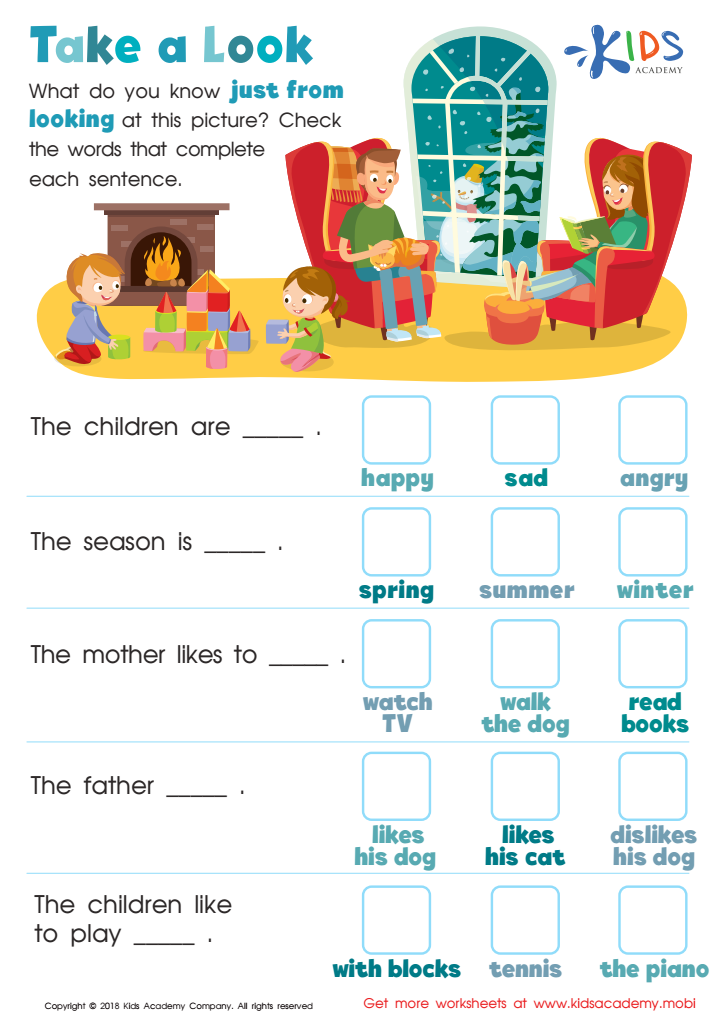
Take a Look - Part 1 Worksheet
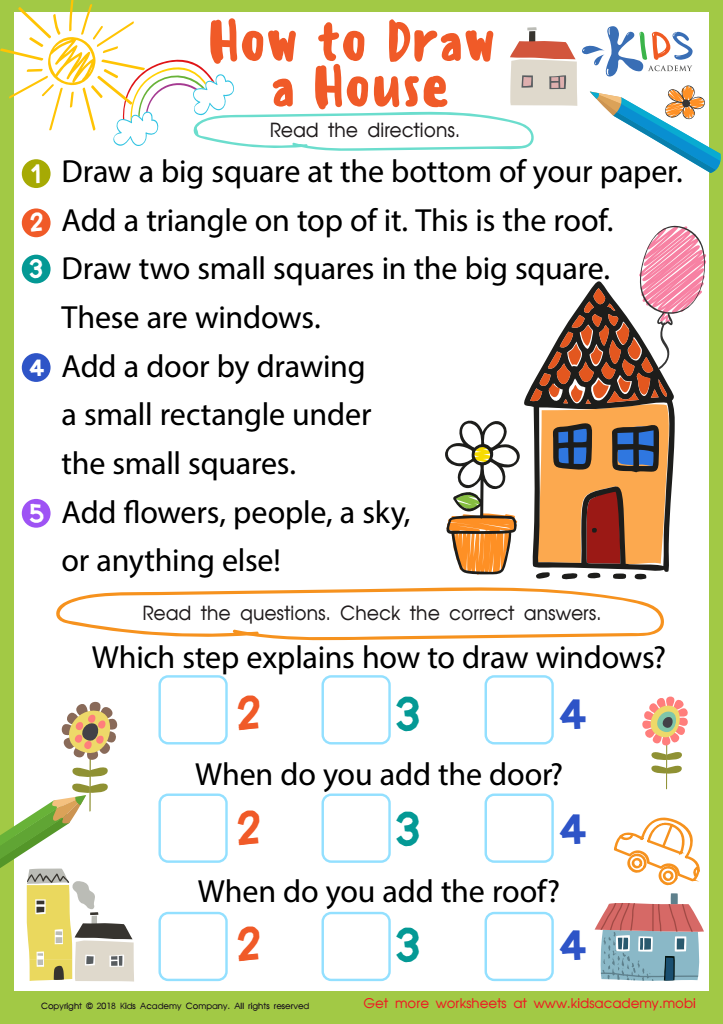
How to Draw House Worksheet
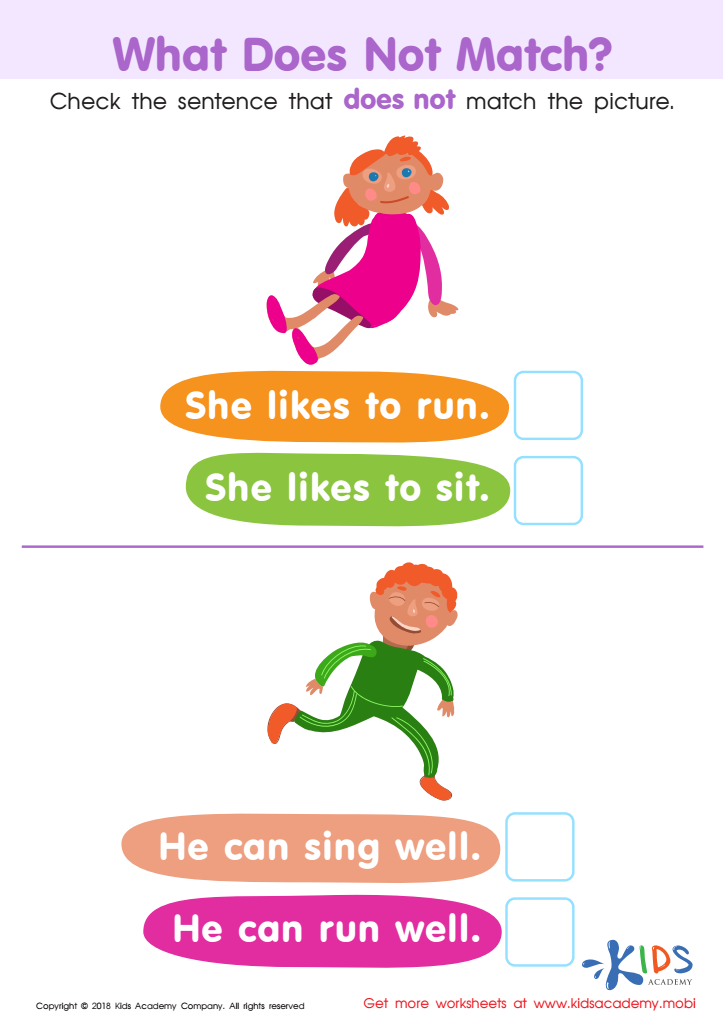
What Does Not Match? Worksheet








Shape recognition is fundamental for children aged 5-9 as it forms the building blocks of early literacy and cognitive development. Parents and teachers should be keen on fostering this skill for several crucial reasons.
Firstly, shape recognition enhances visual discrimination, which is the ability to notice and compare the differences in visual stimuli. This skill is essential for distinguishing letters and numbers, thus directly influencing reading and mathematical abilities. For instance, recognizing that the letters "b" and "d" are different shapes helps prevent reading mistakes and confusion.
Moreover, mastering shapes enhances spatial awareness and reasoning. Understanding how shapes fit together assists in comprehending the structure of letters and words, which is vital for writing. This spatial intelligence also supports success in subjects like geometry and problem-solving later on.
Furthermore, shape recognition intercepts at an emotional and social level, too. Early mastery builds a child's confidence and is linked to a positive school experience. When children successfully engage with their learning materials, their motivation increases, resulting in a more fruitful educational journey.
Lastly, incorporating shape recognition into playtime fosters motor skills and creativity. Activities like drawing shapes or assembling puzzles are not just fun but educational, encouraging children to explore the world around them while building essential skills.
Parents and teachers prioritizing this fundamental aspect are ensuring a robust foundation for the child's future academic and personal success.








