Understanding perspectives Reading Comprehension Worksheets for Ages 5-9
3 filtered results
-
From - To
Enhance young minds with our "Understanding Perspectives Reading Comprehension Worksheets" designed for ages 5 to 9. These engaging worksheets nurture critical thinking and empathy by helping children recognize different viewpoints within stories. Ideal for early grade readers, they cultivate skills in identifying characters’ feelings, motivations, and varied perspectives, essential for social and emotional growth. Our carefully crafted exercises integrate fun activities that make learning enjoyable and effective. Boost your child’s reading abilities and comprehension with materials that align with educational standards, fostering a deeper understanding of the diverse world around them through literature. Start exploring today!
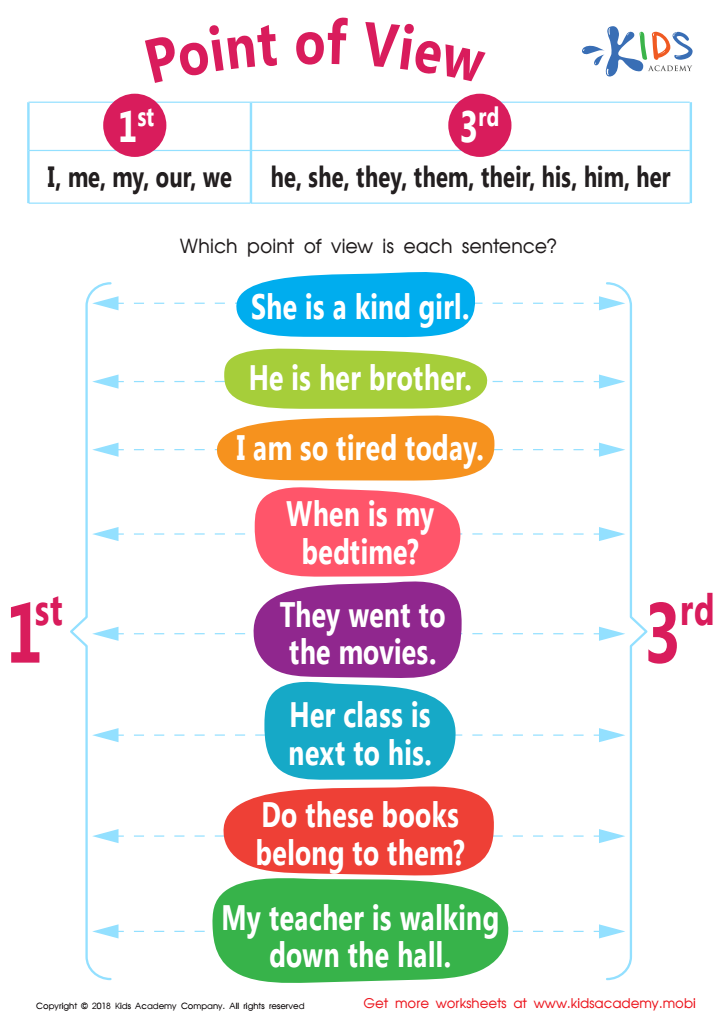
Point of View Worksheet
 Assign to My Students
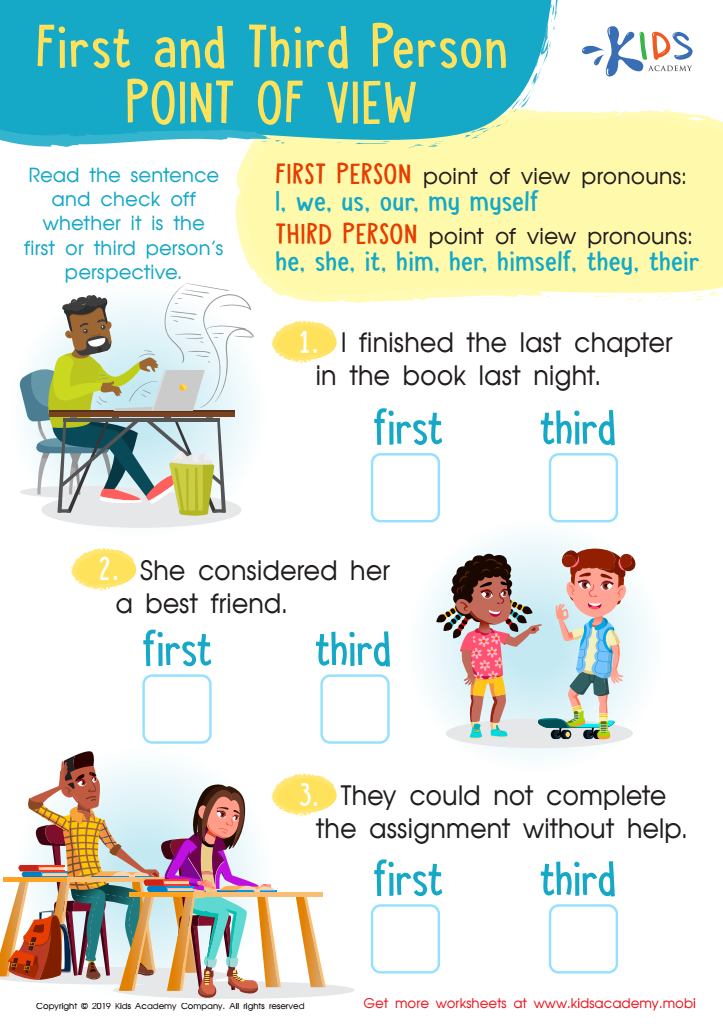
First and Third Person Point of View Worksheet
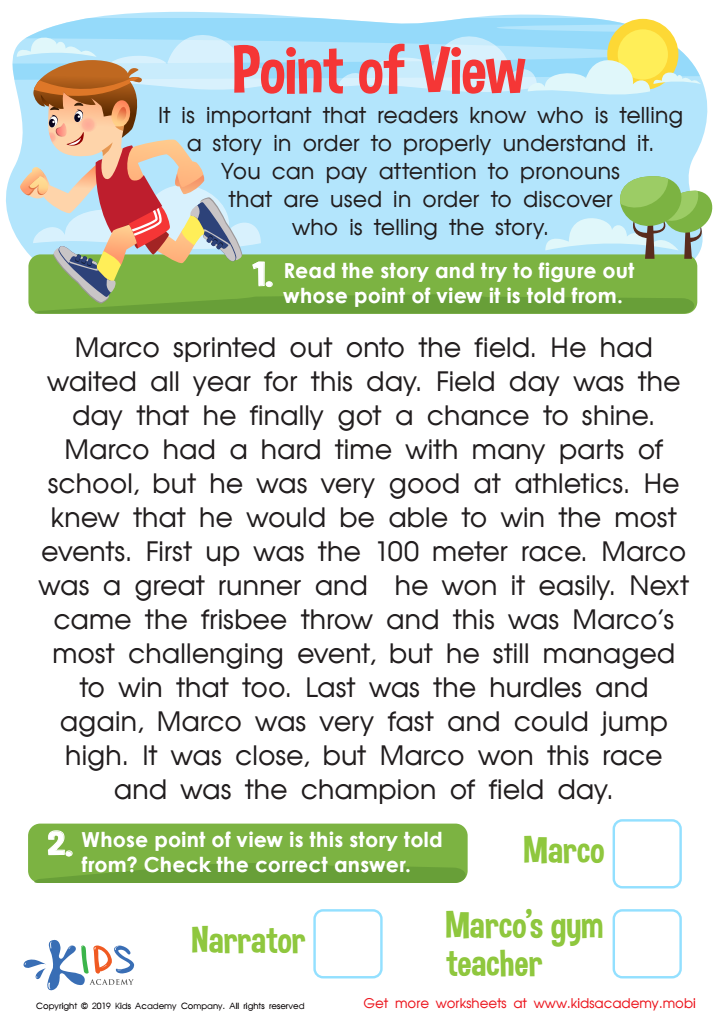
Point of View Worksheet








Understanding perspectives is a crucial component of reading comprehension, especially for children aged 5-9. During these formative years, kids are beginning to interact more complexly with the world around them. By learning to see the world from different viewpoints, they develop empathy, critical thinking, and social awareness. When a child understands a character's perspective in a story, they are better able to grasp the narrative’s deeper meanings and moral lessons.
Furthermore, this skill helps children with conflict resolution in real-life situations. Being able to understand why someone might feel or act differently fosters better communication and cooperation, both in the classroom and at home. It enhances their ability to make sense of social dynamics and build stronger, more understanding relationships with peers.
From an academic standpoint, perspective-taking enriches vocabulary and comprehension skills. Kids learn to ask questions like "Why did the character do that?" or "How would I feel in that situation?" which drive deeper engagement with the text. For parents and teachers, fostering this kind of thinking means nurturing a more emotionally and culturally aware generation equipped with the social and cognitive skills needed for future success. In essence, understanding perspectives in reading is foundational in raising well-rounded, thoughtful, and empathetic individuals.








