Filters

172 filtered results

Clear all filters
Favorites
With answer key
Interactive

172 filtered results

Difficulty Level

Grade


Subject

    Check out this FREE Trial Lesson on Reading Fiction for age 5-9!

    Answer Questions About Key Details in a Story

    Favorites
    With answer key
    Interactive
    • 5-9
    • Reading Fiction
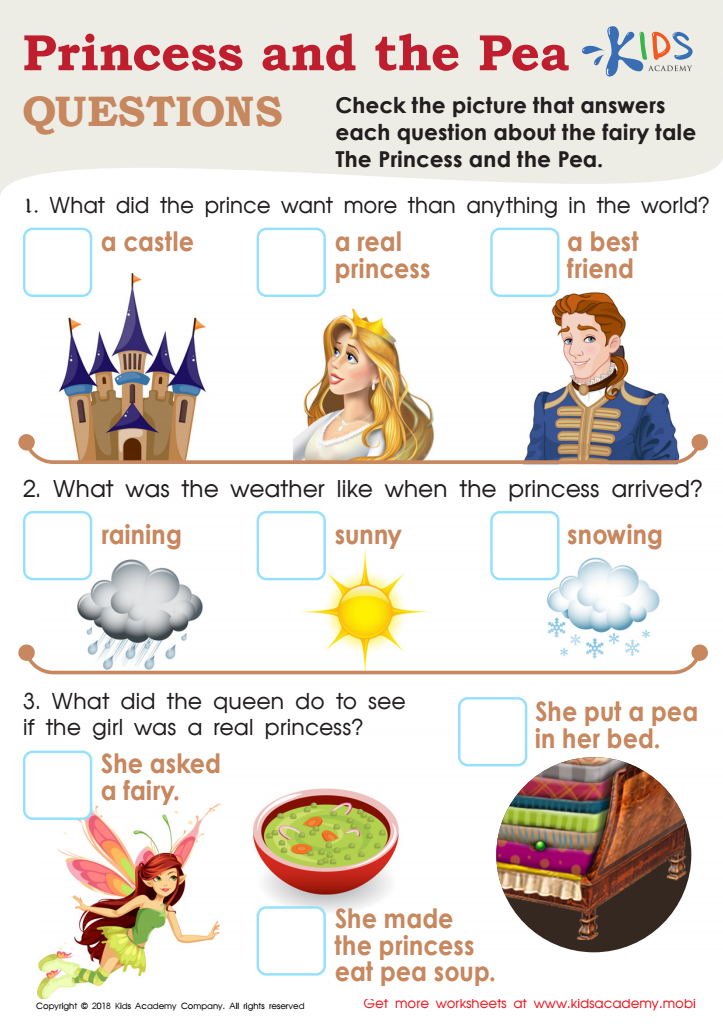
    Princess and the Pea Questions Worksheet
    Princess and the Pea Questions Worksheet

    Princess and the Pea Questions Worksheet

    Your kid knows The Princess and the Pea inside-out? Test their knowledge with this worksheet. Ask your little one to read the questions and match each one to the picture. It's a fun way to see just how much attention they've paid to their bedtime story.
    Princess and the Pea Questions Worksheet
    Worksheet
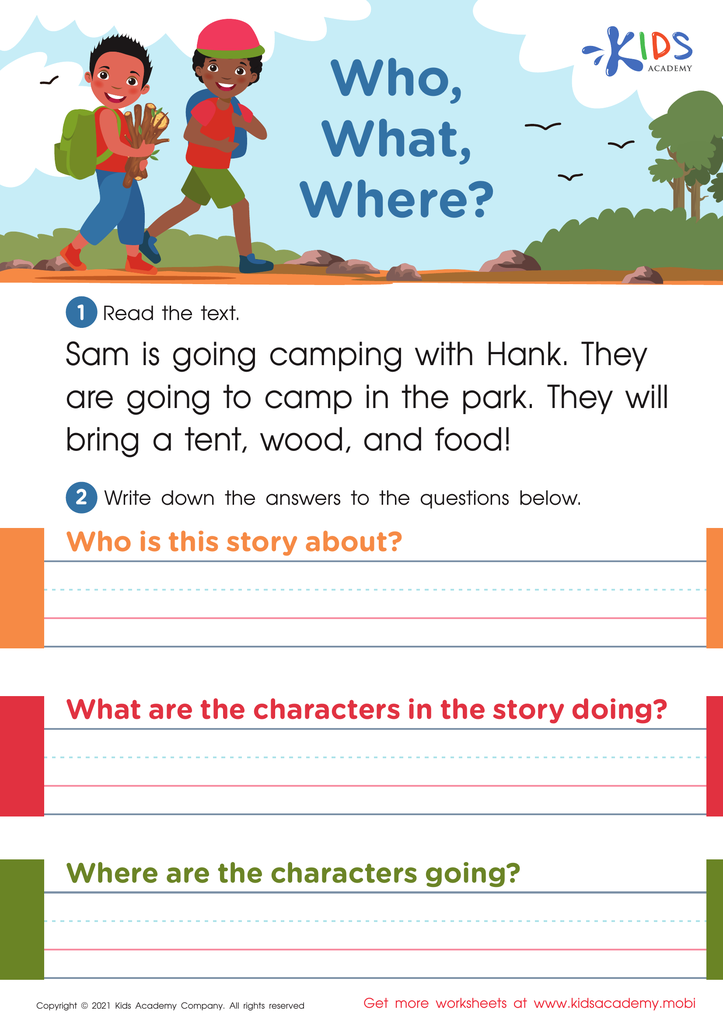
    Who, What, Where? Worksheet
    Who, What, Where? Worksheet

    Who, What, Where? Worksheet

    The availability of technology has changed the way students learn and interact with their environment in a very meaningful way. Technology has revolutionized learning and interaction for students. It offers an array of opportunities to engage with their surroundings, leading to a more meaningful educational experience.
    Who, What, Where? Worksheet
    Worksheet
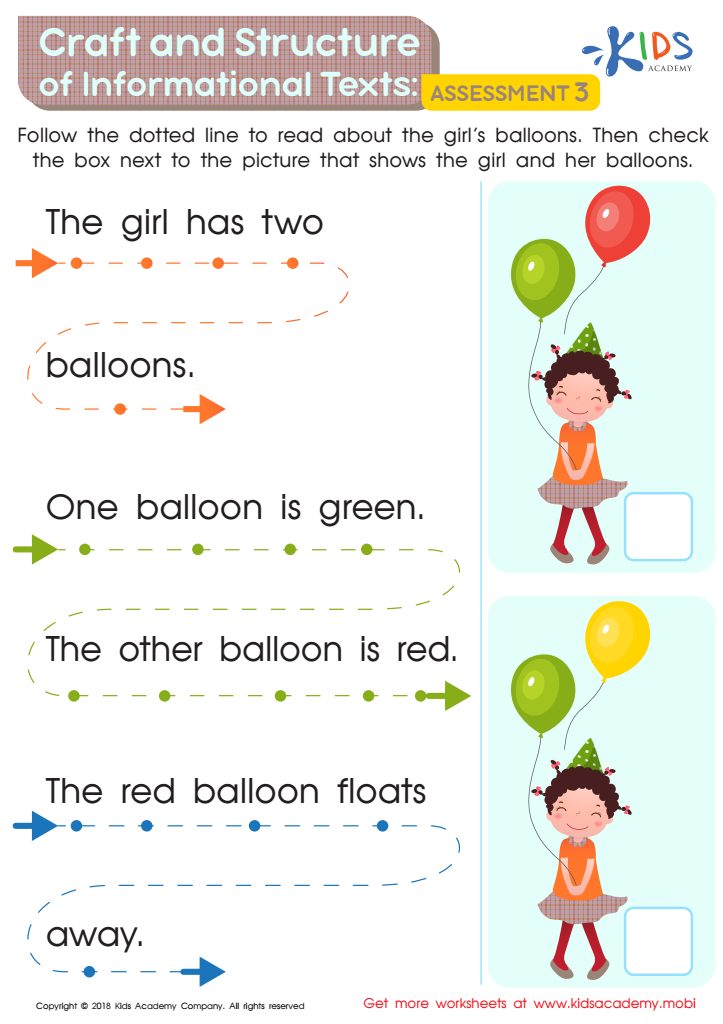
    Craft and Structure of Informational Texts: Assessment 3 Worksheet
    Craft and Structure of Informational Texts: Assessment 3 Worksheet

    Craft and Structure of Informational Texts: Assessment 3 Worksheet

    Test your beginning reader's understanding of left-to-right directionality and use of details from informational texts with this fun worksheet. Follow the traceable paths to find the right picture for each sentence. This will help your child gain confidence and be successful as a reader.
    Craft and Structure of Informational Texts: Assessment 3 Worksheet
    Worksheet
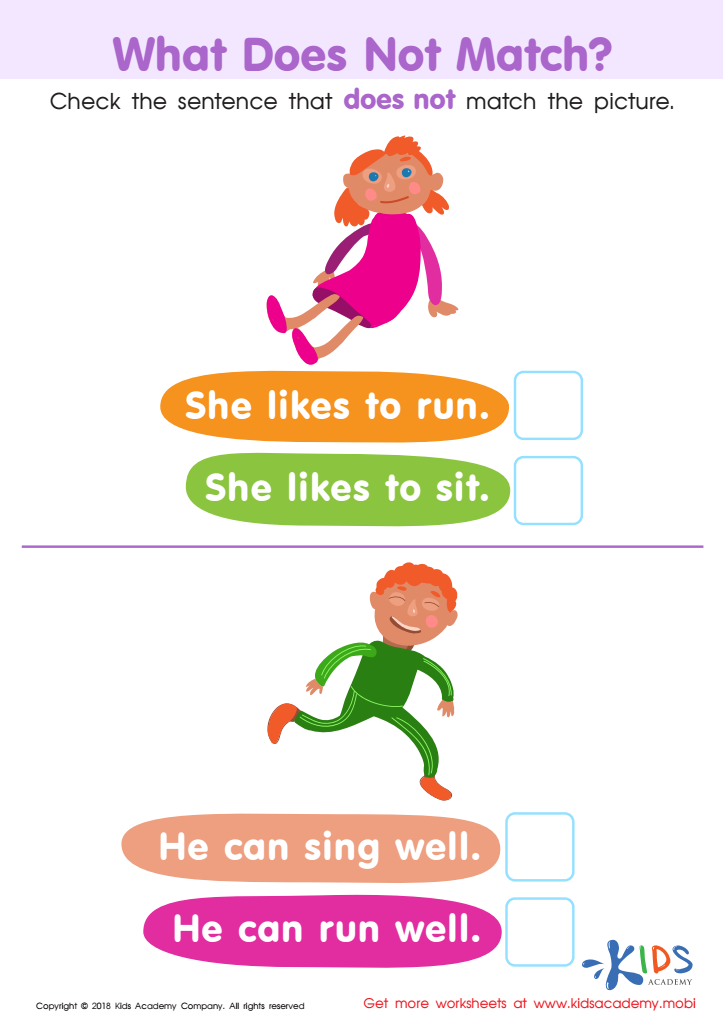
    What Does Not Match? Worksheet

    What Does Not Match? Worksheet

    What Does Not Match? Worksheet

    Emerging readers need to practice using visual cues and repetitive text. This colorful PDF provides them with an opportunity to look at pictures, use discrimination and discern which phrase does not match. It also enables them to gain familiarity with high-frequency words to aid decoding longer sentences.
    What Does Not Match? Worksheet

    Worksheet


    ... 7 8

    Reading fiction for children ages 5-9 is crucial for several reasons. Firstly, it enhances language skills; exposure to diverse vocabulary and sentence structures supports language acquisition and fluency. Through storytelling, children learn to express themselves better, both in speaking and writing.

    Secondly, reading fiction fosters empathy and emotional intelligence. Characters face various challenges, helping children understand different perspectives and emotions. This develops their ability to relate to others and enhances social skills, a vital aspect of early childhood education.

    Furthermore, fiction stimulates imagination and creativity. Engaging with imaginative worlds encourages children to think critically and explore their thoughts and ideas, laying the groundwork for creative problem-solving in the future. Staying engaged with a story also improves focus and concentration, skills essential for academic success.

    Lastly, reading together creates lasting bonds between parents, teachers, and children. These shared moments cultivate a love for reading and learning, which are instrumental for lifelong educational development. In today's digital age, prioritizing reading fiction sets a strong foundation for literacy and cognitive growth, instilling values, lessons, and a passion for storytelling that lasts well beyond the early years. For all these reasons, reading fiction is an invaluable activity that parents and teachers should actively encourage.