Animal Classification Science Worksheets for Ages 5-9
8 filtered results
-
From - To
Explore our engaging "Animal Classification Science Worksheets" designed specifically for children ages 5-9! These fun and educational resources facilitate early science learning by helping young learners identify and categorize animals based on their characteristics. With vibrant illustrations and interactive activities, students will delight in discovering various animal classes, such as mammals, reptiles, birds, and more. Our structured worksheets encourage critical thinking, enhance vocabulary, and foster an appreciation for the animal kingdom. Perfect for classroom use or at-home learning, these worksheets make understanding the concept of animal classification enjoyable and accessible for young minds. Start your child's scientific journey today!
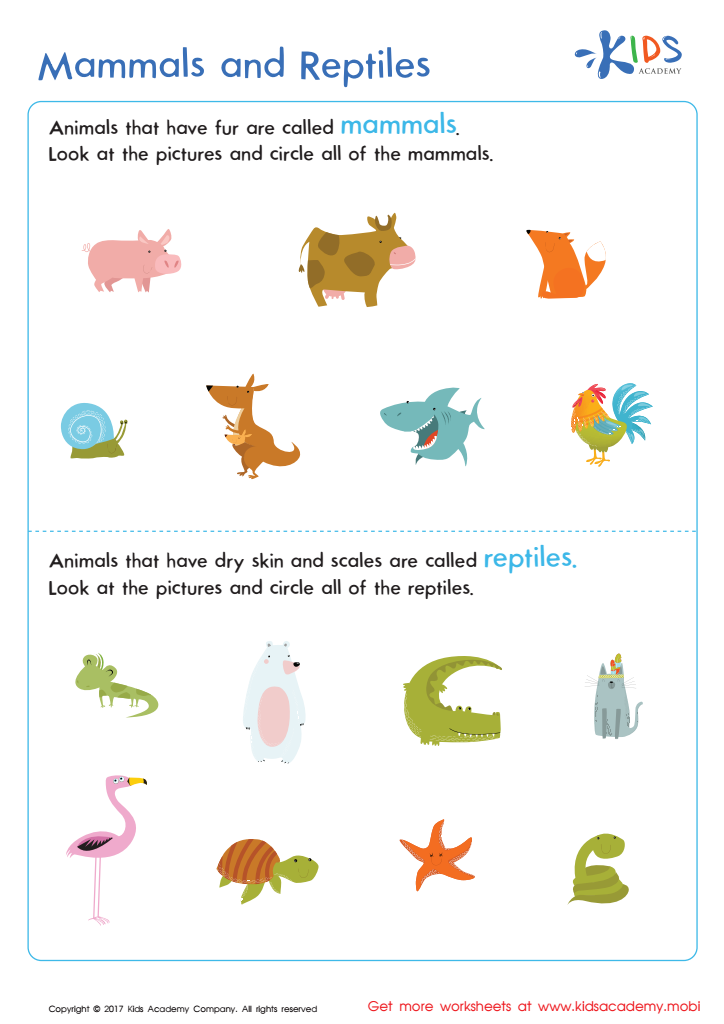
Mammals and Reptiles Worksheet
 Assign to My Students
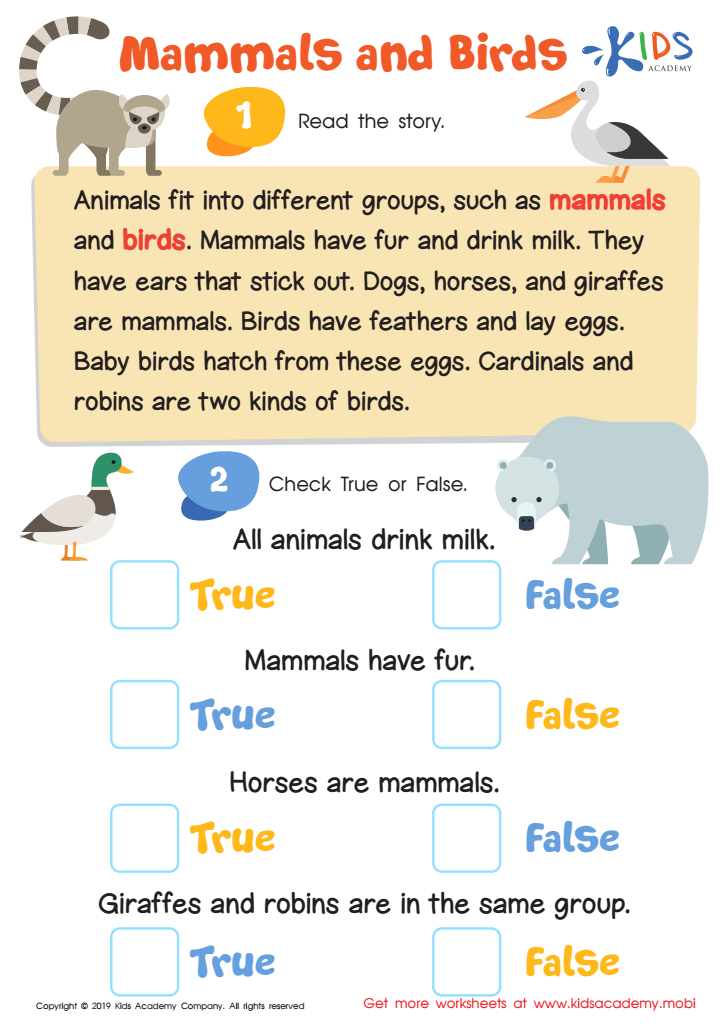
Mammals and Birds Worksheet
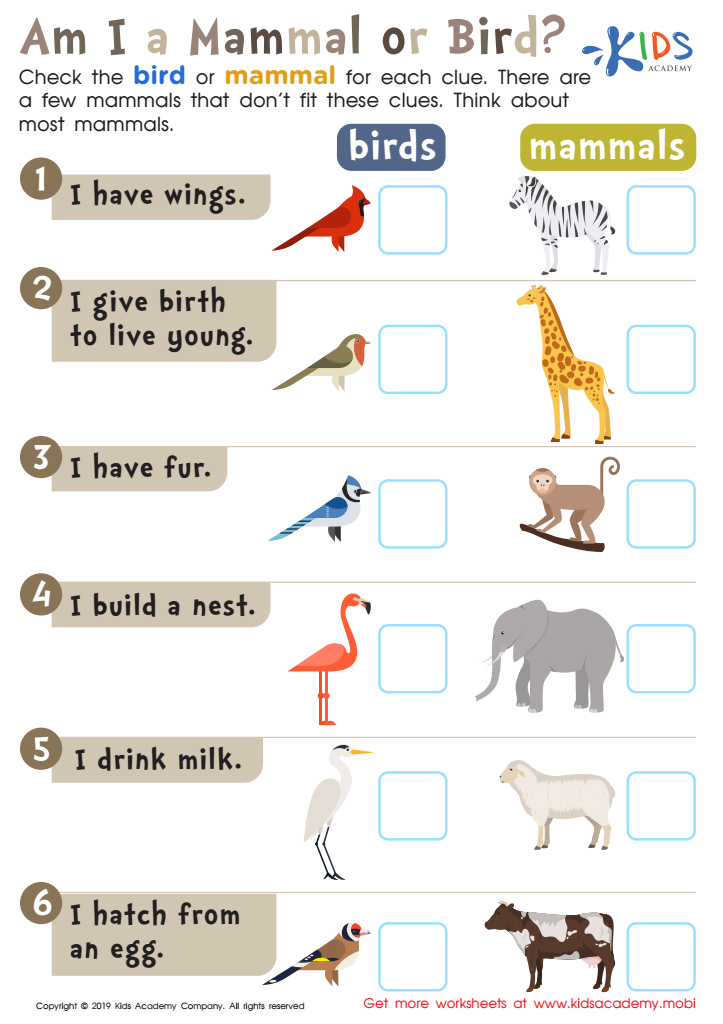
Am I a Mammal or Bird? Worksheet
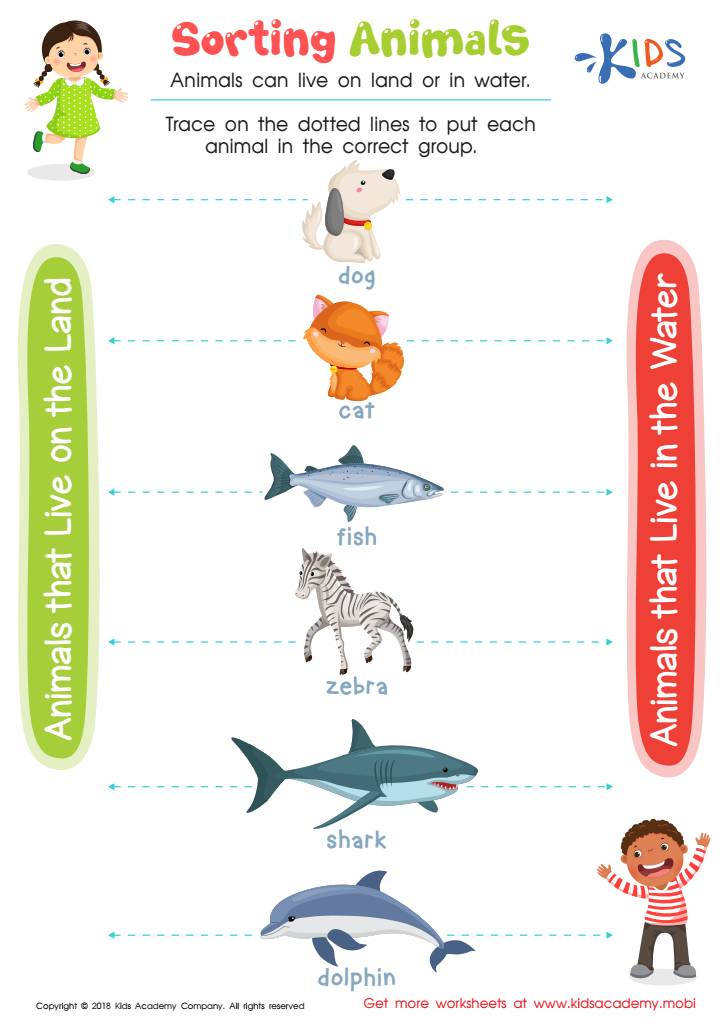
Sorting Animals Worksheet
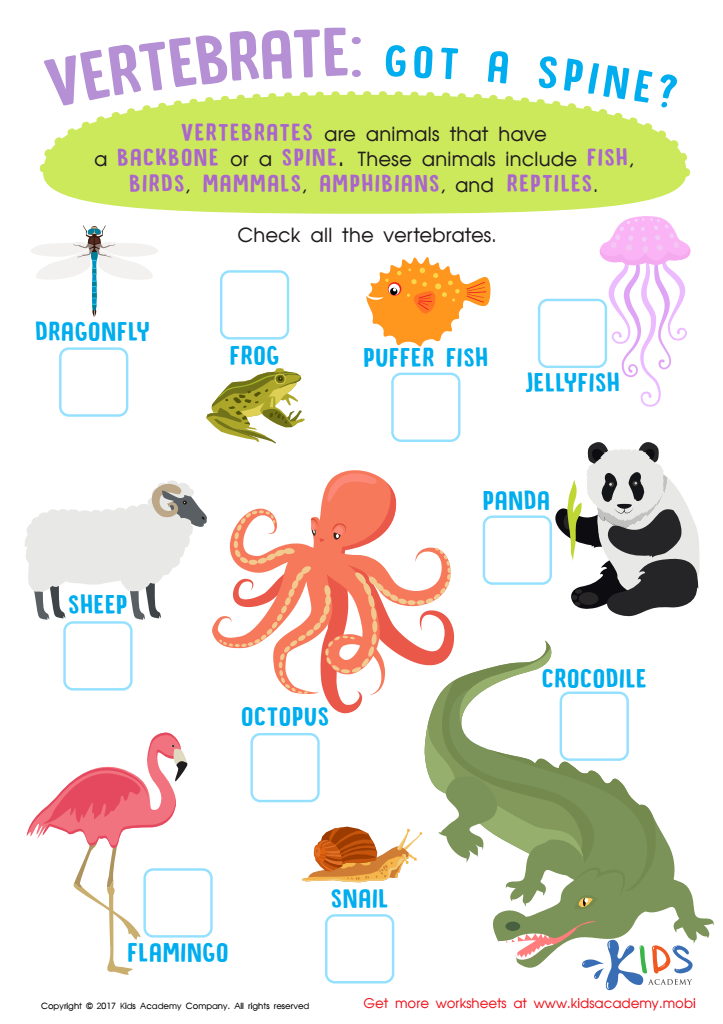
Vertebrates Animals Worksheet for 3rd Grade
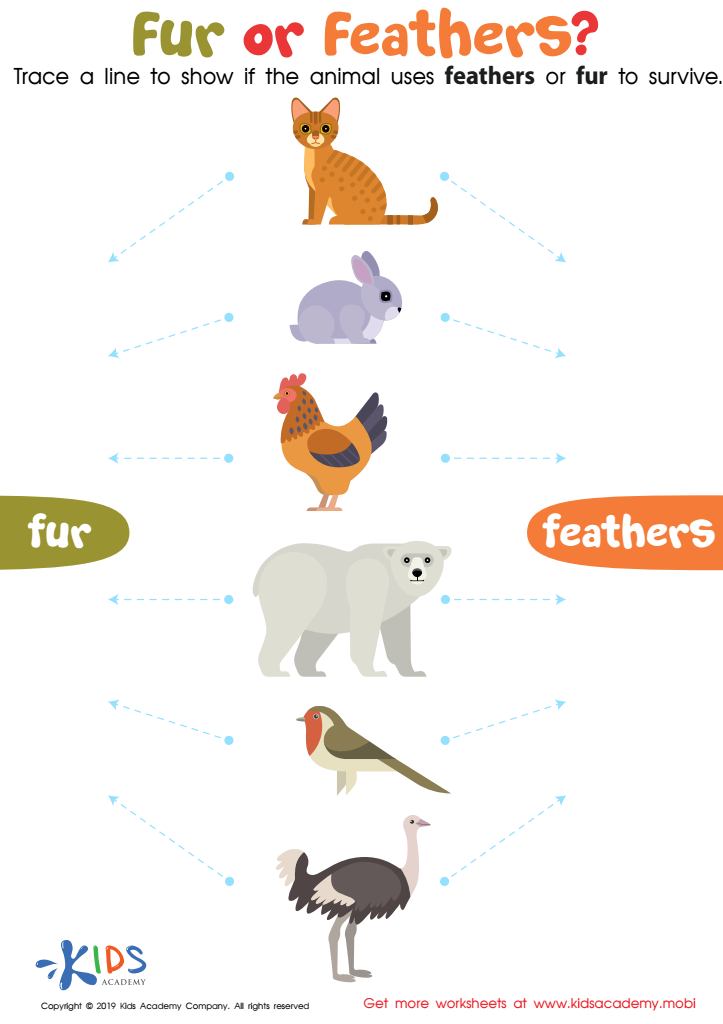
Fur or Feathers? Worksheet
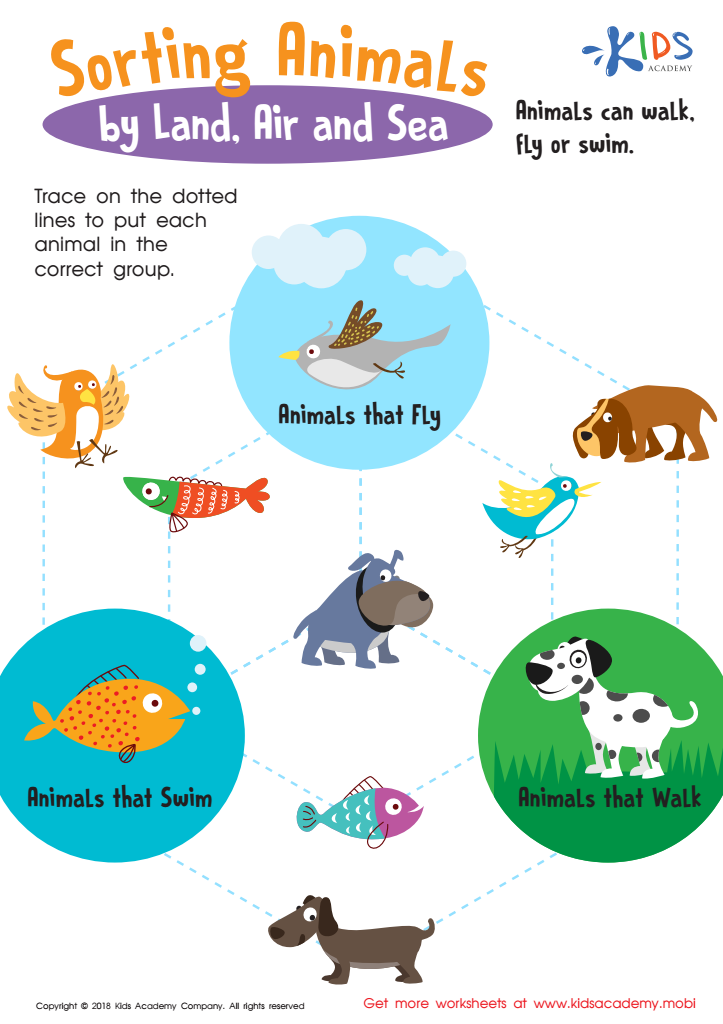
Sorting Animals by Land, Air and Sea Worksheet
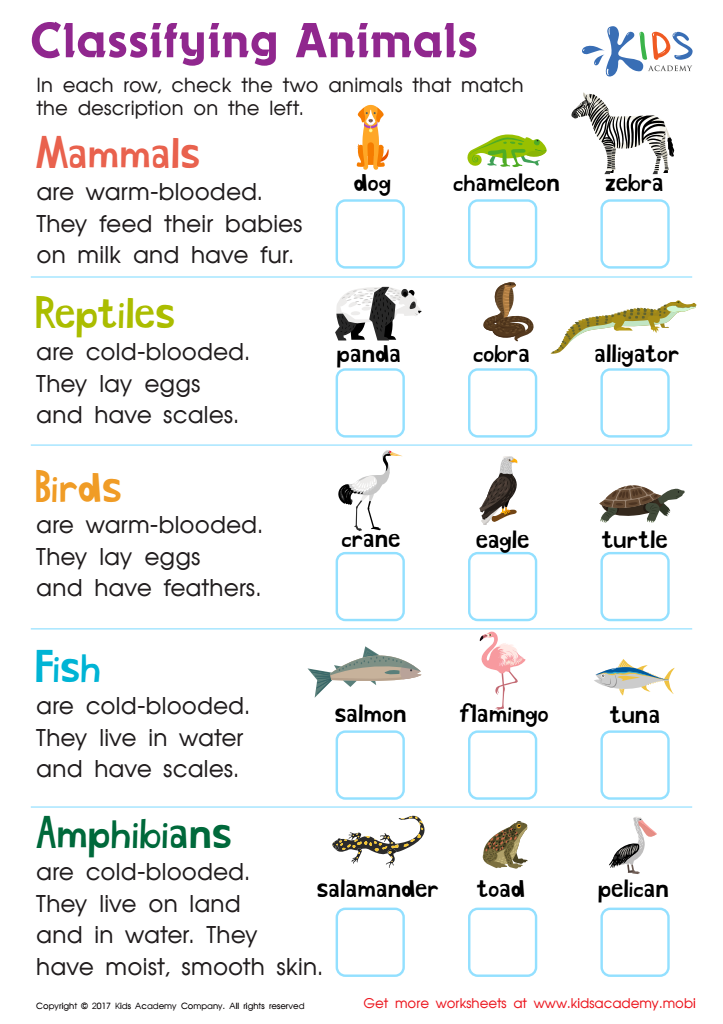
Classifying Animals Worksheet





Animal classification science, or taxonomy, is an essential component of early education, particularly for children aged 5-9. Understanding how animals are classified helps foster a sense of curiosity about the natural world, encouraging young learners to observe, question, and explore their surroundings.
By introducing children to the concept of animal groups—such as mammals, birds, reptiles, amphibians, and fish—teachers and parents nurture critical thinking skills. This foundational knowledge encourages kids to make connections between different species and their environments, enhancing their understanding of biodiversity and ecosystems.
Moreover, learning about animal classification plays a vital role in developing vocabulary and language skills. As children discover new terms and concepts, they enhance their ability to express thoughts and engage in discussions.
Additionally, animal classification science promotes empathy and respect for living creatures. Understanding the roles different animals play in their ecosystems helps children appreciate the importance of conservation and responsible stewardship of the environment.
In summary, animal classification science provides invaluable educational benefits, from cultivating curiosity and critical thinking to fostering a respect for nature—an essential mindset for shaping responsible, informed future citizens.







