Animal recognition Science Worksheets for Ages 5-9
6 filtered results
-
From - To
Discover our engaging Animal Recognition Science Worksheets, designed specifically for children aged 5-9! These fun and interactive worksheets help young learners explore the fascinating world of animals through vibrant illustrations and exciting activities. Kids will enhance their observational skills while learning about different species, habitats, and characteristics. Our carefully crafted worksheets promote critical thinking and creativity, making science accessible and enjoyable for early learners. Perfect for home or classroom use, these resources will inspire curiosity and a love for nature in your child. Equip your young explorers with essential skills—download our Animal Recognition Science Worksheets today and let the adventure begin!
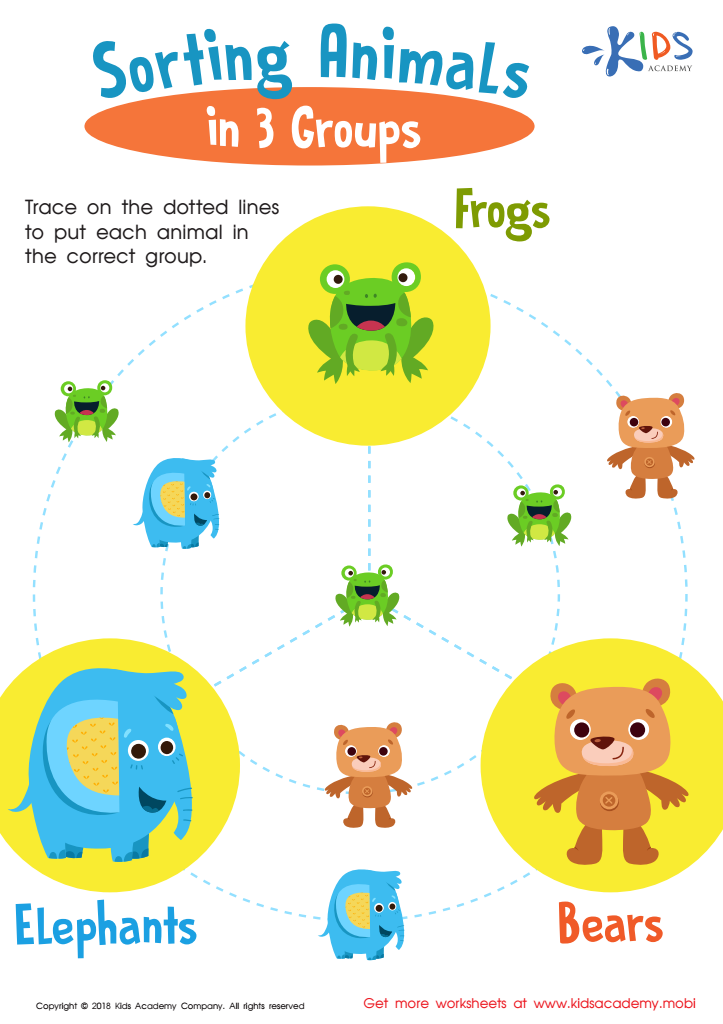
Sorting Animals in 3 Groups Worksheet
 Assign to My Students
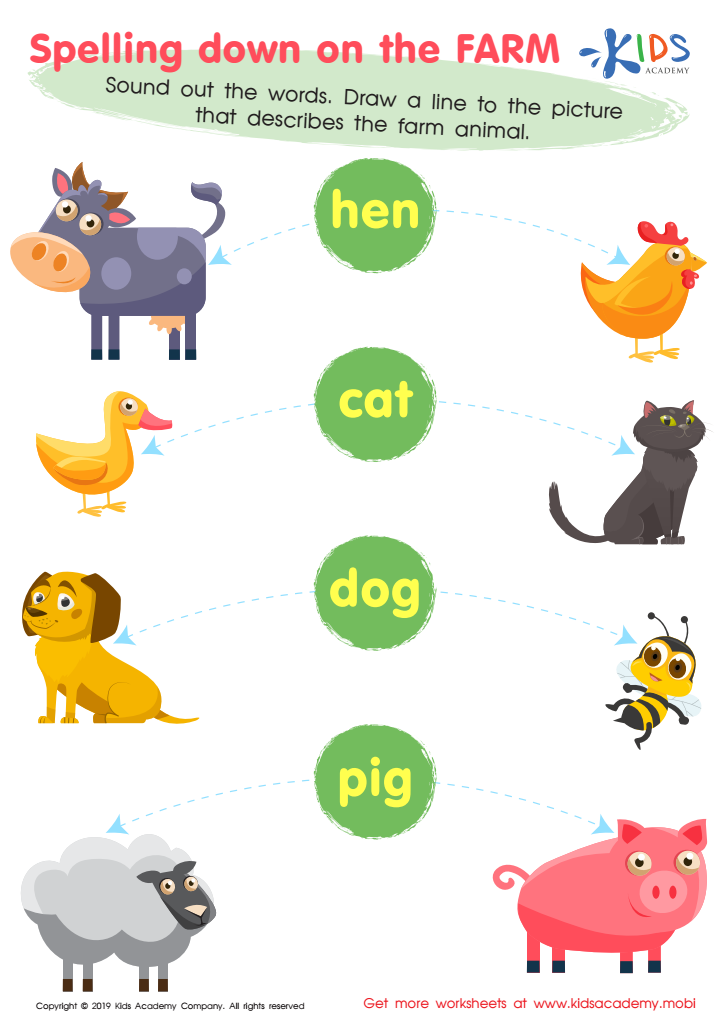
Spelling Down on the Farm Worksheet
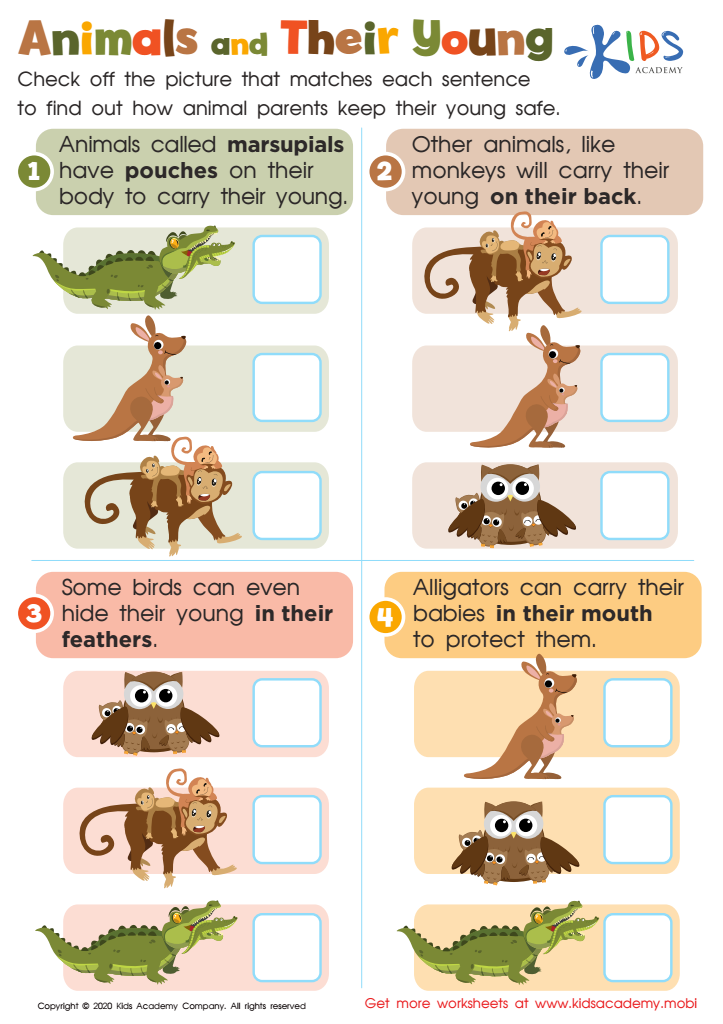
Animals and Their Young Worksheet
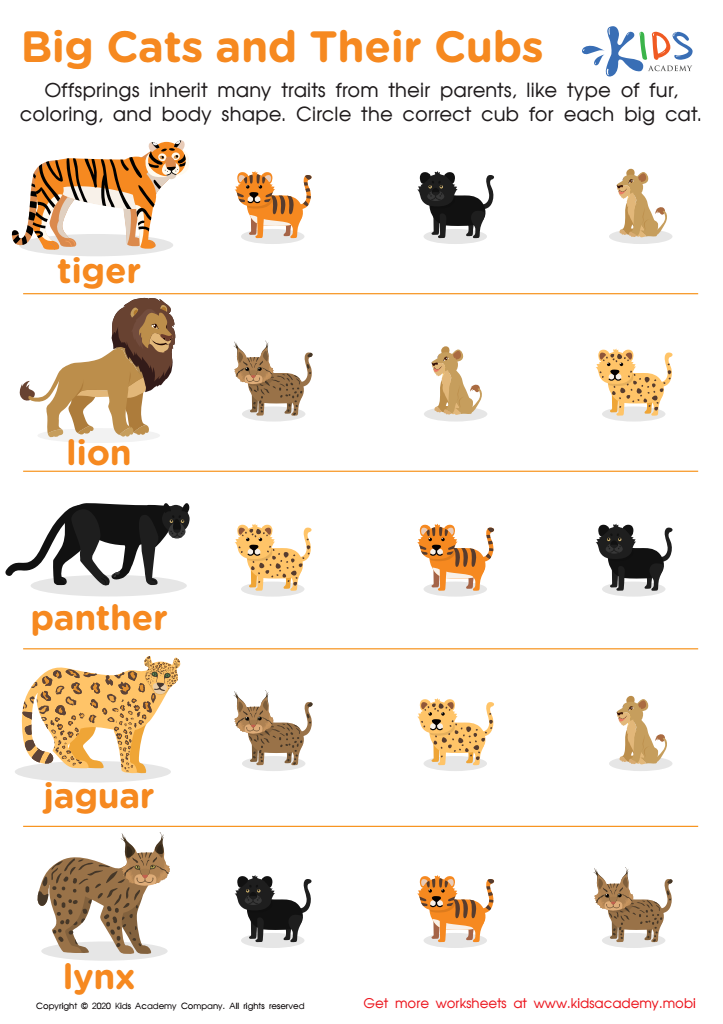
Big Cats and Their Cubs Worksheet
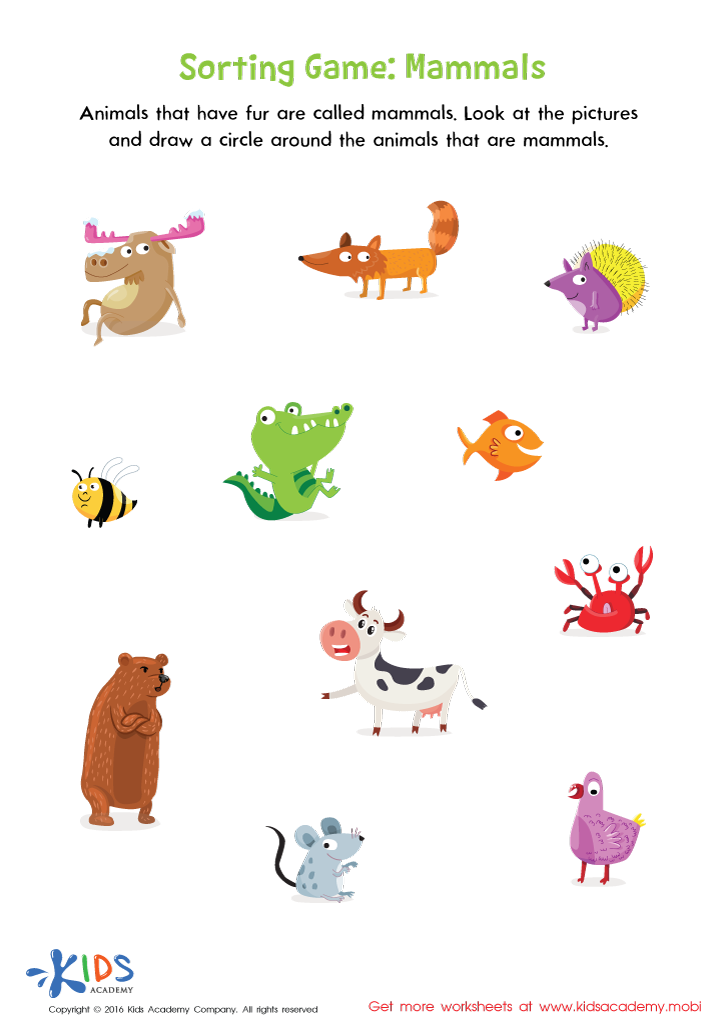
Mammals Sorting Worksheet
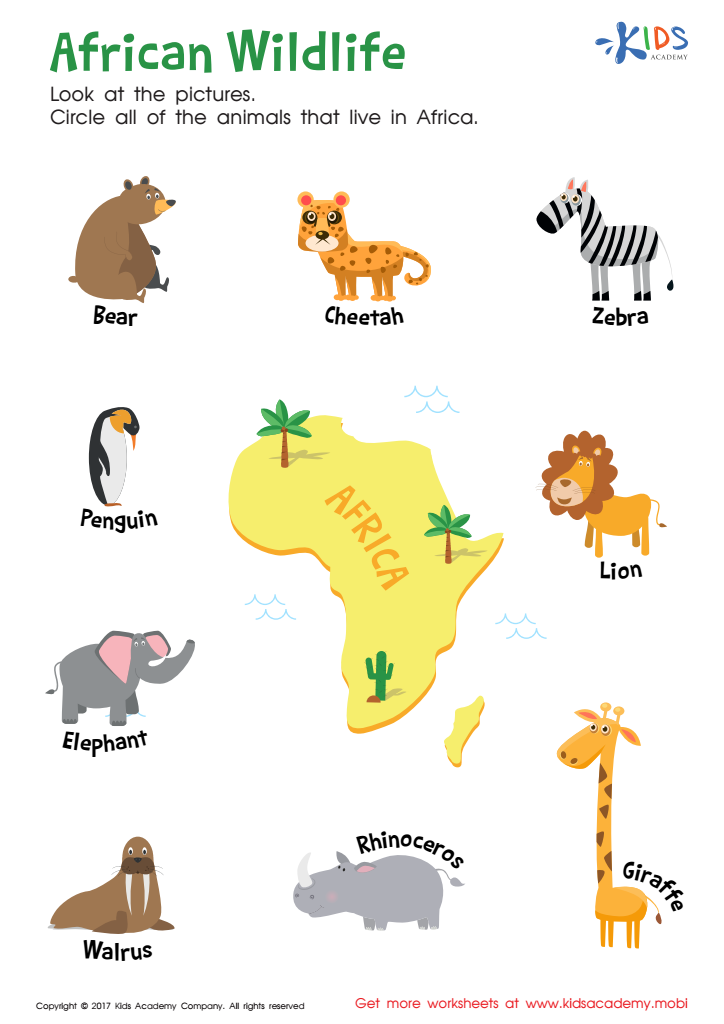







Animal recognition science is crucial for children aged 5-9 as it fosters curiosity about the natural world, enhances cognitive skills, and promotes empathy towards living beings. At this age, children are naturally inclined to explore and learn about their environment, making it an ideal time to introduce them to the rich diversity of animal life.
Understanding different species enables children to develop observational skills and cognitive abilities like classification and comparison, which are essential for their overall learning development. It encourages critical thinking as they begin to ask questions about habitats, behaviors, and ecological roles.
Moreover, animal recognition science promotes emotional growth. Teaching children about various animals, their needs, and their habitats fosters nurturing attitudes and empathy. This understanding helps children learn foundational values about conservation and respect for life.
For parents and teachers, integrating animal recognition into learning can enhance curriculum engagement and create memorable experiences through hands-on activities like nature walks or classroom projects. It lays the groundwork for responsible citizenship, encouraging future generations to become stewards of the planet. Overall, animal recognition science presents a holistic approach to learning, combining science education with essential life skills that will benefit children far beyond the classroom.







