Basic Addition Science Worksheets for Ages 5-9
4 filtered results
-
From - To
Explore our engaging Basic Addition Science Worksheets designed for children aged 5-9! These worksheets seamlessly blend fundamental math concepts with captivating science themes, making learning fun and interactive. Perfect for early grade teachers and homeschool parents, our resources foster a love for learning while reinforcing addition skills. Each worksheet includes vibrant illustrations and clear instructions to help young learners practice addition in various contexts. Whether you're teaching in the classroom or at home, our printable worksheets provide a valuable tool for enhancing math understanding with a scientific twist. Dive into science and math together with our enriching addition worksheets!
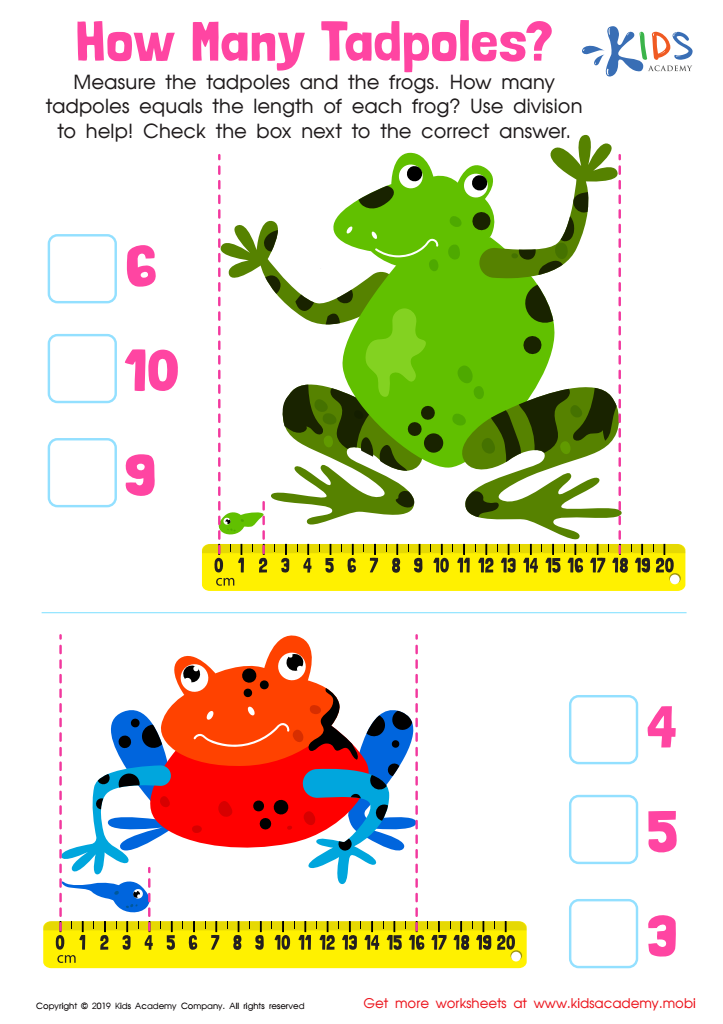
How Many Tadpoles Worksheet
 Assign to My Students

African Wildlife: Giraffe Worksheet
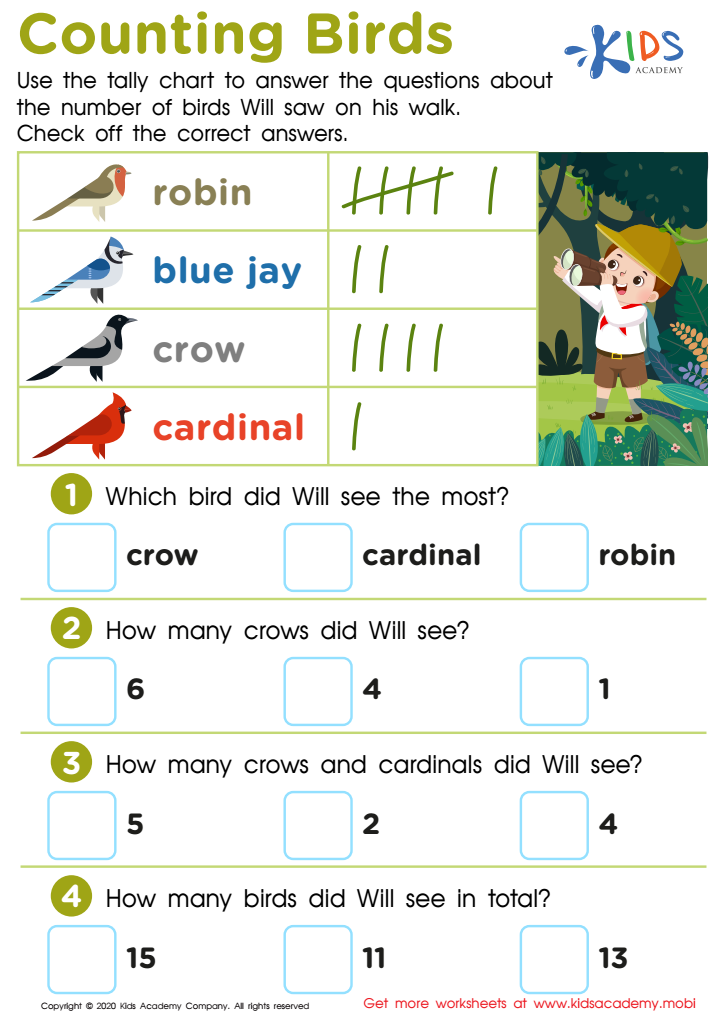
Counting Birds Worksheet
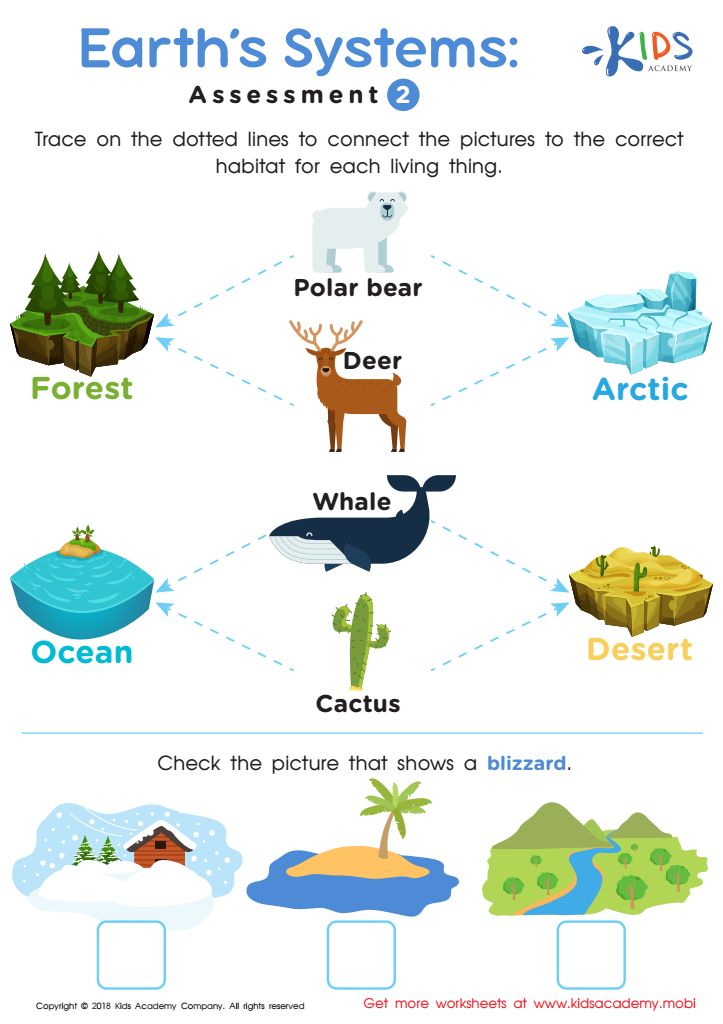
Earth's Systems: Assessment 2








Basic addition is a foundational skill in mathematics that children between the ages of 5 to 9 must master and is vital for their overall cognitive development. For parents and teachers, nurturing this skill is essential for several reasons.
Firstly, addition forms the basis for more complex arithmetic operations, such as subtraction, multiplication, and division. Mastery at an early age builds confidence and ensures a smoother progression through elementary mathematics and beyond.
Moreover, basic addition enhances critical thinking and problem-solving abilities. When children learn to manipulate numbers, they begin to understand patterns, relationships, and logical reasoning. These skills are not only applicable in math but across various subjects and real-life situations.
Engaging with addition through games and interactive activities fosters a positive attitude towards learning. This approach turns mathematics from a daunting subject into an enjoyable venture, cultivating a lifelong appreciation for learning.
Lastly, early mastery of addition is crucial for academic success. Difficulties in mathematics can lead to aversion and affect overall performance in school. By prioritizing basic addition, parents and teachers set the stage for sustained motivation and achievement in mathematics throughout a child's educational journey. Supporting this foundational skill is thus indispensable in laying the groundwork for a bright future.







