Observational skills development Science Worksheets for Ages 5-9
3 filtered results
-
From - To
Enhance your child's observational skills with our Science Worksheets tailored for ages 5-9! Designed to ignite curiosity and foster critical thinking, these printable worksheets offer engaging activities that require kids to carefully examine, compare, and analyze details in their surroundings. From identifying patterns in nature to exploring scientific concepts, each worksheet promotes hands-on learning and observational practice. Perfect for both classroom use and at-home learning, these resources help young learners build a strong foundation in science while sharpening their keen observational abilities. Empower your child to see and understand the world like a true scientist!
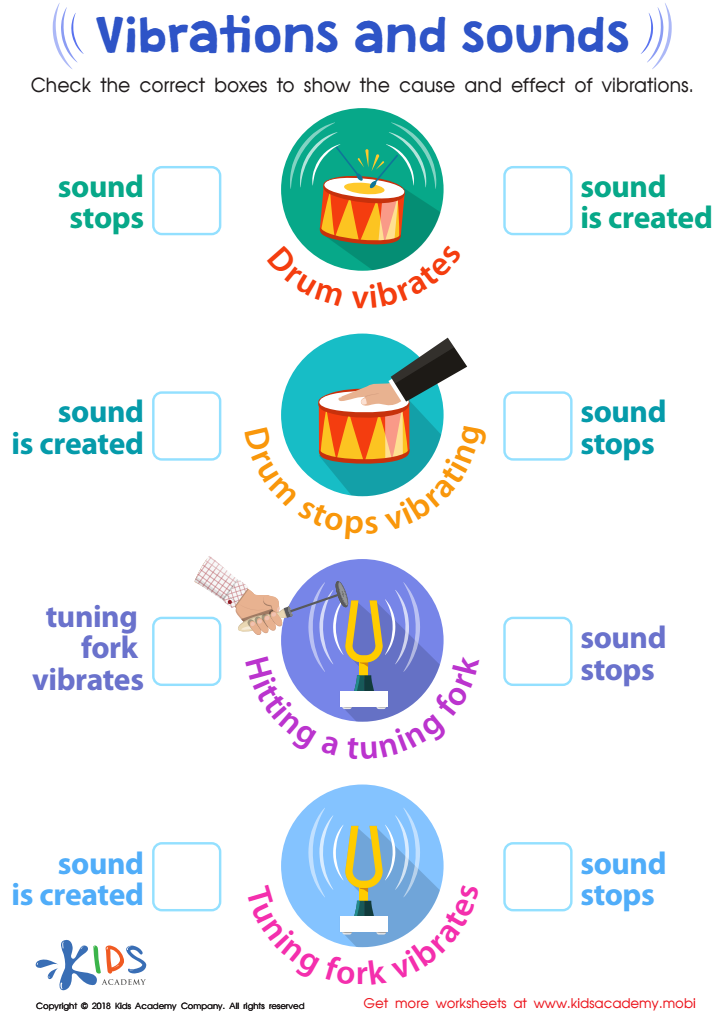
Vibrations and Sounds Worksheet
 Assign to My Students
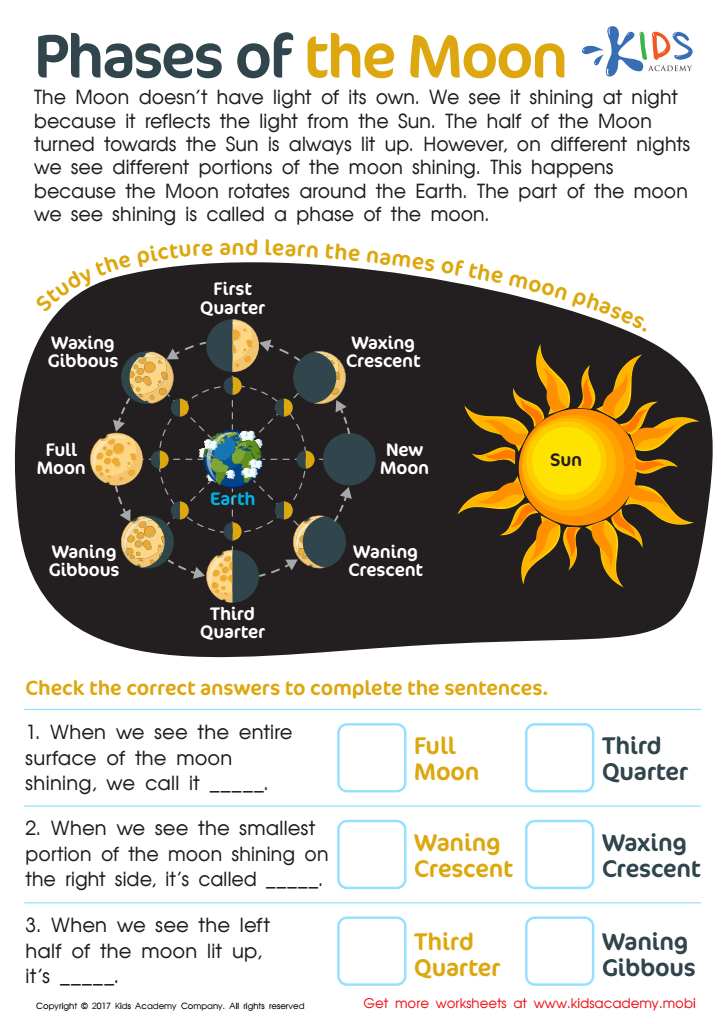
Phases of The Moon Worksheet
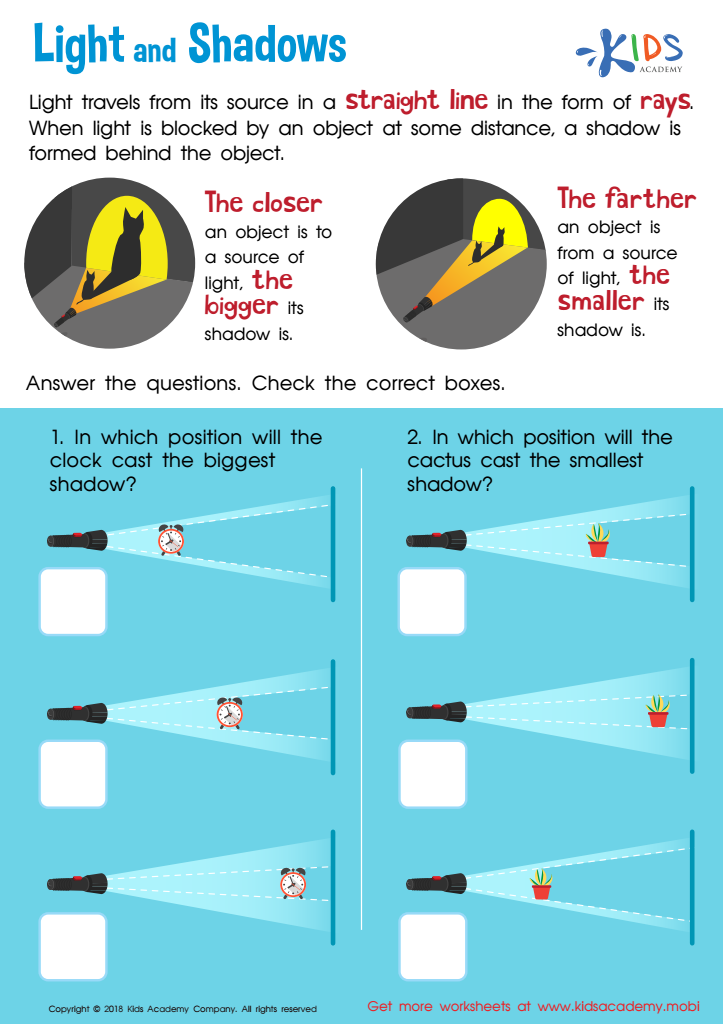
Light and Shadow Worksheet for Grade 3







Observational skills development in science is essential for children ages 5-9 as it forms the foundation for all future scientific learning and critical thinking. At this young age, children are naturally curious and eager to explore the world around them. Encouraging observation helps harness this curiosity and guide them toward structured thinking.
When children practice observing, they learn to notice details, make comparisons, and draw conclusions based on evidence they see. This not only sharpens their scientific skills but also enhances their overall cognitive development. Observational skills promote a habit of focusing carefully, a critical component for success in both academic and real-world settings.
For teachers and parents, fostering these skills can make science learning more interactive and engaging. Simple activities like examining leaves, watching insects, or noting weather changes turn everyday experiences into valuable learning opportunities. By developing strong observational skills, children build a critical early foundation for inquiry-based learning, enabling them to become more adept at asking questions, conducting experiments, and understanding the natural world.
Furthermore, these skills are essential for other subjects too. Enhanced observation boosts reading comprehension, attentive listening, and mindful art creation. For a balanced, confident child capable of thinking critically and creatively, investing in observational skills development is undoubtedly worthwhile.







