Understanding directions Science Worksheets for Ages 5-9
4 filtered results
-
From - To
Transform learning with our "Understanding Directions Science Worksheets for Ages 5-9" designed to hone navigational skills in young learners. Engaging and educational, these worksheets integrate fun activities to help kids grasp concepts like north, south, east, and west, while fostering critical thinking and spatial awareness. Perfect for curious minds, each worksheet ensures that young explorers can follow instructions, comprehend maps, and understand directional cues both in the classroom and beyond. Empower your child with confidence and mastery in following directions, setting a foundation for lifelong learning and practical skills. Discover more today on Kids Academy.
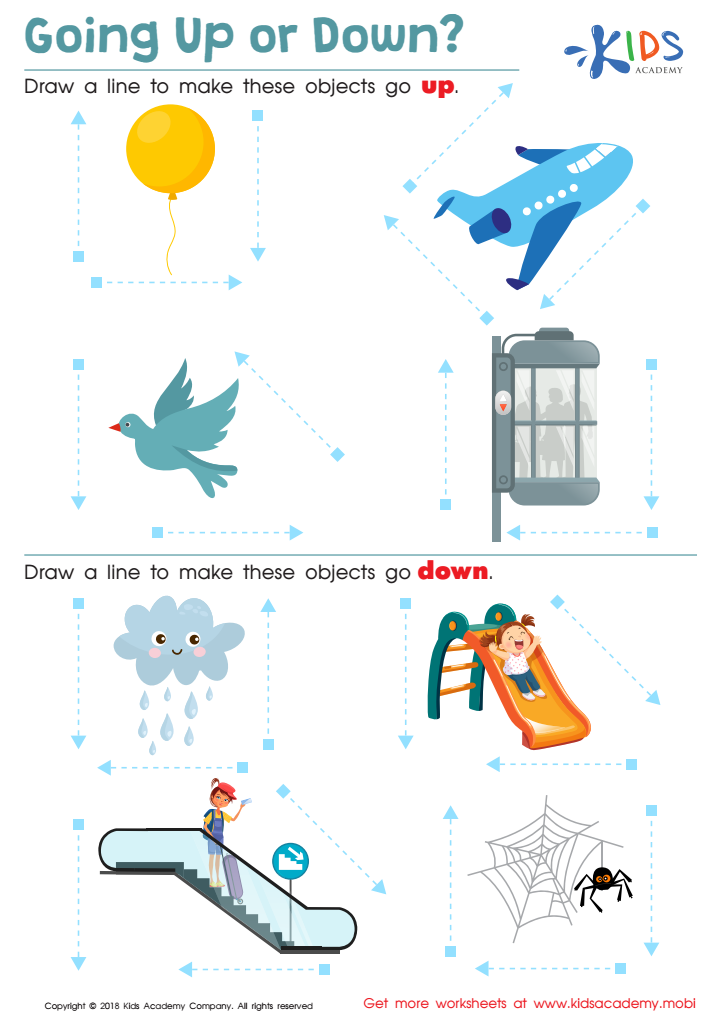
Going up or Down? Worksheet
 Assign to My Students
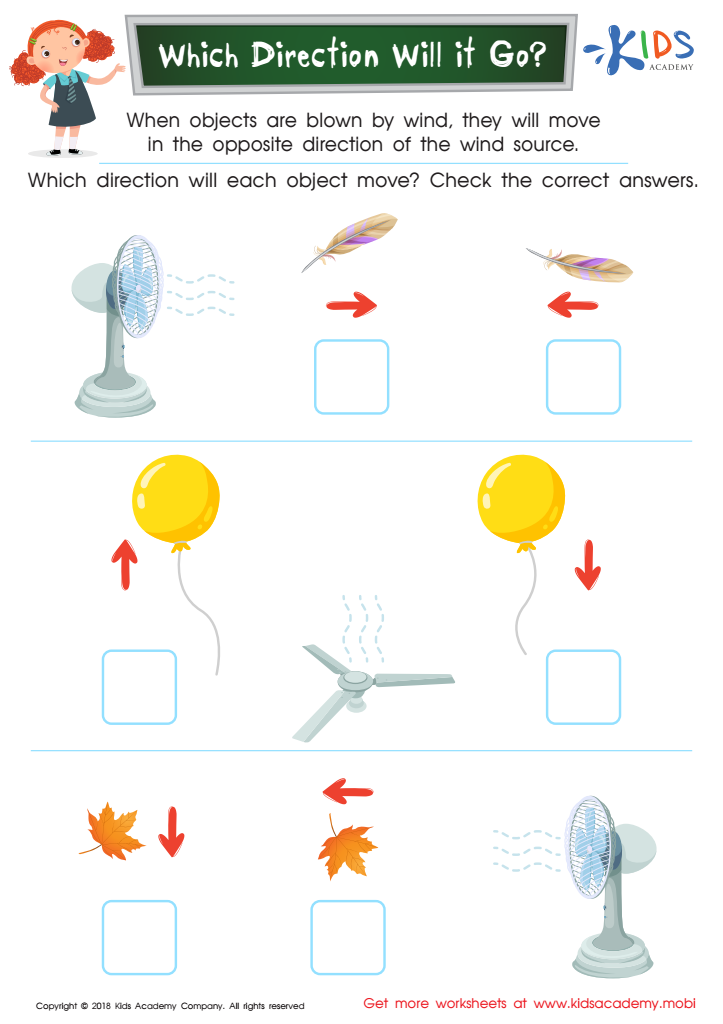
Which Direction Will it Go? Worksheet
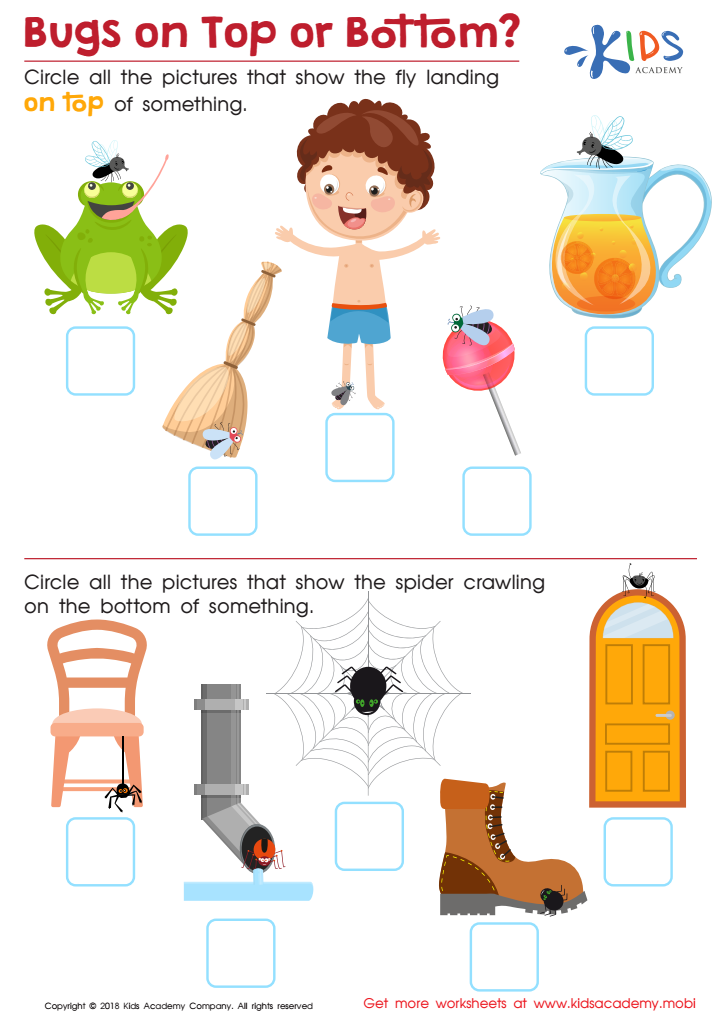
Bugs on Top or Bottom? Worksheet
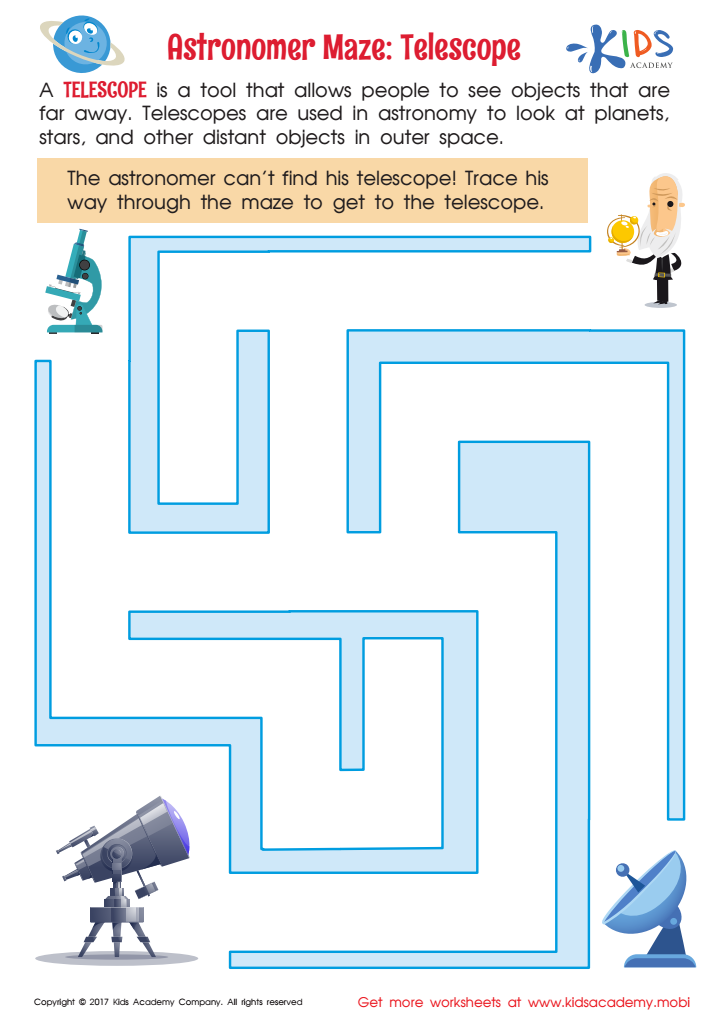
Astronomer Maze: Telescope Worksheet








Understanding directions and basic scientific concepts at an early age (5-9 years) is crucial for several reasons. Firstly, it lays the foundation for independent learning and critical thinking. When children know how to follow directions, they become more adept at tackling problems and engaging in experiments, fostering a scientific mindset. Secondly, engaging in simple scientific activities helps to cultivate curiosity and a love for learning. Children this age are naturally inquisitive, and structured direction-following can channel this curiosity effectively, sparking an interest in how the world works.
Furthermore, comprehending directions is essential for developing practical life skills. Being able to interpret and follow instructions accurately can enhance a child's ability to perform day-to-day tasks efficiently and safely. Additionally, these activities can improve cognitive abilities such as sequencing, memory, and attention to detail. Understanding cause and effect, which is a fundamental aspect of science, teaches children about the consequences of actions in both controlled experiments and real-life situations.
Finally, engaging in science-based direction-following activities encourages collaborative learning. It can enhance social skills as children often work together to complete experiments or tasks, learning valuable lessons in cooperation, communication, and teamwork. Overall, focusing on these skills equips children with both the academic and life skills essential for their development.







