Spatial awareness Physical Science Worksheets for Ages 5-9
4 filtered results
-
From - To
Unlock your child's potential with our engaging Spatial Awareness Physical Science Worksheets, designed for ages 5-9. These worksheets foster essential spatial skills, helping young learners understand how objects relate to each other in space. Through fun activities and easy-to-follow instructions, children develop critical thinking and problem-solving abilities while exploring foundational concepts in physical science. Ideal for home learning or classroom enrichment, our resources encourage hands-on exploration and interactive learning. With a variety of exercises tailored to young learners, you’ll find the perfect activities to boost their confidence and curiosity. Dive into a world of discovery today!
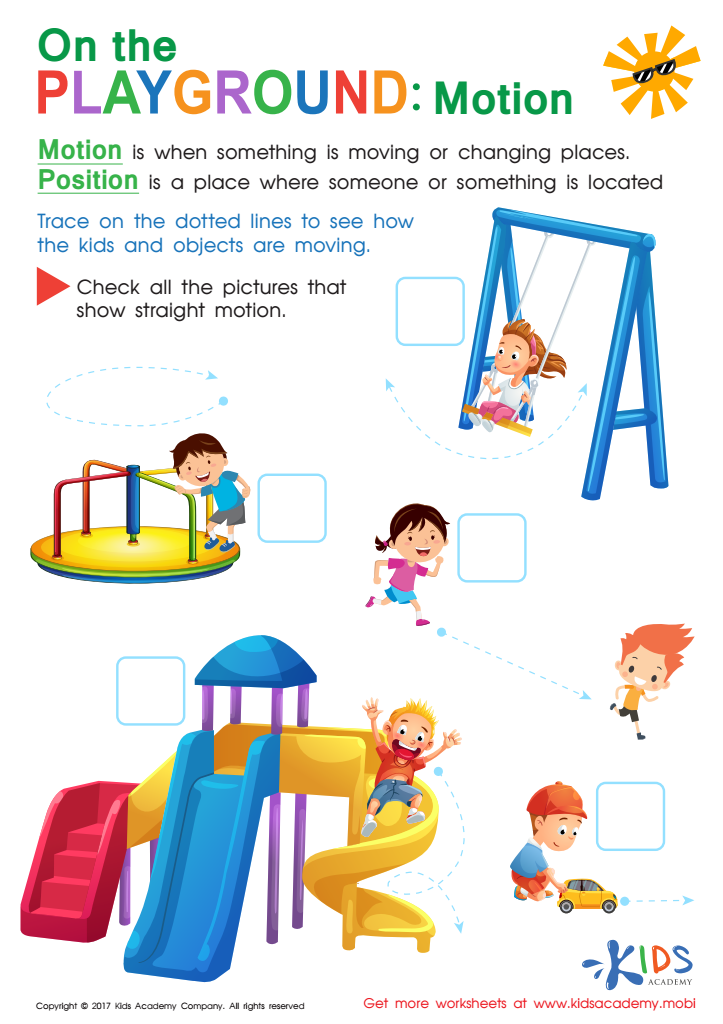
Position and Motion Worksheet
 Assign to My Students
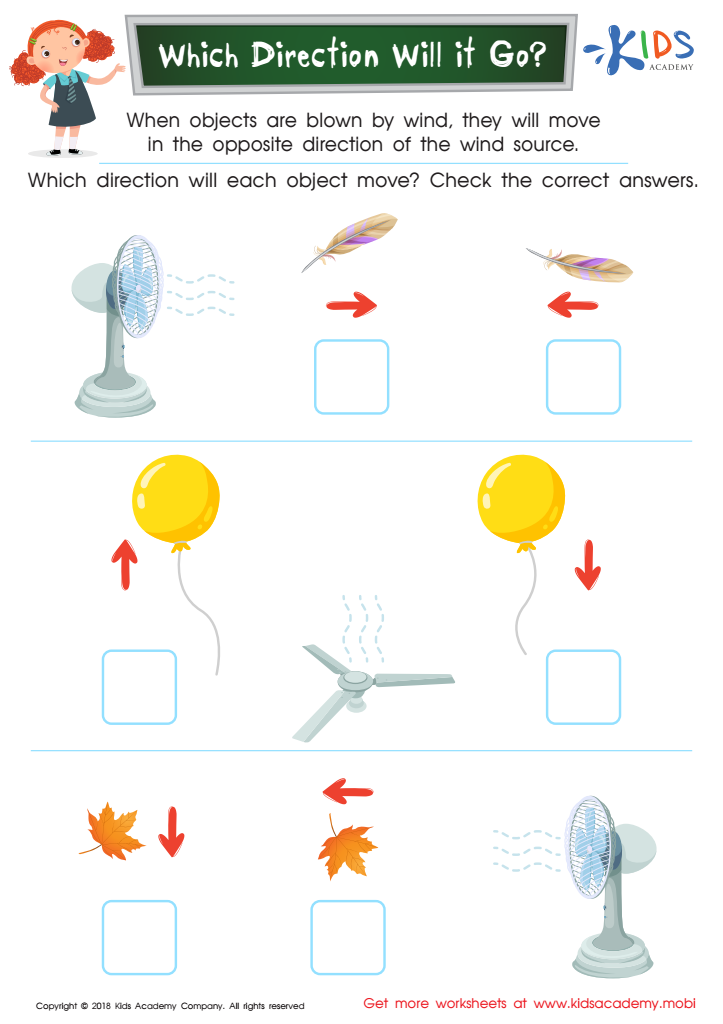
Which Direction Will it Go? Worksheet
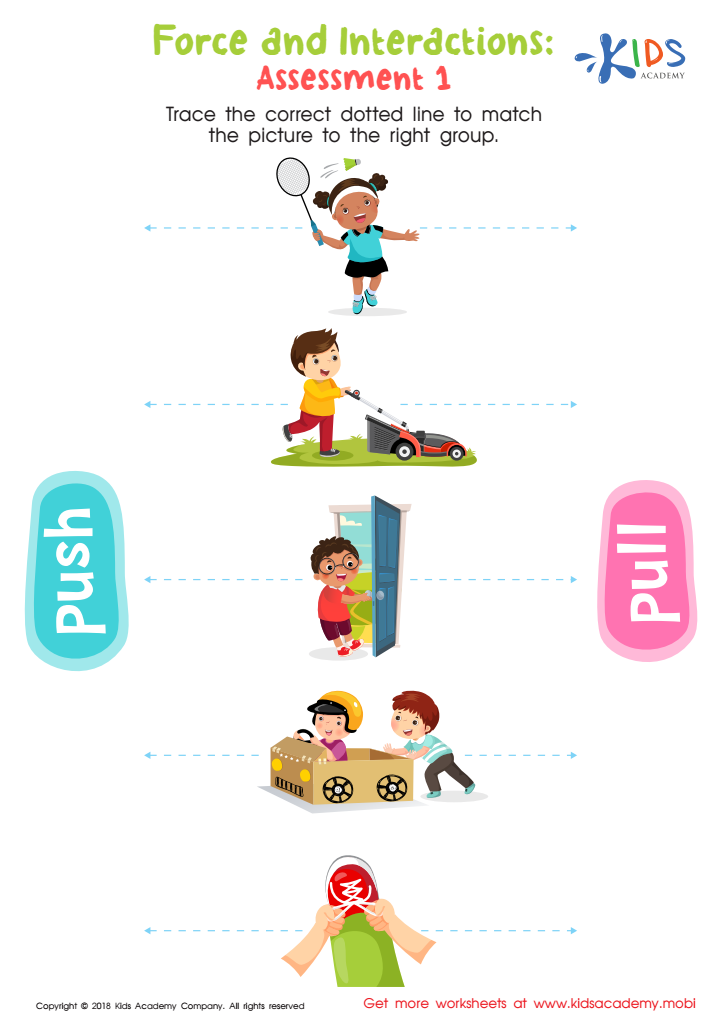
Force and Interactions: Assessment 2 Worksheet
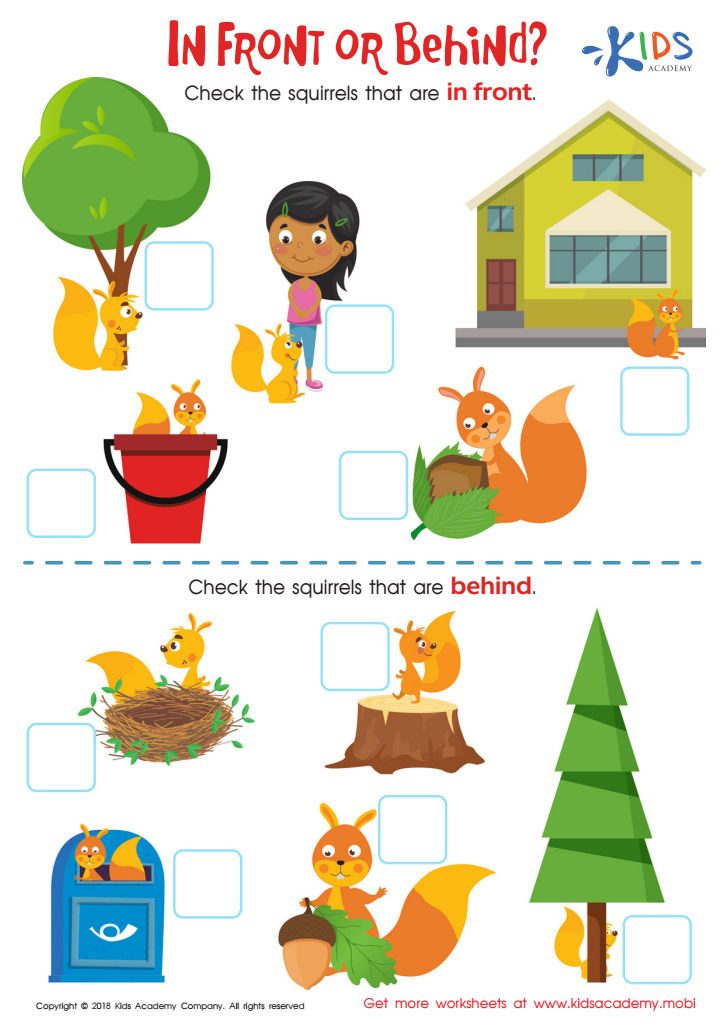
In Front or Behind: Part 2 Worksheet








Spatial awareness is a crucial component of early childhood development, particularly in the realm of physical science for children aged 5 to 9. This foundational skill involves recognizing the position and relationship of objects in space, which is essential as it directly influences a child's ability to understand complex scientific concepts.
First, spatial awareness aids in problem-solving and critical thinking. Children learn to visualize objects and comprehend how they fit within their environment, which is vital for conducting experiments, building structures, or engaging in hands-on science projects. As they manipulate physical objects, they develop an intuitive understanding of basic principles like gravity and balance.
Furthermore, a spatially aware child is better equipped to excel in areas like mathematics, engineering, and technology—fields increasingly relevant to today's economy. By fostering these skills early on, parents and teachers enhance a child's overall cognitive development, laying the groundwork for future learning.
Finally, engaging in spatial awareness activities helps promote creativity and confidence as children explore and experiment. Encouraging exploration fosters a love for science and discovery, ultimately developing informed, capable individuals who contribute positively to society. Thus, prioritizing spatial awareness in physical science is essential for nurturing the next generation of thinkers and innovators.







