Understanding magnetism Physical Science Worksheets for Ages 5-9
4 filtered results
-
From - To
Dive into the fascinating world of magnetism with our engaging Physical Science Worksheets designed for kids ages 5-9! These resources explore the basics of magnetism, including concepts like magnetic poles, attraction, and repulsion. Our worksheets feature fun activities and stimulating exercises that encourage young learners to discover how magnets work in their everyday lives. Perfect for classroom use or at-home learning, these worksheets help develop critical thinking and observation skills while nurturing a love for science. Empower your child's educational journey—download our Understanding Magnetism worksheets today and watch their curiosity spark about the wonders of the physical world!
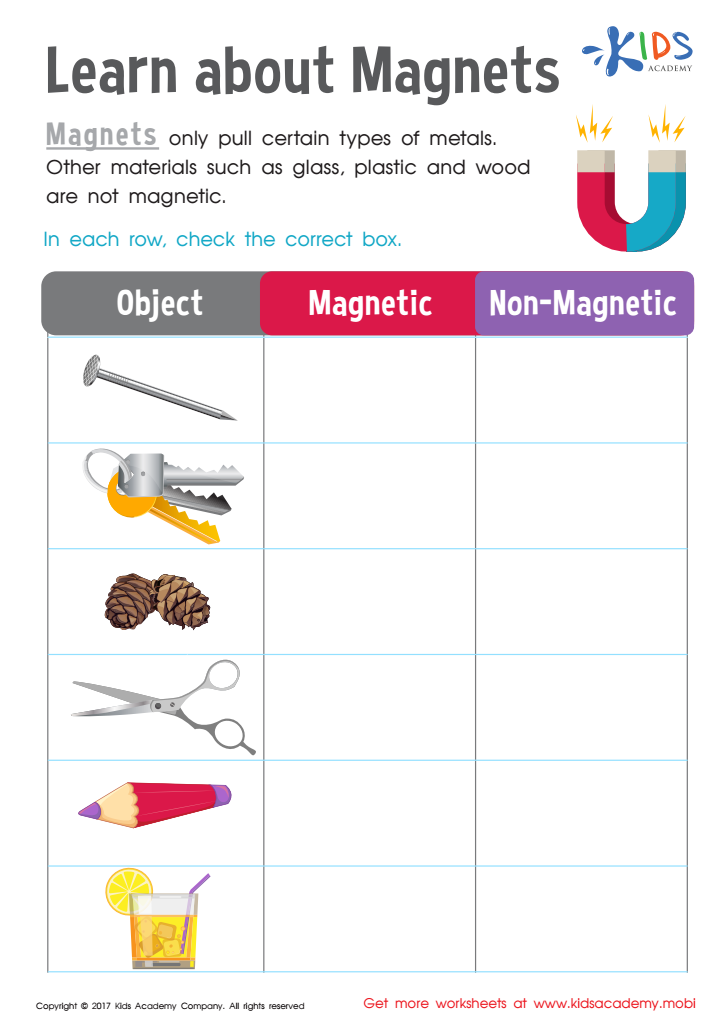
Magnetic Or Not Worksheet
 Assign to My Students
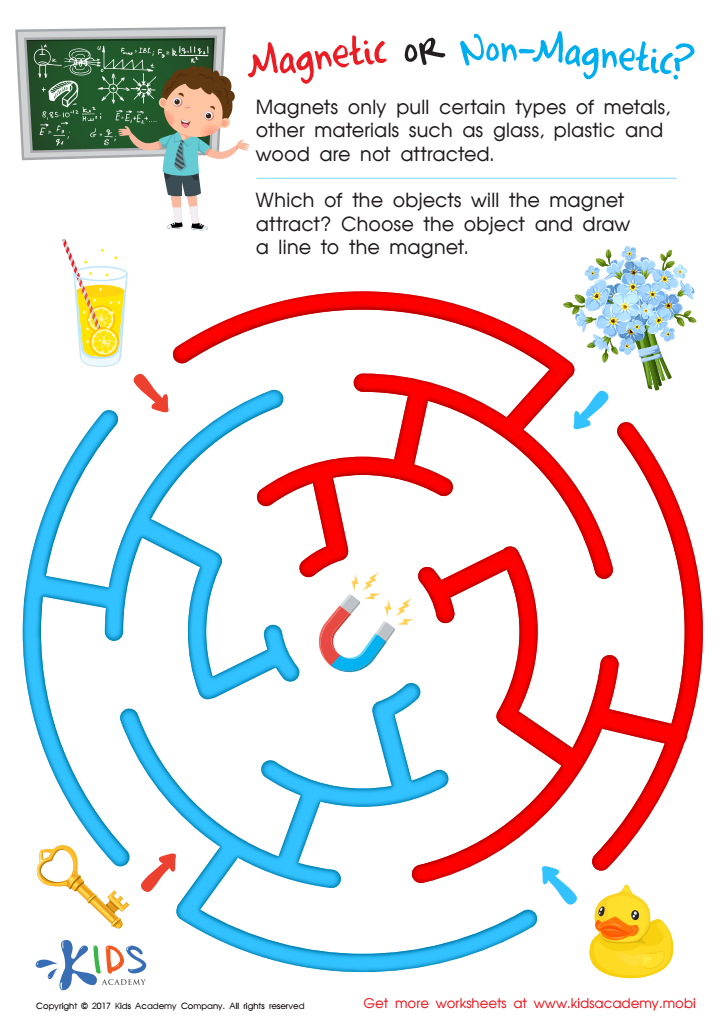
Magnetic or Non–Magnetic Worksheet
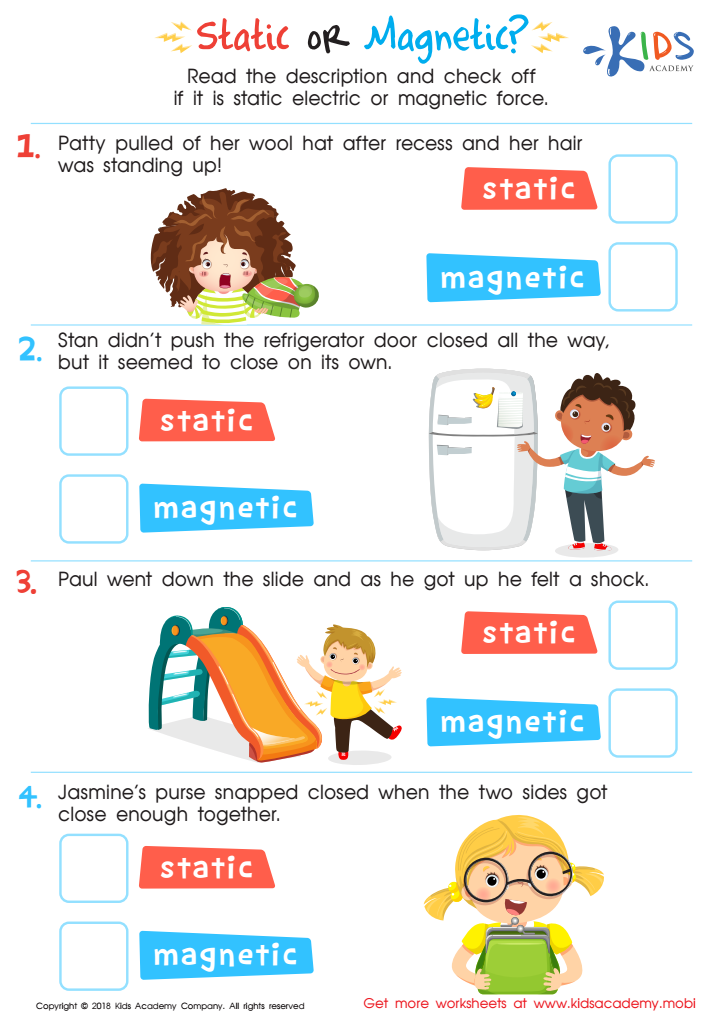
Static or Magnetic Printable Worksheet
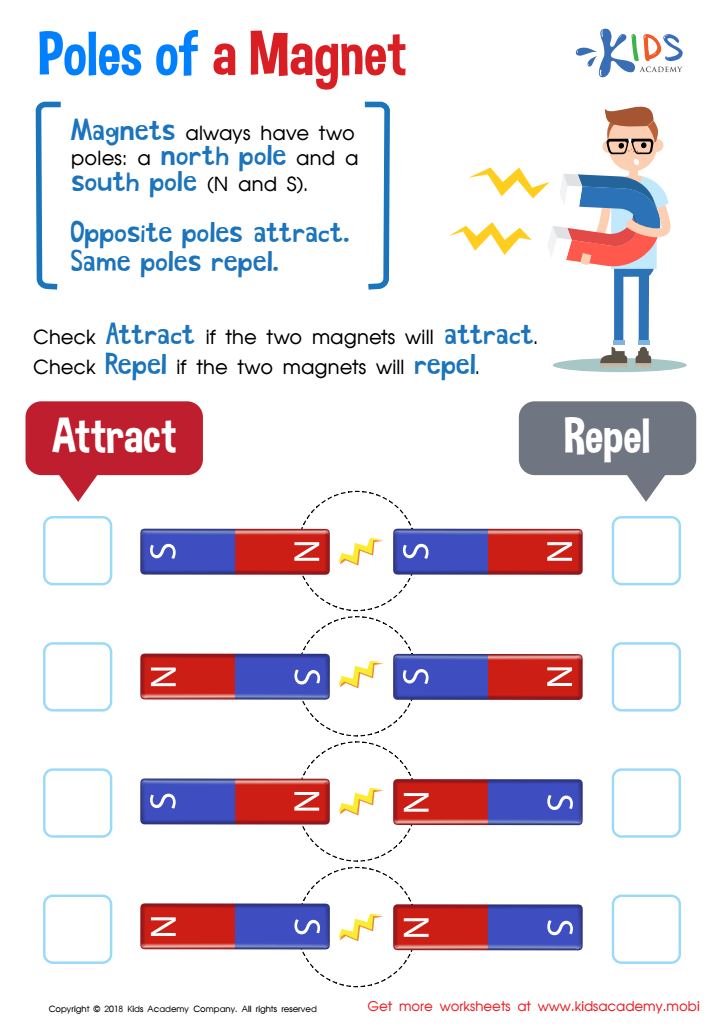
Magnet Poles Attract or Repel Worksheet








Understanding magnetism is crucial for children ages 5-9 as it lays foundational concepts for later scientific learning. First, early exposure to physical science fosters curiosity about the world, encouraging instilling a lifelong love for learning. Magnetism is a tangible and engaging topic; children can see and experience magnetic forces through simple experiments and everyday objects, helping them grasp abstract scientific concepts in a concrete way.
Teaching magnetism can enhance critical thinking and problem-solving skills. Children learn to inquire, hypothesize, test, and analyze outcomes through hands-on activities. This process nurtures their ability to take initiative in exploring complex ideas.
Moreover, understanding magnetism supports developing essential skills such as observation, communication, and teamwork. It often involves collaborative experiments, promoting social skills while reinforcing scientific concepts.
Parents and teachers should prioritize teaching magnetism because it integrates science with art, engineering, and mathematics, showcasing the interconnectedness of disciplines in real life. Ultimately, introducing children to magnetism not only enriches their knowledge base but also empowers them with the skills and confidence needed to explore future scientific opportunities. By prioritizing this early science education, we help cultivate inquisitive minds that can tackle challenges and innovate for tomorrow.







