
Vocabulary development Plants and Animals Worksheets for Ages 5-9
4 filtered results
Difficulty Level
Grade
Age
-
From - To
Subject
Activity
Standards
Elevate your child's understanding of the natural world with our "Vocabulary Development: Plants and Animals Worksheets" designed for ages 5-9. These engaging worksheets enhance science knowledge while building essential vocabulary skills, fostering a love for nature. Through fun, interactive activities, kids explore the diverse species, habitats, and life cycles of plants and animals. Ideal for kindergarten through 3rd grade, these worksheets support curriculum goals and inspire curiosity about the environment. Download today to help your child gain confidence in both language arts and science, setting the foundation for future academic success.
Favorites
With answer key
Interactive
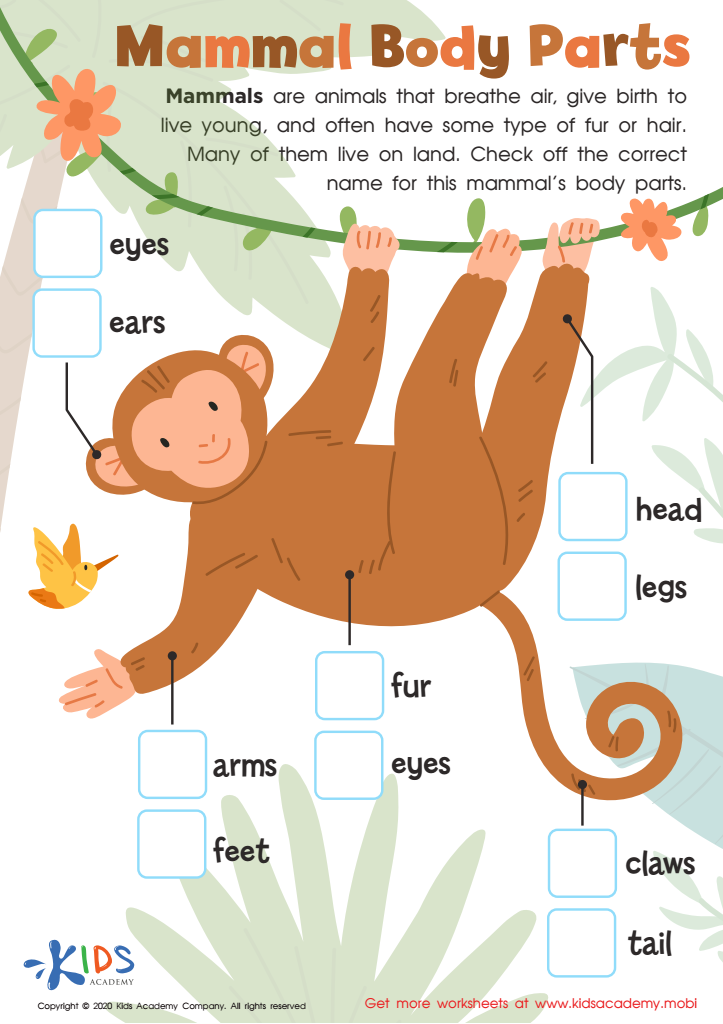
Mammal Body Parts Worksheet
Help your little scientist identify a mammal's body parts with this cute and colorful worksheet. It includes fur, arms, legs, tails, and more! Read the passage to learn what makes an animal a mammal, then have them check off the boxes to identify parts of the monkey. It's a fun way to learn about animals in the animal kingdom!
 Assign to My Students
Mammal Body Parts Worksheet
Worksheet











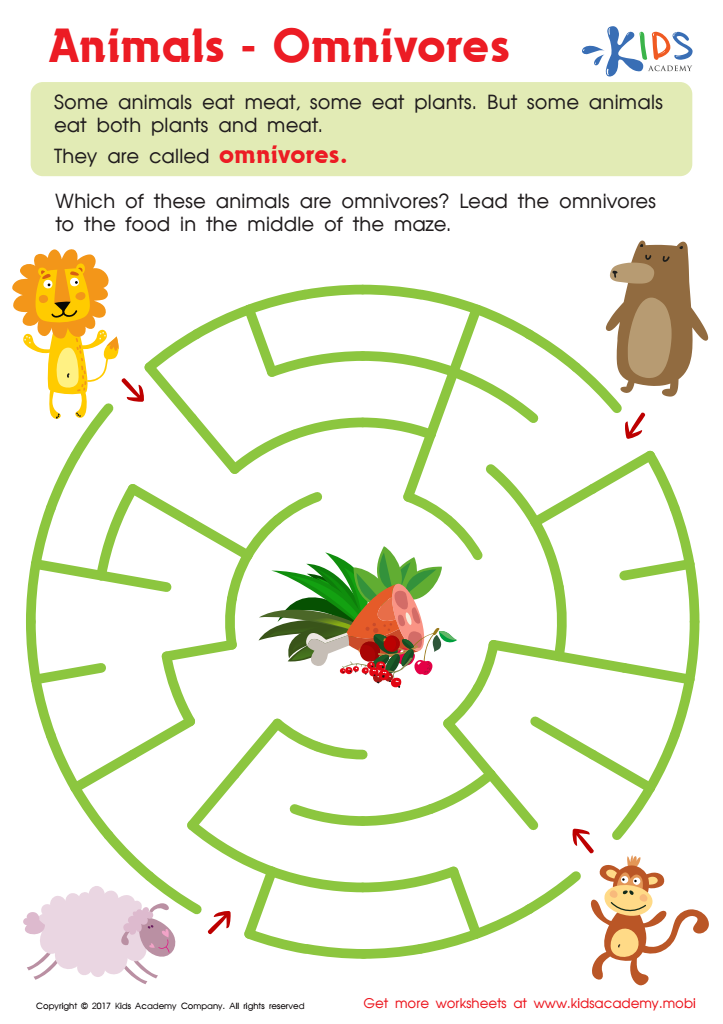
Omnivores Animals Worksheet
Kids can explore omnivores animals with this worksheet! It presents herbivores, carnivores and omnivores, with the main activity being a maze. Kids must guide a bear through it to get to its food. See how much they know about omnivores!
Omnivores Animals Worksheet
Worksheet
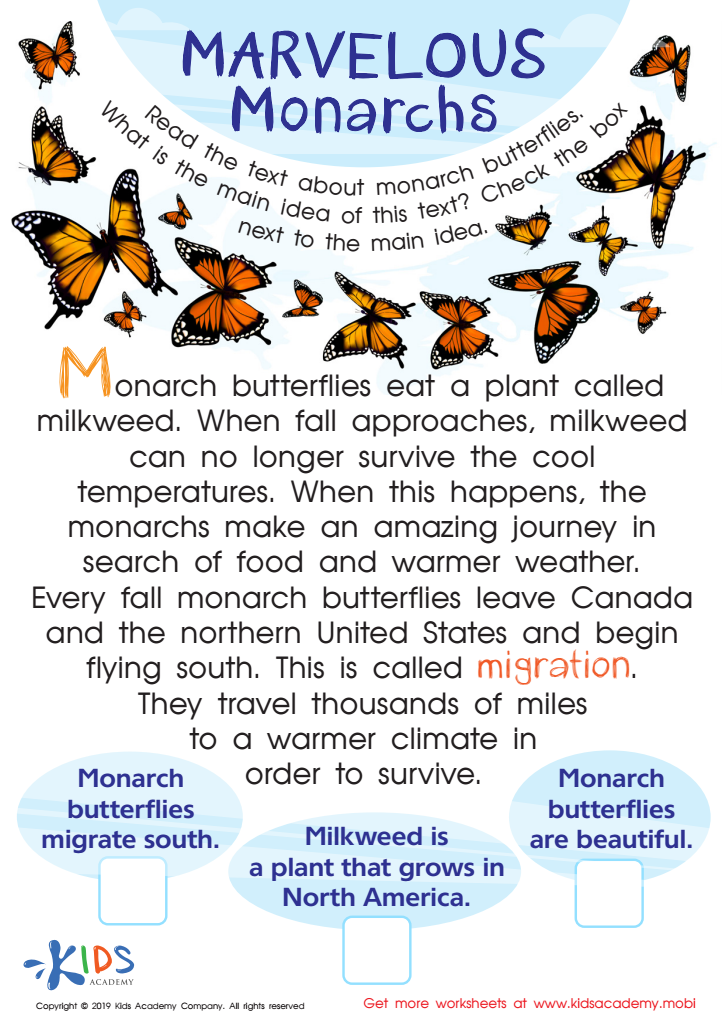
Marvelous Monarchs Worksheet
Help your kids have fun while reading - start with small words and short sentences. This worksheet can test your kids' reading and comprehension skills. Ask them to read the text about Monarch butterflies and help them locate the main idea.
Marvelous Monarchs Worksheet
Worksheet
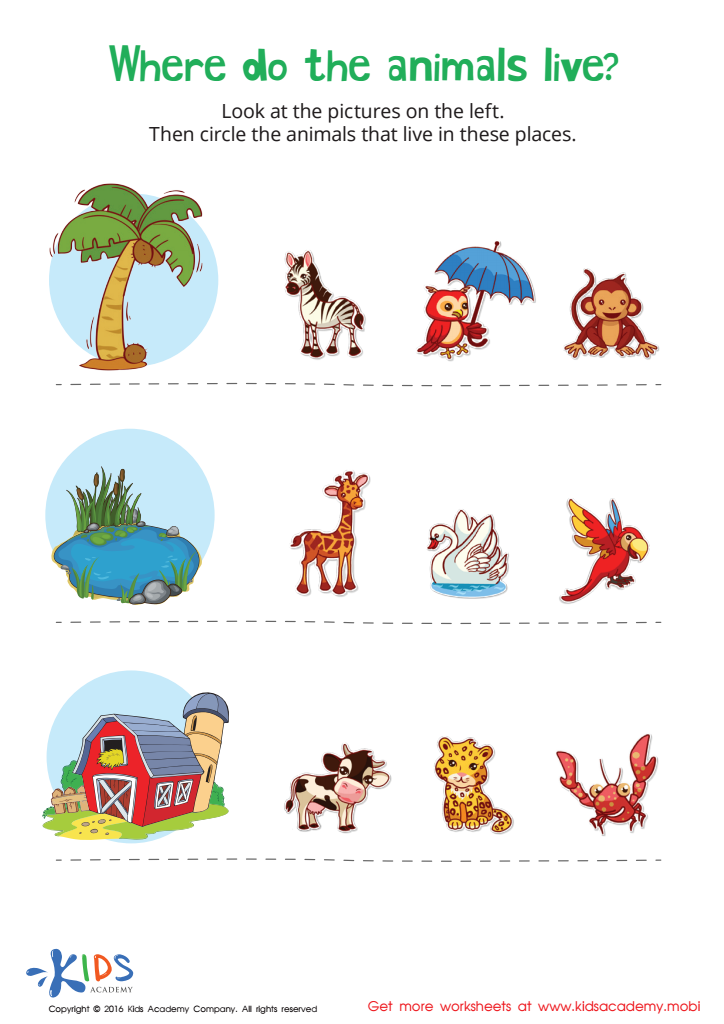
Where Animals Live Worksheet
Teaching early reading and math skills is important, but don't forget about science. With the Where Animals Live PDF worksheet, kids can identify their favorite animals and the environments they live in. Ask them what type of environment the animals like and introduce them to geography. It's great for logical reasoning and classification skills. Your kid will practice with their favorite animals and love the trip to the zoo afterwards!
Where Animals Live Worksheet
Worksheet
Join Kids Academy for Free
Who is primarily going to use this learning content?


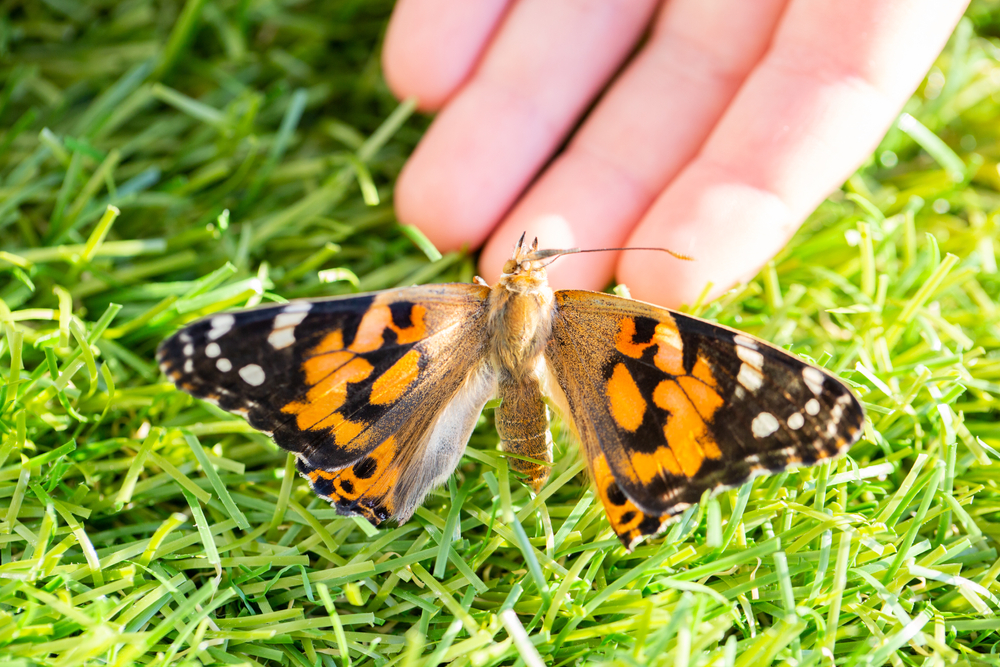





Vocabulary development in the topic of plants and animals is crucial for children aged 5-9, as it lays a strong foundation for their overall academic growth and curiosity about the world. At this age, children are naturally curious and eager to explore their surroundings. Introducing specific vocabulary about plants and animals helps them make sense of what they see in nature, fostering both observational and critical thinking skills.
Understanding basic botanical and zoological terms enhances children's comprehension in science and environmental education, making future learning more accessible. When children can name parts of a plant or identify different animals and their habitats, they build a more structured and organized way of thinking. This also improves their ability to communicate effectively, both in writing and verbally, boosting their overall language skills.
Moreover, knowing about plants and animals fosters a sense of appreciation and responsibility for nature. It encourages inquisitiveness and develops a child's ability to ask questions and seek answers, essential traits for lifelong learning. Early vocabulary skills in these areas also intersect with other subjects like reading and math, making learning interdisciplinary and more engaging. Thus, prioritizing vocabulary about plants and animals enriches children's general education, nurtures a love for nature, and supports their linguistic and cognitive development.








