Filters

6 filtered results

Clear all filters
Favorites
With answer key
Interactive

6 filtered results

Difficulty Level

Grade


Enhance your child’s learning experience with our Counting Skills Social Studies Worksheets designed for ages 5-9. These engaging worksheets combine essential counting skills with social studies concepts, providing a fun and interactive way for young learners to explore numbers and their relevance in the social world. Each activity promotes critical thinking while fostering an understanding of community, geography, and diversity. With vibrant illustrations and age-appropriate challenges, these worksheets keep children motivated and excited about learning. Perfect for classroom use or home activities, our Counting Skills worksheets are a valuable resource for developing foundational math skills alongside social awareness. Try them today!

Check out this FREE Trial Lesson on Social Studies for age 5-9!

My Family

Favorites
With answer key
Interactive
  • 5-9
  • Counting skills
  • Social Studies
Presidential Maze Through the 5’s Worksheet

Presidential Maze Through the 5’s Worksheet

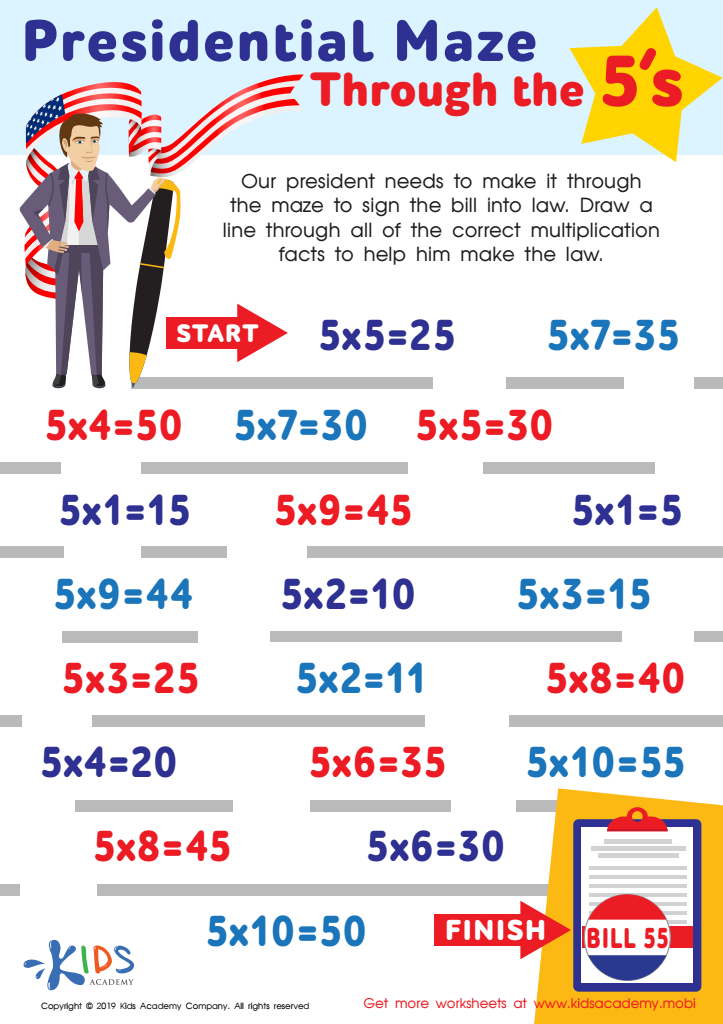
Help your kids draw a line through the right multiplication facts to guide the state's President to sign the bill into law. This is a big responsibility - the President has been elected to make decisions on behalf of the people and has the power to make laws and sign them.
Presidential Maze Through the 5’s Worksheet
Worksheet
Let's Look! Assessment Worksheet

Let's Look! Assessment Worksheet

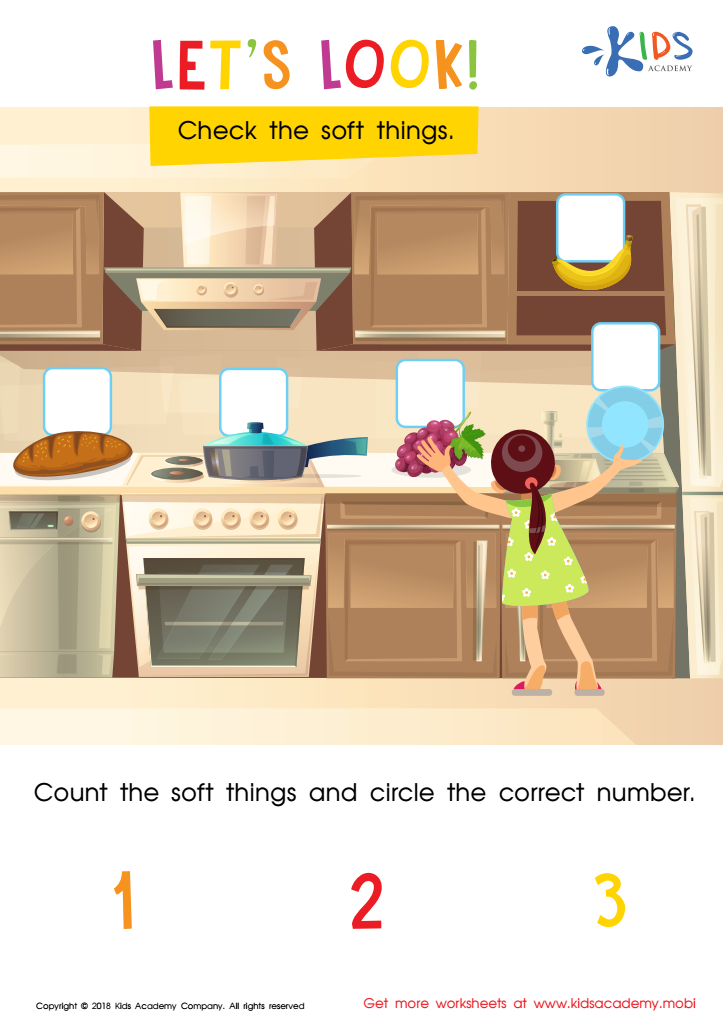
Have your child look at the picture in the printout and name the objects. Ask which ones are soft and hard and have them count the soft objects and circle the number. This worksheet will engage your child's thinking and teach them about texture.
Let's Look! Assessment Worksheet
Worksheet
Let's Check! Assessment Worksheet

Let's Check! Assessment Worksheet

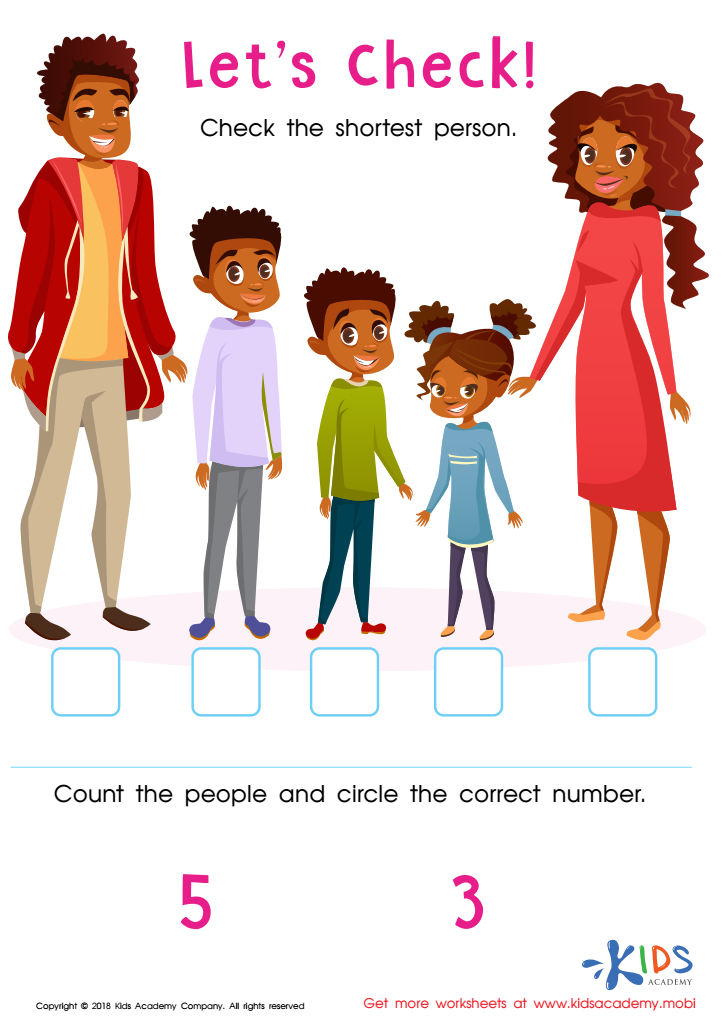
Check your child's understanding of height with this worksheet. Ask them to sort the objects in order of size and identify the tallest and shortest member of the family in the picture. See if they can correctly arrange the items from tallest to shortest.
Let's Check! Assessment Worksheet
Worksheet
Voting by 1s Worksheet

Voting by 1s Worksheet

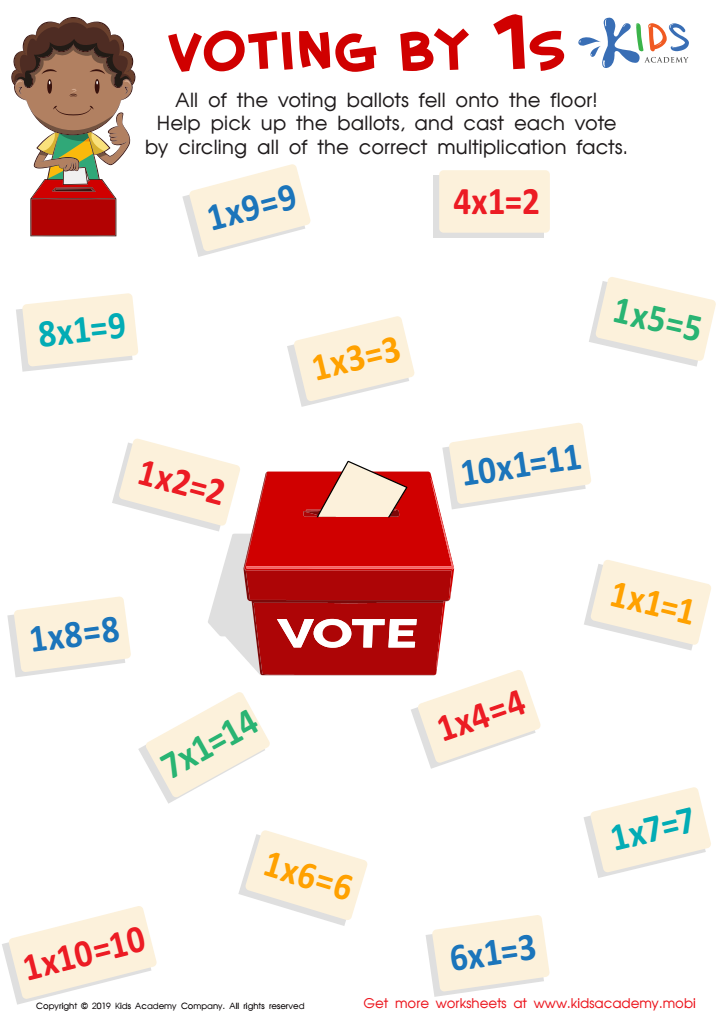
Ask your child if they can list duties of a good citizen. These include voting, to elect right leaders. With this worksheet, the voting ballots have fallen to the floor! Help your kids pick them up and cast each vote by circling the correct multiplication facts.
Voting by 1s Worksheet
Worksheet
Earth's Systems: Assessment 2

Earth's Systems: Assessment 2

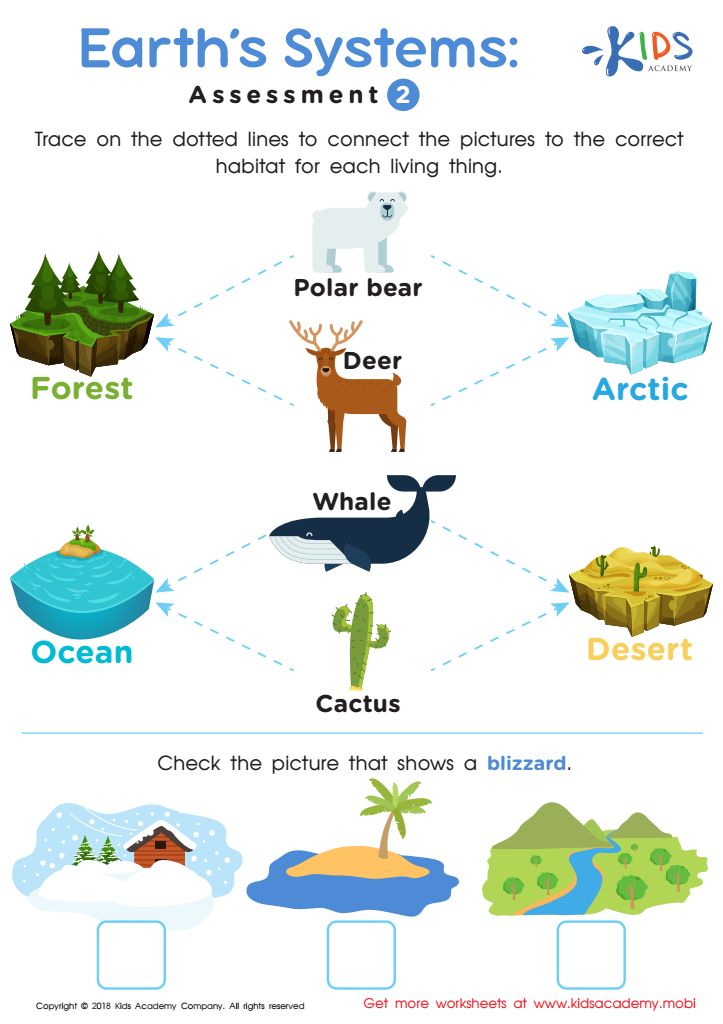
Kids will love this free printable worksheet to assess their knowledge of habitats and the living creatures found in them. They'll trace the dotted lines to connect the pictures of plants and animals to their respective habitat and identify the type of weather depicted. No, polar bears don't live in the ocean, but they do like to swim in icy waters! With this fun activity, your little learner will master earth science basics.
Earth's Systems: Assessment 2
Worksheet
Marching 8’s for Rights Worksheet


Marching 8’s for Rights Worksheet

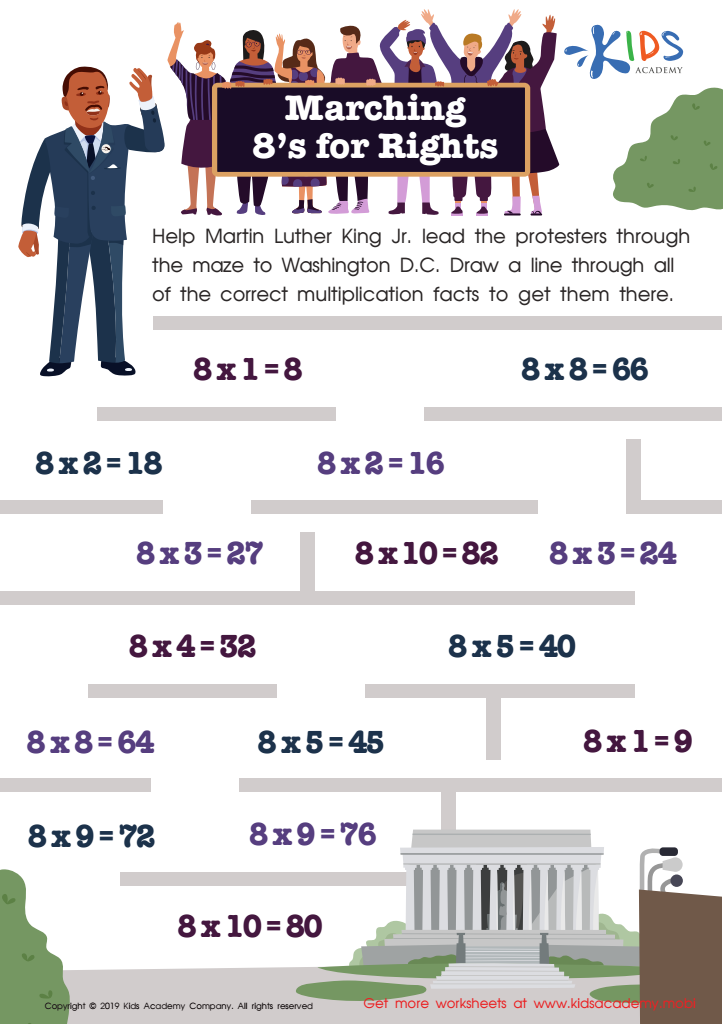
Encourage your students to explore MLK's history! This worksheet provides the perfect opportunity. Help them understand his contributions by having them "march" MLK from the starting point to Washington D.C. Have them draw a line through the correct multiplication facts to get there. It's an enjoyable way for kindergartners to learn about a key part of history.
Marching 8’s for Rights Worksheet

Worksheet


Counting skills are crucial for children aged 5-9 as they lay the foundation for mathematical understanding and are intricately connected to Social Studies. At this age, children are developing their ability to understand quantity, order, and basic arithmetic—skills that are not only vital in math but also in interpreting data within Social Studies contexts.

Firstly, counting aids in understanding the demographics of communities, such as population size and how resources are distributed. When children learn to count, they begin comprehending how numbers and statistics reflect real-world situations, like understanding where they live, the different cultures around them, and the importance of civic participation.

Additionally, counting supports critical thinking and problem-solving skills. By recognizing trends and patterns through counting, children learn to analyze information critically, a skill pivotal for participating in a democratic society and respecting diverse perspectives.

By fostering counting skills through Social Studies activities, parents and teachers enhance children's comprehension of the world, preparing them for responsible citizenship and instilling an early appreciation for diverse cultures and societal structures. Overall, developing counting skills in conjunction with Social Studies enhances children’s learning experiences, strengthening their academic foundation and nurturing informed, engaged future citizens.