
Problem-solving abilities Social Studies Worksheets for Ages 5-9
3 filtered results
Difficulty Level
Grade
Age
-
From - To
Subject
Activity
Standards
Nurture your child's problem-solving abilities with our engaging Social Studies worksheets designed for ages 5-9. These interactive resources help young learners develop critical thinking and analytical skills through real-life scenarios and historical contexts. Our worksheets cover various topics, from community roles to fundamental economic concepts, making learning fun and relevant. The activities encourage exploration, reasoning, and collaboration, providing a solid foundation for lifelong learning. Perfect for classrooms or at-home enrichment, these worksheets align with educational standards to support and challenge young minds. Equip your child with the tools to understand and solve problems effectively while igniting a passion for Social Studies.
Favorites
With answer key
Interactive
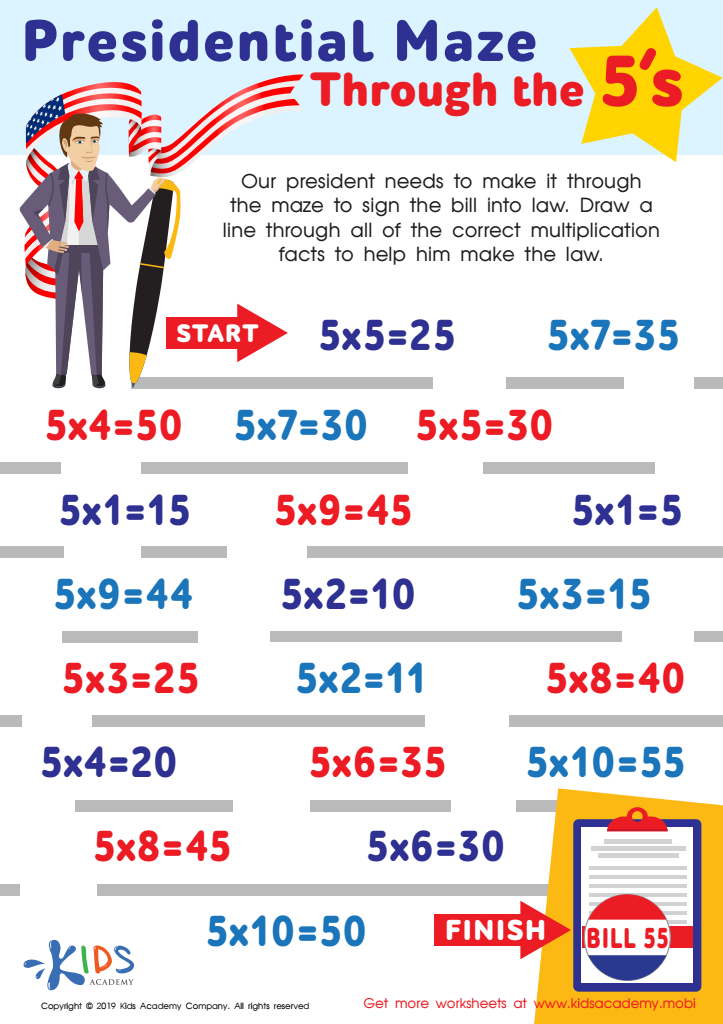
Presidential Maze Through the 5’s Worksheet
Help your kids draw a line through the right multiplication facts to guide the state's President to sign the bill into law. This is a big responsibility - the President has been elected to make decisions on behalf of the people and has the power to make laws and sign them.
 Assign to My Students
Presidential Maze Through the 5’s Worksheet
Worksheet
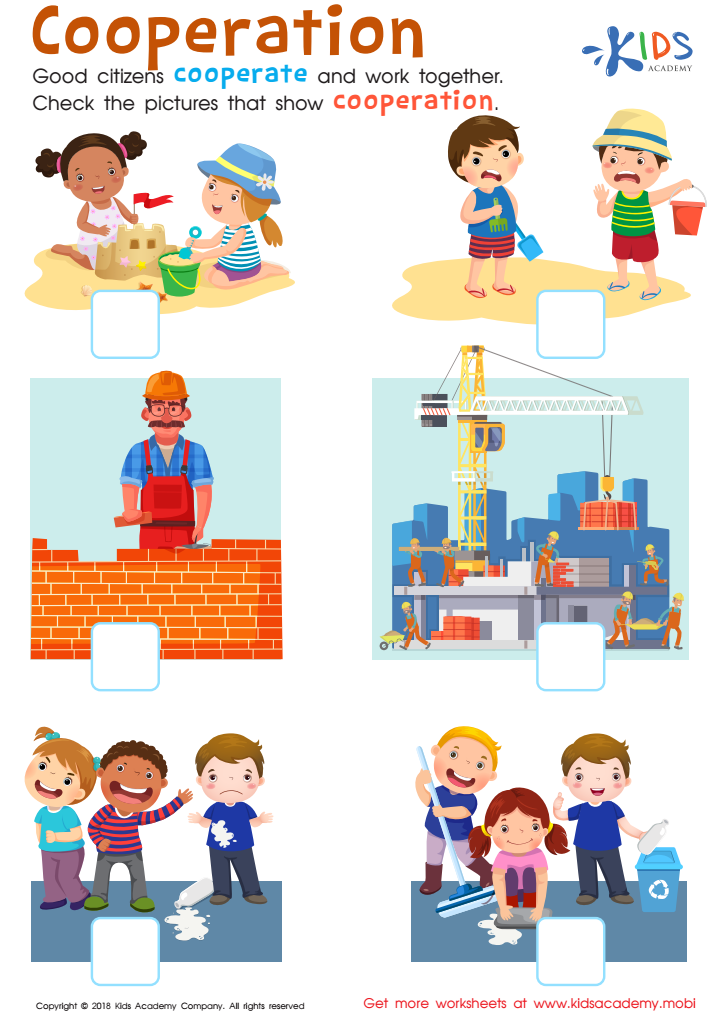
Cooperation Worksheet
Cooperation is an essential component of successful teamwork - in school, in offices, with citizens. Ask your students to check the pictures in the worksheet showing citizens working together. This is what makes a good citizen: cooperation.
Cooperation Worksheet
Worksheet

Fourth of July Maze Printable
Help our friend collect all the items related to the Fourth of July. Learn about our country's traditions and American symbols while having fun.
Fourth of July Maze Printable
Worksheet
Join Kids Academy for Free
Who is primarily going to use this learning content?








Problem-solving abilities in Social Studies for children aged 5-9 are essential because they lay the foundation for their cognitive and social development. At this formative age, children are not only learning facts about history, geography, and community, but they are also being introduced to thinking critically about the world around them. Encouraging problem-solving skills helps children learn how to deal with real-life situations and fosters their ability to make informed decisions.
By navigating simple problems related to Social Studies, children learn to analyze information, ask questions, and understand different perspectives. For example, exploring why communities have certain rules helps kids appreciate the importance of cooperation and ethics, nurturing their sense of empathy and social responsibility. These skills extend beyond the classroom, enriching their interactions with peers, family members, and the larger community.
Furthermore, early problem-solving experiences in Social Studies build confidence and resilience. Kids who tackle minor challenges and arrive at solutions develop a growth mindset, understanding that perseverance and effort can lead to success. These abilities are crucial as they advance in their education and encounter increasingly complex scenarios. Therefore, parents and teachers should prioritize this aspect of learning to equip children with the tools they need for both academic and personal growth.








