Understanding road signs Social Studies Worksheets for Ages 5-9
3 filtered results
Difficulty Level
Grade
Age
-
From - To
Subject
Activity
Standards
Our "Understanding Road Signs" Social Studies Worksheets for Ages 5-9 introduce young learners to essential traffic symbols and safety practices. Engaging activities teach children how to recognize and interpret common road signs, enhancing their awareness of rules that keep them safe. Through fun matching games, illustrations, and simple exercises, these worksheets build foundational knowledge in a way that's both educational and enjoyable. Perfect for classroom use or at-home practice, these resources empower kids to confidently navigate their surroundings. Foster essential road safety skills in your young ones and set the stage for lifelong learning about community and safety!
Favorites
With answer key
Interactive
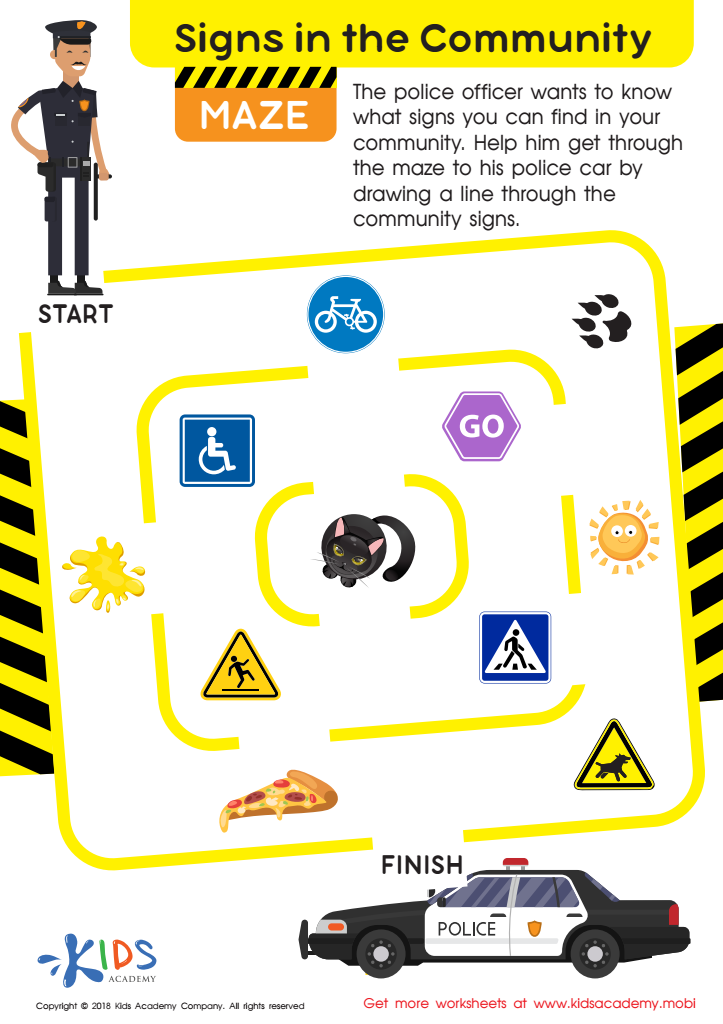
Signs in the Community: Maze Worksheet
This worksheet helps kids build writing skills like good hand grasp, pencil grip and how to hold a pencil. They can trace a path for the community helper to reach the car, learning community signs and strengthening fine-motor and pre-literacy skills while they enjoy the bright, colourful pictures.
 Assign to My Students
Signs in the Community: Maze Worksheet
Worksheet
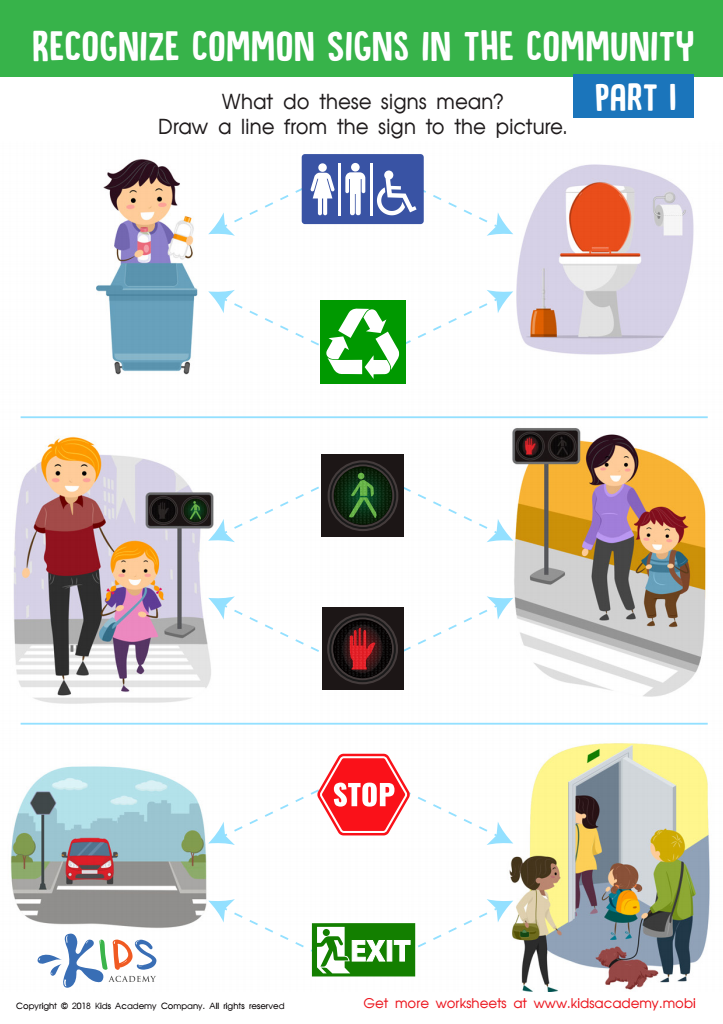
Recognize Common Signs: Part 1 Worksheet
Beginning readers can strengthen picture identification and decoding skills with a free downloadable worksheet. They use traceable lines to match activities in community signs to the correct pictures and build a bridge to reading. This helps familiarize them with their surroundings and starts them on their reading journey.
Recognize Common Signs: Part 1 Worksheet
Worksheet
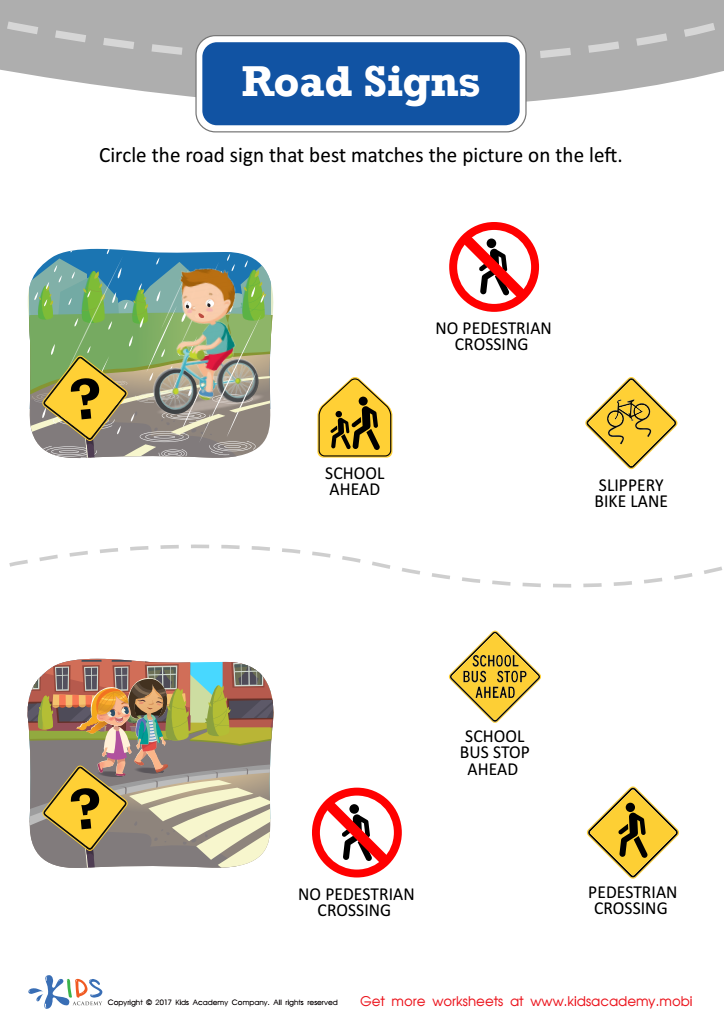
Road Signs (Part 2) Printable
Help your child stay safe with road sign worksheets! These worksheets help kids recognize common traffic signs, boost comprehension and symbol recognition, and know when to stay safe near or on roads. Use the sheets to start a conversation, and take your child out to spot signs near home or school.
Road Signs (Part 2) Printable
Worksheet
Join Kids Academy for Free
Who is primarily going to use this learning content?








Understanding road signs is a crucial aspect of social studies for children ages 5-9 because it equips them with essential life skills that ensure their safety and well-being. Road signs are universally recognized symbols that convey important information about traffic rules, hazards, and directions, which are vital for safe navigation of streets and roads.
Firstly, teaching young children about road signs helps to instill early habits of road safety. Knowledge of these signs can significantly reduce the risk of accidents by making children aware of key instructions, such as 'Stop,' 'Yield,' 'School Zone,' and 'Pedestrian Crossing.' It empowers them to recognize potential danger and to respond appropriately.
In addition, understanding road signs fosters a sense of independence among children. As they grow and begin to move around their neighborhoods either walking, biking, or being driven, recognizing road signs allows them to feel more confident and capable in their environment.
Furthermore, this knowledge promotes civic awareness and responsibility. Children learn that adhering to road signs is part of obeying laws designed for the common good, which plants the seeds for good citizenship and respect for rules.
Lastly, integrating road sign education in social studies builds interdisciplinary skills. It combines aspects of reading, critical thinking, and even basic geography, enriching their overall learning experience. Hence, parents and teachers should recognize the importance of this practical knowledge for young learners.